Why Does Sydney Still Have Overhead Power Lines? (And Will They Ever Go Underground?)
Why does Sydney still have overhead power lines? Because most of the city's network was strung on poles decades before underground cabling became standard practice, and rebuilding an established suburb underground is slow, disruptive and very expensive. Newer estates are built underground from day one, but for most older streets the poles are staying. The part you can control is your own connection, and converting that is a well trodden path.
1. How Sydney ended up on poles and wires
Sydney electrified street by street across the last century, and overhead construction was how it happened: poles were quick to stand, easy to extend, and simple to repair with the tools of the day. Every decade of growth added more of them, which is why the older and more established a suburb is, the more likely its power arrives overhead.
That legacy is not carelessness. It is simply what a city looks like when the network arrived before the technology and economics of undergrounding matured.
If you're planning a build, extension or major renovation near an existing overhead line, clearance distances and easements still apply regardless of how old the line is. Our guide to building near power lines in NSW covers the clearances, easement restrictions and approval steps to work through before you finalise plans.
2. Why the whole city has not gone underground
Burying an existing overhead network is a completely different job from cabling a bare subdivision. In an established street the trench has to negotiate roads, driveways, mature trees, water, gas, phone and stormwater services, all while keeping homes supplied. Multiply that by tens of thousands of streets and the bill runs far beyond what any network could recover without huge price rises.
So Ausgrid and Endeavour Energy spend where it matters most: replacing ageing assets, managing vegetation, hardening the network against bushfire and storms, and undergrounding selectively where the case is strongest. Wholesale conversion of existing suburbs is not on the table in any near term plan.
3. Where Sydney is already underground
Drive through any estate built in the last few decades and you will notice the absence of poles. New subdivisions have been cabled underground as standard for years, with supply arriving through pits, pillars and conduits rather than overhead spans. Many town centres and high traffic precincts have also been converted over time.
That is why two suburbs a few minutes apart can look completely different: one grew up with the overhead network, the other was subdivided after underground became the default. Which network serves you matters too, and you can check your network area in seconds with our postcode checker.
4. Overhead vs underground: what each does well
Overhead lines are cheaper to build, easy to inspect from the ground, and faults are quick to find and repair. The price is exposure: wind, falling branches and storms — including the heavy rain and wind events like an east coast low that regularly test Sydney's network — are the classic causes of outages, and a sagging or sparking span is a genuine emergency. Our guide to overhead service line warning signs covers what to watch for, and the storm damage responsibility guide explains who fixes what.
Underground cabling is protected from weather and looks tidier, but it costs more to install, and the rare faults it does have take longer to locate and repair. For a service line specifically, the trade offs are covered in our ABC vs underground service comparison.
5. You can underground your own connection
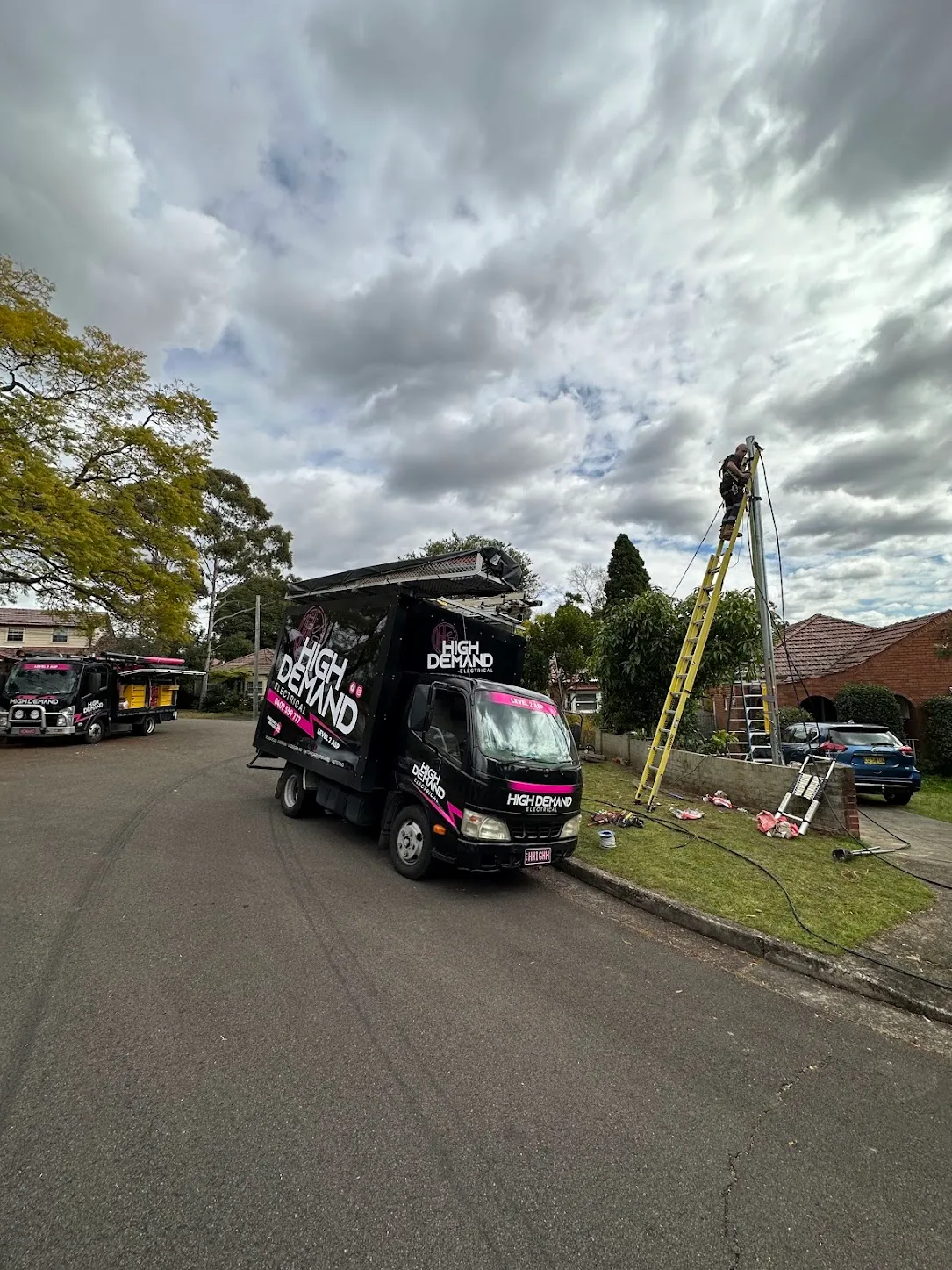
While the street network is out of your hands, the service line that feeds your property is not. An overhead to underground conversion replaces the span from the network to your house with a trenched underground service, removing the private pole or roof attachment along the way.
The conversion runs from the nearest existing network pole, involves a designed route, a compliant trench and conduit, and a coordinated switchover day. The full process, approvals and realistic timeline are covered in our overhead to underground conversion guide, and if you want a realistic budget figure before you commit, our 2026 overhead to underground cost guide breaks down what homeowners typically pay. Any digging starts with a BYDA search. If your supply currently comes through a private pole, our private power pole team can advise whether replacing or removing it makes more sense.
Why it's Level 2 ASP work
Any work on the service line between the network and your meter, overhead or underground, is network connected work. In NSW only a Level 2 Accredited Service Provider can disconnect, alter and reconnect that cabling. High Demand Electrical is accredited for both overhead and underground service mains on the Ausgrid and Endeavour Energy networks.
How High Demand Electrical helps
If you are weighing up a conversion, we assess your site, design the route, handle the distributor paperwork and complete the trench, conduit and connection as one job. If your overhead service is damaged or ageing rather than unwanted, we repair and replace spans, points of attachment and private poles as well, including emergency make safe work after storms. As a Level 2 ASP, we lodge the connection and disconnection paperwork directly with Ausgrid or Endeavour Energy on your behalf, so you are not left chasing approvals between trades yourself. We also test and certify the finished connection against AS/NZS wiring rules before handover, so you have documented proof of compliance on file for your records or for a future sale.
Thinking about going underground?
Get an underground service quote or call 0402 559 777 to talk it through. Every conversion starts with a site assessment before scope and pricing are confirmed.
Related Services
.webp)

Powering Your Needs with Expertise
If you’re looking for a reliable, experienced, and prompt electrician, look no further than High Demand Electrical. We cater to all your electrical needs, from routine maintenance to emergency repairs and complete system installations. Our skilled team is committed to providing professional service that ensures your electrical systems run smoothly. Whether it's a small task or a large project, give us a call today. Let us meet all your electrical demands with the quality and reliability you deserve.