Converting Overhead Power to Underground in Sydney: The Real Process, Approvals and Timeline
What does it actually take to convert overhead power to underground in Sydney? Four things: a route design, your distributor's approval, a trench with conduit to strict specifications, and a switchover day where a Level 2 ASP disconnects the old service and livens the new one. The digging is usually the quick part. The paperwork and coordination are what stretch the timeline into weeks. For a detailed cost breakdown alongside this process guide, see overhead to underground power conversion costs in Sydney.
1. Designing the route
An underground service has rules an overhead span never worried about: the run is limited to 50 metres to the main switchboard, it wants a straight alignment with sweeping bends only, and it must dodge every other buried utility on the way. Before any design is final, the underground services search happens, which is why we wrote about how BYDA works and why sparkies never skip it. Driveways, mature trees and neighbouring services all shape where the trench can go, and where the route runs near an easement or an existing overhead span, clearance rules add another layer of constraint, covered in our guide to building near power lines: NSW clearances and easements.
2. The paperwork
Converting a connection type is a change your distributor approves, not just observes. Your Level 2 ASP handles the application and, on completion, lodges the Notification of Service Work with a sketch of the buried route. Ausgrid and Endeavour Energy run their own processes and timeframes, so the first practical step is knowing whose area you are in. You can check your network area in seconds with our postcode checker, and our comparison of connection timeframes across the two networks shows why the same job can move at different speeds a few suburbs apart.
3. The trench and the conduit
The buried run is built to SIRNSW specification: heavy duty conduit of at least 40 mm, laid straight at a minimum 500 mm depth, with orange marker tape above the conduit warning future diggers. Where the run crosses a driveway or the ground level fights the design, the detail work grows. This underground standard is a big part of why storm season barely touches underground services, a comparison we covered in ABC versus underground service, which also carries the cost discussion for both options.
4. Up the pole: how UGOH works
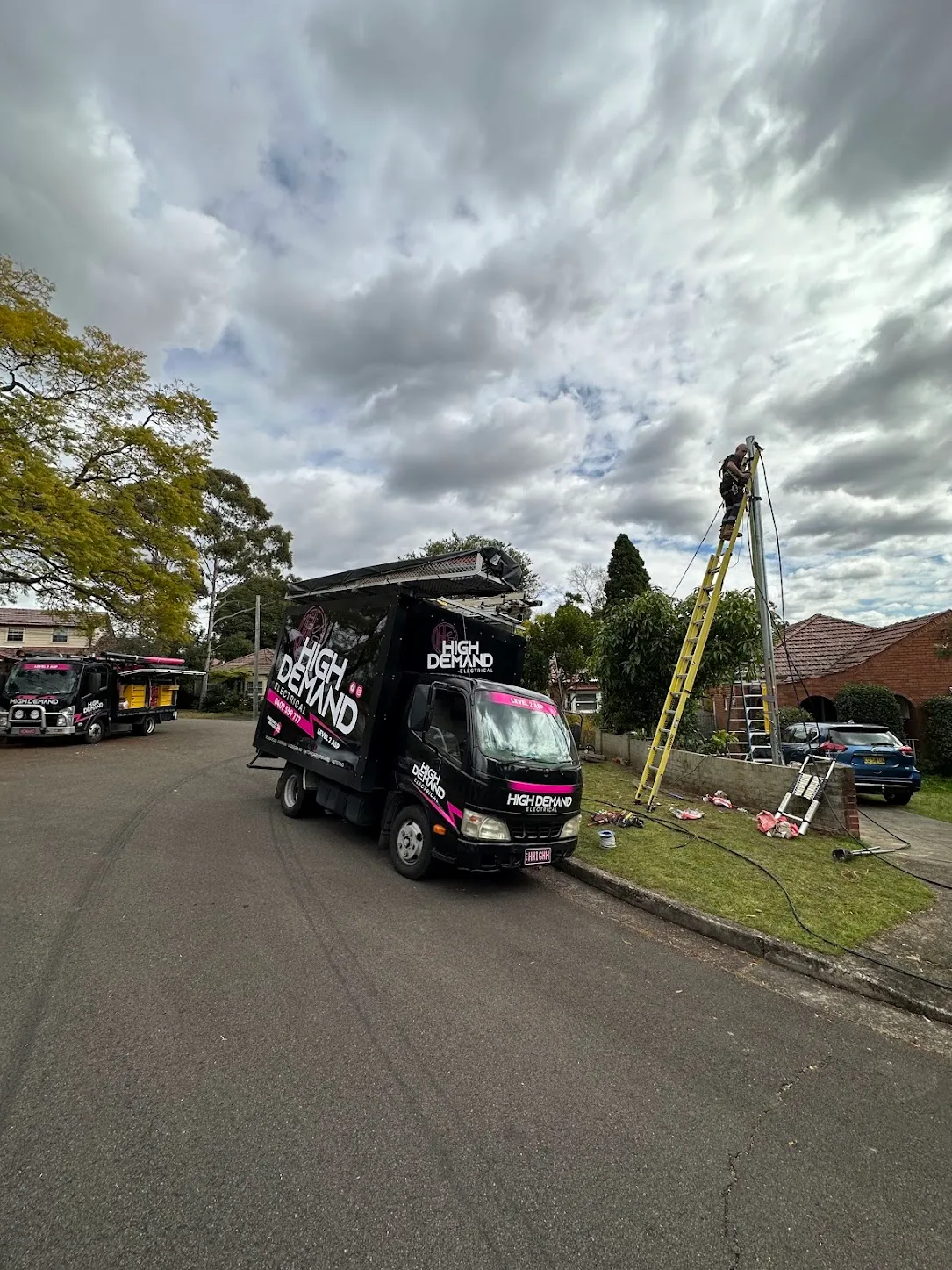
Unless your street already has underground mains, which is genuinely rare for established Sydney suburbs, for reasons we explain in why Sydney still has overhead power lines, the new service still starts overhead. The cable runs from the nearest existing network pole, protected down the pole face, then underground to your property. No new street pole gets built for it, and each pole can only host a limited number of these underground runs before a footpath pillar is required at the customer's cost. That pole end detail is network territory and one of the clearest reasons the job sits with a Level 2 electrician.
5. Switchover day
With the conduit in, the cable proven and the paperwork ready, the changeover itself is typically a single day: planned disconnection of the overhead service, termination of the new underground run, testing, then reconnection. Our disconnect and reconnect service is built around exactly this kind of planned outage, and if the old service fed a private pole, its removal is scheduled in the same window. What happens at the pre connection inspection is covered in our post on the Level 2 site inspection before your connection is approved.
6. The timeline, honestly
The physical work usually fits inside two or three site days. End to end, allow weeks rather than days: distributor processing, the utilities search, trenching access and weather all sit on the critical path. Jobs slow down when the route crosses shared driveways or needs council road opening consent, and speed up when the trench line is clear private land. A conversion bundled into a renovation, while trenches are already open, is the cheapest version of this job, which is one of the nine electrical decisions that are far cheaper during a build.
Why Is This Level 2 ASP Work?
The conversion touches the service line, the point of attachment and often the consumer mains, all of which sit beyond a standard electrical licence. An accredited ASP carries the authorisation to work at the network boundary, and the distributor holds the network side of the switchover. Our underground service mains installation service covers the full scope, with the overhead service mains service handling the disconnection side.
How Does High Demand Electrical Help?
We run the whole conversion as one project: route design, BYDA search, distributor application, trenching coordination, cable installation, switchover and the closing paperwork. One team, one timeline, and no gap between the electrician who digs and the ASP who livens. If a private pole retires as part of the job, our private power pole team handles that too.
Get an underground conversion quote
Send us your address and a photo of the current service and we will map the realistic route, approvals and price. Get an underground service quote or call 0402 559 777. Scope and pricing are confirmed after a site assessment.
Related Services

.webp)
Powering Your Needs with Expertise
If you’re looking for a reliable, experienced, and prompt electrician, look no further than High Demand Electrical. We cater to all your electrical needs, from routine maintenance to emergency repairs and complete system installations. Our skilled team is committed to providing professional service that ensures your electrical systems run smoothly. Whether it's a small task or a large project, give us a call today. Let us meet all your electrical demands with the quality and reliability you deserve.