Private Power Pole Replacement vs Removal: Which Should You Choose?
Replace a private power pole when you want the lowest immediate cost and the overhead route still works; remove it when you want to end the pole's maintenance obligation permanently, usually by converting to underground consumer mains or re-routing the service line directly to the building. Both options must be carried out by a Level 2 ASP electrician.
The right choice depends on distance from the street, ground conditions, your plans for the property and how long you intend to stay.
Table of Contents
- When is replacing the pole the better option?
- When is removing the pole the better option?
- What are the two ways to remove a private pole?
- How do replacement and removal compare?
- What if you have received a defect notice?
- How High Demand Electrical helps you decide
- FAQs
When is replacing the pole the better option?
- The run from the street to the house is long, over rock or under established landscaping, making trenching expensive.
- You need a fast fix after a defect notice, storm or termite damage.
- You are selling soon and want the lowest-cost compliant outcome.
- A pole is needed to maintain overhead clearance over a driveway.
Steel poles resist termites and rot better than timber. See timber vs steel private power poles.
When is removing the pole the better option?
- The pole has failed inspection more than once, or you want to stop future inspection and replacement costs.
- Trees, storms or vehicles keep damaging the line.
- A renovation, pool or driveway would clash with the pole or line.
- You plan to upgrade to three-phase or add large loads and the mains need replacing anyway.
- The ground is easy to trench, or civil works are already planned.
What are the two ways to remove a private pole?
1. Go underground. Underground consumer mains are run in conduit from the network pole or pit to the meter box. This is the most common route and removes all aerial cable from the property. See what is involved in converting overhead power to underground.
2. Re-route the overhead service. If the building is close enough to the street and clearances can be achieved, the service line can span directly to a point of attachment on the building, sometimes with a raiser bracket. This is only possible where span length and clearance rules are met.
How do replacement and removal compare?
| Factor | Replace | Remove (underground) |
|---|---|---|
| Upfront cost | Lower | Higher, depends on distance and ground |
| Ongoing upkeep | Regular inspection, eventual replacement | Minimal |
| Storm and tree risk | Remains | Largely removed |
| Time on site | Often one day | One to several days |
| Approvals | Network notification, CCEW, NOSW | Network application, possibly Level 3 design, CCEW, NOSW |
What if you have received a defect notice?
A defect notice sets a deadline. If time is short, replacement may be the only practical option; if there is enough time, ask for a quote on both so you can compare. Our guide to Ausgrid defect notices explains the process.
How High Demand Electrical helps you decide
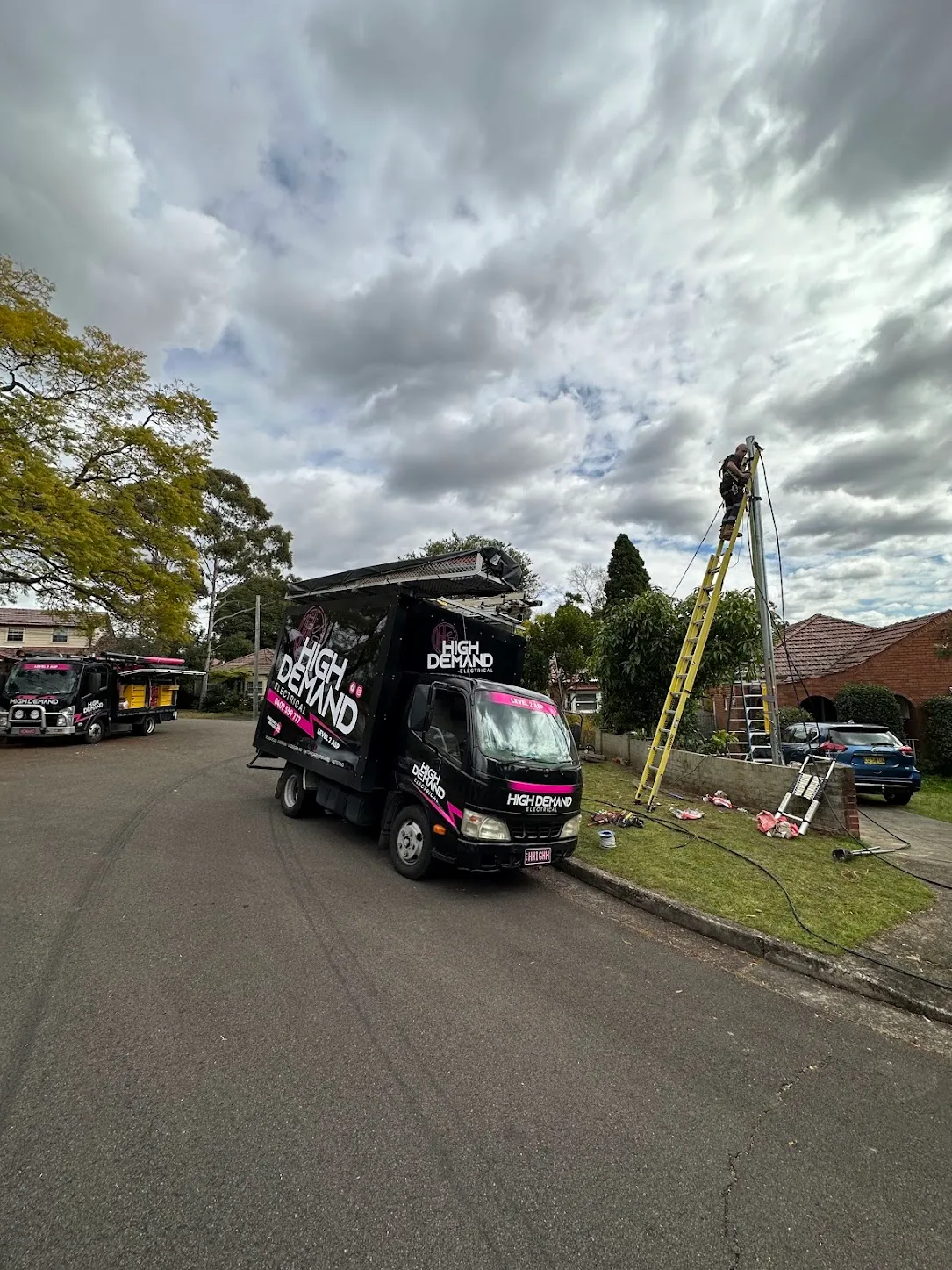
We inspect the pole, the route to the street and your plans for the property, then quote both replacement and removal so you can compare. Our Level 2 ASP team (Licence 397193C) installs private power poles, underground service mains and pole relocations across Sydney.
FAQs
Related reading
Related Services

.webp)
Powering Your Needs with Expertise
If you’re looking for a reliable, experienced, and prompt electrician, look no further than High Demand Electrical. We cater to all your electrical needs, from routine maintenance to emergency repairs and complete system installations. Our skilled team is committed to providing professional service that ensures your electrical systems run smoothly. Whether it's a small task or a large project, give us a call today. Let us meet all your electrical demands with the quality and reliability you deserve.