
What Is Involved in Converting Overhead Power to Underground? A Step-by-Step Checklist
Converting overhead power to underground involves seven stages: site assessment, network application, route and trench planning, trenching or boring, installing conduit and new consumer mains, a short planned outage to cut over at the pole or pit, and final certification. Most homes are without power for only a few hours on cut-over day; the civil work before it can take a day or several, depending on distance and ground.
Here is what happens at each step, who is responsible, and what you need to prepare.
Table of Contents
- Step 1: What happens at the site assessment?
- Step 2: What network approvals are needed?
- Step 3: How is the cable route planned?
- Step 4: Trenching or boring: which method is used?
- Step 5: What gets installed?
- Step 6: What happens on cut-over day?
- Step 7: What paperwork do I receive?
- How High Demand Electrical manages the whole conversion
- FAQs
Step 1: What happens at the site assessment?
A Level 2 electrician inspects the network pole or pit, your meter box, the proposed cable route and ground conditions. They confirm whether the network asset can accept an underground connection, estimate the cable size needed for your current and future load, and check for obstacles such as rock, tree roots, driveways, pools and existing services.
- Have any plans for extensions, EV chargers or solar ready, because they affect cable size.
- Point out known pipes, irrigation and gas lines.
Step 2: What network approvals are needed?
Your electrician lodges a connection or alteration application with the distributor (Ausgrid, Endeavour Energy or Essential Energy). If the job involves work on the network pole itself, such as fitting an underground-to-overhead riser, a Level 3 design may be required. Before anyone digs, a Before You Dig Australia (BYDA) enquiry is made to locate underground services.
Step 3: How is the cable route planned?
The route is usually the shortest practical path from the network connection point to the meter box. It needs to avoid other services, stay clear of future building footprints and meet AS/NZS 3000 depth and protection requirements for the wiring system used. Where the route crosses a driveway or paving, under-boring can avoid cutting the surface.
Step 4: Trenching or boring: which method is used?
Open trenching is the most cost-effective on lawn and garden beds. Directional or under-boring is used under driveways, paths and established landscaping to limit restoration. Rock, clay and limited access all add time. Heavy-duty conduit is laid, with marker tape above it, then backfilled.
Step 5: What gets installed?
- New underground consumer mains in conduit from the connection point to the meter box.
- A protected riser up the network pole, or a connection at a pit or pillar.
- Often a new or modified meter box and main switch, particularly on older properties.
- Any upgrade to three-phase or higher capacity supply, if planned.
Step 6: What happens on cut-over day?
The electrician isolates supply, disconnects the old overhead service, terminates the new underground mains at the network connection and at your meter, tests polarity and insulation resistance, then restores power. Expect a planned outage of a few hours. Old aerial cable, brackets and, if agreed, the private pole are removed.
Step 7: What paperwork do I receive?
You should receive a CCEW for the installation work, and the electrician lodges the NOSW with the network. Keep both with your property records; buyers, insurers and future electricians will ask for them.
How High Demand Electrical manages the whole conversion
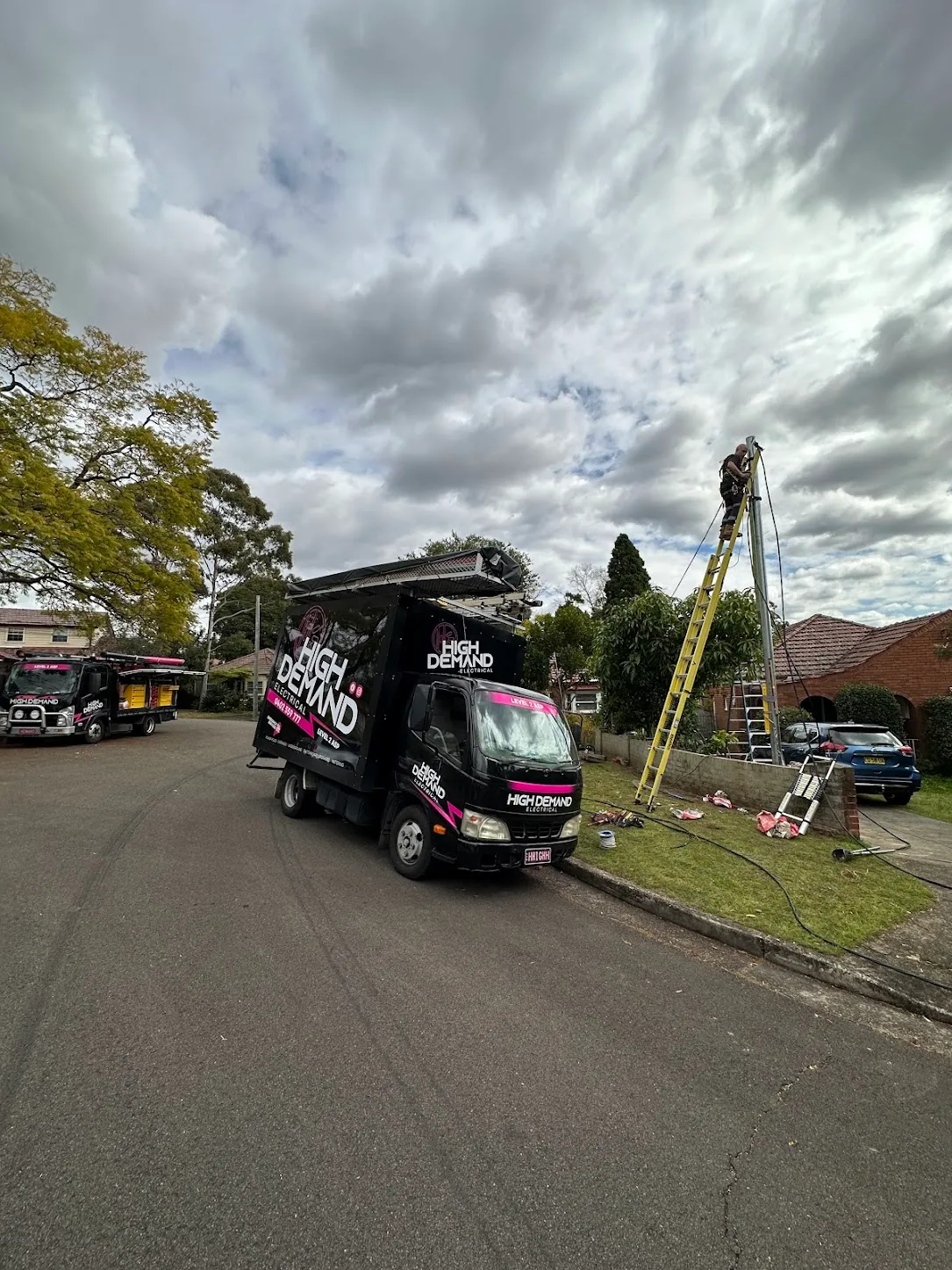
We handle every stage in-house: assessment, network application, civil works coordination, underground service mains, cut-over and certification. As an ASP Level 2 contractor (Licence 397193C) we can also remove a failing private power pole in the same job. Learn more about our overhead to underground power conversion service.
FAQs
Related reading
Related Services


Powering Your Needs with Expertise
If you’re looking for a reliable, experienced, and prompt electrician, look no further than High Demand Electrical. We cater to all your electrical needs, from routine maintenance to emergency repairs and complete system installations. Our skilled team is committed to providing professional service that ensures your electrical systems run smoothly. Whether it's a small task or a large project, give us a call today. Let us meet all your electrical demands with the quality and reliability you deserve.

