NSW Underground Power Trenching: Why Hire a Level 2 ASP
Underground power trenching in NSW must be carried out or supervised by an accredited Level 2 Authorised Service Provider (ASP), because consumer mains work and connections to the network are authorised electrical work under distributor rules. Expect distributor-specific trench depth and cover requirements, mandatory utility locates with potholing, and a Safe Work Method Statement before any excavation starts. Level 2 and underground service mains work are performed across Sydney with options for free site inspections to scope the job properly.
TL;DR:
- Trench depth requirements vary from 600 to 1,200 millimeters depending on the distributor, making site-specific confirmation essential before digging.
- Excavation must be preceded by thorough asset locating, potholing with non-destructive methods, and a Safe Work Method Statement for trenches over 1.5 meters deep.
- Open trenching is mainly suitable for residential or low-traffic sites, while trenchless techniques like directional drilling are better for road crossings and congested areas.
- Costs include separate quotes for civil work, conduit, jointing, and connection fees, with trenchless methods often reducing overall reinstatement expenses on urban streets.
- Only accredited Level 2 ASPs can handle live network connections and disconnections in NSW, making their involvement vital for a compliant and successful installation.
Table of Contents
- What the job covers: services, site types and who does each task
- Regulatory and technical requirements you must meet in NSW
- Site safety and pre-works: locating assets, potholing and SWMS
- Trenching methods and practical details
- Approvals, coordination and fees: what to budget for
- Why choose a Level 2 ASP for underground trenching
- Soil types and ground conditions across Sydney
- Weather and seasonal timing for trenching work
- Environmental rules and heritage considerations in NSW
- Inspection and testing once the trench is closed
- Equipment used for underground trenching in NSW
- Managing risk and common hazards on site
- Practical tips for property owners planning a trench
- High Demand Electrical: local Level 2 trenching, inspections and installations
- Sources
- FAQ
What the job covers: services, site types and who does each task
Underground power trenching is rarely one task. It usually combines civil excavation, conduit and pit installation, cable laying, jointing, and coordination with the local network distributor, and different parts of the job sit with different parties.
The customer (or their electrician) is generally responsible for the consumer mains, which run from the property boundary to the switchboard. The network distributor, either Endeavour Energy or Ausgrid depending on the suburb, owns and controls the network mains and the point of connection. A Level 2 ASP is the only party authorised to connect, alter or disconnect the consumer’s side of that boundary, which is why most residential and commercial trenching jobs need one involved from the start.
Site types vary widely across Sydney:
- A single residential property upgrading from overhead to underground service mains typically needs a shorter trench run and one connection point.
- A new subdivision needs longer trench runs, multiple pits, and design coordination with the distributor before civil work begins.
- Industrial and commercial sites often need higher-capacity conduits and additional switchboard upgrades to match new supply capacity.
- Road or rail crossings usually shift the method from open trenching to trenchless techniques to avoid closing traffic lanes.
Contractors typically quote separately for civil trenching and reinstatement, conduit and pit supply and installation, cable jointing and testing, and distributor liaison and connection fees. Knowing which of these quote actually covers, avoids surprises once the trench is open.
Regulatory and technical requirements you must meet in NSW
Underground power trenching in Sydney sits under a layered set of rules: the distributor’s own technical standards, national wiring standards, and SafeWork NSW’s excavation and electric line codes. None of these are optional, and missing one usually means reopening a trench later.
- Distributor technical standards set the physical rules: Endeavour Energy’s MCI 0006 construction standards manual specifies trench profiles, bedding with washed sand, and minimum cover depths, with typical allocations of 600 to 1,200 millimetres and a common 750 millimetre cover for private cabling in some contexts.
- Ausgrid’s own network standards, including NS159 for trenchless installations, set different minimum bore depths and require mandrelling and grout records for directional drilling work.
- AS/NZS 3000 governs the wiring rules that apply once cable reaches the switchboard, and it works alongside, not instead of, the distributor’s own connection and conduit requirements.
- A property near a boundary between distributor areas should never assume the neighbouring suburb’s rules apply.
Trench depth is not a single national figure. Endeavour Energy’s construction standards specify minimum cover in the 600 to 1,200 millimetre range, depending on the cabling and context, which is why confirming the distributor area before digging matters more than following a generic rule of thumb.
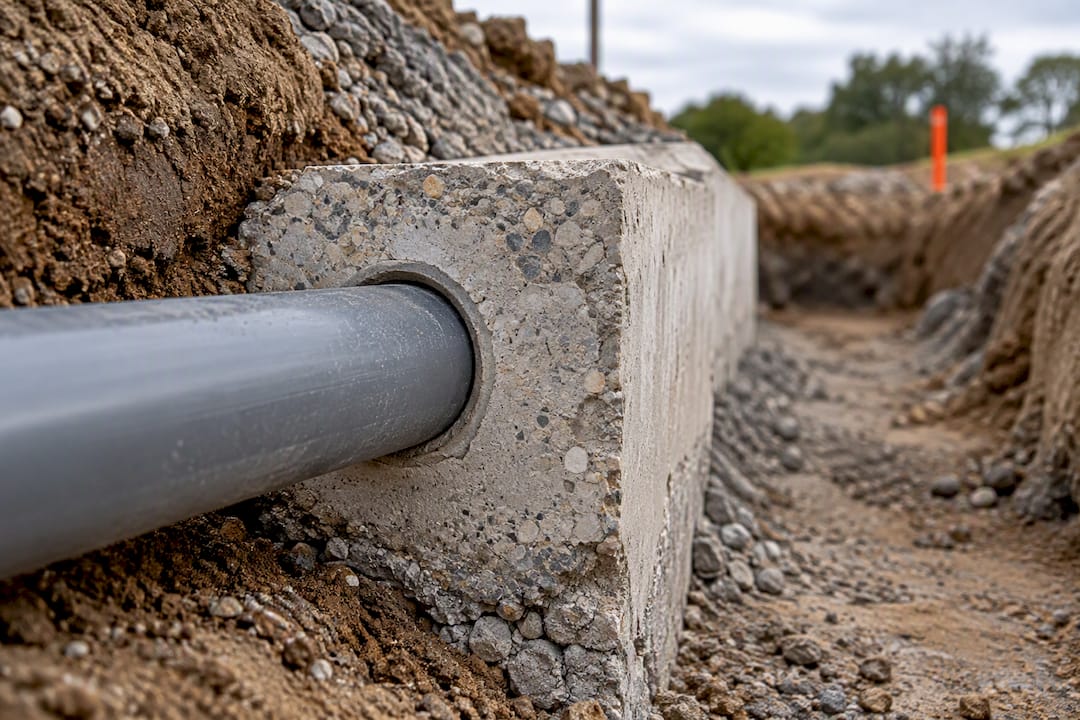
Where the required cover cannot be achieved, for example near shallow services or rock, distributors may accept concrete encasement as an alternative, but only with prior approval and design sign-off, which usually adds cost and time to the schedule.
Site safety and pre-works: locating assets, potholing and SWMS
No trenching job in NSW should start with a shovel or an excavator bucket before the ground has been mapped and checked. SafeWork NSW’s excavation work code of practice requires a Safe Work Method Statement for any excavation deeper than 1.5 metres, and treats work near underground electric lines as high-risk construction work.
- Lodge a Dial Before You Dig request and contact each listed asset owner directly, since plans record approximate locations only.
- Pothole at regular intervals along the planned trench line using non-destructive excavation, because SafeWork NSW notes that undocumented or historic works often sit where maps show nothing.
- Prepare the SWMS covering approach distances, isolation procedures and the controls needed if a live cable is found closer to the surface than expected.
Pro Tip: Keep a printed copy of the Dial Before You Dig response and the SWMS on site, since inspectors and distributor crews will often ask for both before work proceeds.
Trenching methods and practical details
Most Sydney jobs use open trenching, but not every site allows it. Choosing the right method up front saves reinstatement costs and avoids delays later in the job.
- Open trenching suits residential yards, new subdivisions and any area without heavy existing services, since it is faster and cheaper per metre than trenchless alternatives.
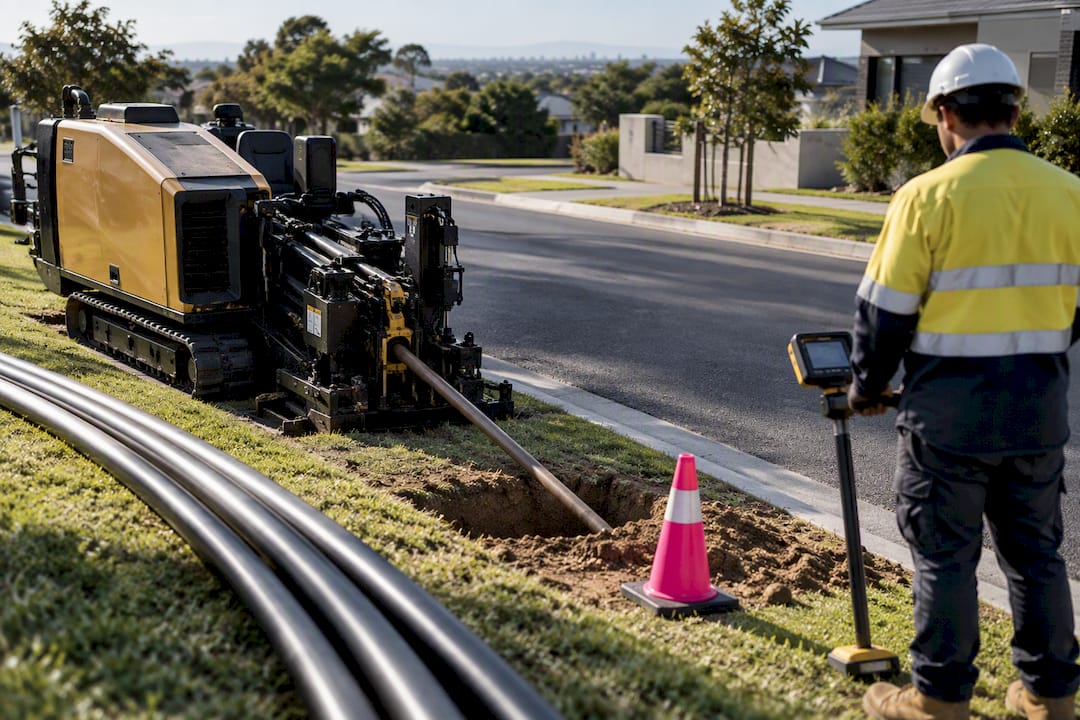
- Horizontal directional drilling is the usual choice for road crossings, footpaths and sites crowded with other utilities, because it avoids trenching through the public domain.
- Bedding typically uses washed sand around the conduit, with concrete encasement reserved for shallow cover situations or crossings under driveways and structural slabs.
- Marker tape sits above the conduit line as a warning layer for anyone digging later, and joint bays are formed at cable connection points to allow safe access.
- Trenches deeper than 1.5 metres need shoring or benching under SafeWork NSW rules, which changes both the equipment and the time needed on site.
Ausgrid’s NS159 standard for trenchless techniques requires potholing before boring and grout and mandrel records afterwards, so trenchless work carries its own paperwork even though it disturbs less ground.
Approvals, coordination and fees: what to budget for
Underground power trenching involves more than the excavation contract. Distributor connection applications, council approvals for road openings, and traffic control arrangements each add time and cost that property owners should plan for early.
- A distributor connection application is required whenever the job changes the point of supply or the capacity of an existing connection.
- Councils or Transport for NSW approvals apply where the trench crosses a footpath, verge or road, and traffic control costs scale with how long the crossing stays open.
- The main cost drivers are trench length, whether the crossing method is open trench or directional drilling, reinstatement of paving or turf, conduit and pit supply, cable jointing and testing, and the distributor’s own connection fee.
Trenchless installation typically costs more per metre than open trenching, but Ausgrid’s technical standards note that it substantially cuts reinstatement and traffic management costs on busy streets, which often makes it the cheaper overall option for short urban crossings.
A typical residential timeline runs from site inspection and quoting, through Dial Before You Dig locates and potholing, then civil trenching, cable installation and jointing, and finishes with distributor inspection before energisation. Subdivision and commercial jobs add design approval stages that extend this timeline well beyond a single residential connection.
Why choose a Level 2 ASP for underground trenching
Consumer mains work, service connections and disconnections are restricted to accredited Level 2 ASPs because they involve live network infrastructure that ordinary electrical licences do not cover. Choosing an unaccredited contractor for this work risks a failed connection, a defect notice, or a job the distributor refuses to energise.
High Demand Electrical is a certified Level 2 electrical contractor operating across Sydney, with accredited electricians available for underground service mains installation and connected work such as power supply upgrades. The company offers a free site inspection for Level 2 work, which typically covers a walk of the proposed trench route, confirmation of the distributor area and its specific requirements, and a written quote outlining the recommended trenching method.
Soil types and ground conditions across Sydney
Sydney sits across sandstone, shale and clay soils that behave very differently once a trench opens, and the right approach depends on which one a property sits on. Sandstone country, common through the Inner West and northern suburbs, often needs rock breaking or hydraulic hammering, which slows progress and can push a job toward trenchless methods to avoid extensive rock excavation.
Clay soils, found through much of western Sydney, hold water and swell after rain, which affects trench stability and can require additional shoring even at moderate depths. Sandy soils near coastal and estuarine areas tend to collapse more easily without support, so benching or shoring is applied earlier than the standard 1.5 metre trigger in the SafeWork NSW excavation code.
Reactive clay sites, common on the Cumberland Plain, sometimes need engineered bedding rather than a standard sand surround, since ground movement over time can shift a conduit that was correctly bedded at installation. A pre-excavation soil assessment is worth arranging on any site where the ground type is uncertain, since it changes both the trenching method and the equipment a crew brings to site.
Weather and seasonal timing for trenching work
Sydney’s wet season, typically running through summer and into early autumn, is the main weather risk for open trenching. Heavy rain can flood an open trench overnight, undermine trench walls, and force a delay until the ground dries enough to backfill safely.
Waterlogged clay is particularly unstable, and a trench left open in saturated ground is more likely to need reshoring before work resumes. Winter presents the opposite problem in parts of western Sydney, where cooler, drier conditions make excavation easier but can harden clay soils enough to slow digging speed.
Scheduling trenching work for drier months, or building weather contingency into the timeline during summer, reduces the chance of a half-finished trench sitting open for days. A contractor familiar with local conditions will usually factor this into the quoted timeline rather than treating weather delays as an afterthought.
Environmental rules and heritage considerations in NSW
Underground trenching can intersect with environmental and heritage protections, particularly on older Sydney properties, near waterways, or in areas with recorded Aboriginal cultural heritage. Any excavation near a registered heritage item or an area with known Aboriginal objects may need a heritage due diligence check before work starts, since disturbing an unrecorded site carries legal consequences under NSW heritage legislation.
Trenching near trees protected under a council’s tree preservation order can also trigger approval requirements, since root damage from excavation is treated the same as removal in some council areas. Erosion and sediment control measures matter on sites near stormwater drains or waterways, since an open trench can direct runoff into the stormwater system during rain.
None of these checks are usually a barrier to the work, but skipping them can halt a job midway if a council or Heritage NSW notice arrives after excavation has started. A short desktop check against council heritage mapping before quoting saves that risk.
Inspection and testing once the trench is closed
A completed underground installation is not finished until it passes inspection and testing, both to confirm safety and to satisfy the distributor before energisation. The Level 2 ASP tests cable insulation resistance, confirms correct polarity and continuity, and checks that jointing meets the distributor’s technical standard before backfilling is signed off.
Endeavour Energy and Ausgrid each require as-built records confirming trench depth, bedding material and conduit position, which is why potholing and depth checks during the job matter as much as the final test. For trenchless installations, Ausgrid’s NS159 standard specifically requires grout and mandrel records to confirm the bore was completed correctly before the conduit is accepted.
Once testing is complete, the distributor conducts its own inspection before approving energisation, and any defect identified at this stage needs rectification before the connection proceeds. Booking this inspection early in the job, rather than as an afterthought, keeps the project on schedule.
Equipment used for underground trenching in NSW
The equipment on a trenching site depends heavily on ground conditions and the chosen method. Mini excavators and trenchers handle most standard residential trenching, while sandstone sites often need a rock hammer attachment or a rock saw to break through without excessive vibration to nearby structures.
Horizontal directional drilling rigs bore beneath roads and footpaths without opening a trench, guided by locating equipment that tracks the bore head in real time. Non-destructive excavation units, using compressed air or water with a vacuum system, are the standard tool for potholing, since they expose buried services without the risk a mechanical excavator carries.
Ground-penetrating radar and electromagnetic locators supplement Dial Before You Dig records on sites with dense existing infrastructure, giving crews a clearer picture before any digging starts. Compaction equipment, from hand tampers to plate compactors, finishes the job by restoring the trench to the density needed for driveways, paths or turf areas.
Managing risk and common hazards on site
The two biggest hazards on any underground trenching site are striking a live service and trench collapse, and NSW rules are built around controlling both. SafeWork NSW’s code on work near electric lines sets approach distances that must be maintained until a cable’s exact position is confirmed by potholing, since a struck underground cable can cause serious injury even without direct contact.
Trench collapse is the other major risk, particularly in the sandy and reactive clay soils common across Sydney, which is why SafeWork NSW mandates shoring or benching for excavations beyond 1.5 metres. Other common hazards include underground gas and water services running close to power conduits, unstable ground after rain, and public access to an open trench in residential streets.
A documented risk assessment, current SWMS, and clear site fencing or covers around any open trench address most of these hazards before they become incidents. Crews experienced with Sydney’s mixed soil conditions generally treat potholing as a safety control rather than a formality, which is the difference between a smooth job and a costly delay.
Practical tips for property owners planning a trench
Prefer trenchless methods for footpath or road crossings to cut disruption. Prepare clear site access before the crew arrives to speed up civil works. Ask any quote who arranges distributor approval, who does the potholing, and what reinstatement is included.
— Christopher
High Demand Electrical: local Level 2 trenching, inspections and installations

Underground power trenching in Sydney gets simpler once one accredited contractor manages the trenching, the distributor liaison and the connection under a single quote, instead of juggling a civil contractor and a separate electrician. High Demand Electrical handles Level 2 electrical work and underground service mains installation for residential and commercial properties across Sydney.
- Book a free site inspection to get a written quote covering the trenching method, distributor contacts and expected timeline.
- Pair trenching work with a power supply upgrade or switchboard upgrade if the connection is changing capacity.
- Reach the team directly through the High Demand Electrical home page to arrange a site visit and quote.
Sources
- Excavation work code of practice (SafeWork NSW)
- NS159 — Installation of Cables and Conduits using Trenchless Techniques (Ausgrid)
FAQ
What is the minimum underground depth required for power cables in Australia?
Minimum depth depends on the network distributor, not a single national figure. Endeavour Energy’s construction standards specify cover typically ranging from 600 to 1,200 millimetres, so always confirm the requirement for the specific distributor area before digging.
How deep should an electrical trench be?
The required depth follows the relevant distributor’s technical standard for the cable and location involved, rather than a fixed universal number. Where a distributor’s minimum cover cannot be met, concrete encasement may be accepted as an alternative with prior approval.
What is the minimum distance you should keep away from power lines in NSW?
SafeWork NSW’s code of practice on electric lines sets approach distances that must be maintained near overhead and underground lines until exact positions are confirmed. Excavation near an underground cable should not proceed with powered equipment until potholing has verified its exact location.
How much does it cost to install underground power lines in a house?
Costs vary by trench length, ground conditions, the trenching method used and the distributor’s own connection fees, so there is no single published figure that applies to every property. A free site inspection from a Level 2 electrician gives an accurate quote based on the specific site.
Recommended
Powering Your Needs with Expertise
If you’re looking for a reliable, experienced, and prompt electrician, look no further than High Demand Electrical. We cater to all your electrical needs, from routine maintenance to emergency repairs and complete system installations. Our skilled team is committed to providing professional service that ensures your electrical systems run smoothly. Whether it's a small task or a large project, give us a call today. Let us meet all your electrical demands with the quality and reliability you deserve.