
Does a Commercial Property Need a Larger Three-Phase Supply? How to Tell
A commercial property needs a larger three-phase supply when its maximum demand is close to, or will exceed, the rating of the existing supply, consumer mains or main switch. The only reliable way to know is to measure demand with power logging and compare it against the supply rating, rather than guessing from the size of the bill.
This guide explains the warning signs, how capacity is assessed, and what an upgrade involves for Sydney businesses.
Table of Contents
- What are the signs your business has outgrown its supply?
- How is supply capacity assessed?
- Is the problem capacity, or something else?
- What does a larger three-phase supply involve?
- How long does a commercial supply upgrade take?
- How High Demand Electrical helps commercial clients
- FAQs
What are the signs your business has outgrown its supply?
- The main switch or a large circuit breaker trips during peak trading or production.
- Lights dim or equipment resets when compressors, ovens, welders or lifts start.
- One phase runs much hotter or higher than the others.
- Switchboard enclosures, busbars or cable terminations feel warm or show discolouration.
- You are adding EV chargers, commercial kitchen equipment, HVAC or machinery.
- An electrician has told you a new load cannot be connected without an upgrade.
How is supply capacity assessed?
AS/NZS 3000 allows maximum demand to be determined by calculation, assessment, measurement or limitation. For an existing commercial site, measurement through power logging is the most accurate: a logger on the main supply records current, voltage and power factor per phase, capturing peaks that a spot reading misses. The result is compared with the rating of the network connection, consumer mains and main switch. Our free maximum demand calculator gives a first estimate for planned loads.
Is the problem capacity, or something else?
Not every trip means you need a bigger supply. Phase imbalance, a poor power factor, undersized sub-mains or a single overloaded circuit can all look like a capacity problem. Rebalancing loads across phases, correcting power factor or upgrading one sub-board is sometimes enough, and far cheaper than a new supply. Logging shows which one you are dealing with.
What does a larger three-phase supply involve?
- Power logging and a load schedule for current and planned equipment.
- An application to the distributor for increased capacity. Supplies above standard ratings, commonly over 100A per phase, need network assessment and may need a Level 3 design or a substation or kiosk upgrade.
- New consumer mains sized for the new demand.
- A main switchboard upgrade, often with CT metering for larger supplies.
- Connection by a Level 2 ASP, testing, NOSW and CCEW.
How long does a commercial supply upgrade take?
Straightforward upgrades within the existing network capacity can be completed in weeks. Where the network needs to augment a transformer or install a kiosk, lead times can run to months, so start logging and applying early, well before fit-out deadlines.
How High Demand Electrical helps commercial clients
We log demand, interpret the data and give you a clear recommendation, whether that is load balancing or a full commercial power supply upgrade. Our Level 2 ASP team (Licence 397193C) manages the network application, new mains, switchboard works and connection, and coordinates with your fit-out program.
FAQs
Related reading
Related Services
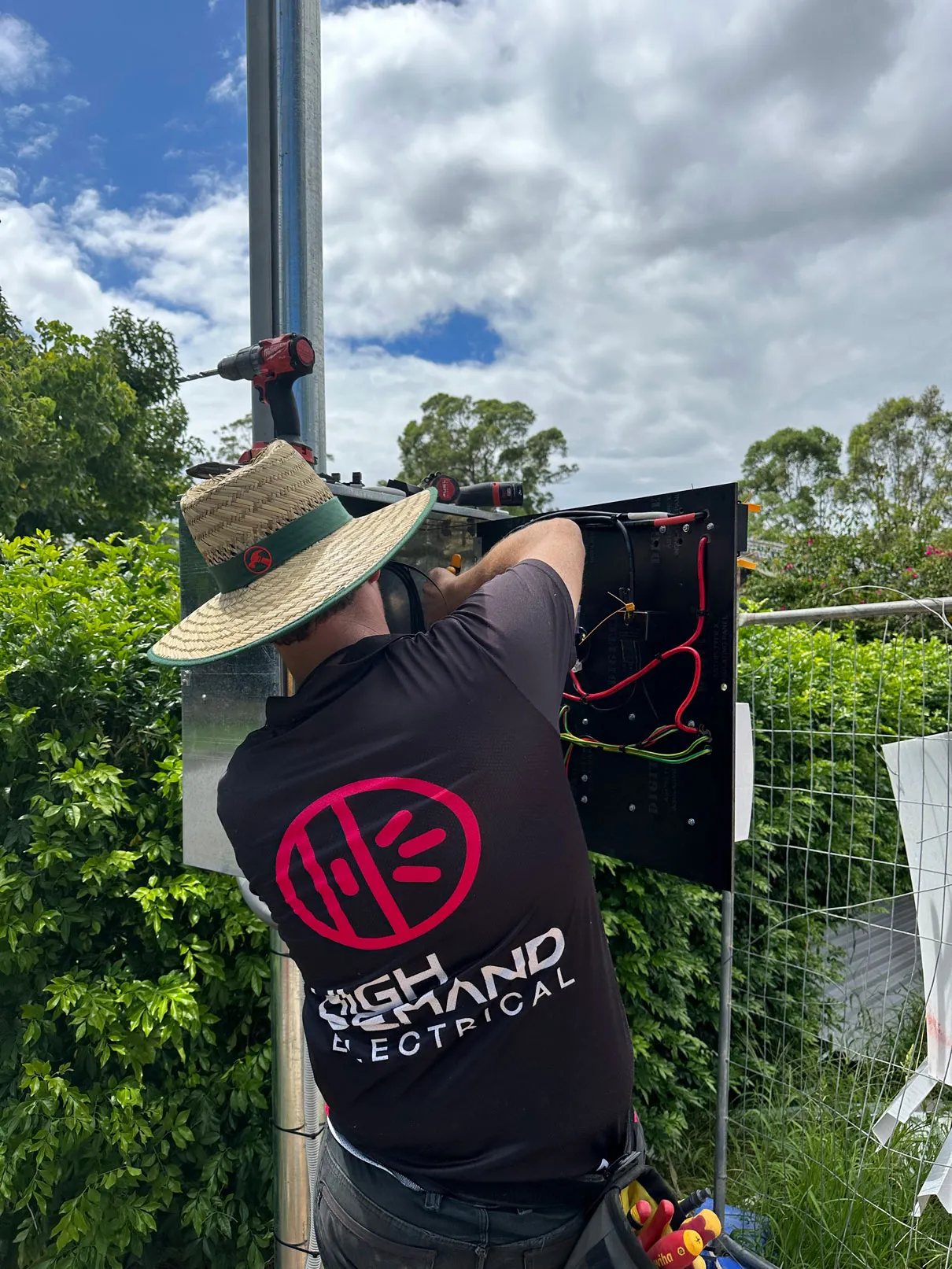


Powering Your Needs with Expertise
If you’re looking for a reliable, experienced, and prompt electrician, look no further than High Demand Electrical. We cater to all your electrical needs, from routine maintenance to emergency repairs and complete system installations. Our skilled team is committed to providing professional service that ensures your electrical systems run smoothly. Whether it's a small task or a large project, give us a call today. Let us meet all your electrical demands with the quality and reliability you deserve.

