400A Three Phase Supply in Sydney: The Full Upgrade Process
400A three phase is a serious connection — the territory of larger strata and apartment buildings, commercial office fitouts, retail and hospitality sites, and light industrial premises. At this size, the network is not just approving a bigger switchboard; it's assessing whether the local transformer and street mains can support the load at all, and it's common for a 400A application to trigger network augmentation works before a connection can be finalised.
Why 400A is a different scale of project
Every NSW network — Ausgrid, Endeavour Energy and Essential Energy — requires formal design approval for any switchboard above 100A per phase, so a 400A connection was always going into full technical review. What changes at 400A is the likelihood that the existing local infrastructure simply wasn't built to supply it. A residential street transformer sized for houses and small units may not have headroom for a 400A commercial or apartment connection, which means the capacity check in the street can turn into a genuine network upgrade — new transformer capacity, additional street mains, or a dedicated supply arrangement — well before your switchboard design is even considered.
Step 1: Maximum demand calculation or power log
At 400A, the network will want a properly substantiated demand figure, not a rough estimate. For new developments, a Level 3 ASP designer runs the full AS/NZS 3000 Appendix C calculation across all tenancies or areas of the building. For an existing site being upgraded — adding EV charging to a strata car park, electrifying a commercial kitchen, or adding HVAC capacity — power logging across multiple weeks gives real per-phase data, which at this scale can be the difference between a straightforward switchboard upgrade and a six-figure network augmentation.
Step 2: Capacity check in the street
This is the step that most often reshapes a 400A project. The network models the local transformer loading and street mains capacity against your proposed demand. If there isn't headroom, you're looking at one of: augmentation works funded partly or fully by the applicant, a smaller connection with load management, or in some cases a dedicated substation or high-voltage connection instead of a low-voltage one. This needs to be resolved early — ideally before a building's electrical design is locked in — because it affects both budget and program.
Step 3: Application to the network
The formal connection application is lodged with whichever distributor serves the site, with the maximum demand figure, proposed load, and site and building details. At 400A this is invariably managed by a Level 2 ASP electrician working alongside a Level 3 ASP designer, given the volume of technical documentation involved.
Step 4: Switchboard design
The main switchboard is designed to the relevant network standard — Ausgrid's NS114, Endeavour's requirements under the Service and Installation Rules, or Essential Energy's AS/NZS 61439 — covering busbar and breaker ratings, protection coordination, metering arrangement (including CT metering, standard at this size), and physical layout. The applicable compliance statement is prepared alongside the design pack.
Step 5: Switchboard design approval
The network reviews the full design pack before manufacture. At 400A, protection coordination studies and fault level calculations get closer scrutiny than at smaller sizes, and incomplete submissions are the most common cause of delay — a rejected design pack at this scale can add a month or more to a project.
Step 6: Installation
Once approved, the switchboard is manufactured and installed along with consumer mains, CT metering, and any network-side works — including augmentation if that was required — carried out by a Level 1 ASP electrician.
Step 7: Inspection
The network or its appointed inspector checks the completed installation against the approved design on site before energisation, including verifying protection settings match the approved design.
Step 8: Testing
Full testing of protection, earthing, insulation resistance, CT metering accuracy, and phase balance is carried out and documented — this is a more involved test regime than a small residential connection.
Step 9: Commissioning
The connection is energised, metering confirmed live and reporting correctly, and the site formally handed over as a compliant connection.
How long does a 400A connection take?
If the street has spare capacity and the application and switchboard design are clean, budget ten to sixteen weeks from application to commissioning. If network augmentation is required, timelines commonly extend to several months, since that work sits on the network's own construction program rather than yours — which is exactly why the capacity check needs to happen as early as possible in project planning, ideally before construction contracts are signed.
HDE manages 400A connections end to end
High Demand Electrical is Level 1, Level 2 and Level 3 ASP accredited, so we run the full pathway for a 400A three phase connection — power logging and max demand calculation, switchboard design and network approval, installation, inspection, testing and commissioning — across Ausgrid, Endeavour Energy and Essential Energy areas.
If you're scoping a 400A three phase connection for a development, commercial building or industrial site in Sydney, get in touch early — the street capacity check needs to happen before your building design is locked in, not after.
Related Services

Powering Your Needs with Expertise
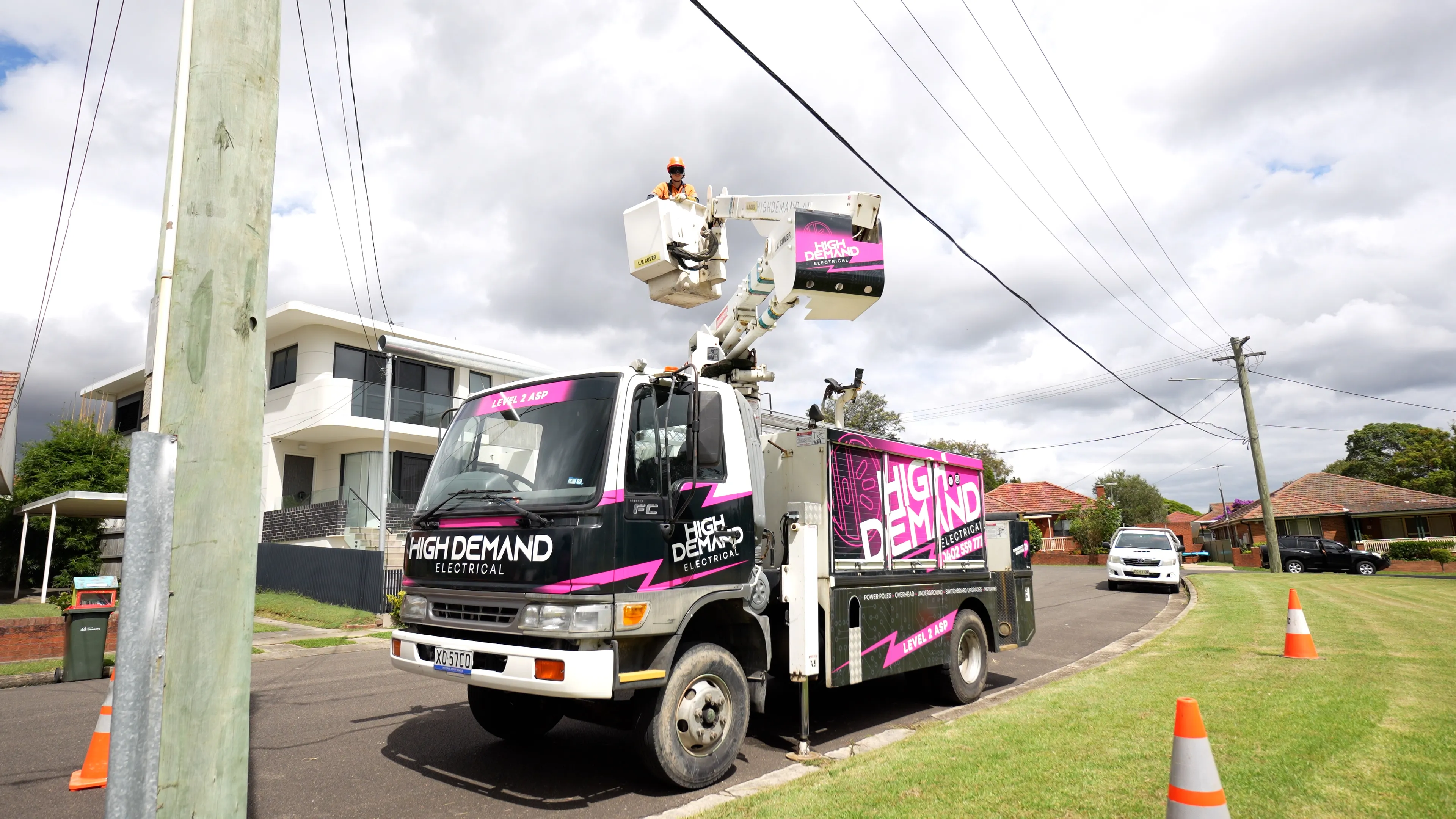
If you’re looking for a reliable, experienced, and prompt electrician, look no further than High Demand Electrical. We cater to all your electrical needs, from routine maintenance to emergency repairs and complete system installations. Our skilled team is committed to providing professional service that ensures your electrical systems run smoothly. Whether it's a small task or a large project, give us a call today. Let us meet all your electrical demands with the quality and reliability you deserve.