What Are the Electrical Requirements for a Ten Pin Bowling Alley in Sydney?
What are the electrical requirements for a ten pin bowling alley in Sydney? A bowling centre needs a switchboard built for serious continuous load, because pinsetter machinery, lane lighting, scoring systems and air conditioning all run at once across every lane, every session. Most multi lane venues need three phase power, dedicated circuits for the pinsetter line and AV equipment, and RCD protection on every final subcircuit to meet AS/NZS 3000. Because this work touches the switchboard and often the connection itself, it falls under Level 2 ASP accreditation, not a standard electrician's licence.
⚡ Quick Answers: Ten Pin Bowling Alley Electrical Requirements
- How much power does a bowling alley actually need? Enough to run every lane's pinsetter at once, plus lighting, HVAC, scoring monitors and often a bar or arcade, which is why the switchboard is usually the first thing assessed before fitout.
- Do pinsetters need their own circuits? Yes, each lane's pinsetter and ball return motor should sit on its own dedicated circuit so one lane going down never trips out the rest of the centre.
- Is three phase power required? Most multi lane venues need it, because the combined continuous load of pinsetters, lighting and climate control across six or more lanes usually exceeds what a single phase supply can carry safely.
- Do bowling alleys need safety switches (RCDs)? Yes, AS/NZS 3000 requires RCD protection on final subcircuits in non domestic installations, and a venue full of moving machinery and spilled drinks makes this protection genuinely important, not a box ticking exercise.
- Who is allowed to upgrade a bowling alley's switchboard? A Level 2 ASP, because switchboard upgrades and new three phase connections involve the consumer mains and metering, which sit outside a standard electrical licence.
- What about lighting and the scoring system? Lane lighting, black light or cosmic bowling effects, and the AV scoring screens each need their own circuit planning so a lighting fault never takes the scoring system down mid session.
1. Pinsetter machinery power
Every lane in a ten pin bowling centre runs its own pinsetter, the electromechanical unit that resets the pins and returns the ball after each frame. These machines run almost continuously through trading hours, cycling dozens of times an hour per lane, and that continuous mechanical duty cycle puts a steady draw on the switchboard rather than the brief spike of a domestic appliance.
Because pinsetters are motor driven equipment running for hours at a stretch, the circuits feeding them need to be sized for continuous load, not just peak load. An electrician assessing a bowling centre fitout works out the full connected load of the pinsetter line first, because that figure drives almost every other decision about switchboard capacity and supply type.
2. Switchboard capacity for a multi lane venue
A six lane centre and a twenty four lane centre have very different switchboard needs, and getting this wrong at the design stage is expensive to fix later. The standard approach uses the maximum demand calculation method set out in AS/NZS 3000, which adds up the connected load of pinsetters, lighting, HVAC, kitchen or bar equipment and AV systems, then applies the diversity factors that reflect how much of that load actually runs at the same time.
For most multi lane venues, that calculation points to a power supply upgrade and a single phase to three phase upgrade, since a single phase supply rarely has the headroom once pinsetters, scoring systems and air conditioning are all added together. The switchboard itself also needs enough physical space and circuit breaker capacity for every dedicated circuit the venue will run, with room to spare for future lanes, an arcade expansion or added AV equipment.
Converting an existing building, such as an old warehouse or retail shell, into a bowling centre often means the original switchboard was never designed for this kind of continuous commercial load. A proper electrical safety inspection early in the fitout process flags whether the existing board can be adapted or needs a full upgrade before fitout trades even arrive on site, a point covered in more depth in our guide to what changes with a three phase upgrade.
3. Dedicated circuits for pinsetters, ball returns and AV
Dedicated circuits mean each major piece of equipment, or each small group of equipment, has its own circuit back to the switchboard rather than sharing a circuit with unrelated loads. In a bowling centre this matters for two reasons. First, a fault on one lane's pinsetter should never be able to trip circuits serving other lanes or the scoring system, because that turns a single equipment fault into a venue wide outage during trading hours. Second, pinsetters and ball return motors draw differently to lighting or data equipment, and mixing them on shared circuits makes nuisance tripping far more likely.
A well planned layout typically groups circuits by function rather than by physical location alone: pinsetter power, lane and approach lighting, scoring and AV systems, and general power for the bar, arcade or kitchen each get their own circuit runs. This is similar to the circuit planning behind other high use entertainment venues, which we cover in our guide to indoor trampoline park and climbing gym electrical requirements. It is one of the clearest differences between a bowling centre fitout done properly and one that gets bolted together lane by lane as the venue grows, which is where nuisance trips and overloaded circuits usually start showing up a year or two later.
4. RCD (safety switch) protection
AS/NZS 3000 requires RCD protection on final subcircuits in non domestic installations, and a bowling centre is about as good a case for taking this seriously as any commercial venue gets. Lanes get oiled regularly, drinks get spilled near the approach and scoring terminals, and dozens of patrons are moving around powered equipment every session. A properly configured bank of safety switches, matched to the actual circuit groupings rather than one blanket RCD covering everything, protects patrons and staff without taking out unrelated circuits every time one lane trips.
This is also where a lot of older or converted venues fall short. A building that previously operated as a warehouse or retail space may have RCD coverage that was adequate for its old use but was never updated for a venue running pinsetters, AV racks and commercial kitchen equipment. A safety switch installation review as part of any bowling centre fitout or refurbishment closes that gap before the venue opens to the public, not after an incident flags it.
5. Lighting loads across lanes, approach and venue
Lighting in a bowling centre is rarely a single circuit. Lane and approach lighting needs to meet visibility standards for safe play, while many venues also run black light or cosmic bowling effects for evening sessions, plus general ambient lighting for the concourse, bar and arcade areas. Each of these lighting types has a different duty cycle and a different failure impact, so they are usually split across separate circuits rather than daisy chained together.
Cosmic or glow lighting setups in particular tend to be added after the original fitout, often by an AV or effects contractor rather than the original electrician, which is a common source of overloaded circuits and compliance gaps in bowling venues. Any lighting addition, including LED upgrades or new effects lighting, should be assessed against the switchboard's actual spare capacity rather than assumed to simply slot in.
6. AV and scoring system loads
Modern scoring systems are effectively a small computer network, with a monitor above every lane, a control terminal at the front desk, and often a backend server or rack running the whole system. These loads are relatively small individually but add up across a full bank of lanes, and they are sensitive to power quality in a way that pinsetter motors are not. Voltage dips or switching noise from heavy motor loads sharing a circuit with sensitive AV equipment can cause scoring glitches or lockups that have nothing to do with the software itself.
Separating AV and scoring circuits from pinsetter and motor circuits, and adding surge protection at the switchboard, protects this equipment from the voltage spikes that storms, grid switching events or even the venue's own heavy machinery can produce. For a venue that may be running a dozen or more scoring terminals plus a sound and lighting control system, this is not an optional extra, it is the difference between a scoring system that just works and one that needs a technician call out every few weeks, a challenge shared by venues covered in our guide to esports lounge and gaming cafe electrical requirements.
7. Backup power and resilience considerations
A bowling centre losing power mid session is more than an inconvenience, it is a venue full of patrons in the dark near moving machinery. While not every venue needs a full generator, it is worth planning emergency lighting circuits and, for larger centres, a backup supply for life safety systems and critical scoring infrastructure separately from the main pinsetter load. This is a conversation worth having at the switchboard design stage rather than retrofitting it once the venue is already trading.
Storm damage and sudden outages are a real risk for any Sydney venue, and a bowling centre's reliance on continuously running equipment makes a fast response matter more than usual. Knowing in advance who to call for emergency make safe work or electrical storm damage repairs, rather than finding out during an outage, is a simple step every venue operator should take before opening night, not after the first storm season.
Why it's Level 2 ASP work
Switchboard upgrades, new three phase connections and any work on the consumer mains, service mains or metering sit outside a standard electrician's licence in New South Wales. This work is only carried out by a Level 2 ASP, accredited to work on the network side of the meter under the rules set out in SIRNSW, the Service and Installation Rules of NSW. For a bowling centre fitout, that covers the switchboard upgrade itself, any new consumer mains installation, and the three phase connection that most multi lane venues end up needing.
This distinction matters practically, not just on paper. A standard electrician can wire the internal circuits, the lighting and the power points throughout the venue, but the moment the job touches the supply coming into the building, it needs a Level 2 electrician on site. Planning the whole fitout around this from day one avoids the common problem of a venue getting most of its electrical work done, then discovering partway through that the switchboard upgrade needs a different trade and a separate approval process entirely.
How High Demand Electrical helps
High Demand Electrical is one of Sydney's most trusted Level 2 ASPs for commercial fitouts that need serious switchboard capacity, and a bowling centre is exactly the kind of continuous load venue this work is built for. We assess the full connected load across pinsetters, lighting, AV and climate control before recommending a switchboard upgrade or three phase connection, so the venue is sized for how it will actually run, not just for opening day.
We are a licensed local team, not a call centre, and we work directly with venue operators, builders and fitout managers across Sydney's West, South West and Sutherland Shire to plan dedicated circuits, RCD protection and surge protection around the equipment each venue actually installs. From the initial safety assessment of an existing building through to the final commercial electrical compliance sign off, we manage the Level 2 ASP side of the job so your fitout trades can get on with everything else.
Ten Pin Bowling Alley Electrical Requirements FAQs (Sydney)
How many circuits does a bowling centre need?
It depends on the number of lanes and the equipment installed, but as a rule each lane's pinsetter, the lighting groups, the scoring and AV system, and any bar, kitchen or arcade equipment are split across separate dedicated circuits. See switchboard upgrades for how this is typically planned.
Does converting a warehouse into a bowling alley need a full rewire?
Not always a full rewire, but almost always a switchboard assessment, since most warehouse or retail shells were never designed for continuous commercial machinery load. An electrical safety inspection early in the planning process confirms what can be reused and what needs upgrading.
Do bowling centres need three phase power?
Most multi lane venues do, once the combined load of pinsetters, lighting, HVAC and AV equipment is added up using the maximum demand method in AS/NZS 3000. A smaller single lane or boutique venue may be able to stay on single phase, but this is confirmed with a proper load assessment, not assumed either way.
What happens if the power goes out mid session?
Emergency lighting circuits should keep exit paths and safety lighting running regardless of the main supply, and larger venues often add backup power for critical systems separately from the pinsetter load. If a storm or fault has already taken out power, emergency make safe work restores safe conditions as quickly as possible.
Who do I call for a bowling alley switchboard upgrade in Sydney?
This is Level 2 ASP work, so it needs an accredited provider rather than a standard electrician alone. A site assessment is the first step for any venue planning a fitout, refurbishment or lane expansion.
If you are planning a new bowling centre fitout or upgrading an existing venue's switchboard, get a switchboard upgrade quote from High Demand Electrical. Call 0402 559 777 to talk through your venue's layout and equipment list. Every job needs a site assessment before scope or pricing can be confirmed, since every venue's lane count, equipment and existing switchboard are different.
Need Help Fast?
Related Services

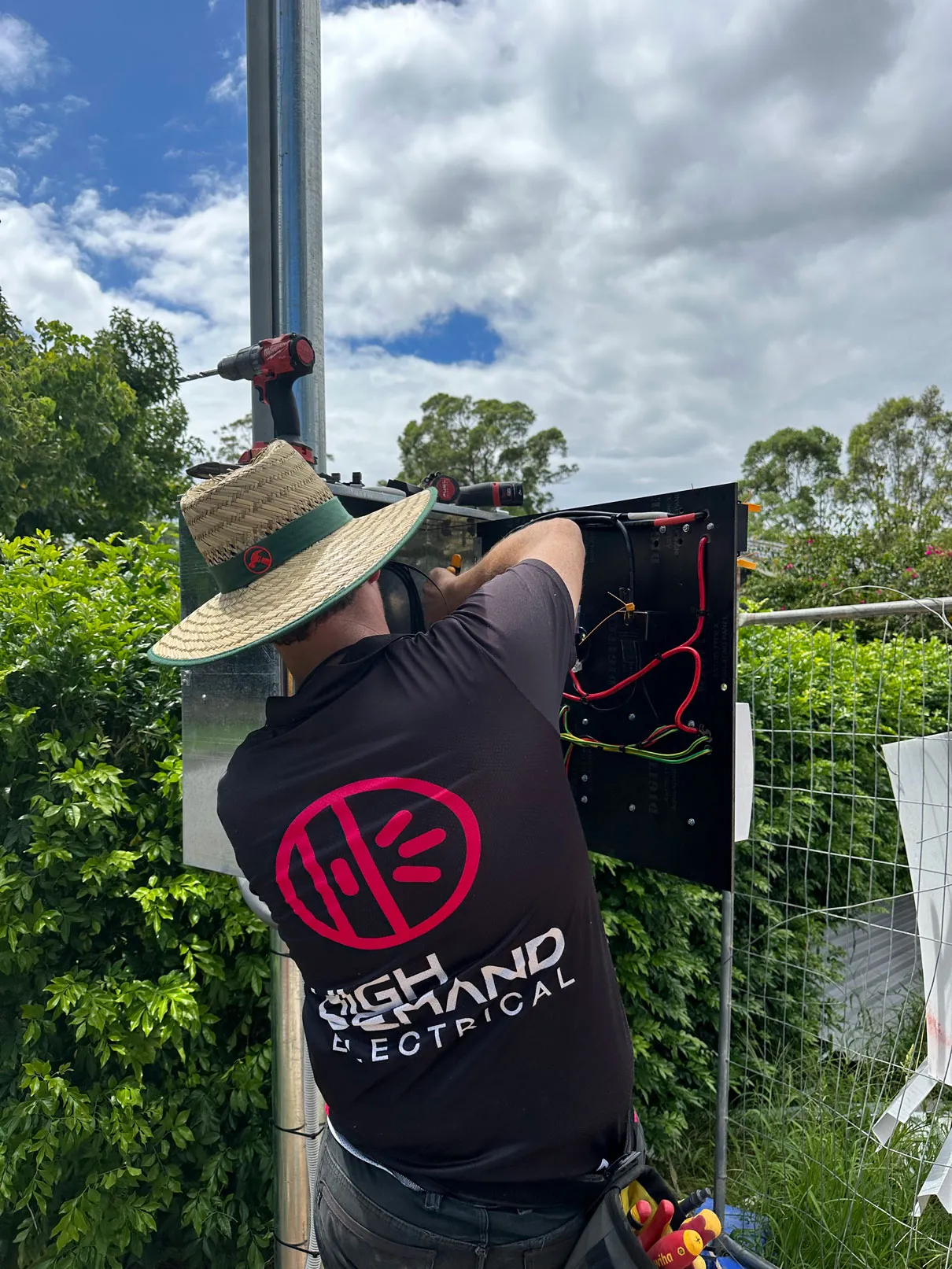

Powering Your Needs with Expertise
If you’re looking for a reliable, experienced, and prompt electrician, look no further than High Demand Electrical. We cater to all your electrical needs, from routine maintenance to emergency repairs and complete system installations. Our skilled team is committed to providing professional service that ensures your electrical systems run smoothly. Whether it's a small task or a large project, give us a call today. Let us meet all your electrical demands with the quality and reliability you deserve.

Licensed Level 2 ASP electricians across Sydney. Same-day service and 24/7 emergency response.
Licence 397193C
ABN 87 051 836 527
