
How Much Spare Capacity Does Your Home Actually Have? Maximum Demand, Explained Simply
How much spare electrical capacity does your home actually have? The answer is a figure called maximum demand: an estimate of the largest load your home is ever likely to draw at one time, measured in amps. Compare that figure with the size of your supply and you know straight away whether there is room for the EV charger, ducted aircon or heat pump you are planning, or whether a switchboard or supply upgrade has to come first.
1. What maximum demand actually means
Your home almost never runs everything at once. Maximum demand is the realistic worst case: dinner cooking, aircon running, hot water heating and the car charging at the same time on a summer evening.
Electricians assess it using the method set out in the Wiring Rules. Each category of load contributes a weighted amount rather than its full nameplate rating, because standards assume normal households do not run every single circuit flat out simultaneously. The result is the figure your consumer mains, main switch and switchboard must be sized to carry.
If you want the full working, our companion guide on how to calculate maximum demand walks through the maths. This post stays on the practical question: how much room do you have left?
2. Calculated on paper vs measured in the real world
There are two ways to answer that question. The calculated method above is what compliance and design work is based on. The measured method uses a power logger on your switchboard for around a week to record what your home genuinely draws.
Real homes very often measure well below their calculated figure. That gap matters: it can be the difference between needing a supply upgrade and not needing one. For apartment buildings and homes close to the limit, power logging is the honest way to find out before anyone spends money.
3. The loads that eat capacity fastest
A few modern additions dominate every maximum demand conversation:
- EV charging. A dedicated 7kW charger is one of the largest single loads a home can add. Our guide to EV ready provisions covers how to plan for it cheaply, and if a single phase supply cannot carry a fast charger alongside everything else, our 3-phase EV charger upgrade guide covers the alternative.
- Ducted air conditioning. Large systems draw heavily on start up and run for hours on hot days.
- Induction cooking. A full induction cooktop needs its own properly sized circuit, and our guide to getting your switchboard induction-cooktop ready covers what to check before you buy.
- Electric and heat pump hot water. Modest on its own, but it stacks with everything else unless it runs on controlled load or a timer.
- Pool pumps and heaters. Long run times make these bigger contributors than most owners expect.
Add two or three of these to a home built decades ago and the supply that once had plenty of headroom is suddenly full.
4. Check your spare capacity in two minutes
The embedded maximum demand calculator on this page gives you an estimate the same way an electrician would start: tick off your loads and it applies the Wiring Rules weightings for you. It is one of several free tools on our site, and it pairs well with a quick look at your main switch to see what your supply is rated at.
Treat the result as a conversation starter rather than a design. Site conditions, the state of your switchboard and the condition of your consumer mains all affect what your home can safely carry, and those need eyes on site.
5. What happens when the answer is "not enough"
Running out of headroom does not automatically mean a big project. If you are planning a broader shift to an all-electric home rather than adding one appliance at a time, our all-electric switchboard planning guide is worth reading before you commit to any one option below. In rough order of cost:
- Shift loads. Hot water on controlled load and appliances run overnight take pressure off the evening peak. Our off peak times guide explains the windows.
- Load management. Smart EV chargers can throttle themselves when the rest of the house is busy, keeping total draw under the limit.
- Switchboard upgrade. If the board is the bottleneck, a modern board restores room for new circuits. See our switchboard upgrade guide.
- Supply upgrade. The permanent fix for a genuinely full supply is upgrading from single phase to three phase, which changes what your home can run for good. Here is what changes in a three phase upgrade.
One more thing to know: adding a significant load can require a Notification of Service Work with your distributor, whether that is Ausgrid or Endeavour Energy. Our guide to when a load increase triggers a NOSW explains it, and you can check your network area in seconds with our postcode checker if you are not sure which network you are on.
Why the supply side is Level 2 ASP work
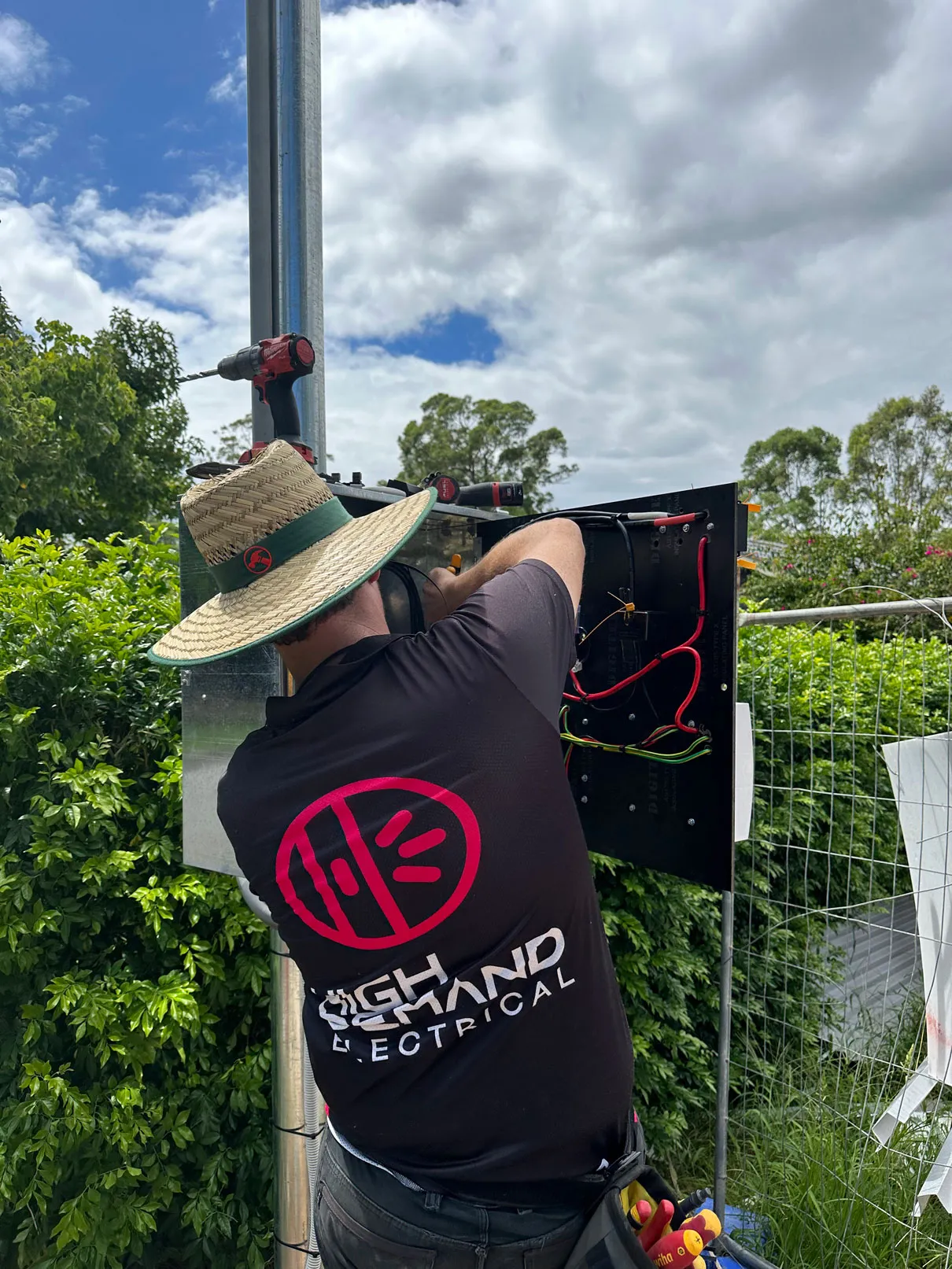
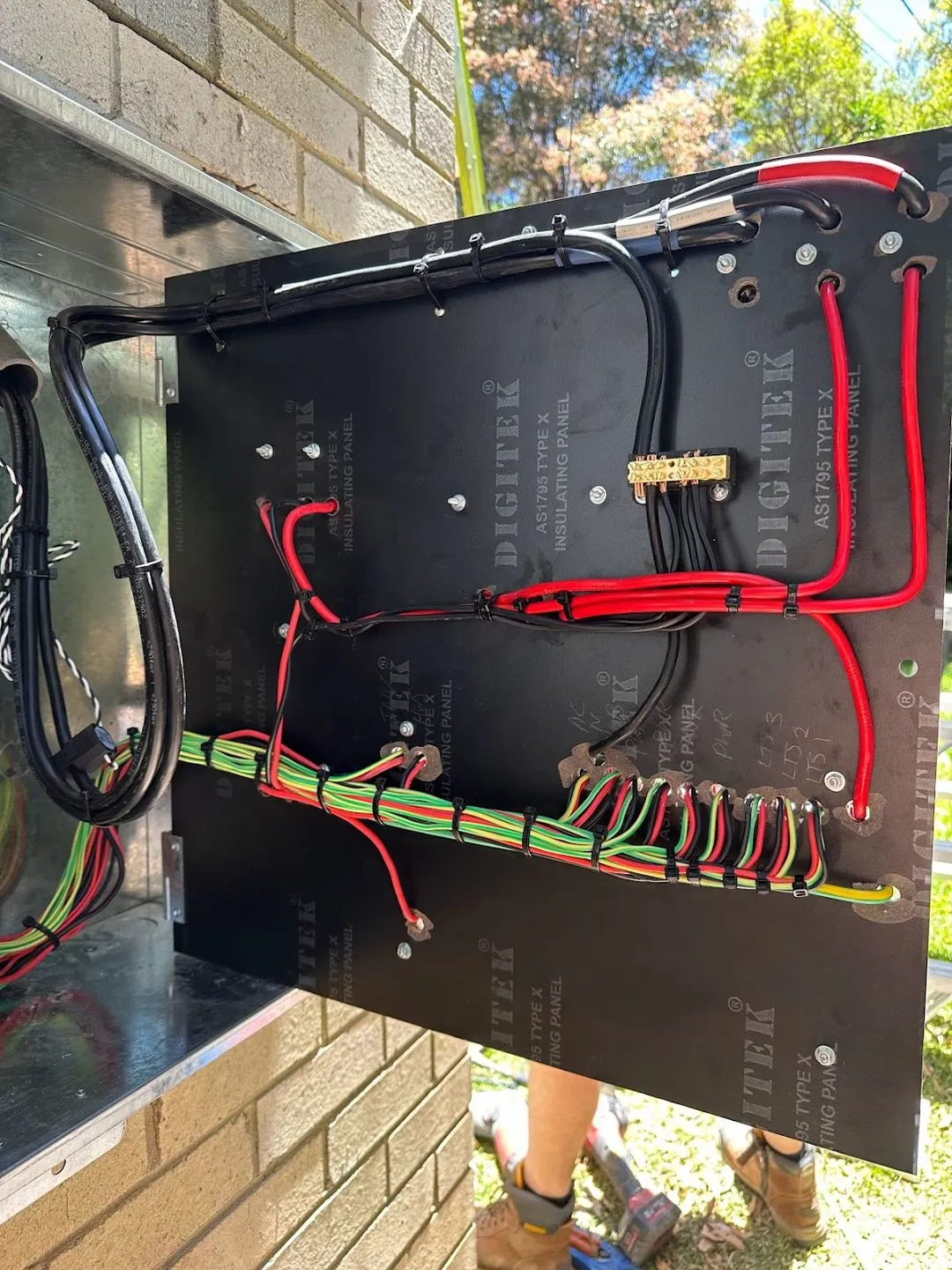
Everything from the street to your meter, including upsizing consumer mains and connecting a bigger supply, is network connected work. In NSW it can only be done by a Level 2 Accredited Service Provider, not a general electrician. That is the part of the job High Demand Electrical is accredited for on both Sydney networks. A general electrician can wire the switchboard and internal circuits, but the connection itself, from the point of attachment through to your meter, sits outside their licence. Getting this sequencing wrong is a common reason capacity upgrades stall: a new switchboard gets fitted before anyone confirms the incoming supply can actually carry the extra load. Working with one Level 2 ASP for the whole job, from the network application through to the final connection, keeps the paperwork and the physical work moving together instead of waiting on two separate trades.
How High Demand Electrical helps
We answer the capacity question properly: a site assessment of your supply, mains and switchboard, power logging where the paper figure is borderline, and a clear recommendation ranked from cheapest option to full supply upgrade. If an upgrade is the right call, we handle the network application, the Level 2 connection work and the switchboard in one job with one quote.
Find out how much room your home really has
Run the calculator above for a first look, then get a power supply upgrade quote if the numbers look tight. Call 0402 559 777 and we will take it from there. Every job starts with a site assessment before scope and pricing are confirmed.
1. What are you calculating?
Choose the application — the calculator applies the matching rules from Table C1 or C2 of AS/NZS 3000:2018.
2. Add your loads
3. Results
Show the full working (line by line)
This calculator applies the maximum demand methods in Tables C1 and C2 of AS/NZS 3000:2018 (Appendix C). Appendix C is a guide — the standard permits other assessment methods, and your electricity distributor or the NSW Service & Installation Rules may impose additional requirements. Results are for estimation and education; final maximum demand assessment must be confirmed by a licensed electrician. Ratings entered in watts or kilowatts are converted at 230 V (single-phase) or 400 V (three-phase). Table C1 motors assume pf 0.86 and efficiency 0.95; Table C2 motors assume pf 1 and efficiency 0.95, per the standard's conventions.
Project information
These details appear on your PDF report.
Related Services

Powering Your Needs with Expertise
If you’re looking for a reliable, experienced, and prompt electrician, look no further than High Demand Electrical. We cater to all your electrical needs, from routine maintenance to emergency repairs and complete system installations. Our skilled team is committed to providing professional service that ensures your electrical systems run smoothly. Whether it's a small task or a large project, give us a call today. Let us meet all your electrical demands with the quality and reliability you deserve.

