Do you need a solar-ready switchboard before going solar?
Many Australian homes need at least a partial switchboard upgrade before solar goes live, and the fastest way to know for certain is a licensed inspection, not a guess. If your board still has ceramic fuses, no RCDs, or fewer than two spare ways, it will not meet AS/NZS 3000 or the isolation requirements in AS/NZS 4777, and no installer can legally connect an inverter to it. Sort this before panels arrive, not after.
- Book a licensed electrician (ideally a Level 2 electrician) for a pre-solar switchboard inspection.
- Ask your solar installer directly whether switchboard work and the Certificate of Compliance are already included in their quote.
Key Takeaways
A solar-ready switchboard needs spare ways, an AC isolator, RCD protection, and correct labelling, verified by a licensed electrician before solar is installed.
| Point | Details |
|---|---|
| Get inspected first | Book a licensed electrician before your solar quote is finalised, not after installation day. |
| Watch for red flags | Ceramic fuses, asbestos backing, and no RCDs usually mean a full board replacement is needed. |
| Coordinate metering early | Distributor or retailer meter swaps can add days to your timeline, so lodge applications early. |
| Budget realistically | Asbestos removal and consumer mains upgrades push costs well above a simple solar-prep job. |
| Choose a Level 2 provider | High Demand Electrical offers free site inspections, written quotes, and full certification for Sydney switchboard upgrades. |
Table of Contents
- What does 'solar ready switchboard' actually mean?
- Quick checklist: does your board need a minor or major upgrade?
- What metering and network steps does grid-connected solar require?
- What components change inside a solar-ready switchboard?
- What does a switchboard upgrade cost and how long does it take?
- How do you actually get a solar-ready switchboard installed?
- Who provides solar-ready switchboard upgrades in Sydney?
- Get your switchboard sorted before the solar installer arrives
- Sources
What does 'solar ready switchboard' actually mean?
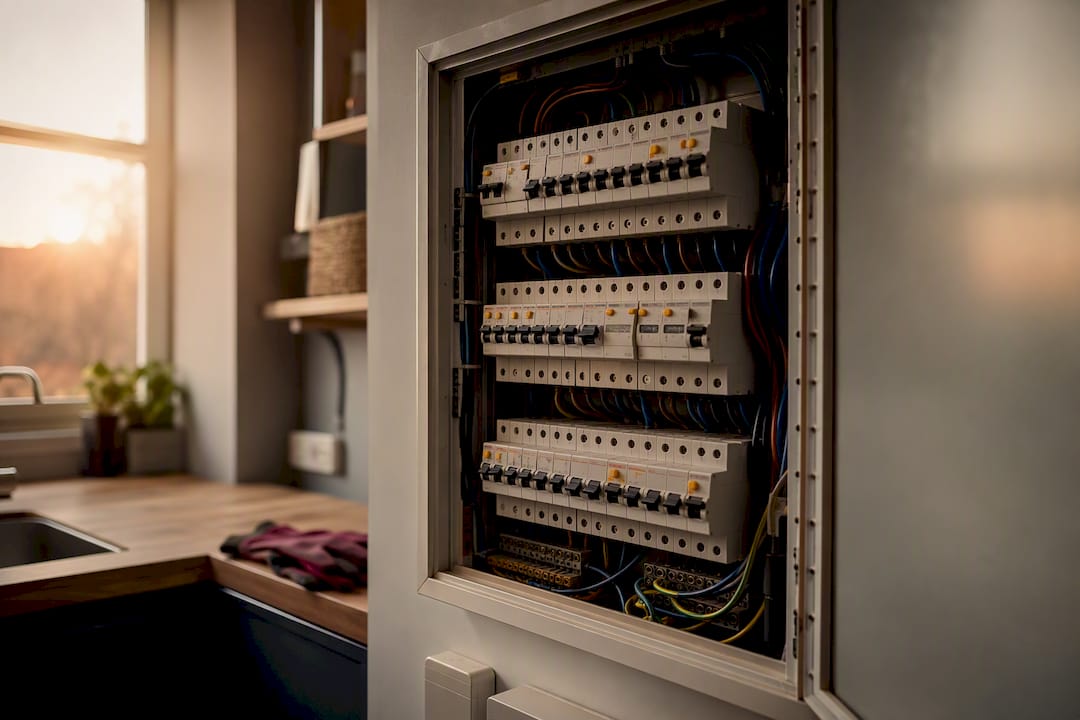
A solar-ready switchboard is a board that has already been prepared to accept the AC connection from a solar inverter, along with every protective device that connection legally requires. It is not a special product. It is your existing switchboard brought up to a standard that has room, isolation, and protection built in.
At minimum, that means:
- At least one or two spare circuit ways for solar breakers.
- A dedicated solar AC isolator, usually mounted beside or below the main switchboard.
- RCD or RCBO protection covering the solar circuit.
- Clear, permanent labelling identifying the solar isolation point.
- Physical space allocated for a consumption meter or CT metering, where export monitoring is required.
Picture the layout: the main switchboard sits in its usual spot, the solar isolator mounts close by on an external wall for quick shutdown access, and the meter box nearby gets space cleared for any new metering equipment. Nothing exotic — just organised and compliant.
Quick checklist: does your board need a minor or major upgrade?
Most boards fall into one of two camps once an electrician has a look: a quick add-on, or a full rebuild. Most Australian homes need at least a partial switchboard upgrade before solar, and the triggers are usually the same handful of issues.
Run through this before you book anyone:
- Ceramic (porcelain) fuses instead of modern circuit breakers.
- A backing panel that looks like fibro or cement sheet, which may contain asbestos.
- Fewer than two spare ways to fit new breakers.
- No RCDs anywhere on the board.
- Discolouration, heat marks, or a burnt smell near the switches.
- A main switch or consumer mains that looks undersized for a new inverter.
Some common issues like ceramic fuses, absence of RCDs, and limited spare ways can often be addressed within a day with an isolator and a couple of RCBOs. Asbestos backing, which requires licensed removal before any electrical work proceeds, or serious heat damage, points to a full replacement.
An electrician cannot legally connect solar to a non-compliant switchboard, full stop. If your board fails a basic visual check, organise the inspection before you sign anything with a solar installer.
What metering and network steps does grid-connected solar require?
Switchboard work is only half the job. Every grid-connected solar system also needs your distributor or retailer looped in, because exporting power typically requires a smart meter or a meter configuration change, and this must be arranged before export is switched on.
The process usually runs like this:
- Your electrician confirms the switchboard is compliant and ready for solar.
- Your retailer or an Accredited Service Provider arranges the meter swap or reconfiguration.
- The distributor is notified and approves the connection for export.
- Your installer commissions the system once metering is confirmed.
A few things worth knowing upfront:
- Meter swaps are not always same-day. They can add several days to your overall timeline, especially with a busy retailer.
- Coordinating the meter application early, ideally while switchboard work is still being quoted, avoids a finished install sitting idle waiting on paperwork.
What components change inside a solar-ready switchboard?
Once your electrician confirms the board needs work, here is what typically goes in. A standard upgrade sequence covers isolation, enclosure work, main switch rating, protective devices, and labelling, roughly in this order:
- A solar/AC isolator, mounted for easy emergency shutdown.
- A dedicated solar breaker, or breakers, sized to the inverter's output.
- RCBOs, or a whole-board RCD upgrade, covering every relevant circuit.
- A Type 2 surge protection device, where the board's exposure and standards call for one.
- A consumption CT meter or export-limiting hardware, for systems with export caps.
- Fresh labelling and documented spare-way capacity for future circuits.
Main switch rating matters more than most homeowners expect. A 63A or 80A main switch that was fine for a modest household load may need reassessing once a 6.6kW or 10kW inverter and its associated circuits are added. Consumer mains capacity gets checked at the same time, because an undersized main feed limits what the board can safely carry regardless of how good the internal wiring looks.
Pro Tip: While the board is open and your electrician is already on-site, ask about roughing in conduit or a spare circuit for a future battery system or EV charger. It costs far less to add now than to remobilise a crew for a second visit in two years.
What does a switchboard upgrade cost and how long does it take?
Costs vary depending on what your electrician finds. Here is a realistic breakdown of the three most common scenarios Sydney homeowners encounter when going solar:
| Scenario | Typical Cost Range | What's Involved |
|---|---|---|
| Solar-prep only (no full board change) | $500–$900 | Add AC isolator and solar breaker to an existing compliant board with spare ways. |
| Partial upgrade (add RCDs + isolator) | $800–$1,500 | Board has circuit breakers but missing RCDs on some circuits; add RCBOs and solar prep components. |
| Full switchboard replacement | $2,500–$4,500 | Old ceramic fuse board or full rebuild required. New enclosure, all RCBOs, consumer mains check. |
Where the money goes:
- Asbestos removal adds $500–$2,000+ and must be done before any electrical work starts on boards with fibro backing.
- Consumer mains upgrades, when the existing feed cannot support the new inverter load.
- Network service upgrades, if the distributor's connection point also needs work.
- Hidden wiring defects found once the old board is opened up.
On timeline, expect inspection and quoting within a week, the physical upgrade completed in a day for most homes, and certification issued shortly after. Add on however long your retailer takes for a meter swap — there are no government rebates for switchboard modernisation work, so this cost sits with the homeowner and is worth budgeting for early rather than discovering it mid-install.
If you are already planning a home EV charger installation, doing both jobs in one visit almost always costs less than two separate callouts.
How do you actually get a solar-ready switchboard installed?
Getting this right is mostly about sequencing and asking the right questions before work starts, not during it.
- Book a site inspection with a licensed electrician before you commit to a solar installer.
- Get a written scope and quote covering exactly what the board needs.
- Confirm who lodges the meter and distributor notification, and when.
- Have the upgrade completed and RCDs tested.
- Receive your Certificate of Compliance for Electrical Work (CCEW).
- Confirm distributor approval before the installer commissions the solar system.
Ask your electrician and solar installer directly:
- Is switchboard work already included in the solar quote, or billed separately?
- Who lodges the meter application, and roughly how long will it take?
- Will I receive a CCEW once the work is finished?
Watch for these red flags on any quote: no written scope of work, vague pricing around potential asbestos work, or an electrician reluctant to test RCDs and label circuits properly. All three are shortcuts that cost more later.
Who provides solar-ready switchboard upgrades in Sydney?
For Sydney homeowners, High Demand Electrical handles Level 2 metering work, full switchboard upgrades, and the certification and distributor coordination that comes with it. They also cover emergency callouts, so a fault discovered mid-inspection does not turn into a second booking with a different contractor.
What to expect when you book:
- A free site inspection for Level 2 work, before any quote is locked in.
- A written, itemised quote with no vague line items.
- Certification and distributor notification handled as part of the job, not left to you.
Treat your switchboard as the control hub for everything electrical in the house, not a one-off fix. Get it right once, and solar, batteries, and EV charging all plug into a board that is already ready for them.
Author perspective: why upgrade now rather than later
Most homeowners treat the switchboard as an afterthought to solar, when it is really the foundation. Fixing it piecemeal — once for solar, again for a battery, again for an EV charger — costs more in callouts than doing it properly once. If the board is open, rough in the extra circuit. Future you will be glad.
Get your switchboard sorted before the solar installer arrives
High Demand Electrical gets you a genuine assessment before your solar quote locks in, not after your installer discovers a problem on the day. That means no rescheduling, no surprise asbestos quote, and no waiting on a second contractor to sort metering paperwork you did not know you needed.
Booking is straightforward: a free site inspection for Level 2 electrical work, a written quote covering the actual scope of your board, and certification handled as part of the job. Their switchboard upgrade service also covers optional pre-wiring for a future battery or EV charger while the board is already open, saving a second visit down the track. As a licensed, insured Level 2 contractor covering Sydney with 24/7 availability, they handle both the switchboard and the network liaison side of the job. If your board is due for a look before solar goes ahead, learn about pre-wiring for solar or get in touch for a written quote on what your home actually needs.
Sources
Powering Your Needs with Expertise
If you’re looking for a reliable, experienced, and prompt electrician, look no further than High Demand Electrical. We cater to all your electrical needs, from routine maintenance to emergency repairs and complete system installations. Our skilled team is committed to providing professional service that ensures your electrical systems run smoothly. Whether it's a small task or a large project, give us a call today. Let us meet all your electrical demands with the quality and reliability you deserve.