What Are the Electrical Requirements for a Photography or Film Studio in Sydney?
What are the electrical requirements for a commercial photography or film studio in Sydney? A working photo or film studio needs three phase power once the lighting grid, grip gear and post production suite are all running together, dedicated circuits that keep continuous lighting and strobe or flash packs apart, a switchboard with genuine spare capacity, and surge protection for cameras, computers and editing hardware. Most studios set up inside a converted warehouse or industrial unit also need the existing switchboard reassessed, because a supply sized for storage or light assembly work is rarely enough once a full lighting grid and a busy post production room are added to the load.
⚡ Quick Answers: Photography and Film Studio Electrical Requirements
- Do I need three phase power for a studio? Most working photo and film studios do, once the lighting grid, air conditioning and post production gear are totalled up, because single phase supply runs out of safe capacity quickly.
- How many lighting circuits does a studio need? Enough to spread continuous and strobe lighting across separate, dedicated circuits instead of daisy chaining fixtures off general power points or extension leads.
- Do strobe and flash packs need their own circuit? Yes, high output strobe packs draw a short, sharp current spike on recharge that shared general power circuits are not built to carry alongside other equipment.
- What protects cameras and computers from power spikes? Surge protection fitted at the main switchboard, backed up by point of use protection at camera stations, editing suites and server or render racks.
- Can an old warehouse switchboard handle a studio fit out? Often not without an upgrade, since warehouse switchboards are usually sized for storage or light industrial use, not a lighting grid plus continuous post production load.
- Who is allowed to upgrade a switchboard or connect three phase power? Only a Level 2 ASP can work on the consumer mains, service mains and metering that a switchboard upgrade or new three phase connection usually involves.
1. Three phase power and the studio lighting grid
A single camera setup with a couple of continuous lights can usually run on a standard single phase supply without any trouble. A working studio is a different story. Once you add a full lighting grid of continuous fixtures, a bank of strobe or flash heads, air conditioning for a converted shed or warehouse, and a post production room with several workstations and render machines, the combined draw adds up fast and single phase capacity runs out.
Three phase power splits that load across three separate active conductors instead of pushing it all down one, which is why it is the standard supply for serious studio builds. It lets you run heavier lighting setups, bigger air conditioning units and industrial equipment like a de rig workshop or workshop compressor on the same site without constantly tripping breakers or overloading the incoming supply. A single phase to three phase upgrade is Level 2 ASP work because it changes the consumer mains and metering arrangement, not just the internal wiring. For a full rundown of what actually changes on site, see our guide to what changes during a three phase upgrade.
If your studio is in an industrial estate, it is worth confirming which network operator services the site before you apply for an upgrade, since Ausgrid and Endeavour Energy have different application processes and timeframes. You can check your network area in seconds with our postcode checker if you are not sure which distributor covers your address.
2. Dedicated circuits for continuous and strobe or flash lighting
Continuous lighting, think LED panels, tungsten fresnels or HMI heads, draws a steady current for the whole length of a take or a session. Strobe and flash packs behave completely differently. They sit at low draw between flashes, then pull a short, sharp spike of current as the capacitors recharge for the next shot. Put both types on the same general circuit and the combined demand can trip a breaker mid shoot, usually at the worst possible moment.
A properly wired studio separates these loads onto dedicated circuits from the start. Continuous lighting runs on its own circuits sized for sustained draw, strobe and flash packs run on circuits sized to handle recharge spikes without nuisance tripping, and general power points for cameras, laptops and accessories sit on circuits of their own again. This is also where a power supply upgrade earns its keep in an older studio, since many converted spaces were wired for general commercial use, not for a lighting grid pulling load from multiple directions at once.
Grip equipment, follow spots and any motorised rigging on a lighting grid add further load that should be planned into the circuit design rather than retrofitted later. A studio that grows its lighting kit over a few years without revisiting the circuit layout is one of the most common reasons we get called out for repeat nuisance tripping.
3. Dimming systems and lighting control
Dimmable continuous lighting, whether tungsten, LED or a mix, needs a dimming system matched to the fixture type. Tungsten fixtures generally work fine on standard phase dimming, but LED fixtures are far more sensitive and often need trailing edge or purpose built LED dimmers to avoid flicker, buzzing or premature failure of the driver. Mixing fixture types on one dimmer channel without checking compatibility is a common cause of flickering that gets blamed on the lights themselves when the real problem is the dimmer.
Larger studios often run a DMX controlled dimming rack so lighting can be programmed and recalled scene by scene rather than adjusted fixture by fixture on set. That rack still needs to sit on properly sized, dedicated circuits with its own protection, the same as any other heavy lighting load, and the wiring behind it should be planned as part of any electrical fit out for the space rather than bolted on afterwards.
4. Surge protection for cameras, computers and post production gear
A studio's most expensive equipment usually is not the lighting, it is the cameras, lenses, computers and post production hardware sitting behind them. Camera bodies, capture systems, editing workstations and render or storage servers are all sensitive to voltage spikes, whether caused by a network fault, a lightning event nearby or simply switching heavy lighting loads on and off on the same supply.
AS/NZS 3000 sets out requirements for surge protection as part of a compliant installation, and a surge protection installation at the main switchboard is the first line of defence for the whole building. For a studio, that is usually backed up with point of use surge protection at camera charging stations, editing suites and any server or render rack, since a whole building device will not catch every spike generated inside the building itself. If your post production suite relies on uninterrupted rendering or backup jobs running overnight, it is also worth discussing a small UPS for critical machines alongside your surge protection, so a brief outage does not corrupt a render or a backup in progress.
5. Switchboard capacity in a converted warehouse or industrial unit
Most commercial photo and film studios in Sydney are set up inside converted warehouses, industrial units or old factory floors, because they offer the floor to ceiling height a lighting grid needs. The problem is that these buildings were almost never wired with a studio fit out in mind. A switchboard sized for storage racking, a roller door motor and a few general power points is a long way short of what a working studio with a full lighting grid, air conditioning and a post production suite actually draws.
Before you commit to a lease or sign off on a fit out, it is worth getting the existing switchboard assessed against your planned equipment list. A Level 2 electrician will run a maximum demand calculation, the AS/NZS 3000 method for working out what a switchboard can safely carry once new load is added, rather than guessing. That calculation accounts for lighting, air conditioning, post production equipment and any workshop or grip gear together, not just what is plugged in on day one. A switchboard upgrade at this stage is far cheaper and less disruptive than discovering mid lease that the board cannot take another circuit.
If the building's incoming supply itself is undersized, not just the internal switchboard, that is also where a conversation about three phase power or a power supply upgrade from the street starts. This comes up often enough in converted industrial units that we have put together a dedicated guide on three phase power for a warehouse or industrial unit, which is worth a read before you sign a lease. This is genuinely Level 2 ASP territory, since it touches the consumer mains and metering ahead of the main switch, not just internal wiring.
6. RCD and safety switch protection
AS/NZS 3000 requires RCD, commonly called safety switch, protection on final subcircuits in non domestic installations, studios included. In a space full of lighting cable runs, extension leads, grip equipment and the occasional spilt drink near a workstation, that protection matters more than in a typical office. A safety switch installation that covers lighting, general power and any dedicated equipment circuits is a basic but essential part of a studio fit out, and it is one of the first things we check on a safety inspection of an existing space.
7. Keeping a shoot running: backup power and load planning
Few studios need full backup power the way a data centre or medical facility does, but losing power mid shoot, mid render or mid client session is still expensive in wasted time and reshoots. Planning circuits with some spare capacity for future lighting or equipment purchases, rather than wiring a board to its exact current load, avoids the constant nuisance tripping that comes from a studio that has quietly outgrown its switchboard over a few years of adding gear. For studios that do want some protection against outages affecting a render job or a live client session, a small UPS on critical post production machines is usually a more practical first step than a full standby generator.
Why it's Level 2 ASP work
A lot of what a studio fit out actually needs, upgrading the switchboard, connecting three phase power, or resolving an undersized supply to a converted warehouse, falls on the consumer mains, service mains or metering side of the installation. That work sits specifically with a Level 2 ASP (Accredited Service Provider), not a standard electrical licence, because it involves the connection points between your building and the distributor's network. A Level 2 electrician in Sydney is accredited to carry out and sign off this work directly, which avoids the delay of booking the distributor separately for jobs like a new three phase connection or a consumer mains upgrade.
How High Demand Electrical helps
High Demand Electrical is one of Sydney's most trusted Level 2 ASPs, and we regularly work with photographers, production companies and studio operators converting warehouses and industrial units into working creative spaces. We start with a proper site assessment and maximum demand calculation rather than a guess, so you know exactly what your switchboard and supply can carry before you sign a lease or commit to a lighting grid layout.
From there we handle the full scope: three phase connections, switchboard upgrades, dedicated circuits for continuous and strobe lighting, dimming system wiring, surge protection and safety switch coverage, and commercial electrical compliance sign off for the finished fit out. We are a licensed local team, not a call centre, servicing studios and commercial fit outs across Sydney's West, South West and Sutherland Shire, and we are used to working around production schedules rather than the other way round.
Photography and Film Studio Electrical FAQs (Sydney)
How many amps does a photography studio need?
It depends entirely on your lighting grid, air conditioning and post production setup, which is why a proper maximum demand calculation matters more than a rule of thumb figure. A site assessment is the only reliable way to confirm what your specific studio needs.
Can I run a photography studio on single phase power?
A small single camera setup with a few continuous lights often can, but most working studios with a full lighting grid, strobe packs, air conditioning and a post production suite outgrow single phase capacity quickly and need to move to three phase power.
What size switchboard does a film or photo studio need?
There is no fixed size, it comes down to your equipment list and a maximum demand calculation against the building's available supply. A switchboard upgrade is common when converting a warehouse or industrial unit, since the existing board is rarely sized for studio use.
Do strobe and flash lights need their own dedicated circuit?
Yes, high output strobe packs draw a sharp current spike on recharge that should not share a circuit with continuous lighting or general power points, to avoid nuisance tripping mid shoot.
How do I protect my cameras, computers and render servers from power surges?
Start with a surge protection installation at the main switchboard, then add point of use protection at camera stations, editing suites and server racks for a second layer of defence against spikes generated inside the building itself.
If you are setting up or upgrading a photography or film studio in Sydney, get a switchboard upgrade quote from High Demand Electrical. Call 0402 559 777 to talk through your lighting grid and equipment list, and keep in mind that every job needs a site assessment before we can confirm scope or pricing.
Need Help Fast?
Related Services

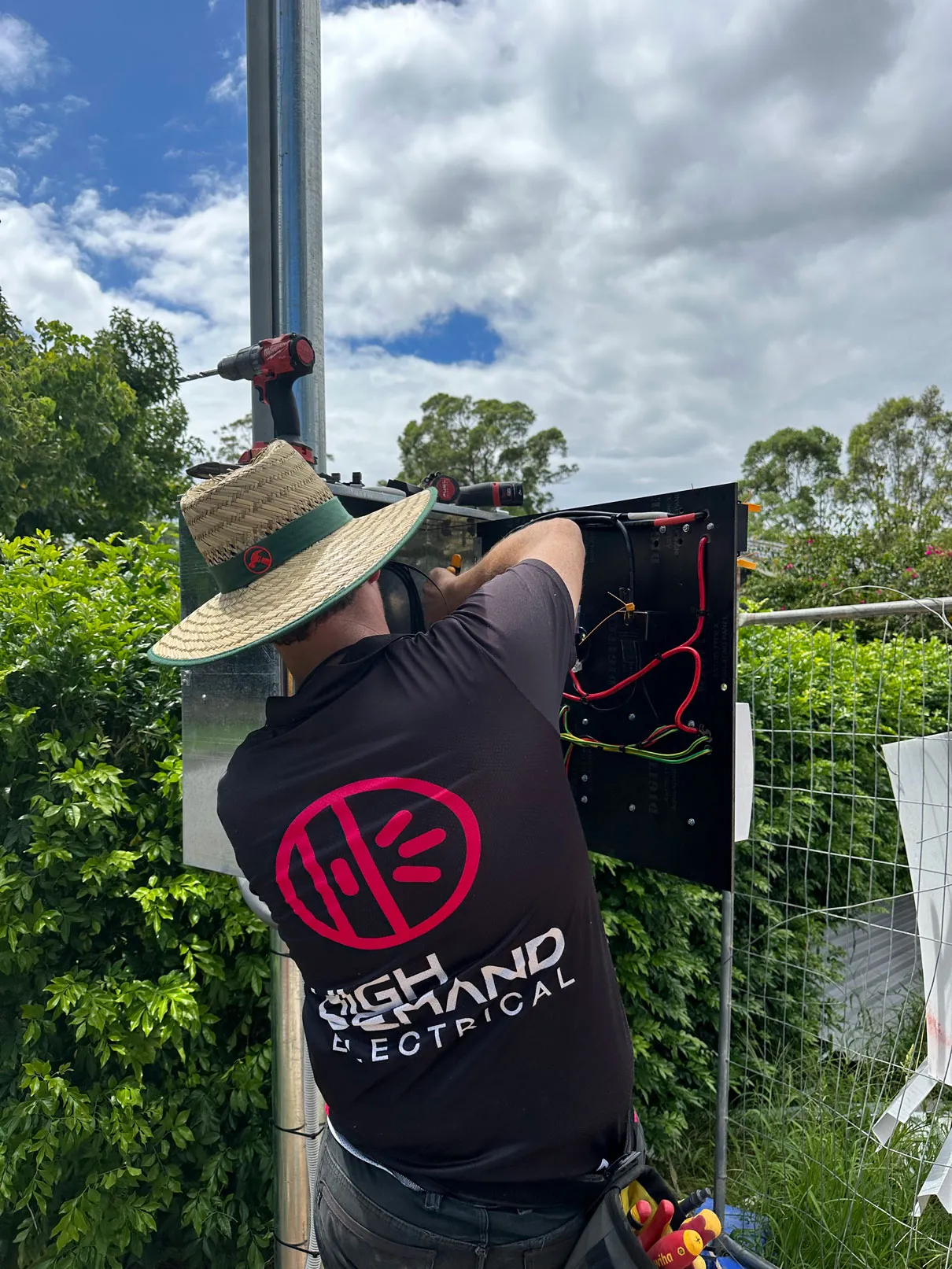

Powering Your Needs with Expertise
If you’re looking for a reliable, experienced, and prompt electrician, look no further than High Demand Electrical. We cater to all your electrical needs, from routine maintenance to emergency repairs and complete system installations. Our skilled team is committed to providing professional service that ensures your electrical systems run smoothly. Whether it's a small task or a large project, give us a call today. Let us meet all your electrical demands with the quality and reliability you deserve.

Licensed Level 2 ASP electricians across Sydney. Same-day service and 24/7 emergency response.
Licence 397193C
ABN 87 051 836 527
