What Are the Electrical Requirements for a Jewellery Store in Sydney?
What are the electrical requirements for a jewellery store in Sydney? A jewellery store or any high value retail fitout needs dedicated circuits for display case and feature lighting, a switchboard with enough capacity for lighting, security and alarm loads, surge protection on sensitive electronics, and RCD (safety switch) protection throughout the store. Getting this right at fitout stage, rather than patching it later, protects the stock, the security systems and the store's trading hours.
⚡ Quick Answers: Jewellery Store Electrical Requirements
- Do display cases need their own circuits? Yes, dedicated circuits for display case and feature lighting stop a tripped circuit elsewhere in the store from blacking out the cabinets customers are looking into.
- Why does switchboard capacity matter so much? A jewellery store's lighting, security, CCTV and alarm loads all draw at once, and an undersized or outdated switchboard limits what you can safely add.
- Does a jewellery store need three phase power? Many fit comfortably into a single phase supply, but larger stores with heavy lighting, air conditioning and multiple security systems often need three phase power to carry the combined load safely.
- What backup power should security and alarm systems have? Alarm panels, CCTV recorders and access control should sit on a reliable, clearly labelled circuit, and battery backed equipment keeps working through a short outage.
- Is surge protection essential? Yes, a single voltage spike can damage display lighting drivers, alarm panels and CCTV recorders in one hit, and surge protection at the switchboard is the first line of defence.
- Who should do this work? Anything touching the consumer mains, service mains or an overall switchboard capacity upgrade is Level 2 ASP work, not standard licensed electrician work.
1. Dedicated circuits for display cases and feature lighting
Jewellery stores depend on lighting that makes stock look its best, from narrow beam downlights over display cases to feature pendants and window lighting that draws customers in from the street. Running all of this lighting off the same circuit as the power points, air conditioning or storeroom equipment is asking for trouble, because a fault or an overloaded point of sale terminal can trip a circuit and plunge a whole bank of display cases into darkness in the middle of trade. A dedicated circuit for display case and feature lighting keeps that lighting isolated from everyday power loads, so a nuisance trip somewhere else in the store never touches the cabinets customers are looking into.
It also makes the store easier to maintain. If an electrician needs to work on general power points or a back of house circuit, dedicated lighting circuits mean the shop floor lighting and display cases stay on and the store can keep trading. For a fitout with multiple cabinet runs, feature pendants and a lit shopfront window, this usually means grouping circuits by zone rather than running one oversized circuit for the whole floor. Our guide to retail lighting design looks at layering light levels and fixture choice in more detail if you are still planning the lighting scheme itself.
2. Switchboard capacity for a jewellery store fitout
Every circuit above has to come from somewhere, and that is where switchboard capacity becomes the real constraint. A jewellery store crams a lot of electrical load into a small footprint: display case lighting, feature lighting, air conditioning, point of sale systems, CCTV, alarm panels and access control all draw from the same board at the same time. Many Sydney retail tenancies, especially in older shopping strips and heritage buildings, were wired decades before any of this equipment existed, and the original switchboard was never sized for it.
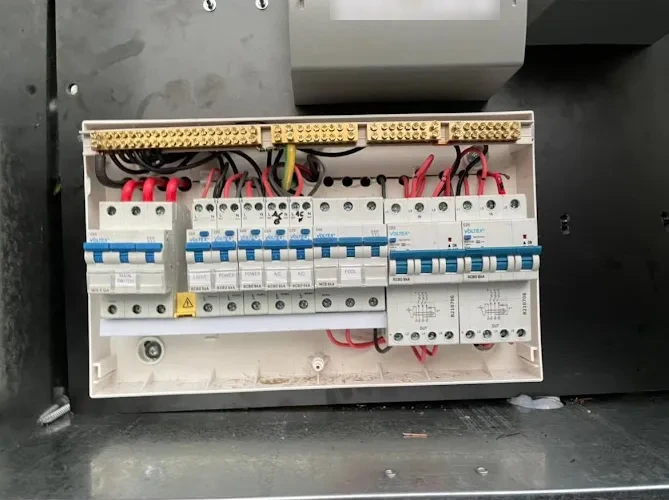
Before fitting out a jewellery store, it is worth having an electrician assess the existing switchboard against the real load the fitout will add, using the maximum demand calculation set out in AS/NZS 3000. That assessment tells you honestly whether the board has room to spare or needs a switchboard upgrade before new circuits go in. Skipping this step is one of the most common reasons a retail fitout runs into delays, because a board that looked fine on paper trips constantly once the lighting and security systems are all switched on together. If you are planning a wider renovation rather than just the lighting and security side, our guide to retail shop fitout electrical requirements covers the broader checklist, and our piece on what to look for in a switchboard upgrade quote explains what a proper quote should actually include.
3. RCD protection across the whole store
AS/NZS 3000 requires RCD, or safety switch, protection on final subcircuits in non domestic installations, and a jewellery store is no exception. This matters for staff and customer safety around display lighting, point of sale equipment and any power tools used during stock takes or fitout changes. Older tenancies sometimes have RCD protection on only part of the board, usually added circuit by circuit over the years rather than designed in from the start.
A proper safety switch installation covers every final subcircuit, not just the obvious ones, and is one of the cheapest, highest value checks to run during a jewellery store fitout or refit. It is also one of the first things picked up during a routine electrical inspection, so it is far better to find and fix gaps before you are relying on the board during trading hours.
4. Backup power considerations for security and alarm systems
Security is central to how a jewellery store operates, and the alarm panel, CCTV recorder, access control and any safe monitoring equipment all need power that does not simply vanish the moment Sydney has a blackout or a storm related outage. This is squarely an electrical job rather than a security company job, because it comes down to how those systems are wired into the switchboard, which circuit they sit on and whether that circuit is isolated from the loads most likely to trip during a fault.
Most alarm panels, CCTV recorders and access control units already include their own internal battery, which keeps them running for a period after mains power drops out. What the electrician controls is making sure that equipment is fed from a dedicated, clearly labelled circuit, protected the same way as the rest of the board, and not sharing a circuit with display lighting or point of sale equipment that is far more likely to trip under load. For stores that want longer runtime during an extended outage, a dedicated circuit also makes it straightforward to add a small battery backup unit later without rewiring the whole board.
If your store has had an unexplained security system dropout, it is worth having an electrician check the wiring and switchboard capacity behind it before assuming the security equipment itself is at fault. Often the real cause is a shared circuit, a loose connection or a board running close to its limit, and that is a straightforward thing for a licensed electrician to find and fix.
5. Surge protection for lighting, security and point of sale equipment
A jewellery store's most valuable electronics, security system, CCTV recorder, point of sale terminals and LED lighting drivers, are also some of the most sensitive to voltage spikes. A single surge from the network, a nearby lightning strike or even a large piece of equipment switching off elsewhere in the building can damage this equipment in an instant, and jewellery stores tend to carry more of this kind of equipment per square metre than most other retail tenancies.
Surge protection installation at the main switchboard, with a second layer at sensitive equipment where needed, is the most effective way to protect this investment. It is a relatively small cost next to the price of replacing a damaged alarm panel, CCTV system or a bank of display lighting drivers, and it is worth building into any new fitout rather than adding as an afterthought once something has already failed.
6. Three phase power for larger format jewellery and high value retail
Smaller jewellery stores usually run comfortably on a single phase supply. Larger stores, flagship locations or high value retail tenancies with heavy lighting loads, larger air conditioning systems and multiple security systems running at once can push past what a single phase supply can safely carry. When that happens, a single phase to three phase upgrade spreads the load across three circuits instead of one, giving the store real headroom for lighting, air conditioning and security equipment without constantly testing the limits of the existing supply.
This is not a decision to make casually, because a three phase upgrade usually means new consumer mains and service mains work, and sometimes a new connection agreement with Ausgrid or Endeavour Energy. It is worth having an electrician assess your actual expected load first, since many stores can get everything they need from a well planned single phase switchboard upgrade without the extra cost of a three phase connection.
Why it's Level 2 ASP work
A lot of what sits behind a jewellery store's electrical requirements, assessing switchboard capacity, upgrading consumer mains, connecting a new three phase supply, is work that only a Level 2 Accredited Service Provider is authorised to carry out in NSW. Standard electrical licence holders can wire circuits inside the switchboard, but anything on the consumer mains, service mains or metering, the parts of the installation before the main switchboard, falls under SIRNSW and needs a Level 2 ASP.
This is why a switchboard upgrade, a new three phase connection or any service mains work for a jewellery store fitout needs to go through a Level 2 electrician in Sydney rather than a general electrical contractor. Getting this distinction right early avoids delays later, when a standard electrician discovers partway through a fitout that part of the job legally needs to be handed to an ASP.
How High Demand Electrical helps
High Demand Electrical is one of Sydney's most trusted Level 2 ASPs, and we work with retail fitout teams, shop owners and property managers across jewellery stores and other high value retail tenancies. We assess your existing switchboard capacity against the real load of your display case and feature lighting, security systems and point of sale equipment, then design dedicated circuits, safety switch protection and surge protection around that assessment rather than guessing.
Where a switchboard upgrade or three phase connection is needed, our Level 2 ASP accreditation means we can carry out the consumer mains, service mains and metering work in house instead of handing it to a separate contractor. We are a licensed local team, not a call centre, servicing homes and businesses across Sydney's West, South West and Sutherland Shire, and we understand the pressure retail fitouts for shops are under to be trading on time.
Jewellery Store Electrical FAQs (Sydney)
Does a jewellery store need a dedicated circuit for every display case?
Not necessarily every single case, but display case and feature lighting should be grouped onto dedicated circuits separate from power points, air conditioning and back of house equipment. See electrical fitouts for shops for how we plan circuit layouts during a retail fitout.
How do I know if my switchboard has enough capacity for a jewellery store fitout?
An electrician can assess your existing board against the fitout's expected load using the maximum demand method in AS/NZS 3000. If the board is close to its limit, a switchboard upgrade before the fitout starts avoids nuisance trips once everything is switched on.
What backup power should my alarm and CCTV system have?
Most alarm panels and CCTV recorders include an internal battery for short outages, but the electrical side of this is making sure that equipment sits on its own clearly labelled circuit, isolated from loads more likely to trip. A dedicated circuit also makes it easier to add a battery backup unit later if you want longer runtime.
Is surge protection worth it for a small jewellery store?
Yes. A single surge can damage lighting drivers, an alarm panel or point of sale equipment in one hit, and surge protection installation at the switchboard is a small cost against the price of replacing that equipment.
Does my jewellery store need three phase power?
Most smaller stores run fine on single phase. Larger stores or flagship tenancies with heavy lighting, air conditioning and security loads sometimes need a single phase to three phase upgrade, but this should be based on an actual load assessment rather than assumed.
If you are fitting out or upgrading a jewellery store or high value retail tenancy in Sydney, get a switchboard upgrade quote from High Demand Electrical, a Level 2 electrician in Sydney with the accreditation to handle consumer mains, service mains and switchboard capacity work in one job. Call 0402 559 777 to talk through your store's lighting, security and power needs. Every job needs a site assessment before scope or pricing can be confirmed.
Need Help Fast?
Related Services


Powering Your Needs with Expertise
If you’re looking for a reliable, experienced, and prompt electrician, look no further than High Demand Electrical. We cater to all your electrical needs, from routine maintenance to emergency repairs and complete system installations. Our skilled team is committed to providing professional service that ensures your electrical systems run smoothly. Whether it's a small task or a large project, give us a call today. Let us meet all your electrical demands with the quality and reliability you deserve.

Licensed Level 2 ASP electricians across Sydney. Same-day service and 24/7 emergency response.
Licence 397193C
ABN 87 051 836 527
