What Are the Electrical Requirements for a Commercial Greenhouse or Hydroponic Growing Facility in Sydney?
Does a commercial greenhouse or hydroponic growing facility need special electrical work in Sydney? Yes. Grow lights, climate control fans, irrigation pumps and dosing controllers all draw continuous, often heavy loads that a typical residential switchboard was never designed for, and the humid, wet growing environment changes which wiring methods and safety switches are allowed. Most commercial setups eventually need a dedicated circuit plan, upgraded switchboard capacity and, once the facility scales past a hobby tent or single glasshouse, a three phase power supply.
⚡ Quick Answers: Greenhouse and Hydroponic Electrical Work
- Do grow lights need their own circuit? Yes, high intensity grow lights are usually the single biggest load in the facility and should run on dedicated circuits sized for continuous duty, not shared with general power points.
- Is three phase power needed for a commercial setup? Often yes once a facility runs multiple light banks, climate control units and pumps together, because the combined load is more efficiently and reliably carried on three phase than on a single phase supply.
- Are special safety switches required in a wet growing area? Yes, irrigation, misting and nutrient dosing areas are damp locations under AS/NZS 3000, which calls for residual current device protection and equipment rated for the moisture exposure.
- Can an existing switchboard just be extended? Only if it has spare capacity. A proper maximum demand assessment, not a guess, tells you whether the existing supply can take the new circuits or needs upgrading.
- Who assesses whether the site needs more supply from the network? A Level 2 ASP electrician handles everything up to the point of supply, including consumer mains and switchboard upgrades, while any new connection or capacity increase from the network itself goes through Ausgrid or Endeavour Energy.
- Can a hobby setup be scaled up later? Yes, but it is worth planning the switchboard and cable sizing for the eventual commercial scale from the start, rather than repeating upgrades every time the facility grows.
1. Grow lights are usually the biggest single load
High pressure sodium, ceramic metal halide and modern LED grow light fixtures all draw significant continuous current, and a commercial facility usually runs dozens of them on timers for most of the day. Each light bank needs cabling and a circuit breaker rated for that continuous draw, not the lighter duty circuits used for general household lighting. Grouping too many fixtures onto one circuit is a common reason growers see breakers tripping during the hottest part of the lighting cycle.
A electrical safety inspection is a sensible first step before adding new light banks to an existing setup, since it checks whether the current wiring, breakers and connections are already running hotter than they should.
2. Climate control and ventilation need their own circuits
Exhaust fans, circulation fans, evaporative coolers and dehumidifiers run continuously alongside the lighting, and in a hot Sydney summer the cooling load can rival the lighting load itself. These motors have their own starting current characteristics and should sit on circuits sized with that in mind, separate from the lighting and irrigation circuits so one fault does not take down the whole environment.
Where climate control equipment is three phase, as larger commercial units often are, that is one of the clearest signs the site has outgrown a single phase supply. A single phase to three phase upgrade gives the facility a more stable, better balanced supply for this kind of continuous motor load.
3. Irrigation pumps and dosing controllers add continuous draw
Recirculating hydroponic systems rely on pumps that run around the clock, plus nutrient dosing controllers, pH monitors and sometimes chillers for the nutrient reservoir. Each of these is a genuine continuous load, not an occasional one, and needs to be accounted for separately when the switchboard capacity is assessed rather than lumped in as a minor extra.
Because irrigation equipment sits in or near wet areas, the wiring method and the isolating switches around pumps and controllers also need to suit a damp location, which is covered in the next section.
4. Damp and wet locations change the wiring rules
A growing area with misting, drip irrigation, condensation and regular hosing down for cleaning is treated as a damp or wet location under AS/NZS 3000, Australia's wiring standard. That means equipment with an appropriate ingress protection rating, cable runs and enclosures suited to moisture, and residual current device protection on the final subcircuits feeding socket outlets, lighting and directly connected equipment in those areas.
This is not optional extra caution, it is how the standard treats any commercial or industrial space where water is a routine part of the process. Getting a safety inspection done on an existing facility is the easiest way to find out whether the current RCD coverage and equipment ratings already meet this bar.
5. Three phase power becomes worthwhile at commercial scale
A single light tent or a small glasshouse can usually run comfortably on a single phase supply. Once a grower is running several light banks, climate control units and pumps together across a genuine commercial facility, three phase power spreads that load more evenly, runs large motors more efficiently and gives real headroom for the facility to keep growing without constantly bumping into supply limits.
This is the same pattern seen in other heavy load commercial settings, including warehouse and industrial unit power supplies and farm and rural property electrical setups, where moving to three phase is less about any single appliance and more about the combined demand of running several heavy loads together.
6. Switchboard capacity and maximum demand
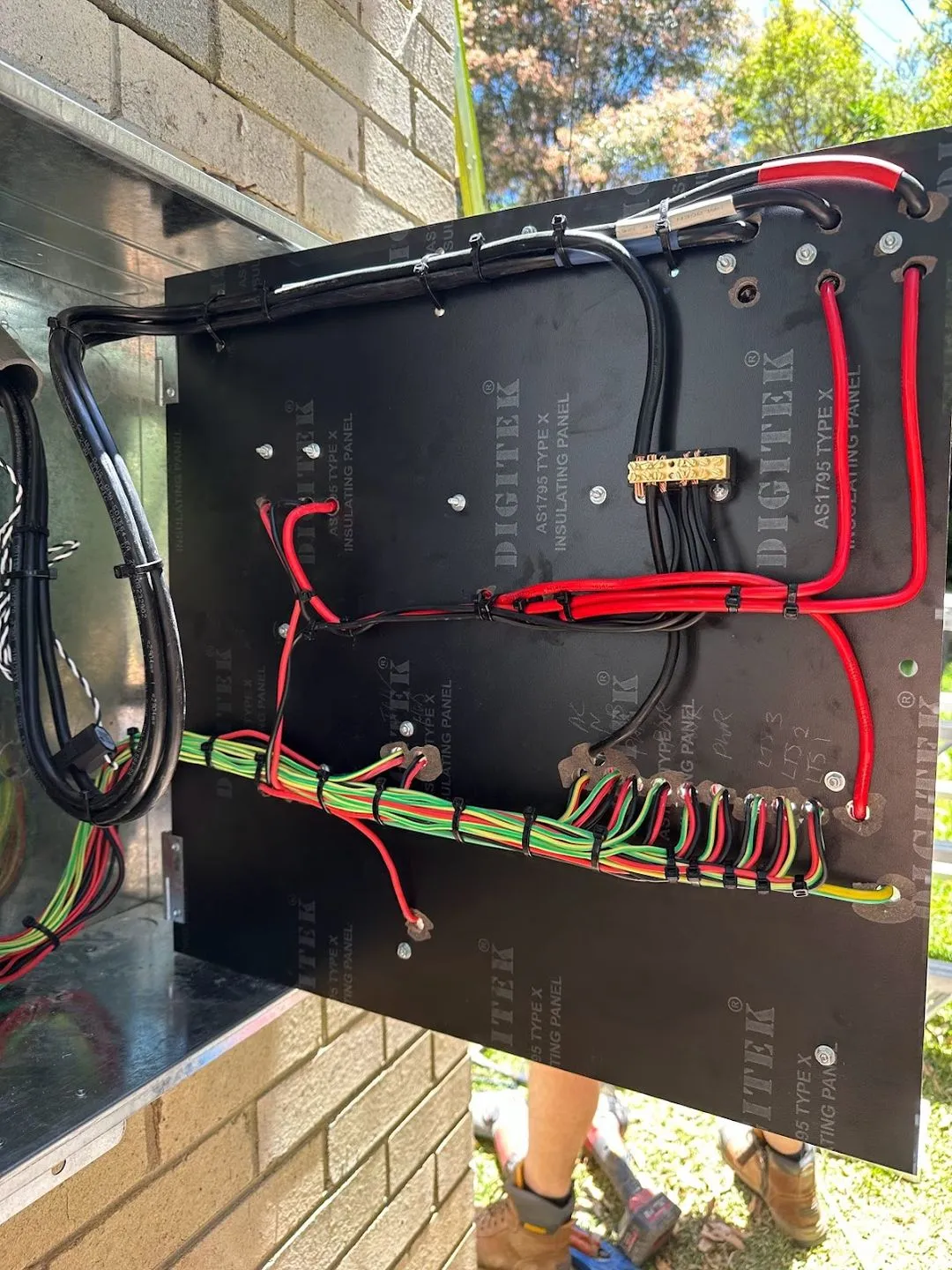
Before any new circuits go in, a Level 2 ASP electrician works out the facility's maximum demand, the method set out in AS/NZS 3000's Appendix C for calculating the realistic combined load of every circuit rather than simply adding up each appliance's rated wattage. This tells you honestly whether the existing switchboard and consumer mains have room for the new lighting, climate control and irrigation circuits, or whether a switchboard upgrade or power supply upgrade is needed first.
If the maximum demand assessment shows the site needs more capacity from the network itself, that becomes a distributor application through Ausgrid or Endeavour Energy. It is worth using our postcode checker to check your network area in seconds before starting that process, since the application pathway and timeframes differ between the two distributors.
Why it's Level 2 ASP work
Any work on the consumer mains, the main switchboard or a new three phase connection has to be done by a Level 2 Accredited Service Provider, not a standard electrician. A Level 2 electrician is authorised to work on the supply side of the meter, which covers exactly the kind of switchboard and supply capacity increase a growing hydroponic or greenhouse operation usually needs. For a facility planning a genuinely large supply increase, bringing in Level 3 design early can also help the switchboard and cabling plan properly accommodate future expansion rather than being redesigned again in a year or two.
How High Demand Electrical helps
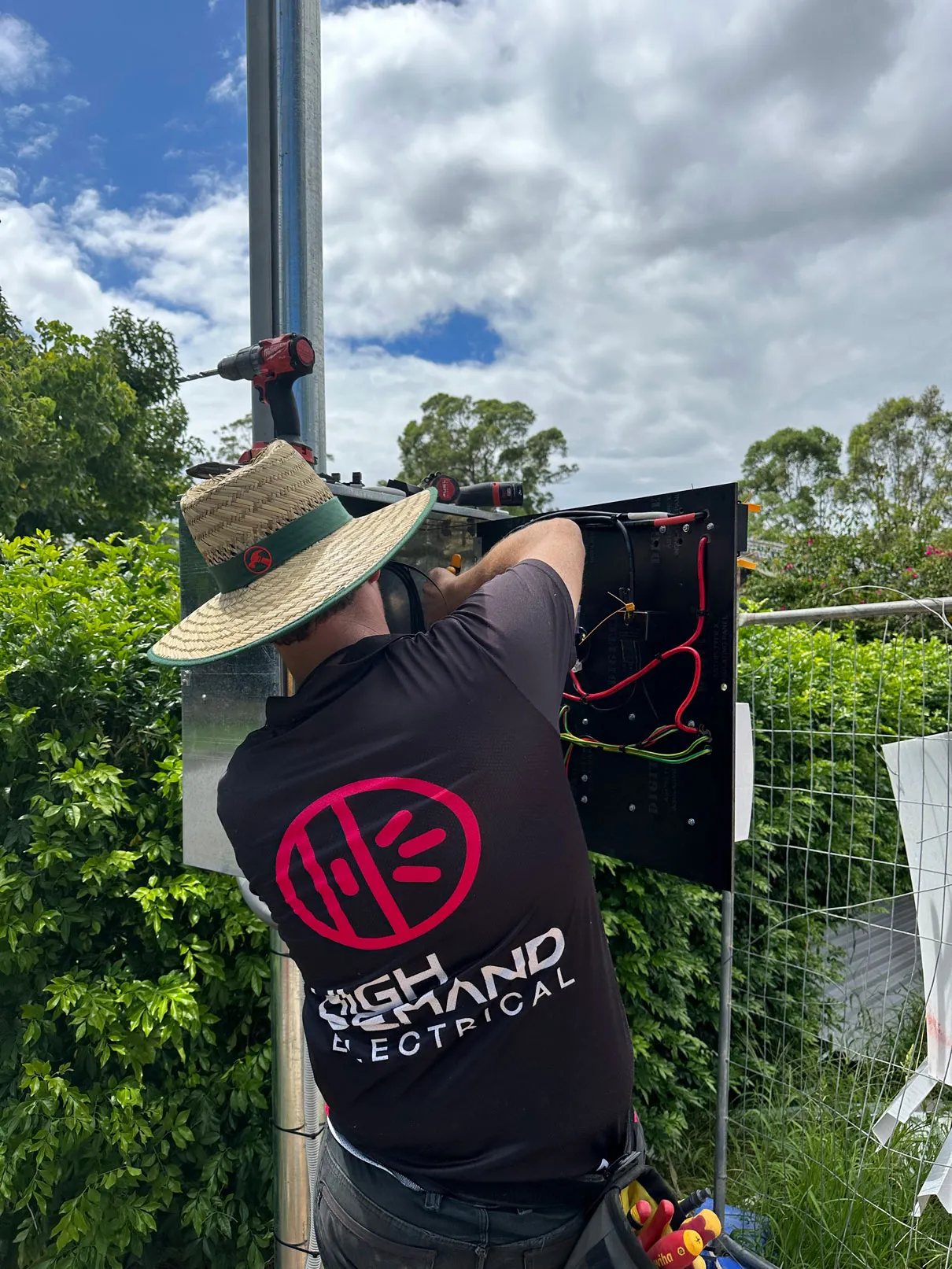
High Demand Electrical is one of Sydney's most trusted Level 2 ASPs for exactly this kind of commercial supply and switchboard work, and we have priced and installed circuits for plenty of growers, nurseries and light industrial operators who outgrew their original single phase setup. We are a licensed local team, not a call centre, so the same electricians who do the maximum demand assessment are the ones back on site to carry out the switchboard upgrade or three phase connection. We service homes and businesses across Sydney's West, South West and Sutherland Shire, and we always start with a proper site assessment rather than quoting a greenhouse or hydroponic job sight unseen, because every growing operation's lighting, cooling and irrigation load is genuinely different.
Greenhouse and Hydroponic Electrical FAQs (Sydney)
Do I need council approval for a commercial greenhouse electrical upgrade?
Council approval requirements depend on the structure and the scale of the operation, and sit separately from the electrical compliance certificate your electrician provides for the wiring work itself. Check with your local council on the structural and land use side while your electrician handles the switchboard and circuit compliance.
How much does a three phase upgrade cost for a hydroponic facility?
Cost depends on how far the existing supply is from three phase ready, the distance to the switchboard, and whether the distributor needs to upgrade the network connection as well. A proper quote only follows a site assessment and maximum demand calculation, never a flat figure given sight unseen.
Can I add grow lights to my existing switchboard myself?
No. Any new circuit on the switchboard, and certainly anything feeding a damp growing area, needs to be installed and certified by a licensed electrician. See our electrical safety inspection service if you are not sure what your current switchboard can safely take.
What size cable do I need for a bank of grow lights?
Cable size depends on the combined continuous load of that light bank, the run length to the switchboard and the ambient temperature in the growing area, which is exactly the kind of calculation a Level 2 electrician does as part of the circuit design rather than a general rule of thumb.
Does a small hobby setup need the same RCD protection as a commercial facility?
Yes, any damp or wet growing area needs appropriate residual current device protection regardless of scale, though the number of circuits and the complexity of the switchboard work grows significantly once the operation becomes a genuine commercial facility.
Ready to upgrade your greenhouse or hydroponic facility's power supply?
Get a Power Supply Upgrade Quote or get a Switchboard Upgrade Quote from High Demand Electrical. Call 0402 559 777 to talk through your growing operation's load. Every job needs a site assessment before we can confirm scope or pricing, since lighting, cooling and irrigation loads vary so much between facilities.
Need Help Fast?
Related Services

Powering Your Needs with Expertise
If you’re looking for a reliable, experienced, and prompt electrician, look no further than High Demand Electrical. We cater to all your electrical needs, from routine maintenance to emergency repairs and complete system installations. Our skilled team is committed to providing professional service that ensures your electrical systems run smoothly. Whether it's a small task or a large project, give us a call today. Let us meet all your electrical demands with the quality and reliability you deserve.

Licensed Level 2 ASP electricians across Sydney. Same-day service and 24/7 emergency response.
Licence 397193C
ABN 87 051 836 527
