What Are the Electrical Requirements for a Farm or Rural Property on Sydney's Fringe?
What electrical requirements apply to a farm or rural property on Sydney's outer fringe? A rural property needs its service connection, overhead run length and voltage drop assessed together before any shed, pump or workshop circuit is designed, because the long distances common on acreage blocks in areas like Hawkesbury, Wollondilly and Camden change the electrical calculations in ways a standard suburban block never has to consider. Getting the private power pole position, cable size and switchboard location right for the property's actual layout avoids a fix that costs far more once sheds, pumps and fencing are already built around the wrong assumptions.
⚡ Quick Answers: Farm and Rural Property Electrical Requirements
- Why is a rural property's electrical design different from a suburban home? Longer cable runs between the connection point, the house, sheds and pumps mean voltage drop becomes a real limiting factor, not just a cable size table lookup.
- Does a long underground run need special approval? Yes, under the Service and Installation Rules of NSW, an underground run exceeding 50 metres on a rural property means the network nominates where your connection point sits, rather than you choosing it freely.
- Can one switchboard supply the house, shed and pump all at once? It can on paper, but splitting loads across submains with their own protection is usually the safer and more practical approach once distances and equipment add up.
- Does a shed or workshop on acreage need three phase power? Many do, particularly where irrigation pumps, machinery or a serious workshop setup are involved, and that usually means planning the connection for three phase from the outset rather than retrofitting it later.
- Who installs the private power pole on a rural property? A Level 2 Accredited Service Provider, since the pole and overhead run connect directly to the network's own infrastructure.
- What's the most common electrical mistake on rural blocks? Undersizing cable for the actual run length to a shed or pump, which shows up later as dim lighting, struggling motors or voltage drop well outside AS/NZS 3000's limits.
1. Why distance changes the calculation
On a standard suburban block, the distance from the switchboard to the furthest power point is usually short enough that voltage drop barely enters the conversation. On acreage, a cable run from the house switchboard to a back shed, bore pump or machinery shed can easily stretch past one hundred metres, and AS/NZS 3000 sets a maximum allowable voltage drop for exactly this reason: too much resistance over distance and equipment at the far end runs hot, inefficient and under its rated performance. Appendix B of the standard sets out maximum route lengths for common cable and protection combinations, which is the starting point for sizing any long rural run properly rather than guessing.
This is one of the few situations where simply upsizing the cable is the correct, standard answer, rather than an expensive overreaction. A cable sized correctly for current alone can still fail the voltage drop limit over a long enough run, which is why rural jobs need a proper calculation rather than a rule of thumb carried over from suburban work.
2. Overhead runs, private power poles and connection points
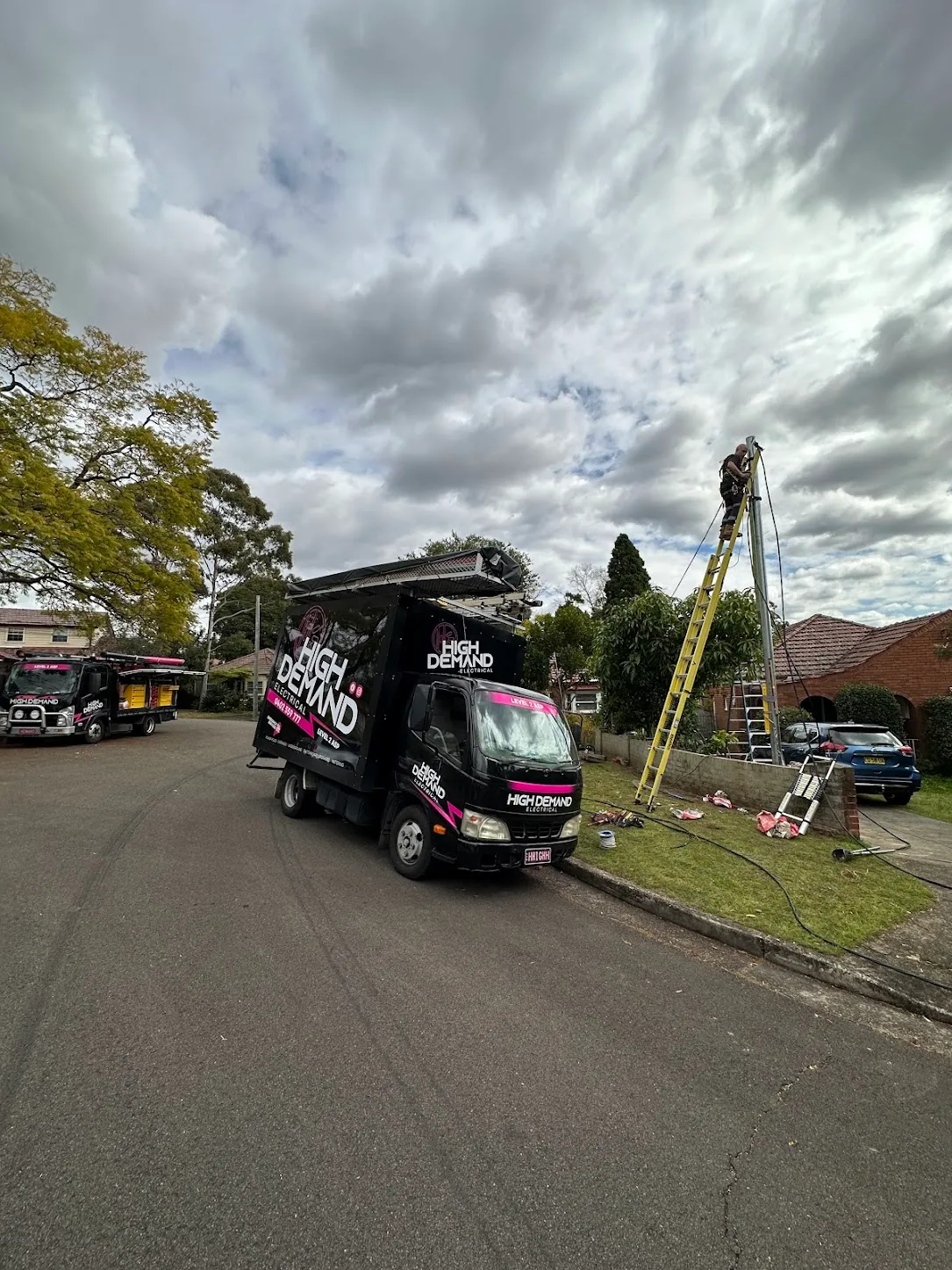
Many rural properties are supplied by an overhead line from the street to a private power pole somewhere on the block, rather than a short underground run straight to the house. Our private power pole installation service covers exactly this kind of connection, including the structural and clearance requirements that come with a longer overhead span across open paddock or driveway. Where an underground connection is preferred instead, the Service and Installation Rules of NSW specifically address rural runs: once an underground service on a rural property would exceed 50 metres, the network nominates where the connection point sits rather than leaving the choice entirely to the property owner.
Overhead and underground rural work also sits alongside the network's own rural electrification infrastructure, including the single wire earth return lines used in some remote areas to supply single phase power at lower cost over very long distances. Most properties within Sydney's outer fringe sit on standard two or three wire supply rather than single wire earth return, but it is worth understanding the difference if your property backs onto genuinely remote network infrastructure.
Sydney's rural fringe sits across both Ausgrid and Endeavour Energy territory, and the two networks run different application processes and timeframes for a new rural connection or a private power pole. Before lodging any connection application, check your network area in seconds with our postcode checker, since confirming the right distributor first avoids delays further down the application process.
3. Pump circuits, irrigation and stock watering
Bore pumps, irrigation pumps and stock watering systems are often the furthest electrical load from the house on a rural property, and they are also some of the most important to get right, since a failed pump circuit can mean stock without water or crops without irrigation at the worst possible time. Submersible pumps have their own specific earthing requirements under AS/NZS 3000, separate from the general earthing rules for fixed equipment, and a pump circuit run a long distance from the main switchboard needs the same voltage drop assessment as any other far flung rural load.
Where a pump shares a switchboard with other shed or paddock equipment, we recommend dedicated circuit protection for the pump alone, so a fault on a stock trough heater or shed lighting circuit cannot take the pump offline during a critical watering cycle.
4. Sheds, workshops and three phase power on acreage
A serious rural workshop, whether it is machinery maintenance, a hobby farm business or genuine agricultural equipment, often benefits from three phase power the same way any light industrial workshop does. If the property currently only has single phase supply, upgrading to three phase for a shed is Level 2 ASP work, since it usually involves the network's own service connection rather than just internal wiring. Our single phase to three phase upgrade guide covers the process, and the same general wiring principles we set out for a shed and workshop wiring apply just as directly on acreage as they do on a standard suburban block, with the added complication of run length from the switchboard.
Wash down areas common on rural properties, such as dairies, milking sheds, shearing sheds and produce washing and packing areas, fall under AS/NZS 3000's sanitisation and hosing down rules by name, which means classified zones, restricted protection methods and mandatory RCD protection apply just as they would in a commercial food production site.
5. Planning the switchboard and submain layout for the whole property
Rather than running every shed and pump as a separate circuit straight back to the main switchboard, most rural properties are better served by one or more submain switchboards positioned closer to clusters of equipment, each protected and metered appropriately. This reduces total cable length, keeps voltage drop manageable, and makes isolating a single shed or pump for maintenance far simpler than working at the main board every time. Our private power pole installation team at HD Power Pole covers exactly this kind of whole property planning for rural and semi rural blocks, including the three phase capacity planning that acreage workshops and irrigation systems often need; see HD Power Pole's guide to three phase power through a private power pole for how that planning works in practice.
Why it's Level 2 ASP work
Any new private power pole, overhead or underground connection upgrade, or three phase conversion on a rural property connects directly to the network's own infrastructure, which puts it squarely in Level 2 ASP territory rather than standard electrical work. We manage the overhead service mains installation or underground service mains installation, whichever suits your property's layout, along with the network application and final connection.
How High Demand Electrical helps
We are a licensed local team, not a call centre, and we understand that rural and acreage properties across Sydney's outer fringe need a different planning approach to a standard suburban job, not just a longer cable. We assess the whole property layout, from the connection point through to the furthest shed or pump, before recommending cable sizes or submain positions, and we handle the private power pole, overhead or underground connection and any three phase upgrade as one coordinated project with a single Level 2 ASP team.
Farm and Rural Property Electrical FAQs (Sydney)
How far can a power run go before voltage drop becomes a problem?
It depends on the cable size, the current drawn and the protection device, which is exactly why AS/NZS 3000's voltage drop limits and route length tables exist rather than a single fixed distance. A proper calculation during a site assessment is the only reliable answer for your specific layout.
Do I need council or network approval for a new private power pole?
Yes, a new private power pole involves both the network's own approval process and generally a council assessment, which we manage as part of our private power pole installation service.
Can an existing single phase rural property be upgraded to three phase?
In most cases yes, though the process and cost depend on the network's existing infrastructure near your property. See our single phase to three phase upgrade guide for how the assessment works.
Does a stock watering pump need RCD protection?
Yes, like any other fixed electrical equipment, a pump circuit needs appropriate RCD protection, and submersible pumps carry their own specific earthing requirements under AS/NZS 3000.
Who do I call for storm damage to an overhead line on a rural property?
Call our electrical storm damage line on 0402 559 777 immediately, and keep clear of any fallen or sagging overhead conductors until a Level 2 ASP confirms the line is safe.
Get a Private Power Pole Quote: Call High Demand Electrical on 0402 559 777 for your farm or rural property's connection, overhead run or three phase upgrade. Every job needs an on site assessment before scope or pricing can be confirmed.
Need Help Fast?
Related Services

Powering Your Needs with Expertise
If you’re looking for a reliable, experienced, and prompt electrician, look no further than High Demand Electrical. We cater to all your electrical needs, from routine maintenance to emergency repairs and complete system installations. Our skilled team is committed to providing professional service that ensures your electrical systems run smoothly. Whether it's a small task or a large project, give us a call today. Let us meet all your electrical demands with the quality and reliability you deserve.

Licensed Level 2 ASP electricians across Sydney. Same-day service and 24/7 emergency response.
Licence 397193C
ABN 87 051 836 527
