What Are the Electrical Requirements for a Dental Laboratory in Sydney?
What are the electrical requirements for a dental laboratory in Sydney? A dental laboratory needs dedicated circuits for casting and burnout furnaces, vacuum forming and vacuum mixing equipment, compressors and polishing gear, each protected by an RCD safety switch and sized correctly on the switchboard. Most working labs end up needing three phase power once this equipment runs together, because a single phase supply sized for a small office or retail tenancy runs out of headroom fast. Getting the switchboard assessment right before fitout, rather than after the first tripped breaker, saves real money and keeps production moving.
⚡ Quick Answers: Dental Laboratory Electrical Requirements
- Do dental labs need three phase power? Many do once casting machines, burnout furnaces, compressors and milling equipment are all drawing at once, because the combined load often exceeds what a single phase supply can safely carry.
- What circuits need to be dedicated? Burnout and sintering furnaces, casting machines, compressors and larger extraction fans each need their own dedicated circuit sized to the equipment's actual rated load, not shared with general power points.
- Is RCD protection compulsory in a dental lab? Yes. AS/NZS 3000 requires RCD (safety switch) protection on final subcircuits in commercial premises including workshops and laboratories.
- How much switchboard capacity does a lab actually need? It depends on existing load plus every new machine, worked out using the maximum demand calculation method in AS/NZS 3000, which is why a proper assessment comes before any quote.
- Who can upgrade a lab's switchboard or supply? Work on consumer mains, service mains and metering is Level 2 ASP work. A standard electrical licence does not cover it.
- Can an existing tenancy fitout be upgraded without a full rewire? Often yes, with a switchboard review and new dedicated circuits run to each machine's position, though older tenancies sometimes need a consumer mains or service mains upgrade too.
1. Casting and burnout furnaces are the biggest single load
Every working lab runs some form of burnout oven to remove wax patterns before casting, plus a casting unit (induction or centrifugal) to cast crowns, bridges and denture frameworks. These units cycle to high temperatures and draw well beyond what a standard 10 amp general power outlet is designed to carry continuously. Each furnace and casting machine needs its own dedicated circuit, sized to the manufacturer's rated load, not daisy chained off the same circuit as benchtop lighting or a kettle in the staff room.
Larger induction casting units and bigger burnout ovens, especially in labs running multiple shifts or high volume crown and bridge work, often push a tenancy toward a three phase supply. A single phase to three phase upgrade spreads this heavy load evenly across three circuits instead of overloading one, which is exactly the kind of work that should be assessed before new equipment is ordered, not after it arrives and will not run properly. Our guide on what actually changes with a three phase upgrade walks through the process in more detail if you want the background before a quote.
2. Vacuum forming and vacuum mixing equipment adds continuous load
Vacuum forming machines are used constantly for mouthguards, splints, denture bases and orthodontic appliances, while vacuum mixers prepare investment material for casting. These are typically single phase machines, but they often run for long stretches across a shift alongside furnaces, compressors and lighting. Treating them as an afterthought on a shared circuit is a common cause of nuisance tripping in older lab fitouts.
A dedicated circuit for each vacuum unit, positioned close to the bench it sits on, keeps the load predictable and makes future equipment moves far simpler because the wiring already matches the bench layout rather than trailing extension leads across the workshop floor.
3. Compressed air, polishing and sandblasting equipment
Air compressors supply sandblasting cabinets used to clean castings, along with micromotors, polishing lathes and ultrasonic cleaners. Compressors draw a high starting current even when their running load looks modest on the nameplate, so they need a dedicated circuit with a breaker rated for that startup surge, not just the running amps. Larger shop compressors feeding several workstations at once are another common trigger for a three phase connection.
Polishing lathes and micromotors are usually single phase, but a lab with several benches running them together adds up quickly. This is where a proper power supply upgrade assessment earns its keep, because it looks at total connected load across the whole floor rather than one machine at a time.
4. Digital workflows and CAD/CAM milling are changing the load profile
More Sydney labs are running digital workflows alongside traditional casting, with intraoral and desktop scanners, design workstations, milling machines for crowns and frameworks, and resin printers with curing units. Wet milling machines that use water or coolant need their circuits and isolation points positioned well clear of any water source, a standard electrical safety requirement that is easy to overlook in a tight lab layout.
Sintering furnaces for zirconia frameworks are a less obvious but genuinely significant load. A sintering cycle can run for several hours at high temperature, so this is effectively a continuous draw circuit, not a brief spike like a kettle. Labs upgrading from mostly manual processes to a full digital workflow often outgrow a switchboard that was only ever sized for the casting side of the business, which is why it pays to plan the electrical side around where the lab is heading, not just where it is today.
5. Ventilation and extraction need their own circuits too
Dust and fume extraction for grinding, polishing and sandblasting stations, plus general workshop ventilation around furnaces, all draw real power and need to be wired into fixed positions that match the bench layout. These circuits are easy to forget when a fitout is planned around the machines alone, and retrofitting extraction wiring after benches are installed is far more disruptive than including it in the original circuit plan.
6. Switchboard capacity and the maximum demand calculation
Before any new machine is ordered, a proper switchboard assessment should work out how much spare capacity actually exists. This uses the maximum demand calculation method set out in AS/NZS 3000, which accounts for existing load, diversity between machines that are not all running flat out at once, and the genuine draw of new equipment. Many small commercial tenancies, particularly in older strata buildings or converted retail spaces, only have a modest single phase supply that was never meant to run a workshop.
If the calculation shows the existing supply cannot safely carry the new load, the options are usually a switchboard upgrade, a three phase connection, or in some cases a full consumer mains upgrade where the supply into the building itself is the limiting factor. None of this should be guessed at. It needs a site assessment and a proper load calculation before pricing or scope is locked in, and our notes on what to look for in a switchboard upgrade quote are a useful starting point if you are comparing options.
Why it's Level 2 ASP work
Upgrading consumer mains, service mains or metering, the infrastructure between the street and the main switchboard, is Level 2 ASP (Accredited Service Provider) work, not standard electrical licence work. This covers new three phase connections, service mains replacements and most metering changes a growing dental lab is likely to need. A standard electrician can wire the internal circuits to each machine, but the connection work itself has to go through an accredited provider. Working with a single Level 2 ASP for both the internal fitout and the connection work avoids the back and forth of coordinating two separate trades on the same job.
How High Demand Electrical helps
High Demand Electrical is one of Sydney's most trusted Level 2 ASPs, and we assess dental lab fitouts the same way we would any commercial workshop with mixed heavy equipment, by mapping every furnace, casting unit, compressor and milling machine against the existing switchboard before a single new circuit is run. Where the numbers show the supply is tight, we handle the single phase to three phase upgrade, the switchboard upgrade and the metering change as one coordinated job rather than separate quotes from separate trades.
We are a licensed local team, not a call centre, servicing homes and businesses across Sydney's West, South West and Sutherland Shire, including the small commercial tenancies and strata units where most working dental labs operate. If your lab is adding a sintering furnace, a new casting unit or a digital milling setup and you are not sure the existing board can take it, a electrical safety inspection and load assessment is the sensible first step before equipment is ordered.
Dental Laboratory Electrical Requirements FAQs (Sydney)
Do I need to apply to the network distributor for a dental lab fitout?
Not always. Many internal switchboard upgrades do not require a new distributor connection, but a three phase upgrade or any work that changes the capacity coming into the building usually does. A Level 2 ASP can confirm whether your job needs a distributor application as part of the site assessment.
How long does a switchboard upgrade take for a working lab?
Timeframes depend on the scope, whether new three phase supply is needed, and whether any distributor approval is required, so this is confirmed after a site assessment rather than quoted sight unseen. Most internal switchboard work can be scheduled to minimise disruption to a working lab.
Can I run casting furnaces and compressors on the existing single phase supply?
Sometimes, if the combined load is genuinely within capacity and each machine has its own dedicated circuit, but many labs outgrow a single phase supply once two or three heavy machines run together. A maximum demand calculation will confirm whether your existing supply has room before you commit to new equipment.
What happens if my switchboard keeps tripping when I run multiple machines?
Repeated tripping usually means either a shared circuit is carrying more than it was designed for, or the overall switchboard is at capacity. Both point to an assessment rather than simply resetting the breaker and hoping it holds, since nuisance tripping on commercial equipment is a safety and reliability issue, not just an inconvenience.
Does a dental lab need surge protection?
It is worth considering given the cost of casting units, milling machines and digital workstations, since a voltage spike can damage sensitive electronics in a single event. See surge protection installation for how this is typically added at the switchboard.
Is this the same as the electrical requirements for a dental clinic?
No. A dental clinic is a patient care environment with chairs, imaging equipment and sterilisation units, while a dental laboratory is a fabrication workshop with furnaces, casting machines and compressors, a genuinely different load profile. If you are after the clinic side of dentistry, see our separate guide on medical and dental practice electrical fitouts.
If you are planning a new dental laboratory fitout or adding heavier equipment to an existing one, get a Switchboard Upgrade Quote before you order anything. Call 0402 559 777 to arrange a site assessment, since every job needs one before scope or pricing can be confirmed.
Need Help Fast?
Related Services

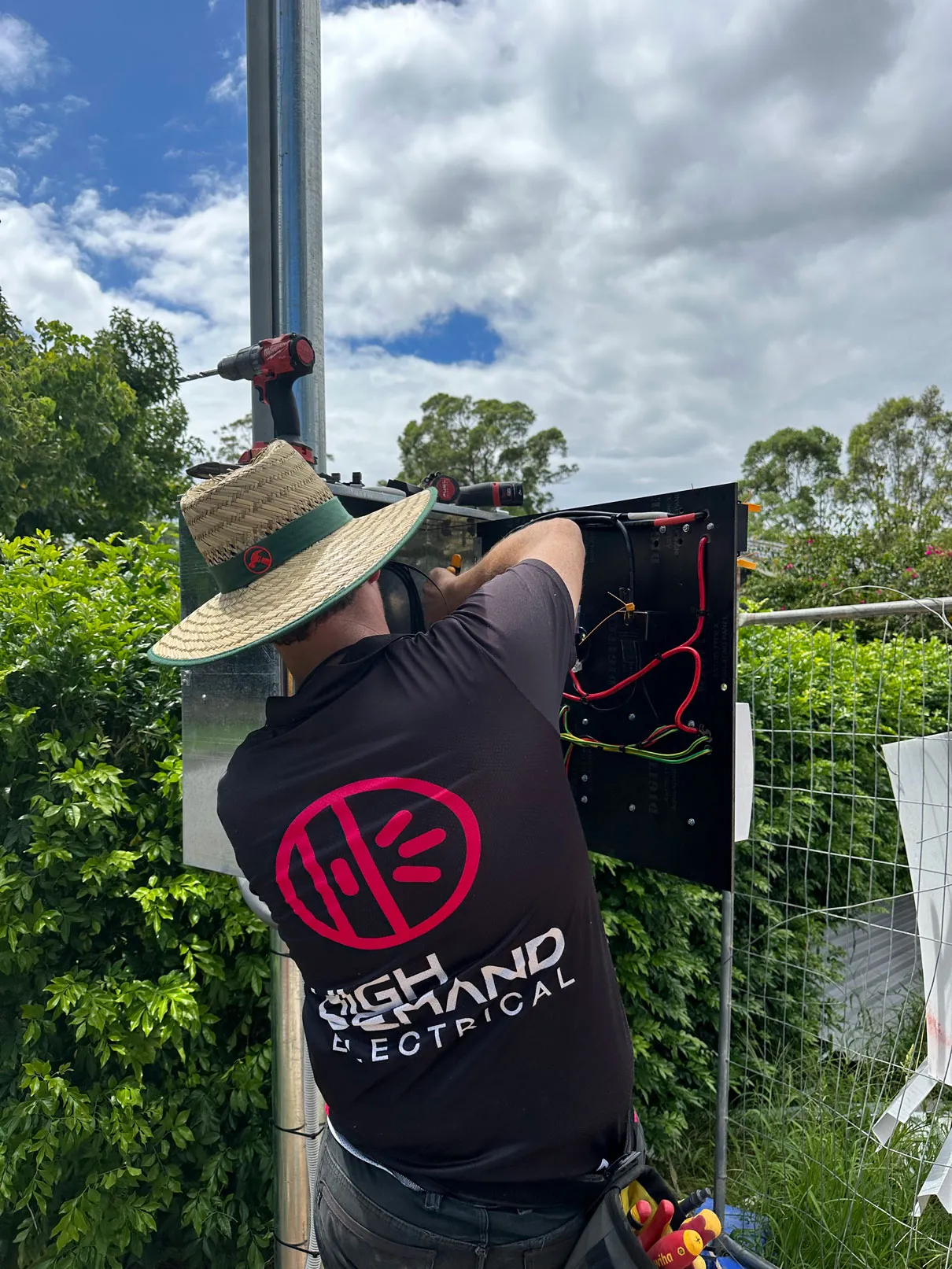

Powering Your Needs with Expertise
If you’re looking for a reliable, experienced, and prompt electrician, look no further than High Demand Electrical. We cater to all your electrical needs, from routine maintenance to emergency repairs and complete system installations. Our skilled team is committed to providing professional service that ensures your electrical systems run smoothly. Whether it's a small task or a large project, give us a call today. Let us meet all your electrical demands with the quality and reliability you deserve.

Licensed Level 2 ASP electricians across Sydney. Same-day service and 24/7 emergency response.
Licence 397193C
ABN 87 051 836 527
