Consumer Mains Upgrade Sydney: What It Is, When You Need It, and What Happens Next
Written by Chris · Licensed Level 2 ASP Electrician · Licence 397193C · Published 3 November 2026
Consumer Mains Upgrade Sydney: What Are Consumer Mains? (Plain English Explanation)
Most homeowners have never heard the term until a problem forces the conversation. If you've just been quoted a consumer mains upgrade in Sydney and had no idea what that meant, here's the plain version: the consumer mains is the cable running from Ausgrid's connection point, the service fuse at your power pole, or where the street cable meets your home, all the way to your main switchboard. Every appliance you run, every light you switch on, flows through that single cable.
In this guide
The consumer mains is not your internal house wiring. Power points, light fittings, and internal circuits are a general electrician's territory. The consumer mains sits at the boundary between Ausgrid's network and your home's electrical system, and even though Ausgrid controls the service fuse at the connection point, maintaining and replacing the cable itself is your responsibility as the property owner, not theirs.
Because the consumer mains connects directly to live Ausgrid infrastructure, strict licensing rules apply in NSW. A general electrician cannot legally touch it, which is why a consumer mains upgrade in Sydney must be carried out by an accredited Level 2 ASP.
Why Do Consumer Mains Need Upgrading in Sydney?
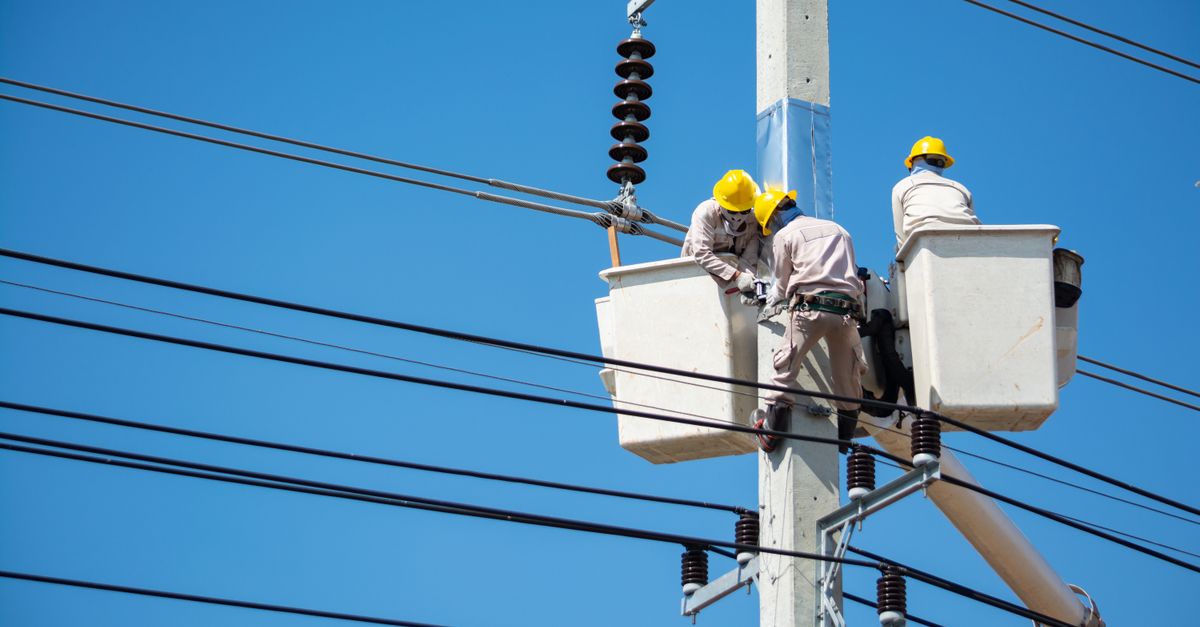
Age: most Sydney homes built before 1980 have undersized aluminium cable
Pre-1980 homes commonly have 4mm² or 6mm² aluminium consumer mains, with a typical 6mm² cable supporting only about 40 amps, installed at a time when the average household used a fraction of what a modern family draws. Those sizes were never designed to carry the current an EV charger, a solar inverter, or a ducted reverse-cycle system demands.
Modern homes typically need at least 16mm² or 25mm² cable to support those loads safely, and those outdated systems are now commonly replaced with cross linked polyethylene (XLPE) cabling. The old cable may look intact on the outside, but the insulation is often brittle, aluminium corrodes at termination points over time, and the cross-section is almost certainly too small for what you're asking it to do. XLPE cabling supports higher loads than older cable and improves safety by reducing fire risks associated with ageing insulation. For Sydney homeowners weighing up whether to proceed, recognising these warning signs early is the most reliable way to avoid a forced consumer mains upgrade under emergency conditions.
New appliances and connections pushing the limits
Planned electrical changes are one of the most common triggers for a consumer mains upgrade in Sydney, whether that means EV chargers, ducted aircon, induction cooktops, modern solar export, or three-phase supply upgrades. When a homeowner applies to add any of these, Ausgrid's technical specifications require the consumer mains to be sized for the requested supply. If the existing cable is too thin, older mains may not have the capacity to maintain a reliable power supply, and Ausgrid won't approve the new installation until it's replaced. The charger or solar system stalls not because of paperwork, but because the cable genuinely cannot carry the current safely.
If you're planning an EV charger installation in Sydney or want to understand how to assess your switchboard capacity before adding a charger, check whether a consumer mains upgrade is also on the cards before you finalise your budget.
Ausgrid defect notices and switchboard inspections
Not every trigger is a new appliance. Ausgrid can issue an electrical defect notice if they identify consumer mains that are damaged, undersized, or no longer meet current technical requirements, and that notice may require the owner to replace outdated systems rather than just fix visible damage. A switchboard upgrade can expose the problem too; on an older Sydney home, opening the board and finding 4mm² aluminium feeding a modern switchboard is common. Switchboard work and consumer mains replacement are related rather than automatic companions, so replacing the cable alone may not be enough if the board also needs attention. In those cases, combining both scopes into a single planned outage is the most practical approach for Sydney households.
Overhead vs Underground: Does It Change Anything?
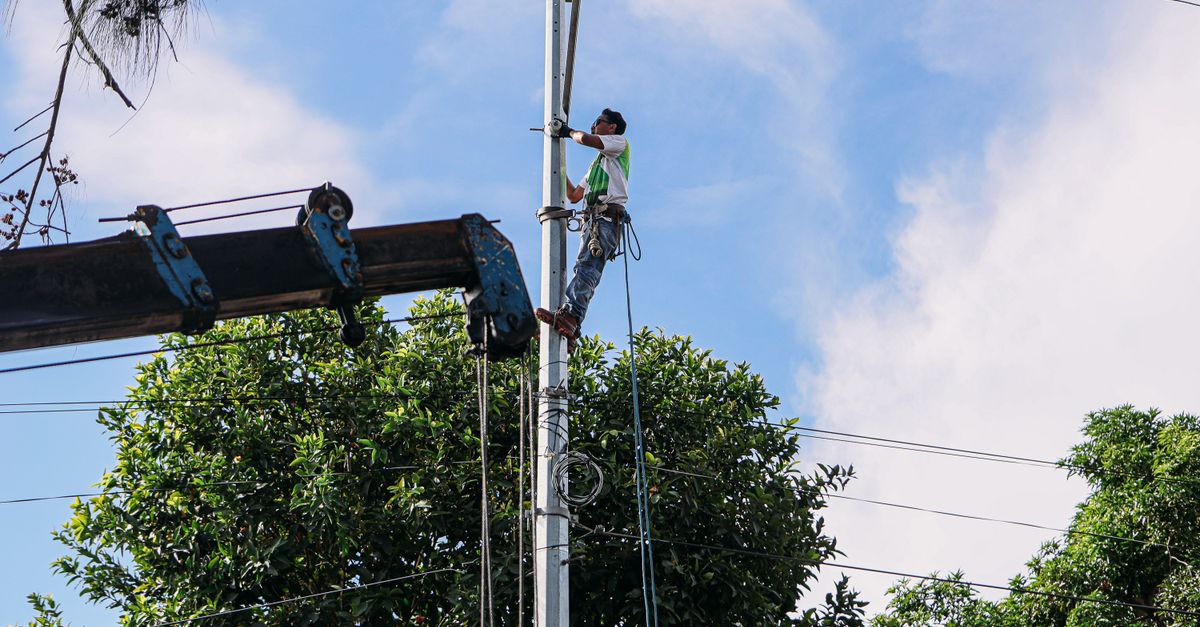
Sydney's older inner suburbs, including the Inner West, Leichhardt, Newtown, Paddington, Glebe and surrounds, predominantly have overhead service cables running from the street pole to the home's point of attachment. Newer suburbs and many properties across the wider Sydney metro area have underground service lines running through conduit below the footpath.
Overhead consumer mains upgrade jobs involve working at height at the point of attachment and running new cable along the existing overhead route. Underground replacements may require excavation to access the conduit, or installing a new conduit run entirely. Some properties use a private pole, and the choice between overhead installation and underground installation depends on the site layout. The physical process differs, but the licensing requirement is identical: both must be performed by a Level 2 ASP. The rules for overhead service spans and cable sizes in Sydney are worth reading alongside this guide if your property has an overhead connection, and whichever route is used, the work must meet local NSW standards and AS/NZS 3000:2007 requirements.
Who Can Actually Do This Work?

This is the part that surprises most homeowners seeking a consumer mains upgrade in Sydney. The work cannot be performed by a general licensed electrician. The consumer mains cable may also extend to the meter box area and metering equipment, and at minimum requires coordinating the disconnection of the service fuse on the Ausgrid network, which puts it firmly in Level 2 ASP territory.
A Level 2 ASP is an accredited service provider authorised for this network-facing scope under Ausgrid rules. That service provider accreditation defines who can lawfully perform the work on infrastructure and cables that connect directly to the network. Carrying out a consumer mains upgrade in Sydney without that accreditation is illegal. If a tradie offers to do it without Level 2 credentials, walk away. The work won't be inspected correctly, it won't be connected safely, and your property may end up without a valid electrical certificate.
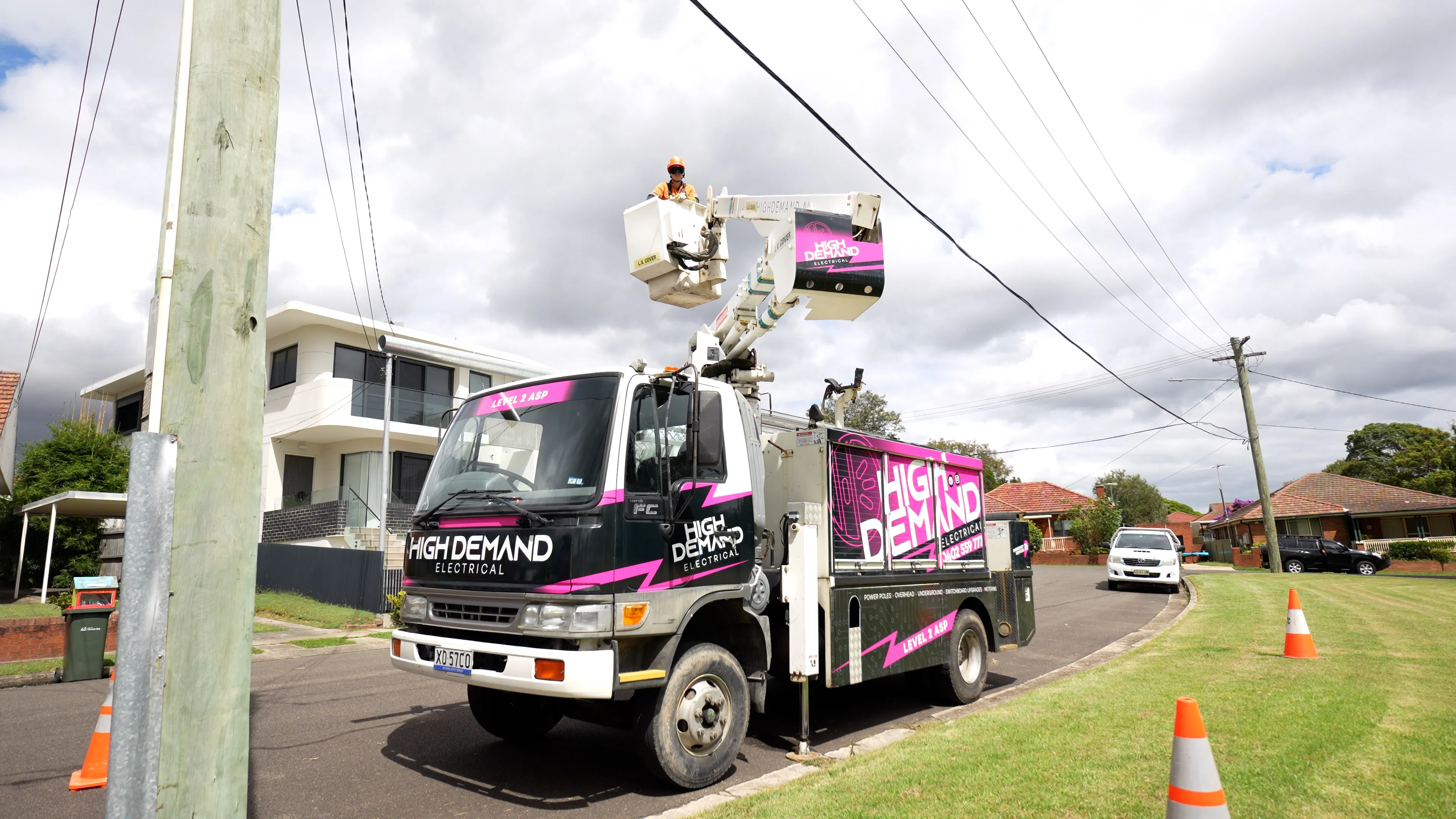
High Demand Electrical is an Ausgrid-accredited Level 2 ASP, licence 397193C. That accreditation lets us apply for the Ausgrid disconnection permit, carry out the physical upgrade, and have Ausgrid inspect and reconnect, handling the whole process so you don't have to navigate the paperwork yourself. The same Level 2 framework also applies in other NSW network areas such as Endeavour Energy.
Consumer Mains Upgrade Sydney: The Step-by-Step Process
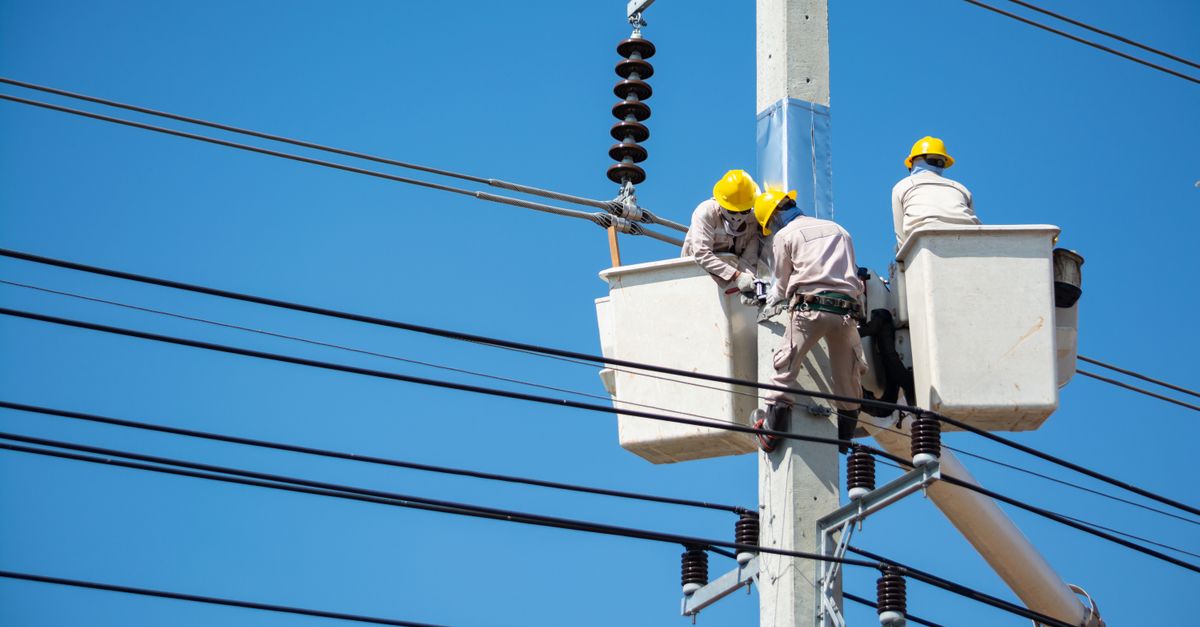
Once you've confirmed a consumer mains upgrade is needed, the work follows a clear sequence.
First, High Demand Electrical submits the application to the local electricity distributor for a disconnection permit, the authorisation that allows work to proceed. The distributor reviews the application, and approval can take anywhere from about 5 business days to several weeks depending on the job, before a disconnection window is scheduled so supply to your property can be isolated safely.
On the day, our team disconnects supply at the point of attachment. The existing consumer mains is removed and the new cable is installed from the service fuse or point of attachment through to your main switchboard. Once all connections are made, Ausgrid inspects the completed work. A Certificate of Compliance for Electrical Work (CCEW) is issued after the upgrade. For standard upgrades, that inspection happens the same day, and power is restored once Ausgrid is satisfied everything meets their technical requirements.
Your property is without power from disconnection through to Ausgrid's sign-off. The onsite installation itself typically takes about 2 to 8 hours, while the agreed outage window covers the disconnection, works, inspection, and reconnection. If a switchboard upgrade is also being done alongside the consumer mains upgrade, it is often scheduled in the same outage. For most standard upgrades across Sydney, that's a manageable portion of a single day.
How Much Does a Consumer Mains Upgrade Cost in Sydney?
Several factors affect the price of a consumer mains upgrade in Sydney: cable run length, overhead versus underground service, single-phase versus three-phase supply, and the condition of existing infrastructure around the work area. For a straightforward job, consumer mains upgrades typically start at about $600 to $1200, but site conditions can change that quickly. Underground jobs generally involve more labour than overhead ones. Three-phase upgrades are more involved than single-phase. If a switchboard upgrade is required at the same time, that commonly adds about $1,000 to $2,500. Because those variables shift the cost considerably, publishing a flat rate here would be misleading.
The practical step is to have one of our Level 2 ASPs assess the job and give you upfront pricing with transparent pricing before work begins, so you know the scope and avoid hidden costs. Call us on 0402 559 777 or use our contact page to arrange a free consultation and detailed quote.
Frequently asked questions
Can a regular electrician do a consumer mains upgrade?
No. Only an Ausgrid-accredited Level 2 ASP can carry out a consumer mains upgrade in Sydney. This is network side electrical work, so a general electrician cannot legally treat it as general electrical work or touch the consumer mains or the service fuse. High Demand Electrical holds Level 2 ASP accreditation (licence 397193C) and manages the full Ausgrid permit and inspection process. That accreditation authorises this specific scope of work, not every type of installation.
How long will I be without power during an upgrade?
For standard consumer mains upgrades in Sydney, the disconnection, cable replacement, and Ausgrid inspection typically all happen within the same day. The outage window is usually agreed in advance so you know when power will be off, and any electrical appliances will be unavailable during that period. You'll be without power from the time of disconnection until Ausgrid completes their inspection and restores supply.
What size cable does my Sydney home actually need?
Pre-1980 homes commonly have 4mm² or 6mm² aluminium consumer mains, which is undersized for modern loads. On longer runs to the main switchboard or meter box, voltage drop can mean a larger cable size is needed. Modern homes typically need at least 16mm² or 25mm² cable so the supply to the main switch can safely support EV chargers, solar inverters, ducted air conditioning, and other high-load appliances.
Does the type of service line — overhead or underground — affect who can do the work?
No. Both overhead and underground consumer mains replacements in Sydney must be performed by a Level 2 ASP. The physical process differs slightly between the two, but the licensing requirement is the same for each.
Why won't Ausgrid approve my solar or EV charger installation until the consumer mains is replaced?
Ausgrid's technical specifications require the consumer mains to be sized appropriately for the supply being requested within the wider supply network. If the existing cable is too thin to safely carry the current needed for the new installation, or if the existing consumer mains fail current supply requirements due to low insulation resistance in some cases, Ausgrid will not approve the work until the consumer mains is upgraded to the correct specification. This is one of the most common reasons a consumer mains upgrade in Sydney becomes necessary before a solar or EV charger project can proceed.
How do I get a quote for a consumer mains upgrade in Sydney?
Call High Demand Electrical on 0402 559 777 or use the contact page to arrange an assessment, and mention your suburb when enquiring, especially if you're in the North Shore or other Sydney areas with differing network requirements. Costs vary depending on cable length, single versus three-phase supply, and whether the service is overhead or underground, so a site assessment is the best way to get an accurate figure for your consumer mains upgrade.
The High Demand Electrical teamHigh Demand Electrical publishes what it learns from the work itself.
Need Help Fast?
Related Services


Powering Your Needs with Expertise
If you’re looking for a reliable, experienced, and prompt electrician, look no further than High Demand Electrical. We cater to all your electrical needs, from routine maintenance to emergency repairs and complete system installations. Our skilled team is committed to providing professional service that ensures your electrical systems run smoothly. Whether it's a small task or a large project, give us a call today. Let us meet all your electrical demands with the quality and reliability you deserve.

Licensed Level 2 ASP electricians across Sydney. Same-day service and 24/7 emergency response.
Licence 397193C
ABN 87 051 836 527
