Buzzing switchboard: what it means and what to do
A buzzing switchboard is almost always a fault signal, not a background quirk. Loose connections, overloaded circuits, failing breakers or RCDs, internal arcing, and ageing components are the most common culprits, and every one of them carries a real fire risk if left unattended. Under Australian wiring rules (AS/NZS 3000), your switchboard must be maintained in a safe condition, which means a persistent or worsening buzz is not something to watch and wait on.
Immediate safety actions:
- Listen and observe from a safe distance. Do not open the switchboard cover.
- Turn off high-draw appliances to reduce load on the affected circuits.
- If you can safely reach the individual circuit breaker causing the issue, switch it off.
- If you smell burning, see smoke, or notice sparks, turn off the main switch and evacuate immediately. Call 000.
- If there is no visible fire but warning signs are present, call a licensed electrician for urgent attendance. High Demand Electrical provides 24/7 emergency make-safe response across Sydney.
Key takeaways
A buzzing switchboard almost always signals a fault that carries real fire risk, and prompt action by a licensed electrician is the only safe response.
| Point | Details |
|---|---|
| Buzzing usually means a fault | Loose connections, overloaded circuits, failing breakers, arcing, or ageing components are the most common causes. |
| Act immediately on warning signs | Burning smell, heat, sparks, or crackling sounds require you to reduce load, isolate if safe, and call 000 or a licensed electrician. |
| Never attempt DIY repairs | Unlicensed electrical work is illegal in NSW and risks electrocution or fire; always call a certified electrician. |
| Upgrade if the board is old or repeatedly faulting | Ceramic fuse boards and undersized panels need replacement, not repeated patching, to handle modern loads safely. |
| High Demand Electrical responds 24/7 | Certified Level 2 contractor with free site inspections for Level 2 work and emergency make-safe attendance across Sydney. |
Table of Contents
- What causes a switchboard to buzz or hum?
- How do you know if a buzzing fuse box is dangerous?
- What to do the moment you hear buzzing
- What will a licensed electrician check, and what does it cost?
- How to prevent switchboard buzzing before it starts
- When is a faint hum from your switchboard actually normal?
- Why High Demand Electrical treats every buzz as urgent
- Frequently asked questions
- High Demand Electrical: emergency make-safe, inspections, and upgrades
- Sources
What causes a switchboard to buzz or hum?
A humming switchboard is often an early warning of stress or a developing fault. Each cause creates noise in a slightly different way, and knowing the difference helps you describe the problem accurately when you call a tradesperson.
-
Loose terminal or connection. A loose screw terminal creates a high-resistance contact point. Current arcs across the gap, generating heat and a buzzing or crackling sound. Left unaddressed, the terminal discolours, the insulation degrades, and fire risk climbs steadily.
-
Overloaded circuit. When a circuit carries more current than its breaker rating, the breaker's internal bimetal strip heats and vibrates, producing a low hum or buzz. The sound often intensifies when a large appliance starts up.
-
Failing breaker or RCD (safety switch). Worn internal contacts or a degraded trip mechanism can cause the breaker to chatter or buzz even under normal load. A failing RCD that no longer trips correctly is particularly dangerous because it removes your primary protection against electrocution.
-
Arcing inside the board. Electricity jumping a gap between conductors or between a conductor and the enclosure produces a crackling or sizzling sound. Arcing is a direct fire hazard and should be treated as an emergency.
-
Ageing or mismatched components. Older ceramic fuse boards were not designed for modern household loads. Mismatched breakers or undersized busbars create stress points that hum under load. If you're unsure whether your panel meets current standards, read our guide on AS/NZS 3000 switchboard requirements in NSW.
-
Busbar corrosion. In coastal properties, salt air accelerates corrosion on busbars and terminal contacts, increasing resistance and generating heat and noise under load. Corroded contacts often need replacement rather than cleaning alone.
-
Ripple control contactors or small transformers. Some switchboards contain contactors for off-peak hot water or ripple control systems. These magnetic components can produce a low, consistent hum that is often benign, though a change in character signals a problem.
Pro Tip: Note whether the buzzing starts or intensifies when a specific appliance runs — an air conditioner, EV charger, or pool pump. That timing is one of the most useful diagnostic clues you can give an electrician, and it can cut diagnostic time significantly.
How do you know if a buzzing fuse box is dangerous?
Not every hum is a crisis, but some signs demand immediate action. Here is how to read the difference.
Call 000 and evacuate if you notice any of these:
- A burning or acrid smell from the switchboard area (an electrical burning smell in the house is never normal)
- Visible smoke, sparks, or flames
- The switchboard surface is warm or hot to the touch
- Scorch marks or discolouration around breakers or the enclosure
- A crackling or sizzling sound rather than a steady hum
Call a licensed electrician urgently (same day) if you notice:
- Frequent, unexplained tripping of breakers or RCDs
- The buzzing is loud, intermittent, or getting worse
- The noise coincides with a burning smell from the switchboard, even faint
- Breakers that feel warm when you touch the cover panel
Lower-immediacy (still needs inspection, not evacuation):
- A faint, steady hum that only appears under heavy load and stops when a large appliance is switched off
A switchboard that buzzes with crackling or sizzling noises can indicate arcing inside the panel. Arcing is a direct fire hazard. If you hear it, do not delay — reduce load immediately and call a licensed electrician.
What to do the moment you hear buzzing
Speed and sequence matter here. Follow these steps in order.
-
Observe without touching. Stand back and listen. Note the character of the sound (steady hum, crackling, intermittent buzz) and whether it changes when appliances cycle on or off.
-
Reduce load. Turn off high-draw appliances one at a time: air conditioners, electric ovens, pool pumps, EV chargers. If the buzzing stops or reduces, you have a strong clue about the source circuit.
-
Switch off the identified circuit at the breaker, if you can do so safely and without opening the switchboard cover.
-
Evacuate and call 000 if there is any smoke, burning smell from the switchboard, or visible arcing. Do not attempt to fight an electrical fire with water.
-
Call a licensed electrician for urgent attendance if warning signs are present but there is no visible fire. High Demand Electrical's emergency electrician service is available around the clock.
What not to do: Do not open the switchboard cover. Do not spray anything into the board. Do not attempt to tighten terminals or replace breakers yourself. Unlicensed electrical work is illegal in NSW and carries serious safety risks.
Pro Tip: Log the exact time the noise started and which appliances were running. A quick note on your phone takes 30 seconds and gives the attending electrician a head start on diagnosis.
What will a licensed electrician check, and what does it cost?
A qualified electrician will work through a structured diagnostic process before touching anything. Here is what that looks like in practice, and what remedial work typically follows.
Diagnostic steps:
- Isolation and visual inspection. The board is de-energised where safe, and the electrician checks for scorch marks, discolouration, loose wiring, and signs of overheating.
- Thermal imaging scan. A thermal camera identifies hotspots invisible to the naked eye, including loose terminals and overloaded conductors. This is one of the most reliable tools for locating the root cause of buzzing.
- Manual torque checks. Every terminal is checked and re-torqued to the manufacturer's specification. A loose terminal found here often explains the buzz entirely.
- Insulation and continuity testing. An insulation tester confirms the integrity of wiring insulation, particularly in older installations.
- Individual circuit load tests. A clamp meter measures actual current draw against breaker ratings to identify overloaded circuits.
- RCD trip testing. Each safety switch is tested to confirm it trips within the required time. A faulty safety switch that does not trip correctly must be replaced immediately.
Typical remedial actions and broad cost ranges:
| Work type | Typical duration | Notes |
|---|---|---|
| Terminal re-torque and minor rectification | 1–3 hours | Often resolves buzzing caused by loose connections |
| Single breaker or RCD replacement | 1–2 hours | Required when internal contacts are worn or the device fails testing |
| Dedicated circuit installation | 2–4 hours | Recommended for EV chargers, air conditioners, pool pumps |
| Full switchboard upgrade | Half day to multiple days | Required for old ceramic fuse boards or severely undersized panels |
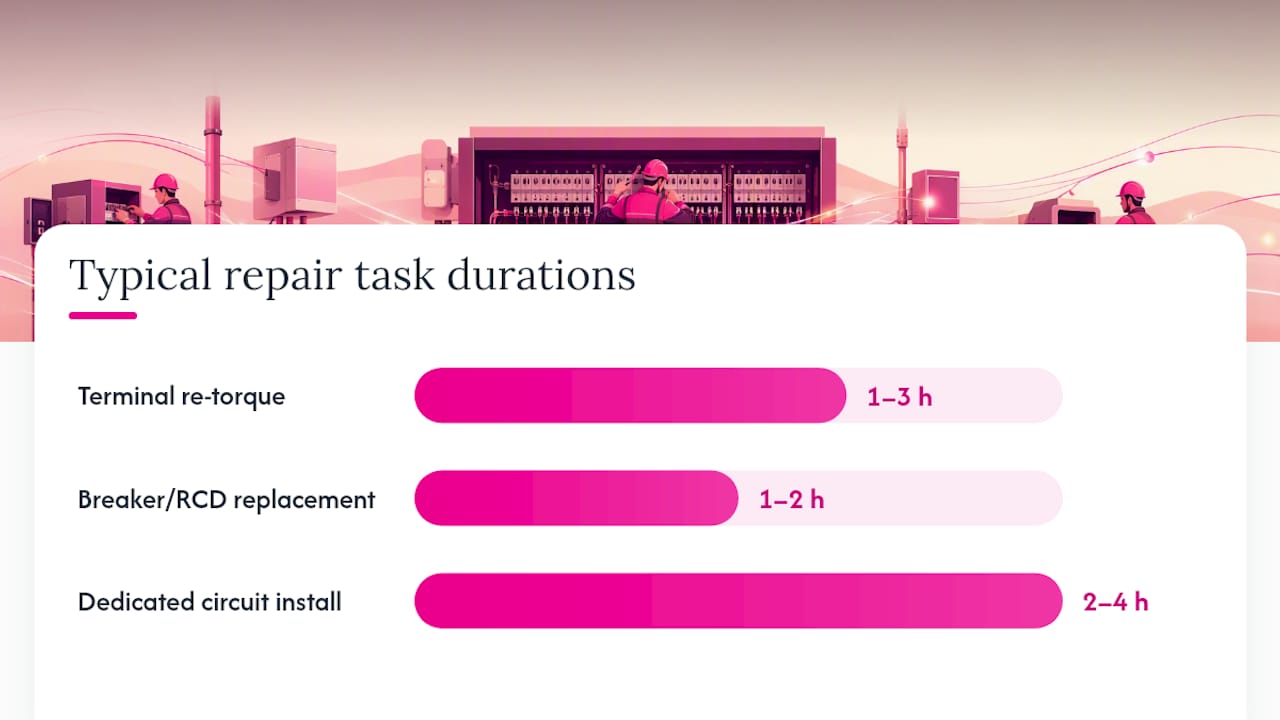
These are broad ranges, not quotes. Actual costs depend on the board's condition, access, and the scope of work identified on site. A Level 2 licence, public liability insurance, and 24/7 emergency availability are the minimum credentials to confirm before authorising any work.
Think of a repeatedly tripping breaker the same way you would a repeatedly blown car fuse: the device doing its job is not the problem. The persistent underlying fault is.
How to prevent switchboard buzzing before it starts
Consistent maintenance is far cheaper than an emergency callout. These are the practical steps worth building into your property routine.
- Test RCDs every three months using the test button on each safety switch. The button should trip the switch instantly. If it does not, call an electrician.
- Annual visual inspection. Check the switchboard cover for discolouration, unusual smells, or moisture ingress. Do not open the cover yourself.
- Professional thermal and torque inspection every 2–5 years, or after any major electrical addition (EV charger, solar, air conditioning system). Rental property inspections at tenancy turnover are particularly important for property managers.
- Manage load deliberately. Avoid running multiple high-draw appliances on the same circuit simultaneously. Stagger usage where possible.
- Install dedicated circuits for EV chargers, pool pumps, and ducted air conditioning rather than sharing with general power circuits.
- Install surge protection to shield sensitive electronics from voltage spikes that can stress switchboard components over time.
- Consider a switchboard upgrade if your board still uses ceramic fuses, if breakers trip repeatedly, or if you are planning a major addition. A switchboard upgrade replaces ageing components and adds capacity for modern loads, resolving the root cause rather than patching symptoms. Before going solar, also check whether your panel is solar-ready — a failing switchboard and a new solar system are a poor combination.
Pro Tip: Coastal properties in Sydney face accelerated busbar and terminal corrosion from salt air. If your home is within a few kilometres of the ocean, schedule professional inspections more frequently, every 2 years rather than 5.
When is a faint hum from your switchboard actually normal?
Some switchboards do produce a low, consistent hum that is not a fault. Manufacturer documentation confirms that magnetic contactors and transformer-type components can emit a baseline hum as a normal byproduct of electromagnetic coil operation. Ripple control contactors for off-peak hot water systems are a common example in Australian homes.
The key question is whether the noise is stable or changing.
Benign hum characteristics:
- Faint and consistent, present since the board was installed or a device was added
- Does not change in volume or character when load varies
- No accompanying heat, smell, or tripping
Suspicious hum characteristics:
- Louder than it used to be, or intermittent and chattering
- Coincides with breaker trips or a warm switchboard surface
- A change from steady to chattering often precedes coil failure in a contactor and warrants prompt inspection
Why High Demand Electrical treats every buzz as urgent
From Christopher's perspective, the cases that concern our team most are not the dramatic ones with visible sparks. They are the boards where a homeowner heard a faint buzz for weeks, assumed it was normal, and called us only after a breaker started tripping regularly. By that point, thermal imaging typically reveals a hotspot that has been building for some time.
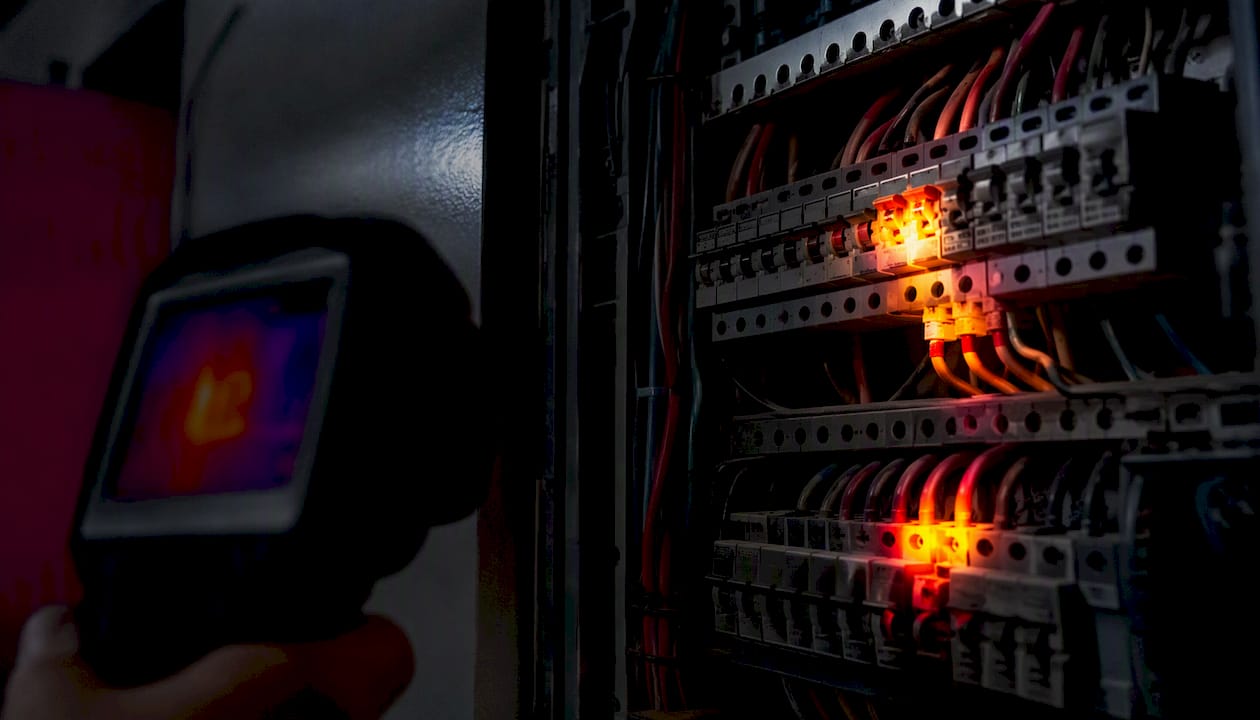
In one recent job, our team attended a Sydney home after the owner reported a buzzing breaker box and a faint burning smell from the fuse box that had developed overnight. Thermal imaging identified a significant hotspot on the main breaker, caused by a loose terminal that had been arcing under load. Re-torquing the terminal and replacing the main breaker took under two hours. The alternative, had the homeowner waited another day or two, was a potential fire.
The practical lesson: "monitoring" a buzzing switchboard while waiting for the sound to worsen is genuinely risky. Heat and arcing are largely invisible until substantial damage has already occurred.
Frequently asked questions
How long can I leave a buzzing switchboard before calling an electrician?
If the buzzing is accompanied by any warning sign — burning smell, warmth on the panel, sparks, or breakers tripping — you should not leave it at all. Call an electrician the same day or, if the symptoms are severe, evacuate and call 000 first. If the hum is very faint, consistent, and has been present since a device was added (like an off-peak hot water contactor), it may be benign — but it still warrants a professional inspection within a few weeks to confirm there is no developing fault. There is no safe waiting period for a buzz that is getting louder, intermittent, or crackling.
Can a buzzing switchboard cause a fire?
Yes. A buzzing or humming switchboard caused by loose terminals, arcing, or failing breakers can cause an electrical fire. Arcing in particular is a direct ignition risk — electricity jumping a gap generates temperatures that can ignite wiring insulation and surrounding materials. This is why the Australian standard (AS/NZS 3000) requires switchboards to be maintained in a safe condition at all times. If you hear crackling or sizzling from your panel, treat it as an emergency, not a nuisance.
Why does my switchboard buzz more at night?
Two common explanations: first, if you have an off-peak hot water system, the ripple control contactor activates during off-peak windows (typically late night and early morning) and the magnetic coil produces an audible hum when energised. This is usually benign. Second, if your property's total load drops at night (lights off, appliances idle) and the buzz becomes more noticeable, it suggests a component that was previously masked by general household noise — which warrants inspection. A contactor hum that has suddenly become louder or more erratic at any time of day is not normal and needs checking.
My switchboard started buzzing after I had an EV charger installed. What is happening?
An EV charger draws a sustained, high current load that many older switchboards were not sized for. If the buzz started immediately after installation, the most likely explanations are: the new circuit's terminal was not torqued correctly at the switchboard end; the charger is sharing a circuit with other high-draw equipment and the combined load is stressing the breaker; or the overall panel is undersized for the added load and needs upgrading. A good EV charger installation includes confirming the switchboard's capacity before the charger is commissioned. If yours did not, it is worth having the board inspected by a Level 2 electrician — a switchboard upgrade may be required. See our guide on when you need a Level 2 electrician for the full picture on who can legally do what.
My switchboard only buzzes when the air conditioner runs. Is that a problem?
Ducted air conditioning systems draw a large startup current (the inrush when the compressor starts) and a sustained running load. If the buzzing starts the moment the compressor kicks in, it suggests the circuit or the main panel is feeling the strain of that load. This could be a breaker that is beginning to fail under repeated inrush stress, a loose terminal that only becomes apparent under high current, or an overloaded circuit. In any case, a buzz that is reliably triggered by a single appliance is a useful diagnostic clue — tell your electrician exactly when and which appliance causes it, and they will investigate that circuit first. A dedicated circuit for the air conditioner, if one does not exist, often resolves the issue.
High Demand Electrical: emergency make-safe, inspections, and upgrades
When your switchboard is buzzing, you need a team that can respond now and fix it properly. High Demand Electrical is a certified Level 2 electrical contractor serving Sydney residential, commercial, and strata properties, with over 300 five-star reviews and 24/7 emergency availability.

Our services for buzzing switchboard faults include emergency make-safe attendance, thermal diagnostic inspections, terminal re-torquing, breaker and RCD replacement, dedicated circuit installation, and full switchboard upgrades for boards that are old, undersized, or repeatedly faulting. Free site inspections are available for Level 2 work, so you get a clear picture of the problem before committing to any repair cost.
For urgent situations, our emergency make-safe service provides temporary isolation and hazard removal around the clock, rain, hail, or shine. Call 0402 559 777 or book online to arrange an urgent inspection or a scheduled upgrade assessment.
Sources
The following references support the guidance in this article.
- NSW Work Health and Safety Regulation 2017 — electrical safety obligations
- AS/NZS 3000:2018 — Wiring Rules (Standards Australia)
- Humming switchboard: causes and solutions — Gemcell
- Clipsal switchboard component FAQs — normal operating sounds
Related reading
Powering Your Needs with Expertise
If you’re looking for a reliable, experienced, and prompt electrician, look no further than High Demand Electrical. We cater to all your electrical needs, from routine maintenance to emergency repairs and complete system installations. Our skilled team is committed to providing professional service that ensures your electrical systems run smoothly. Whether it's a small task or a large project, give us a call today. Let us meet all your electrical demands with the quality and reliability you deserve.