What Are the Electrical Requirements for an Aviation Hangar or Small Aircraft Maintenance Facility in Sydney?
What are the electrical requirements for an aviation hangar or small aircraft maintenance facility in Sydney? A hangar needs a three phase supply sized around a proper maximum demand calculation, a switchboard with enough spare capacity for hangar door motors and ground support equipment, RCD protection on every final subcircuit rated 32 amps or less, and lighting designed for a tall, open span rather than a standard shed or warehouse. Because the load is almost always three phase and often substantial, the connection application and switchboard design work sit squarely with a Level 2 ASP from the very first conversation with Ausgrid or Endeavour Energy.
⚡ Quick Answers: Aviation Hangar and Aircraft Maintenance Facility Electrical Requirements
- Does a hangar need three phase power? Most do, once hangar door motors, air compressors, battery chargers and workshop equipment are added together, a single phase supply runs out of capacity fast.
- Who works out how much power the hangar needs? A Level 2 ASP builds a full load schedule and runs a maximum demand calculation under AS/NZS 3000 before lodging the connection application with the network.
- What RCD protection does a hangar need? Every final subcircuit rated 32 amps or less needs a 30 milliamp RCD, and a hangar sits squarely in the kind of industrial environment the standard calls out for extra protection.
- Does the hangar door motor need special isolation? Yes, a correctly rated isolator with lockable mechanical isolation for maintenance, sized for the motor's starting current rather than just its running current.
- What about aviation fuel and hazardous areas? Any area where fuel vapour could realistically be present needs hazardous area classification, which changes what wiring, fittings and equipment are allowed there.
- Can an existing hangar be upgraded rather than rebuilt? Yes, most upgrades add capacity to the existing switchboard and consumer mains rather than replacing the whole installation, subject to what the network can actually supply at that site.
1. Three phase power and maximum demand for a hangar
Almost every hangar or aircraft maintenance facility runs on three phase power once you add up what is actually installed. A powered hangar door, a compressor feeding air tools, welding equipment, battery chargers for ground support equipment and general workshop machinery all draw more than a single phase supply can comfortably carry, especially when several items run at once during a busy maintenance day.
Before any application goes to the network, your electrician builds a load schedule listing every motor, charger and fixed appliance the site will run, then works out maximum demand using the method in AS/NZS 3000. This is not a rough guess. It applies diversity to lighting and general power while adding larger motors and welders closer to their full rating, because those loads do not conveniently average themselves away. Get this step wrong and you either pay to connect far more capacity than the site will ever use, or you undersize the supply and spend years tripping breakers every time a second piece of equipment starts. A single phase to three phase upgrade for an existing hangar follows the same process as a brand new connection, just starting from what is already on site.
2. Hangar doors and ground support equipment
A powered hangar door is usually the single largest motor load on the site, and it deserves its own dedicated circuit and a properly rated isolator rather than sharing a circuit with general power. The isolator has to handle the motor's starting current, not just the current it draws once it is running, because a door motor can pull several times its running current for a moment every time it starts.
Ground support equipment adds a second layer of demand that is easy to underestimate at the design stage. Battery chargers for tugs, generators and other ground equipment are often left running overnight, and a facility that adds more aircraft or more ground equipment over time can quietly outgrow a switchboard that looked generous when it was first installed. Our guide to three phase motor starters and isolators covers the isolation rules in more depth, and the same principles that apply to a workshop compressor or saw apply just as directly to a hangar door motor or a ground support charger.
3. Switchboard design and consumer mains
A hangar switchboard needs genuine spare capacity built in from day one, not just enough to cover what is plugged in on opening day. Aircraft maintenance operations tend to add equipment over time, a second compressor, an extra welding bay, more charging points, and a switchboard designed with no room to grow turns every addition into a bigger job than it needed to be.
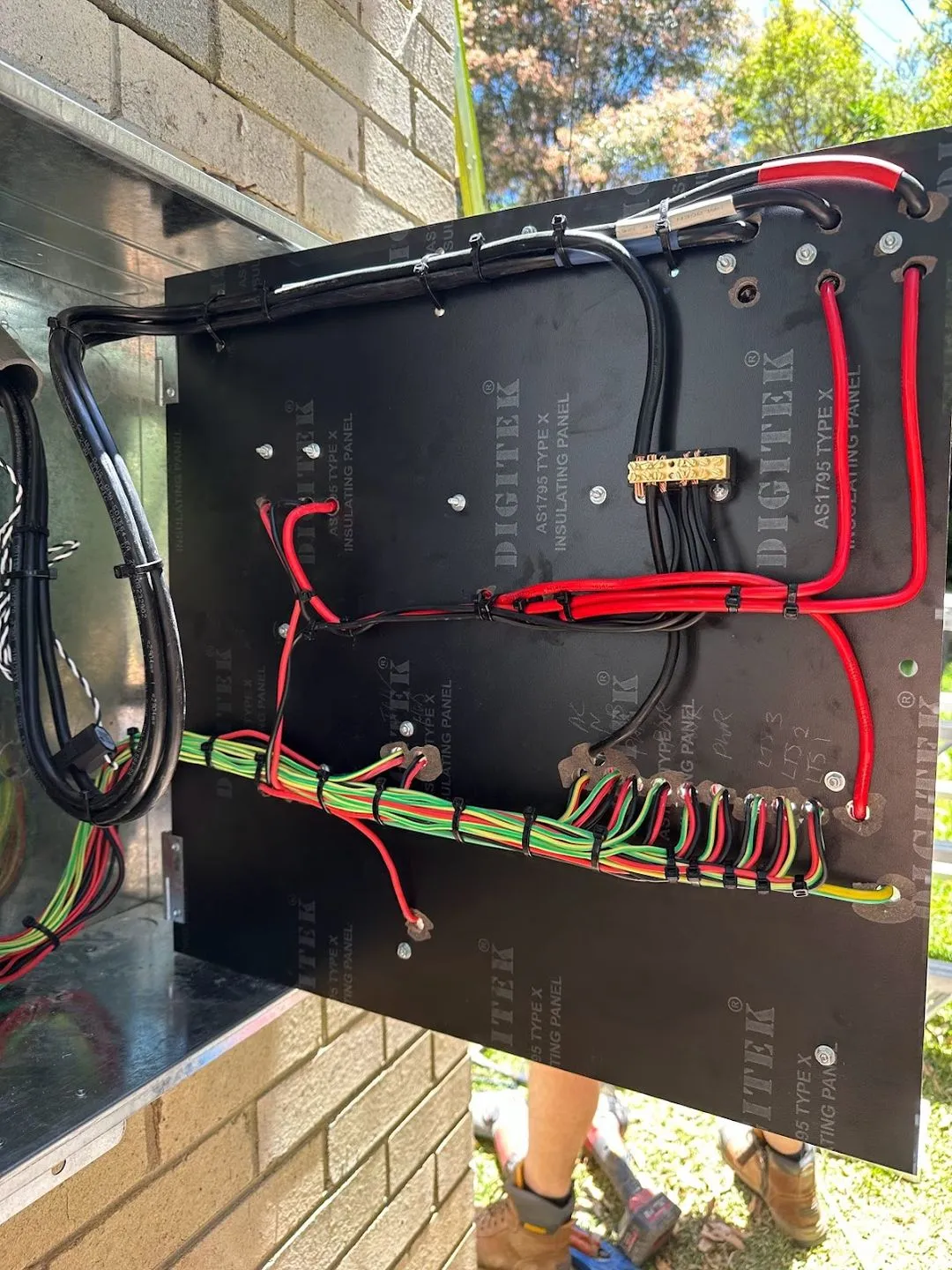
The consumer mains feeding the switchboard also has to be sized for that same maximum demand figure, with enough allowance for future growth that a sensible operator can reasonably expect. Whether the supply arrives underground or overhead depends on the site and what the network can offer, and our team handles the full process from the underground service mains installation through to the final switchboard upgrade that ties it all together. For a larger facility, this is also the point to bring in proper electrical design rather than building the board around whatever happens to be available, and our Level 3 design service covers exactly that for bigger commercial and industrial connections.
4. RCD protection across the hangar floor
AS/NZS 3000 requires a 30 milliamp RCD on every final subcircuit rated 32 amps or less that supplies socket outlets, lighting, handheld equipment or anything that represents an increased risk of electric shock, and the standard specifically names workshops and particular industrial activities as the kind of environment where that extra protection matters. A hangar floor, with its mix of metal aircraft, handheld power tools, compressed air equipment and people working close to live circuits, sits right in that category.
In practice that means socket outlets around the hangar floor, fixed lighting circuits, handheld tools and most fixed equipment all need RCD protection, usually grouped sensibly at the switchboard rather than relying on one oversized RCD covering everything. A single RCD covering too many circuits causes nuisance tripping that shuts down half the hangar every time one tool develops a minor fault, so the grouping matters just as much as the protection itself.
5. Lighting a hangar or maintenance bay
A hangar is a genuinely different lighting problem to a standard warehouse. The ceiling height is often far greater, the floor area underneath an aircraft needs even, glare free light for detailed inspection and maintenance work, and shadows cast by wings, fuselages and tail sections can leave exactly the areas a technician needs to see clearly in the dark.
High bay fittings are usually positioned around the aircraft parking position rather than on a simple grid, with extra attention paid to task lighting near inspection panels and engine bays. Emergency lighting also needs to account for the scale of the space and the time it genuinely takes to move people and equipment clear of a large hangar in an emergency. Our guide to warehouse lighting layout walks through the same lux targets, fixture placement and photometric checking process that applies here, adjusted for the taller, more open span of a typical hangar.
6. Hazardous areas near aviation fuel
Any part of a maintenance facility where aviation fuel vapour could realistically be present, fuel storage, bowsers, refuelling points or defuelling bays, needs formal hazardous area classification before anyone decides what wiring or fittings can go there. This classification work sits outside standard AS/NZS 3000 wiring rules and uses its own dedicated Australian standards for electrical equipment in explosive atmospheres.
Once an area is classified, only equipment rated for that zone can be installed there, which usually rules out standard light fittings, switches and socket outlets in favour of purpose built, certified equipment. Getting this wrong is not a minor compliance issue, it is a genuine fire and explosion risk, so this is one area of hangar design where a conservative, properly documented approach always wins over cutting corners on cost.
Why it's Level 2 ASP work
A new or upgraded three phase connection, a consumer mains installation and a switchboard built around a formal maximum demand calculation all sit within the scope of an Accredited Service Provider, not standard domestic electrical work. A Level 2 ASP is licensed to work on the network side of the connection, including the consumer mains and the metering arrangement, and to lodge the connection application directly with Ausgrid or Endeavour Energy on the operator's behalf.
For a facility the size of a typical hangar, that accreditation is not optional paperwork, it is the difference between a connection application that moves through the network smoothly and one that gets bounced back for missing load data or an incorrect maximum demand figure. If your hangar sits on the boundary between network areas, it pays to check your network area in seconds with our postcode checker before any application goes in, since Ausgrid and Endeavour Energy run separate approval processes.
How High Demand Electrical helps
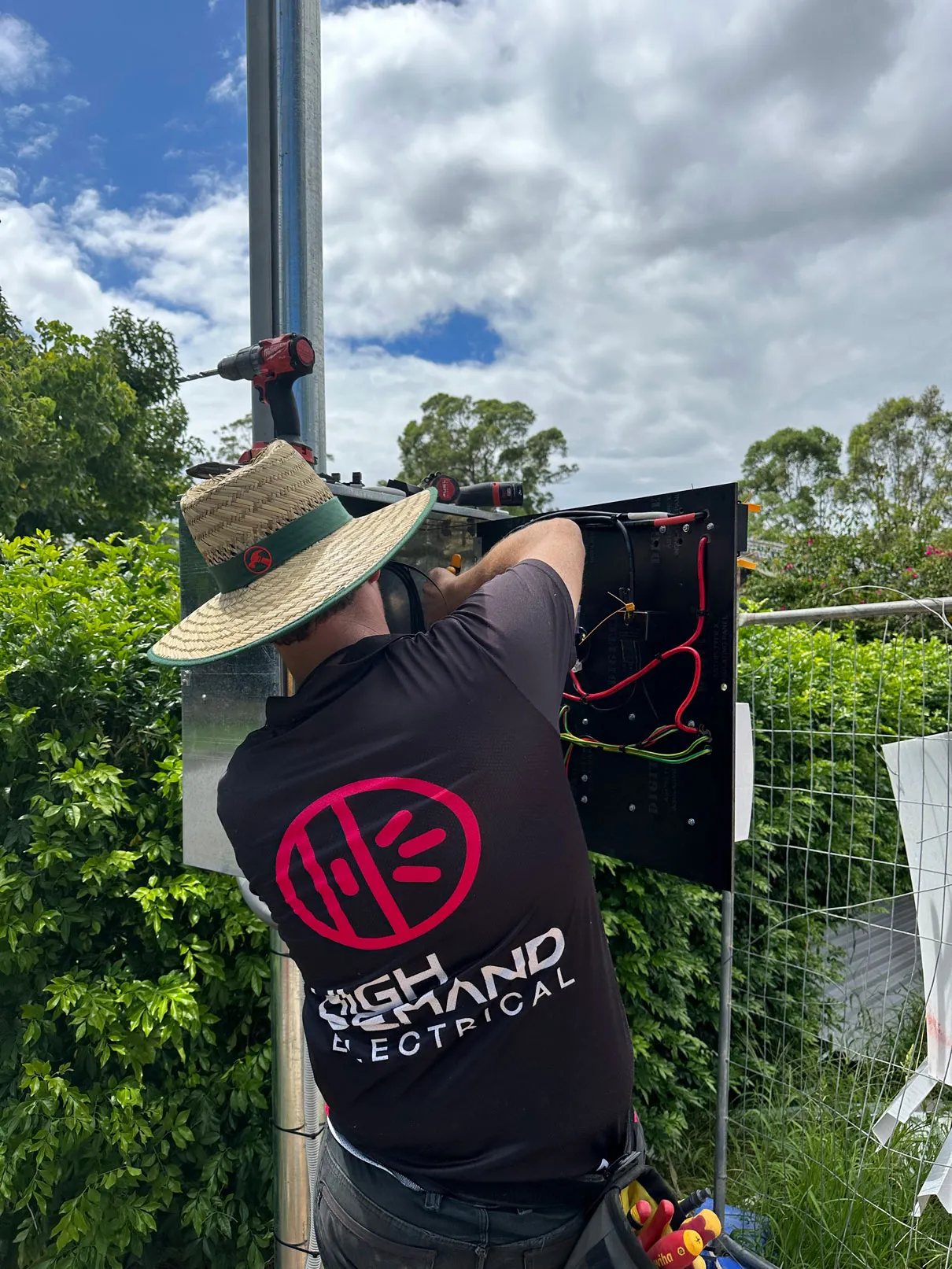
High Demand Electrical is a licensed local team, not a call centre, and we handle the full scope of a hangar or aircraft maintenance facility connection from the initial load schedule through to the final switchboard commissioning. That includes the maximum demand calculation, the network connection application, consumer mains and switchboard work, hangar door and ground support equipment circuits, and the RCD and lighting design that keeps the finished facility safe to work in every day.
We work across Sydney's West, South West and Sutherland Shire, and we treat an aviation or aerospace facility the same way we treat any serious commercial job, with proper design, honest advice on what the site actually needs, and documentation the operator can hand straight to their insurer or regulator. If your facility needs a broader electrical upgrade alongside the hangar work, our power supply upgrades and electrical safety inspection services cover the rest of the site as well, and our Level 2 electrician Sydney page has more on the full range of accredited work we carry out.
Aviation Hangar Electrical FAQs (Sydney)
Does an aviation hangar need a Level 2 ASP for the electrical work?
Yes, for the connection application, consumer mains and most switchboard work on a facility this size. See Level 2 electrician Sydney for what that accreditation actually covers.
How is maximum demand calculated for a hangar or maintenance facility?
Your electrician lists every motor, charger and fixed appliance on site, then applies the maximum demand method in AS/NZS 3000, which adds diversity to lighting and general power while keeping larger motors and welders closer to their full rating. See our guide to three phase power for a warehouse or industrial unit for the same method explained step by step.
What RCD protection applies in a hangar environment?
Every final subcircuit rated 32 amps or less needs a 30 milliamp RCD, and a hangar floor counts as the kind of industrial environment AS/NZS 3000 specifically flags for that extra protection, covering socket outlets, lighting and handheld equipment.
Do hangar doors need their own isolator and circuit?
Yes, a dedicated circuit with an isolator rated for the motor's starting current, not just its running current, along with lockable isolation for maintenance. See three phase motor starters and isolators for the full isolation rules.
What happens if the facility is near aviation fuel storage?
Any area where fuel vapour could realistically be present needs formal hazardous area classification before the electrical design is finalised, which limits the wiring methods and equipment allowed there well beyond standard AS/NZS 3000 requirements.
Ready to scope a hangar or aircraft maintenance facility connection in Sydney? Get a power supply upgrade quote or call 0402 559 777 to speak with our team. Every job like this needs a site assessment before we can confirm scope or pricing.
Need Help Fast?
1. What are you calculating?
Choose the application — the calculator applies the matching rules from Table C1 or C2 of AS/NZS 3000:2018.
2. Add your loads
3. Results
Show the full working (line by line)
This calculator applies the maximum demand methods in Tables C1 and C2 of AS/NZS 3000:2018 (Appendix C). Appendix C is a guide — the standard permits other assessment methods, and your electricity distributor or the NSW Service & Installation Rules may impose additional requirements. Results are for estimation and education; final maximum demand assessment must be confirmed by a licensed electrician. Ratings entered in watts or kilowatts are converted at 230 V (single-phase) or 400 V (three-phase). Table C1 motors assume pf 0.86 and efficiency 0.95; Table C2 motors assume pf 1 and efficiency 0.95, per the standard's conventions.
Project information
These details appear on your PDF report.
Related Services

Powering Your Needs with Expertise
If you’re looking for a reliable, experienced, and prompt electrician, look no further than High Demand Electrical. We cater to all your electrical needs, from routine maintenance to emergency repairs and complete system installations. Our skilled team is committed to providing professional service that ensures your electrical systems run smoothly. Whether it's a small task or a large project, give us a call today. Let us meet all your electrical demands with the quality and reliability you deserve.

Licensed Level 2 ASP electricians across Sydney. Same-day service and 24/7 emergency response.
Licence 397193C
ABN 87 051 836 527
