Who Installs Private Power Poles in Sydney? What to Check
Wondering who installs private power poles in Sydney, and who is legally allowed to do it? If a pole on your property carries power from the network to your building, the pole is yours to arrange and maintain. The wrong person can leave you with an unsafe installation and a compliance problem that lands back on you.
This guide is for homeowners, builders and strata managers who want to judge contractors on what actually matters, not a vague ranking. We cover what counts as a private power pole, why the work needs a Level 2 Accredited Service Provider (ASP, a contractor the network authorises to work on its assets) rather than a standard electrician, and the four checks that separate real operators: current ASP accreditation, network applications, disconnection, reconnection and compliance paperwork, and verifiable quality, safety and environmental certification. Then we look at red flags, what to prioritise, and what to ask before a site assessment.
High Demand Electrical is a Level 2 ASP, working across Ausgrid, Endeavour Energy and Essential Energy, the three networks that operate in NSW.
One rule first: never attempt pole or mains work yourself. If a pole or wire is damaged, leaning or fallen, stay clear and call your network or an ASP straight away.
What Counts as a Private Power Pole and Who Owns It
A private power pole is the pole on your property that carries the overhead service line from the network to your building. A street pole sits with the network, and a private pole sits with the owner.
The point of supply is where the network's responsibility ends and yours begins. Everything past it, including the overhead service mains and the pole itself, sits with the property owner.

That split also changes who you call. Problems on a network-owned street pole go to the network, while problems on a private pole sit with the owner and need a Level 2 ASP.
At the supply point a Service Protection Device (SPD) sits as a safety device on the installation, and pole replacement and overhead to underground conversions usually involve the SPD, along with core drilling for pole bases.
Common triggers: a rotted or leaning pole, storm damage, a pole blocking a renovation or subdivision, or moving an overhead supply underground.
Whatever brings you here, this is not a standard electrician's job.
Why This Work Needs a Level 2 ASP, Not a Standard Electrician
Your private pole sits on your side of the connection, but the work around it is network-authorised. Accredited Service Providers (ASPs) are the contractors the networks authorise to work on their assets, a formal layer each network sets and one that is separate from an ordinary electrical licence.

Ausgrid keeps a dedicated ASP and contractors section, and Essential Energy lists Accreditation and Authorisation as its own category, separate from de-energisation and construction work, contestable work and the sale of materials to ASPs.
An ordinary electrical licence does not make someone an ASP, so a licensed electrician is not automatically able to do this work. Do it unaccredited and the network can reject the job at inspection, which can put reconnection at risk and leave you paying twice to fix it. Who manages the disconnection and reconnection matters too.
Assessing whether a contractor's accreditation actually covers the job means asking for the details in writing, which is where the next section starts.
Check One: Is the Contractor a Current Level 2 ASP?
Now for the checks. Ask any contractor for their ASP accreditation number in writing, along with which networks it covers, as a recommended first step, then verify it through the network's own accreditation information rather than a logo on a ute. Check that the accreditation they hold matches the work, such as private pole replacement, service mains and customer-side reconnection.
Separately, check the electrical contractor licence. In NSW the contracting entity holds an EC number, and it is worth asking for it on your quote, invoice and compliance paperwork. Ask too whether the accreditation is current, and match the trading name on the record to the business quoting you. If those details don't line up, that is your answer.
You can view our accreditation and licence details for a real example. Next comes the application itself.
Check Two: Can They Manage the Network Application?
Accreditation gets them on the network. The next question is who handles the paperwork.
Ask directly: who lodges the connection, disconnection and reconnection applications with the network? If the answer is "you do," you have your answer. A contractor who can swing a pole but not manage the application leaves you chasing approvals.
Network coverage matters more than a long suburb list. Ausgrid, Endeavour Energy and Essential Energy each run their own application, inspection and supply switch-off processes, so ask which of the three networks the contractor is accredited with. If your job also involves a larger supply, our 400A supply specialists can fold that into the same scope.
Then pin down the day itself: who books the outage, who coordinates with the network on site, and what access or notice your household or tenants need. Finally, ask what happens if the network raises a defect or orders an extra inspection. Confirm the contractor manages the return visit and any follow-up paperwork, not you.
Check Three: Do They Handle Disconnection, Reconnection and Compliance Paperwork?
Beyond the application, the next question is whether one contractor owns everything that follows. The full sequence should run from site assessment through network application, de-energisation, old pole removal, new pole or underground installation, reconnection and final certification. Builders lining this up around civil works can see how the steps fit a project schedule in our builder connection packages. Ask who your single point of contact is, because handovers between a pole installer, a separate electrician and a paperwork provider are exactly where delays and gaps appear.
At completion, confirm what you actually receive: the electrical Certificate of Compliance and the network paperwork. Ask for your own copies rather than trusting the network's file alone, and get the list of documents in writing before the work starts.
Ask how the SPD and the meter are handled while the supply is off, and whether your retailer or metering provider needs a separate booking.
Finally, pin down the scope beyond the pole itself: make-safe if needed, excavation, crane or elevated work platform access, vegetation clearing, and site clean-up and restoration. A vague answer here usually signals a gap that surfaces mid-job.
Check Four: Quality, Safety and Environmental Certification You Can Verify
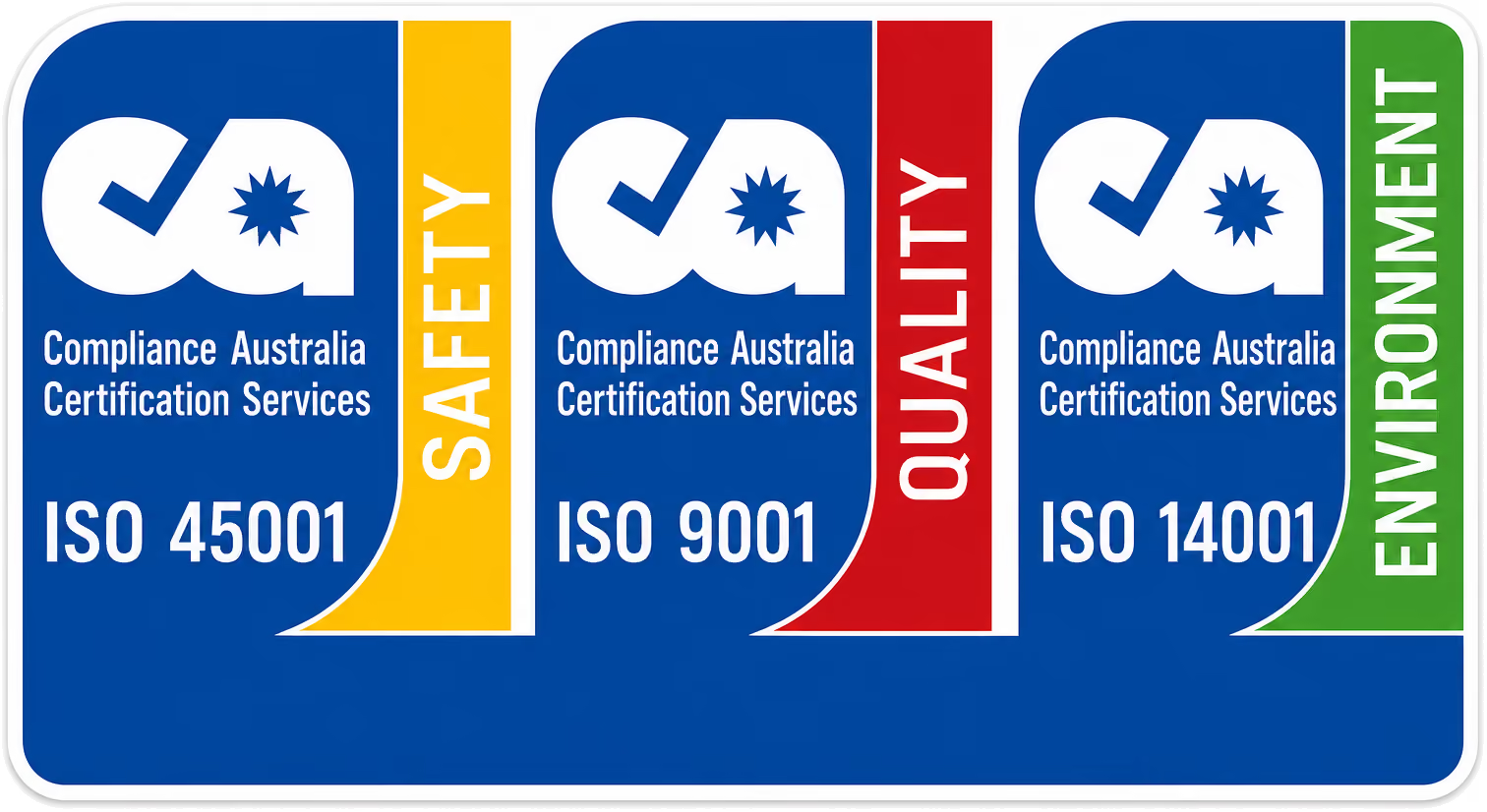
Certification is your next layer of proof. ISO 9001 covers quality management, meaning documented processes and consistent work. ISO 45001 covers work health and safety, which matters when crews work at height, near live or de-energised conductors and close to the public and neighbouring properties. ISO 14001 covers environmental management: relevant to excavation spoil and vegetation clearing or disposal.
ISO certification is a voluntary standard, not something a network requires for this work. Check it yourself: ask for the certificate number, the certification body's name, the scope of certification and the expiry date, not just a badge image, and confirm the certification body's public register lists them.
Just as importantly, ISO certification is not ASP accreditation and does not replace it. One shows the contractor's systems are sound; the other shows the network authorises the contractor to work on its assets. You want both, not one standing in for the other.
High Demand Electrical holds Level 2 ASP accreditation and can show its own certification records when it quotes. That discipline also suits planned maintenance for strata sites.
Next: the red flags that should stop you signing.
Red Flags and the Safety Rule for Damaged Poles
Now watch for the gaps that show up before work starts. A contractor who will not put their ASP accreditation number in writing alongside the quote is a red flag, because accreditation is managed separately from training and ordinary licensing under the NSW ASP Scheme Rules. Vague answers about who lodges the network application, books the de-energisation and signs off the reconnection point to the same problem: you will end up coordinating it. Read the scope line by line. If it omits de-energisation, network inspection or compliance documentation, the gap surfaces after work begins, not before. Ask for safety and environmental credentials, plus a site-specific risk assessment and a safe work method statement (a written plan for doing the job safely). Work at height near live conductors, with public exposure, demands both.
Then the safety rule, plainly. If a pole is leaning or rotted, or a wire is down or damaged, do not approach it or try to make it safe. Keep people and vehicles clear and call your network or a Level 2 ASP immediately. Storm-damaged overhead mains need the same response.
What to Prioritise If You Are a Homeowner, Builder or Strata Manager
Those red flags aside, what you prioritise depends on who you are.
Homeowners
Ask how your yard and driveway will be put back, and insist on a written scope and quote after a site assessment, not an estimate over the phone.
Builders
Raise pole work at the start of the program. Relocation, subdivision and overhead to underground conversions must line up with civil works and the network application, and the compliance documents are worth lining up with your certifier and council early. Supply upgrades for construction projects follow the same sequencing.
Strata Managers
Confirm who can authorise work on common property, how access is arranged, how residents and tenants are told, and where completed records are stored for the owners corporation.
Shared Supply Sites
Check whether the pole serves more than one property. If it does, approval and notification change.
Everyone
Do not sign until accreditation, network coverage, certifications and the full scope are in writing.
Settle those priorities, then book a site assessment.
Next Steps: Site Assessment, Quote and the Questions to Ask
When you are ready to compare, book a site assessment rather than accepting a phone estimate. Pole condition, access, span and network requirements cannot be judged from a description.
Have your details ready: the property address, your network (Ausgrid, Endeavour Energy or Essential Energy), photos of the pole and surrounds, and any previous electrical or compliance certificates you hold.
Then put five questions to every contractor:
What is your ASP accreditation number, and which networks does it cover?
Who lodges the network application?
What documents do I receive at completion?
What certifications do you hold?
What exactly is included in the scope?
Compare on substance, not a headline figure. A scope that excludes de-energisation or compliance paperwork is not cheaper, just incomplete.
Book a site assessment with High Demand Electrical and get a written scope and quote instead of a figure over the phone.
Your Hiring Checklist in Short
If you take nothing else from this guide, take this: the pole is yours to arrange, and the work must be done by a Level 2 Accredited Service Provider. Not an unaccredited electrician, and never you.
Before you sign anything, get four things in writing:
Current Level 2 ASP accreditation, plus the networks it covers (Ausgrid, Endeavour Energy or Essential Energy).
Confirmation they lodge and manage the network application.
End-to-end handling of de-energisation, reconnection and the compliance paperwork.
ISO 9001, ISO 45001 and ISO 14001 certification, with numbers you can check against a public register.
Vague answers about applications, documents or accreditation are a reason to look elsewhere, however competitive the scope looks.
And if a pole is leaning, damaged or down, or a wire is on the ground, stay clear and call your network or a Level 2 ASP.
High Demand Electrical is a Leichhardt based Level 2 ASP and licensed electrical contractor (EC Licence 397193C) working across all three networks, so you can book one site assessment and deal with one contractor from application through to compliance.
Conclusion
Private power poles are your responsibility, but the work is not a DIY job. It must be handled by a current Level 2 ASP, never an unaccredited electrician or you. If a pole is leaning, damaged or down, or a wire is on the ground, stay clear and call your network or a Level 2 ASP.
High Demand Electrical is a Leichhardt based Level 2 ASP and licensed electrical contractor (EC Licence 397193C) working across Ausgrid, Endeavour Energy and Essential Energy. Book one site assessment and deal with one contractor from application through to compliance. Take the checklist, ask the questions, and start the work with a verified professional.
Need Help Fast?
Powering Your Needs with Expertise
If you’re looking for a reliable, experienced, and prompt electrician, look no further than High Demand Electrical. We cater to all your electrical needs, from routine maintenance to emergency repairs and complete system installations. Our skilled team is committed to providing professional service that ensures your electrical systems run smoothly. Whether it's a small task or a large project, give us a call today. Let us meet all your electrical demands with the quality and reliability you deserve.

Licensed Level 2 ASP electricians across Sydney. Same-day service and 24/7 emergency response.
Licence 397193C
ABN 87 051 836 527