Who Installs EV Chargers in Sydney, and What It Really Costs
Thinking about an EV charger in Sydney? The first question is not which charger looks best. It is who can legally install it, and what the final cost depends on. This guide gives you a direct answer, without a sales pitch. You will learn who installs EV chargers in Sydney, when a licensed electrician can complete the work, and when the job becomes network-side work. The guide explains the factors that drive cost, including switchboard capacity, cable runs, and whether the supply needs network upgrades, so you can compare quotes like for like. You will also see how to check quotes, what is changing with kerbside charging and NSW rules, and the next steps to take. Private power pole and mains work must be done by a Level 2 ASP. Never attempt it yourself or use an unaccredited electrician. If a pole or wire is damaged, leaning or fallen, stay clear and call your network or an ASP straight away. HDE is the single contractor for overhead or pole-side work that a standard electrician cannot legally do, backed by Level 2 ASP accreditation and triple ISO certification. For an assessment and quote, contact HDE.
The Short Answer: Who Installs EV Chargers in Sydney?
Charger installation on your side of the connection point is licensed electrician work. The network side is not.
Who does what
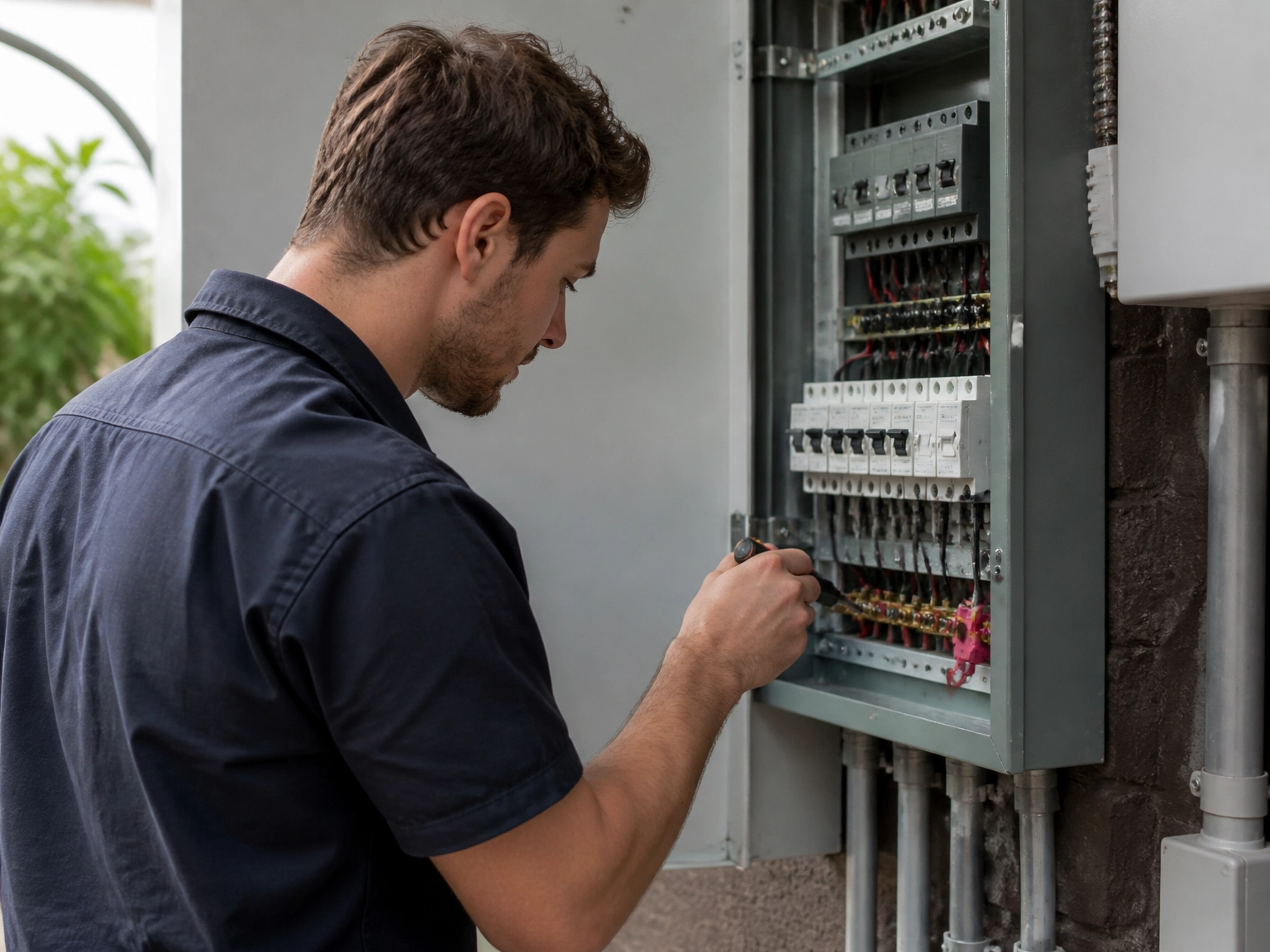
The charger itself, a dedicated circuit, the wall unit, a Service Protection Device (SPD) and any switchboard work on your property fall to a licensed electrician. Anything network side, such as your private pole, overhead mains or service equipment, needs a Level 2 Accredited Service Provider (ASP).
Three terms worth knowing before you call anyone:
Licensed electrician: holds an electrical contractor licence and can do wiring on your side of the connection point. Most EV charger installation work in Sydney sits here.
ASP (Accredited Service Provider): authorised by the network to work on the network side. Faults in the unit itself are EV charger repair jobs in Sydney, still electrician work.
Level 2 ASP: the level covering overhead and pole-side work, including private power pole installation, replacement and overhead to underground mains conversions.
Why the connection point decides it
Your connection point is the boundary where the network's responsibility ends and yours begins. That line decides which trade you call. Network-side work is what Ausgrid, Endeavour Energy and Essential Energy require accredited providers to do under their ASP and contractor arrangements, so confirm the specifics with your network or the NSW ASP scheme rules before you book.
Electrician or Network Specialist? A Plain Bullet Summary
You now know where the connection point sits. Here is the same boundary as a plain checklist.
Safety first: for any damaged, leaning or fallen pole or wire, stay clear and call your network or a Level 2 ASP straight away. Never attempt private pole or mains work yourself, and never engage an unaccredited electrician for it.
Your licensed electrician handles:
Installing and commissioning the wall unit.
Running the dedicated circuit and cable.
Adding a circuit breaker and the required electrical protection.
Switchboard modifications on your side of the connection point.
A Level 2 ASP handles, because it touches the network:
Installing or replacing a private power pole.
Repairs to overhead mains.
Altering or converting the service line, including overhead to underground mains conversion.
New or changed connections where the supply itself is involved.
The grey zone. Load limits on the supply, a fully loaded switchboard, or a long cable run can turn a straightforward charger job into one that needs network approval or network-side work. That is where quotes diverge wildly. When network work is in scope, planned disconnection and reconnection forms part of the job.
Why the split exists. Network-side assets are owned or controlled by the network, so only accredited providers are permitted to work on them. That is why the network side needs an accredited provider, not any licensed electrician. Doing it unaccredited risks safety and compliance.
With that boundary clear, the next question is what actually moves the price.
What Actually Drives the Cost of an EV Charger Installation in Sydney?
You now know which side of the connection point each trade covers. So what actually moves the number?
Switchboard capacity and condition
Whether there is a spare way, whether the board can carry the added load, and whether an upgrade or a supply capacity change is needed. Each of these changes scope before a single metre of cable is run.
Cable run length and route
Distance from the switchboard to the charger location matters. So does the route: through a cavity, along a wall, under a slab, through a garden bed or across a driveway. Access and reinstatement, not the cable itself, drive labour.
Whether the supply itself needs network work
A new or upgraded connection, a service line change, a private pole in poor condition or an overhead to underground conversion is Level 2 ASP scope. It sits outside a standard charger quote.
Site conditions that surface at assessment
Strata or body corporate approvals and shared infrastructure, older wiring, asbestos, difficult roof or ceiling access, and clearances around the point of attachment.
A product factor in plain terms
Single-phase versus three-phase supply, and the charger's power rating, change what the circuit needs to be, not just what the box costs. In NSW, 32A single-phase (7.4kW) is permitted, with load balancing (sharing the supply's capacity between the charger and the rest of the home so the main switch does not trip) left to the installer's judgement, per the EVSE installation guideline.
No figures appear here because every one of these factors is a site variation. Real cost comes from a site assessment of your switchboard, cable route and point of attachment, not from a rough range quoted over the phone. Contact HDE for a site assessment and quote, and see installing your EV charger correctly for what a compliant job involves.
When Does Your EV Charger Job Become Network Work?
Your job crosses onto the network side when the supply itself is the problem, not the charger.
The usual triggers are a private pole that is rotted, leaning or in the way; overhead mains that need replacing; a service that must move for a renovation or subdivision; or a supply that cannot carry the added load. Businesses and strata managers planning commercial EV charger installations meet the same line.
Once any of these is in scope, the job stops being a single electrician visit. It now involves a network application, a planned disconnection and reconnection, and compliance paperwork, sequenced so the power is off only as long as the work requires.
Ask which side of the connection point each figure in a quote covers.
That is the work HDE carries out as a single contractor. HDE works across the Ausgrid, Endeavour Energy and Essential Energy networks, handling site assessment, network applications, disconnection, installation, reconnection and compliance paperwork, with Level 2 ASP accreditation and triple ISO certification (ISO 9001 quality, ISO 45001 safety, ISO 14001 environmental).
If a pole or wire is damaged, leaning or down, stay clear and call your network or a Level 2 ASP immediately. Never attempt private pole or mains work yourself, and never engage an unaccredited electrician for it.
How to Compare EV Charger Quotes Like for Like
Once you know whether your job touches the network side, the next step is making sure every quote prices the same scope of work.
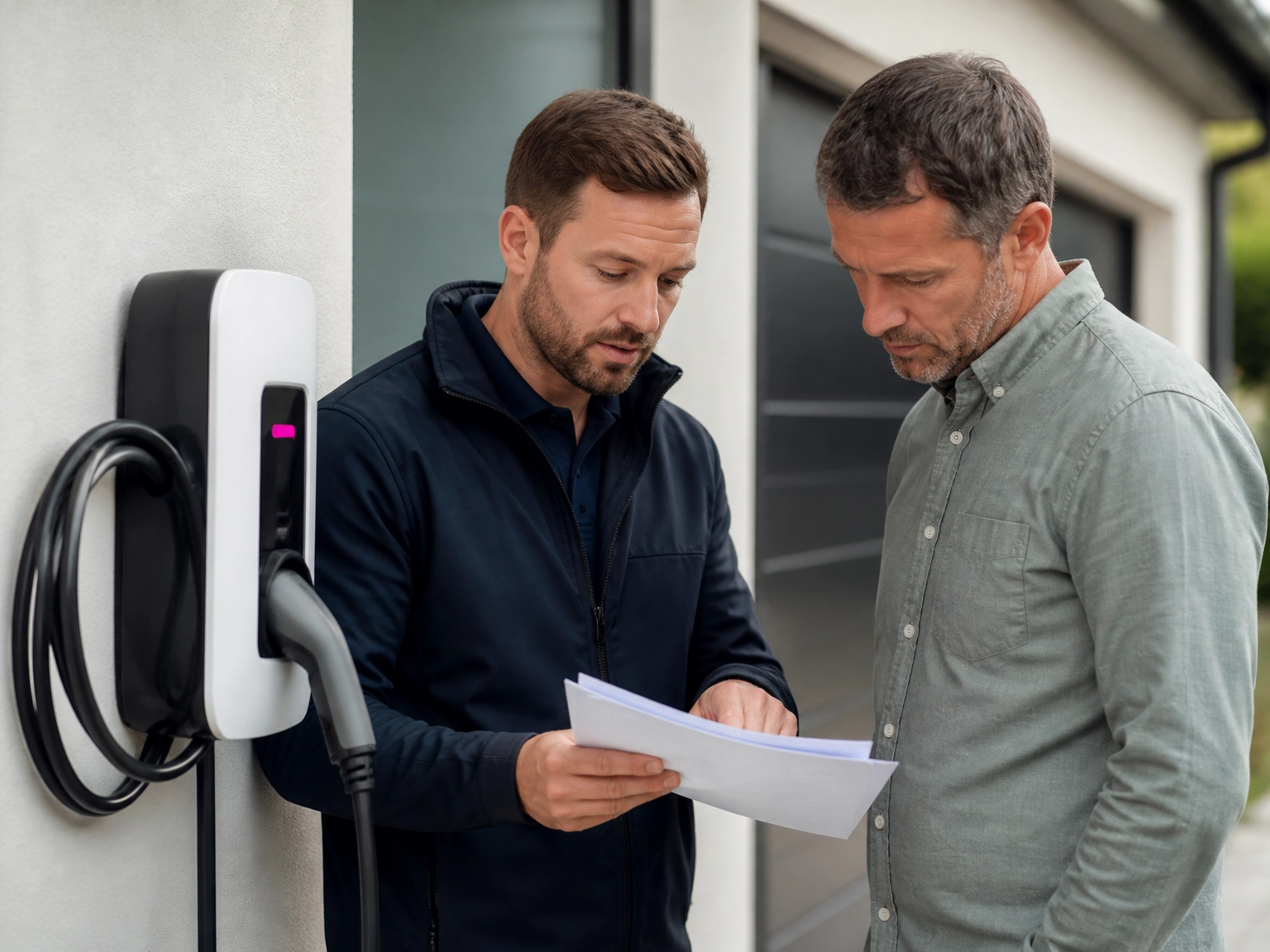
Get the scope in writing. Ask each contractor to set out what is included: charger supply and installation, the dedicated circuit with a stated cable run allowance, any switchboard work, testing and commissioning, and whether the supply capacity has been checked.
Ask which side of the connection point each quote covers. If network-side work is needed and the quote does not mention it, that cost is still coming later. Budget for it before you sign.
Ask what happens if the site assessment changes the scope. No reasonable quote can be firm before someone has seen the switchboard, the cable run and the point of attachment. Treat a firm figure given over the phone with caution.
Check accreditation and paperwork. Note the electrical licence number, and for network-side work, Level 2 ASP accreditation with the relevant network. Confirm who lodges the network application and who issues the compliance certificate. It also helps to know how NSW electrical compliance works.
Have this ready before you request quotes. Photos of the switchboard, the intended charger location, the distance from the board to that spot, whether the home is single or three-phase, whether it is strata, and any known pole or overhead mains issues. Strata adds an approval layer, so it is worth reading about EV charging for strata buildings first.
If a pole or overhead line looks damaged, stop. Do not wait for quotes. Stay clear and call your network or a Level 2 ASP immediately.
With the scopes aligned, you can compare the real cost of the job rather than the headline figure.
What's Changing in Sydney: Kerbside Charging and the Rules Behind It
With your quotes compared, one more question tends to follow: will kerbside charging change any of this? For now, no.
In April 2026, NSW Premier Chris Minns said the state was open to Ausgrid's proposal for around 11,000 AC pole-mounted kerbside chargers by 2030, but only if national electricity rules change to allow costs to be passed through. He called the proposal "not as straightforward as perhaps many believe".
Under the model as proposed, networks would own and maintain the kerbside chargers rather than operate them, with costs spread across the regulated asset base (the pool of network assets whose costs are spread across all customers' bills). Ausgrid says that could deliver low-speed charging at roughly the cost of charging at home. That is Ausgrid's claim, not a confirmed outcome.
The limits matter here. This is a policy question under negotiation, not a service you can book or a delivery commitment. For any network-side work, you can speak to a Level 2 ASP.
For scale, NSW has subsidised private operators to build a 3,200-strong charging network, funding around 80 per cent of that program. Roughly 30 per cent of homes cannot install their own charger because of limited street parking or strata status, which is the gap kerbside charging is meant to address.
An updated NSW Electric Vehicle Strategy was unveiled alongside the Premier's comments in April 2026. Pass-through rules, kerbside models and network roles all remain unsettled, so costs and responsibilities could shift during 2026.
None of that changes the practical answer: your own site gets assessed first.
Getting It Right: Your Next Steps
Policy can shift, but the split that decides who you call today has not.
Switchboard capacity, cable run and whether the supply needs network work are the three factors that decide scope. No figure is meaningful until someone has assessed the site.
Before you request quotes, ask each contractor in writing which side of the connection point the quote covers, and check what Level 2 accreditation allows before you compare.
For any damaged, leaning or fallen pole or wire, stay clear, keep others back and call your network or a Level 2 ASP straight away. Never let an unaccredited electrician near private pole or mains work.
If your job involves network-side work such as a new connection, an overhead to underground conversion or a private pole, contact HDE for a site assessment and quote. HDE holds Level 2 ASP accreditation, EC Licence 397193C and triple ISO certification.
Conclusion
The main point is simple: the connection point decides who you call. A licensed electrician handles the charger circuit and switchboard work on your side. A Level 2 ASP handles network-side tasks such as private poles, overhead mains and service conversions. Switchboard capacity, cable distance and whether network work is needed shape the scope, so no figure means much before a site assessment.
Private pole and mains work must only be done by a Level 2 ASP. Never attempt it yourself or use an unaccredited electrician. For damaged, leaning or fallen poles or wires, stay clear and call your network or an ASP immediately.
If your job involves network-side work, contact HDE for a site assessment and quote. Get the site checked first, then compare quotes with confidence.
Need Help Fast?
Powering Your Needs with Expertise
If you’re looking for a reliable, experienced, and prompt electrician, look no further than High Demand Electrical. We cater to all your electrical needs, from routine maintenance to emergency repairs and complete system installations. Our skilled team is committed to providing professional service that ensures your electrical systems run smoothly. Whether it's a small task or a large project, give us a call today. Let us meet all your electrical demands with the quality and reliability you deserve.

Licensed Level 2 ASP electricians across Sydney. Same-day service and 24/7 emergency response.
Licence 397193C
ABN 87 051 836 527