What Is a Sub Board? When Your Granny Flat, Shed or Garage Needs One
What is a sub board? A sub board, also called a distribution board, is a second, smaller switchboard fed from your main switchboard by a single heavier cable. It gives a distant part of your property its own local circuits, protection and isolation point. If you are powering a granny flat, a workshop, a pool area or a detached garage with an EV charger, a sub board is usually the cleanest and safest way to do it.
1. What a sub board actually is
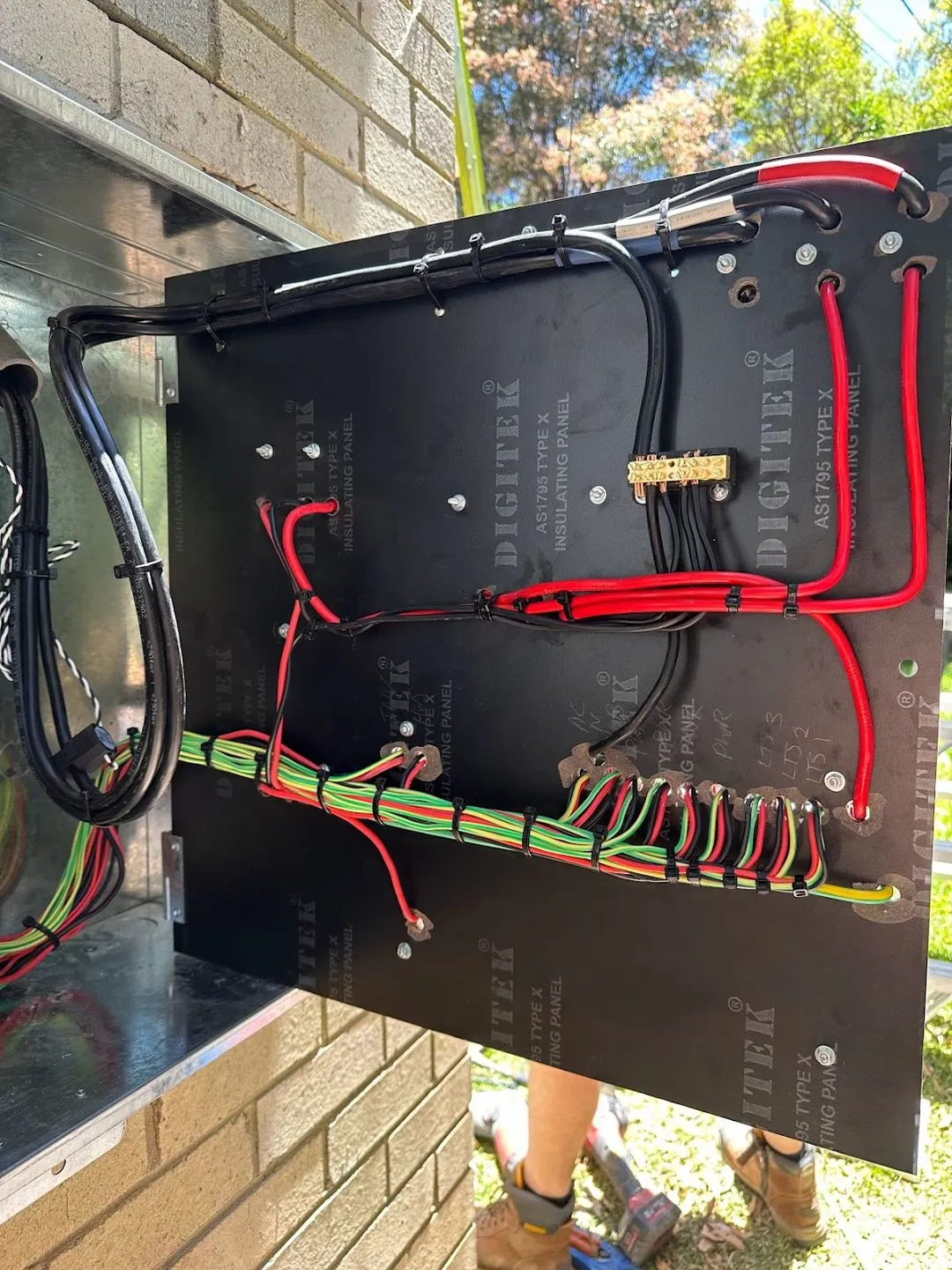
Think of your main switchboard as the trunk of the tree. A sub board is a branch: one cable leaves the main board, travels to the far building or area, and lands in a compact board with its own main isolation switch, circuit breakers and safety switches. From there, local circuits fan out to lights, power points and equipment.
The result is a part of your property that behaves like its own small installation: it can be isolated on the spot, faults trip locally, and adding another circuit later happens at the sub board rather than back at the house.
2. Why distance is the trigger
Electricity loses voltage over distance. Push a circuit too far on a given cable size and the far end runs weak: lights dim, motors strain and chargers slow down. The fix is bigger cable, and this is where the sub board earns its keep. One properly sized sub-mains run, calculated for the load and the distance, beats four or five long individual circuits both on performance and usually on cost.
You can see the effect yourself with the cable size calculator embedded on this page: set a realistic load and stretch the run length, and watch the recommended cable size climb. Our calculator walkthrough explains the inputs, and our cable sizing guide covers why the answer is always "it depends on the run".
3. The four classic sub board scenarios
- Granny flats. A secondary dwelling needs its own lighting, power, cooking and hot water circuits, and often its own metering arrangement. A sub board is the standard approach, covered alongside supply options in our granny flat connection guide.
- Workshops and sheds. Machinery, welders and compressors want local circuits, local protection and a big red isolation point you can reach in seconds.
- Pool areas. Pumps, heaters, lighting and outlets clustered at the far end of a block are a textbook sub board case, and often overlap with pool electrical compliance requirements.
- Detached garages with EV charging. A dedicated EV circuit run a long way from the house is exactly the situation where a sub board plus properly sized sub-mains wins. Our guides on what to check before an EV charger install and 3-phase EV charger installs both come back to this point.
4. What feeds it: sub-mains and protection
The cable between the boards is called the sub-mains, and it does the heavy lifting. It is sized for the maximum demand of everything the sub board will supply, plus the distance, and it is protected by its own breaker at the main switchboard. The sub board then carries safety switches for its local circuits, so protection sits close to the people using it.
This is also where the planning question hides: does your main board and supply have the headroom to feed the new area at all? Our maximum demand explainer covers how that gets assessed, and if the answer is tight, the options run from load choices to a switchboard upgrade or a bigger supply.
5. What the job involves
A typical sub board installation runs: assess the main board and supply capacity, calculate the sub-mains size for load and distance, trench and conduit if the run crosses open ground (starting with a BYDA search), mount and populate the sub board, then test and certify the work with a compliance certificate. It is licensed electrical work from end to end. If your property is on an older ceramic fuse board, that board usually needs attention before a sub board is added.
If the assessment shows your whole supply needs upsizing to carry the addition, that street-to-meter work is Level 2 ASP territory, from consumer mains to a full single to three phase upgrade. Big additions can also trigger a Notification of Service Work with your distributor.
How High Demand Electrical helps
We handle sub board jobs whole: the capacity assessment, the sub-mains sizing, trenching and conduit, the board itself and the certification. Because we are Level 2 ASP accredited on both Sydney networks, the jobs where the supply needs upsizing do not stall while a second contractor is found. One team covers the lot, from the main switchboard to the far corner of the block.
Powering a granny flat, shed or garage?
Get a switchboard and sub board quote or call 0402 559 777. Every job starts with a site assessment before scope and pricing are confirmed.
Powering Your Needs with Expertise
If you’re looking for a reliable, experienced, and prompt electrician, look no further than High Demand Electrical. We cater to all your electrical needs, from routine maintenance to emergency repairs and complete system installations. Our skilled team is committed to providing professional service that ensures your electrical systems run smoothly. Whether it's a small task or a large project, give us a call today. Let us meet all your electrical demands with the quality and reliability you deserve.