Get Your NSW Pool CCEW Lodged in 7 Days for Owners & Agents
Every NSW pool needs a valid Certificate of Compliance for Electrical Work (CCEW), lodged through the mandatory BCNSW eCert portal, before its pool compliance certificate can be issued. Inspectors will check equipotential bonding, RCD protection, and dedicated circuits for pumps and lighting. If any of that sounds unfamiliar, book a licensed Level 2 electrician now for testing, since the CCEW must reach the portal within seven days of the test.
TL;DR:
- NSW pool owners must ensure their electrical work is tested by a licensed Level 2 electrician and lodged within seven days via the BCNSW eCert portal.
- Common compliance issues include corroded bonding straps, missing RCD protection, and inadequate outdoor switchgear, especially in pools over ten years old.
- A pool’s electrical certificate of compliance is valid for three years, but failure to lodge the CCEW on time can delay sales and lead to legal penalties.
- Proper documentation, including test reports and certificates, should be kept organized to streamline future inspections or legal reviews.
- New pools generally meet standards from the start, while older pools require targeted remedial work to address loosened bonds, outdated switchgear, or missing protections.
Table of Contents
- What NSW law and councils require for pool electrical compliance in NSW
- Pool electrical checklist: bonding, earthing, RCDs, circuits, isolation, and IP protection
- Certificates, testing, and lodgement: who does what and by when
- Preparing for inspection and typical Sydney costs for remedial work
- Common non-compliance issues and how they affect sales, leasing, and insurance
- Advice on record keeping and documentation management for compliance audits
- Specific roles and certifications required for electricians and certifiers working on NSW pools
- Legal consequences and enforcement actions beyond penalties for non-submission
- How to handle compliance for existing pools versus new installations
- Christopher’s field notes: what we see most often at Sydney pool inspections
- How High Demand Electrical gets your pool CCEW-ready fast
- Where to verify pool electrical compliance in NSW
- Sources
What NSW law and councils require for pool electrical compliance in NSW
Every pool in NSW must be registered on the NSW Swimming Pool Register, and every pool needs a valid certificate of compliance to be legally occupied, sold, or leased. That certificate typically runs for several years and covers both the physical pool barrier and the electrical safety of pumps, lighting, and switchgear around the water.
Two different bodies handle the paperwork. Your local council can inspect and certify pools, or you can use an accredited E1 certifier working under the Swimming Pools Regulation 2018. Either way, the certificate of compliance must be entered on the Register within three business days of inspection.
Electrical compliance and pool certification are linked but not identical. The electrician who tests your bonding, RCDs, and circuits issues a CCEW, and from 1 July 2026 that document must go through the BCNSW eCert portal rather than a handwritten or PDF form. A pool certifier then relies on that CCEW as part of the broader compliance sign off.
- Pool registration is mandatory before any inspection can proceed.
- The pool certificate of compliance is typically valid for multiple years.
- CCEWs for electrical work must now be lodged via BCNSW eCert, not paper forms.
Pool electrical checklist: bonding, earthing, RCDs, circuits, isolation, and IP protection
Inspectors work through a fairly consistent list of electrical items around pools, and most non-compliance issues come from just a handful of gaps. Equipotential bonding ties together all the metal parts near the pool, handrails, ladders, pump housings, reinforcing mesh, so no dangerous voltage difference can build up between them if a fault occurs. Missing or corroded bonding straps are one of the most common fail points electricians find on older pools.
Earthing under AS/NZS 3000 applies to fixed pool equipment such as pumps, filtration units, and heaters, and the Service and Installation Rules of NSW set the minimum standard for how that equipment connects back to the switchboard. Portable pumps and filters need their own electrical safety approval marking and must be rated for outdoor use.
- RCD (safety switch) protection is required on all circuits feeding pumps, underwater lighting, and any general purpose outlet within reach of the pool.
- Dedicated circuits for pool equipment prevent overloaded shared wiring that trips constantly or overheats unnoticed.
- Isolation switches let you cut power to pumps or lighting for maintenance without touching the switchboard.
- Outdoor switchgear needs a minimum IP rating (commonly IP56 or higher) to keep water and dust out of live components.
Pro Tip: Get bonding and RCD checks done together in one visit. A pool bonding and RCD inspection picks up loose connections that pass a visual check but fail continuity testing, the exact fault most re-inspections turn up.
Certificates, testing, and lodgement: who does what and by when
Getting a compliant pool signed off involves two separate documents moving in sequence, and missing either deadline creates real delays. Here’s the order that actually happens on site.
- A licensed electrician tests bonding continuity, earth leakage, RCD trip times, and circuit wiring, then issues the CCEW.
- That CCEW must be submitted through the BCNSW eCert portal as soon as practical, and no later than seven days after the test.
- Your council or an accredited E1 certifier then inspects the pool barrier and reviews the electrical sign off before issuing the pool certificate of compliance.
- The certifier enters that certificate on the NSW Swimming Pool Register within three business days.
The pool certificate stays valid for three years. If something fails, whether that’s a barrier gap or an electrical fault, the certifier issues a certificate of non-compliance instead, generally valid for 12 months while remedial work gets done and a re-inspection is booked.
Failing to lodge a CCEW on time, or carrying out unsafe pool electrical work, exposes both the electrician and the property owner to penalties under NSW electrical safety law. Councils can also refuse occupation certificates or block a sale settlement until the paperwork is sorted, which is the real cost most owners feel first.
Preparing for inspection and typical Sydney costs for remedial work
A smooth inspection usually comes down to preparation, not luck. Pull together your previous compliance certificate, any electrician’s reports, and the pool’s registration details before the tester arrives. Clear access to the switchboard and pump area, and switch off equipment beforehand so the electrician can test circuits safely without live loads interfering with readings.
Expect the electrician to run continuity tests on bonding straps, measure earth leakage, time RCD trip speeds, and physically inspect switchgear for correct IP ratings. An electrical safety inspection covering all of this in one visit is generally faster than waiting for a certifier to flag issues and booking a second trade separately.
- Bonding retrofit on an older pool: modest cost, usually a half-day job.
- Safety switch (RCD) installation on pool circuits: a few hundred dollars per circuit, depending on switchboard access.
- Outdoor switchboard upgrade to meet IP rating and isolation requirements: the largest of the common remedial jobs, particularly on pools installed before current standards existed.
Sydney pricing varies with switchboard age and how much rewiring the bonding retrofit needs, so a site inspection before quoting is the only reliable way to budget.
Common non-compliance issues and how they affect sales, leasing, and insurance
The failures inspectors flag most often aren’t exotic. Corroded or disconnected bonding straps, missing RCD protection on pump circuits, and outdoor switchgear with a cracked or inadequate enclosure account for the bulk of certificates of non-compliance issued across Sydney pools.
- Bonding gaps and missing RCDs are the two most common electrical fail items.
- A non-compliant certificate can delay or derail a property sale, since many contracts require a valid pool certificate at settlement.
- Insurers can decline or reduce claims tied to pool equipment if the installation wasn’t compliant at the time of an incident.
- Rental properties face similar exposure, landlords risk liability if a tenant is injured near non-compliant pool wiring.
Resolving urgent fail items quickly usually means booking a pre-purchase electrical inspection well before a settlement date, not after a buyer’s solicitor raises it as a condition.
Advice on record keeping and documentation management for compliance audits
Pool compliance isn’t a one-off transaction. Councils, certifiers, and future buyers will all ask for paperwork at some point, and the owner who can produce it in minutes looks a lot more credible than one who’s digging through old emails.
Keep a single folder, physical or digital, with every pool certificate you’ve been issued, the electrician’s test reports and CCEW confirmation, and any receipts for remedial electrical work. Note the date of each RCD test and bonding check, since re-inspections often ask when equipment was last tested, not just whether it currently works.
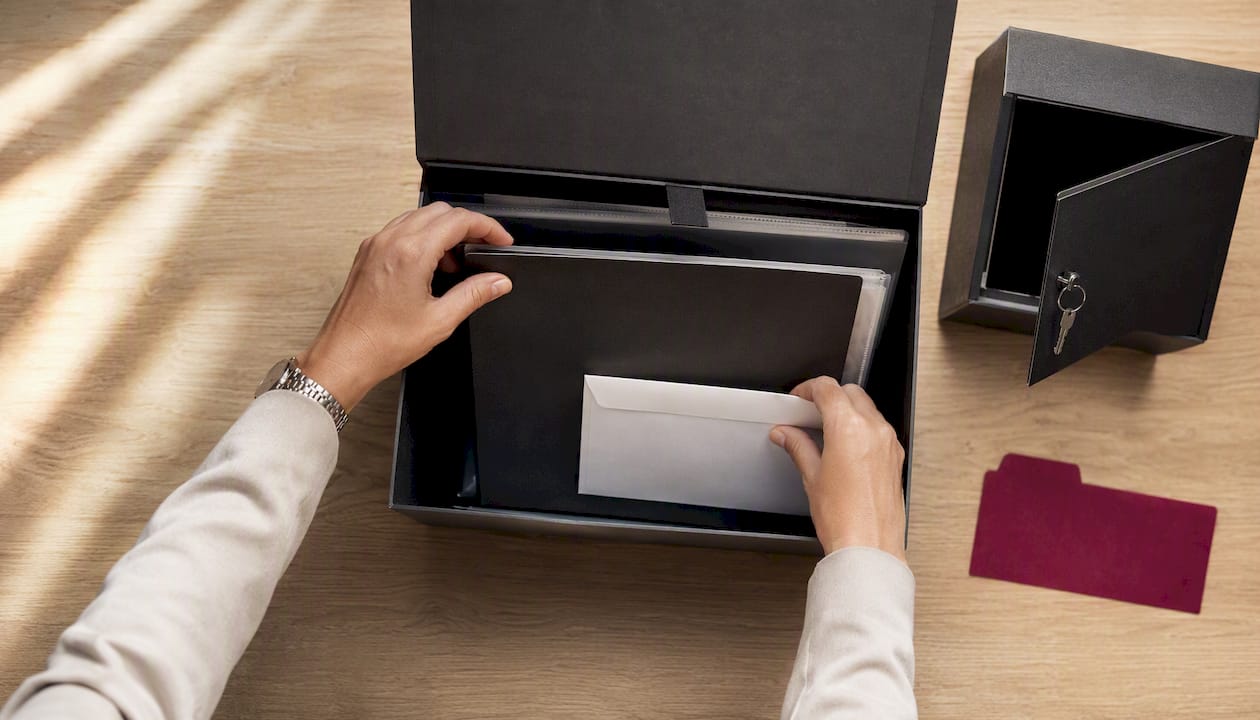
Real estate agents handling a pool property should request this file from the vendor early. A missing CCEW or an expired pool certificate found during due diligence is one of the more common reasons settlements slip by weeks, and it’s entirely avoidable with a five-minute document check before the property goes to market.
Builders installing new pools should hand owners a compliance pack at handover: the CCEW confirmation, the pool certificate, and the electrician’s test results. That pack becomes the baseline every future inspection gets measured against, and it saves the next certifier from having to guess what standard the original installation was built to. Digital copies stored with the property’s other title and building documents survive an ownership change far better than a printed sheet in a kitchen drawer.
Specific roles and certifications required for electricians and certifiers working on NSW pools
Not every electrician is licensed to sign off pool electrical work, and not every certifier can issue a pool certificate. Knowing the difference saves a wasted call.
A Level 2 electrician holds accreditation to work on and near the network connection point, including private power poles and some underground service work, and is the trade most equipped to handle the bonding, earthing, and switchboard work pools typically need. Standard licensed electricians can still test and certify most pool circuits, but complex service connection issues usually need the Level 2 endorsement.
The person who issues your pool’s final certificate is a registered E1 certifier or your local council’s authorised pool inspector, not the electrician. The electrician’s job ends at the CCEW; the certifier reviews that document alongside the physical pool barrier before entering anything on the NSW Swimming Pool Register. Accredited E1 certifiers operate across Sydney and can often issue same-day certificates once the electrical sign off is in hand.
For owners, the practical takeaway is simple: book a licensed (ideally Level 2) electrician for the technical testing, then a separate registered certifier for the compliance certificate itself. Trying to shortcut either role is the fastest way to end up with paperwork a council won’t accept.
Legal consequences and enforcement actions beyond penalties for non-submission
Late CCEW lodgement carries a direct penalty, but that’s rarely where the real cost lands. Councils have the power to issue notices requiring urgent electrical remediation on unsafe pools, and in serious cases can restrict pool use until faults are fixed.
For property transactions, an expired or missing pool certificate can become a legal sticking point in a contract of sale, with buyers entitled to withhold settlement or negotiate a price adjustment. Strata schemes face their own exposure: a body corporate that knowingly allows a non-compliant shared pool to keep operating risks liability if someone is injured, separate from any council penalty.
Electricians who submit false or incomplete CCEWs, or who sign off work they didn’t actually test, risk disciplinary action against their licence, which is a heavier consequence than a missed deadline fine. For owners, the safest position is treating every pool electrical job as documentation-first: get the test done properly, get the CCEW lodged inside the seven-day window, and keep the paper trail. That habit does more to avoid enforcement action than anything else in this article.
How to handle compliance for existing pools versus new installations
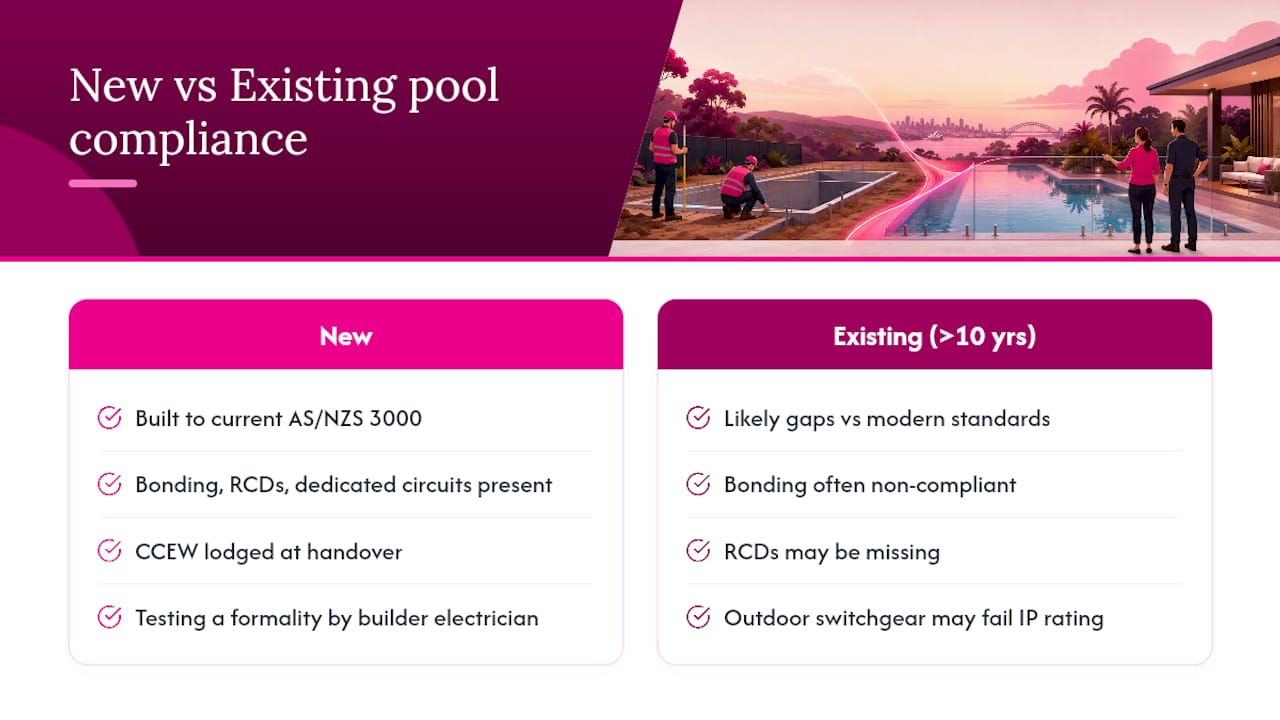
New pool installations start with an advantage: the electrical work goes in against current AS/NZS 3000 standards, so bonding, RCDs, and dedicated circuits are usually built in correctly from day one, and the CCEW gets lodged as part of the standard handover process.
Existing pools, particularly ones installed more than a decade ago, are where most compliance gaps show up. Bonding standards have tightened, RCD requirements weren’t always mandatory on older installations, and outdoor switchgear from earlier builds often falls short of current IP rating requirements. If your pool certificate is due for renewal and the pool is more than ten years old, budget for at least one remedial item.
The practical difference in approach: new installations need a builder’s electrician to complete standard testing and CCEW lodgement as a formality, while existing pools usually need a dedicated inspection first to identify what’s actually failed before any remedial quote makes sense. Don’t assume an older pool that’s “always worked fine” will pass, electrical standards move, and a pump that runs perfectly can still sit on a circuit with no RCD protection.
Christopher’s field notes: what we see most often at Sydney pool inspections
Most jobs we’re called to aren’t dramatic. It’s usually a bonding strap that’s corroded through, or a switchboard that predates RCD requirements entirely, fixed in a single visit, tested, and CCEW lodged the same week.
The pools that cause real delays are almost always ones where a non-accredited electrician did the original work, or where nobody kept the paperwork from the last inspection. An accredited Level 2 electrician who tests to the current standard the first time avoids the re-inspection loop that drags a straightforward job out by weeks. That’s the difference that actually matters to someone trying to settle a sale on schedule.
— Christopher
How High Demand Electrical gets your pool CCEW-ready fast
Most Sydney pool owners don’t need a lecture on regulations, they need someone to show up, test the circuits, and lodge the paperwork correctly the first time. High Demand Electrical does exactly that, with a free site inspection for Level 2 scope work before you commit to anything, so you know the real cost before a technician touches a switchboard.

Our electricians handle pool bonding and RCD protection as a standard callout, alongside full electrical safety inspections that leave you with CCEW-ready test results rather than a vague verbal opinion. Every technician is a certified Level 2 electrician, available 24/7, and the business carries over 300 five-star reviews from Sydney homeowners, builders, and property managers who’ve gone through this exact process. Once testing is complete, we lodge the CCEW through the BCNSW eCert portal within the required window, so your certifier can move straight to issuing the pool certificate without chasing missing paperwork.
If your pool certificate is due, or a sale is riding on a clean inspection, book a Level 2 electrician now and get ahead of the deadline instead of scrambling against it.
Where to verify pool electrical compliance in NSW
Check your obligations directly with NSW Government electrical compliance guidance and the Swimming Pools Regulation 2018. Confirm registration status on the NSW Swimming Pool Register, and for broader pool safety context, see this guide to NSW pool fence rules.
Sources
Recommended
Related Services
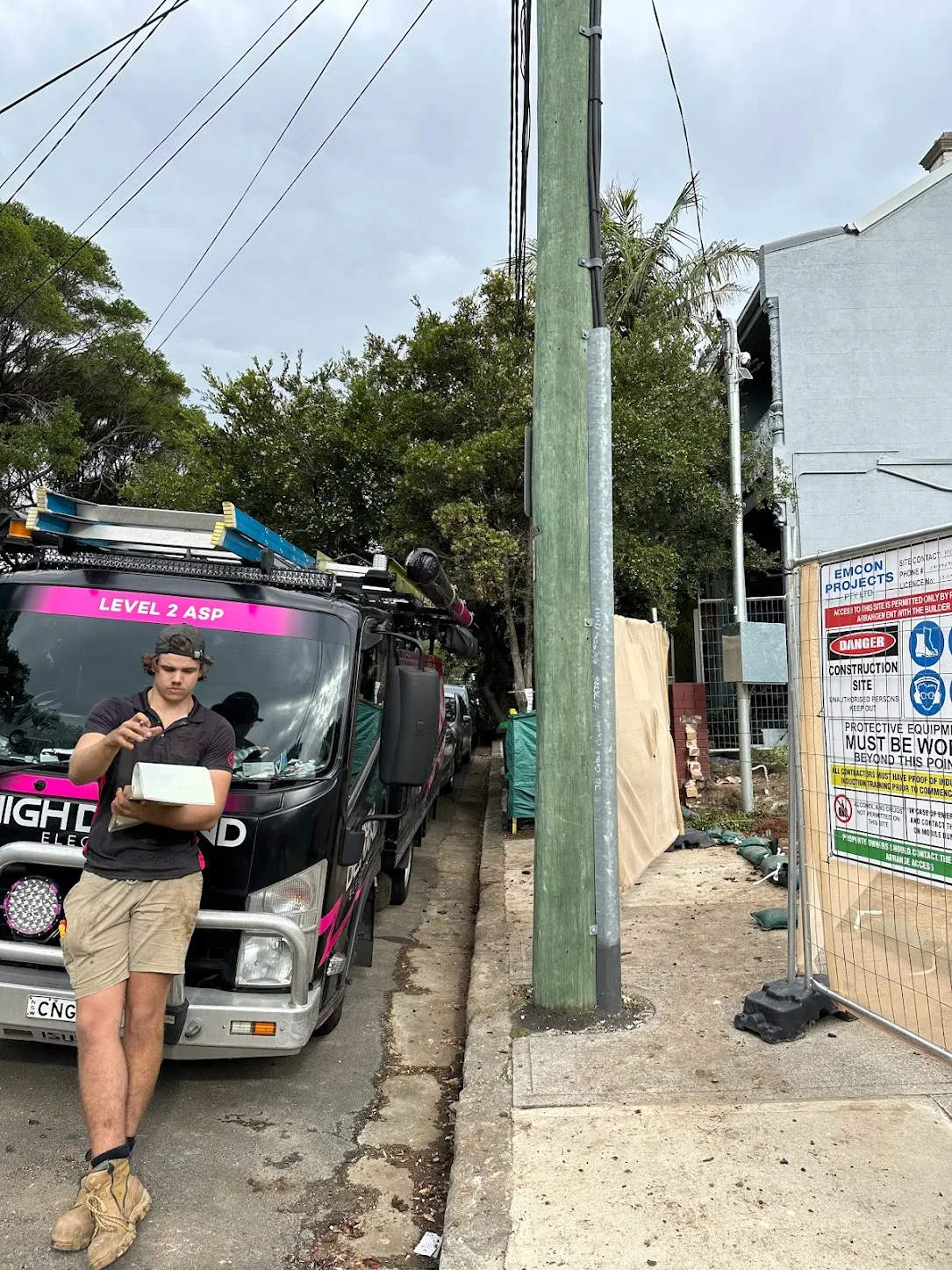
Powering Your Needs with Expertise
If you’re looking for a reliable, experienced, and prompt electrician, look no further than High Demand Electrical. We cater to all your electrical needs, from routine maintenance to emergency repairs and complete system installations. Our skilled team is committed to providing professional service that ensures your electrical systems run smoothly. Whether it's a small task or a large project, give us a call today. Let us meet all your electrical demands with the quality and reliability you deserve.