What Are the Electrical Requirements for Converting a Shipping Container Into a Home, Studio or Office in Sydney?
What Are the Electrical Requirements for Converting a Shipping Container Into a Home, Studio or Office in Sydney?
What are the electrical requirements for converting a shipping container into a home, studio or office in Sydney? A converted container needs a properly sized switchboard and consumer mains supply, cabling planned around the container's insulation and condensation risk, RCD protection on every final subcircuit, and a Certificate of Compliance for Electrical Work (CCEW) once a licensed electrician finishes the job. If you are adding a bathroom or kitchenette inside the container, the AS/NZS 3000 wet area rules apply just as they would in any house, and a genuinely heavy load, think a workshop with welding gear or a loaded air conditioner, can push the job toward a single phase to three phase upgrade.
⚡ Quick Answers: Shipping Container Electrical Requirements
- Can I just run an extension lead from the house? No. A converted container used as a habitable space or a genuine workspace needs its own properly protected circuits fed from a compliant switchboard, not a temporary lead run across the yard.
- Does the container need its own switchboard? Usually yes, a small distribution or sub board inside or beside the container, fed by sized consumer mains from the main house switchboard, or by its own connection for a bigger load.
- Will condensation inside the container affect the wiring? It can. Insulation and cable routes need to be planned together so cabling, joints and accessories are never sitting directly against cold steel where moisture collects.
- Do I need safety switches in a converted container? Yes. Every final subcircuit needs RCD protection, the same rule that applies to any other room in a Sydney home or business.
- What changes if I add a bathroom or kitchenette? The usual wet area zones, IP rated fittings and socket clearances apply inside a container exactly as they do inside a house.
- Do I still need a compliance certificate? Yes. A CCEW is required for the electrical work regardless of whether your council approval path is exempt development, complying development or a full development application.
1. Working out how much power your container conversion actually needs
Before anyone runs a single cable, a level 2 electrician should work out the maximum demand of what you actually plan to run in the finished space. A quiet backyard studio with lighting, a few powerpoints and a split system air conditioner sits in a completely different load bracket to a workshop or office running tools, a kiln, server equipment or a commercial espresso machine.
That maximum demand figure decides everything downstream: whether your existing switchboard and consumer mains have enough spare capacity, whether a switchboard upgrade is needed before the container can be connected at all, and whether a straightforward sub board is enough or the job needs a genuine power supply upgrade. Skipping this step is the single most common reason a container fit out gets held up partway through.
2. Running power from the house, or giving the container its own supply
Most residential container conversions run on a sub main from the main house switchboard to a small distribution board fitted inside or against the container. That sub main needs to be sized for the actual load, not a rough guess, and the combined demand of the house plus the container has to fit within what your existing supply can carry.
Where the container is some distance from the house, carries a heavy load, or is being set up as a genuinely separate dwelling or business with its own metering, a dedicated connection and consumer mains installation can make more sense than stretching a long sub main across the block. That decision also touches your network area, since Ausgrid and Endeavour Energy both have their own application process for a new or upgraded connection, so it is worth checking your network area in seconds with our postcode checker before you commit to a design.
3. When a container conversion triggers a single phase to three phase upgrade
A single phase supply comfortably covers most home studios and offices. The maximum demand calculation changes once you add genuinely heavy equipment, three phase welding gear, a large compressor, a commercial kitchen appliance or a sizeable ducted air conditioning unit are common triggers in container fit outs we see across Sydney.
If your assessment shows the combined load is getting close to what a single phase supply can safely carry, a single phase to three phase upgrade is worth pricing early in the design, rather than discovering it is needed after the container is already lined, powered and in use.
4. Insulation, condensation and planning the cable run
A bare shipping container is an uninsulated steel box, and steel left exposed to Sydney's temperature swings sweats on the inside the same way a cold drink can sweats on a hot day. That moisture is exactly what electricians try to keep cabling, joints and accessories well clear of, so insulation and the cable run need to be planned together rather than one after the other.
In practice this means running cabling inside the lining and framing once insulation is in, not clipped straight to bare steel, and choosing enclosures and joints rated for the damp conditions a sealed steel box can create before ventilation and insulation are properly sorted. It also means thinking through where vapour can still find its way behind a switchboard or GPO, and keeping those fittings away from cold spots and uninsulated corners wherever the layout allows.
None of this is exotic electrical work, it is simply paying attention to a building type that behaves differently to a timber or brick wall, and it is a big part of why container fit outs are worth planning with an electrician from the start rather than bolting the wiring in after the fact.
5. RCD and safety switch coverage for every circuit
AS/NZS 3000 requires residual current device (RCD) protection with a maximum rating of 30mA on all final subcircuits in a domestic or residential electrical installation, and that requirement does not soften just because the walls happen to be corrugated steel rather than brick veneer. Every lighting circuit, every powerpoint circuit and any dedicated circuit for a fixed appliance inside your converted container needs to sit behind a correctly rated safety switch at the board it originates from.
This matters even more in a container than in a typical room, since a metal structure is itself a good conductor, so a fault that might otherwise go unnoticed has a clearer path to earth through the building itself. An electrical safety inspection once the fit out is finished is a sensible way to confirm every circuit is properly protected before the space gets handed over and used day to day.
6. Wet area wiring if you are adding a bathroom or kitchenette
A growing number of container studios and granny flat style conversions include a small bathroom or kitchenette, and the moment water is involved, the AS/NZS 3000 wet area rules apply exactly as they would in a house. Socket outlets cannot sit within the classified zones around a shower, bath or sink, switches and powerpoints need the right IP rating the closer they are to water, and a switchboard can never be located inside a wet area zone at all.
These clearances and ratings are not negotiable just because the fit out is compact. A container bathroom that looks finished can still fail a compliance check if a powerpoint has landed too close to the shower recess or a light fitting above it is not rated for the location, so it pays to get the layout checked before tiling and lining go in rather than after.
Why it's Level 2 ASP work
Most of the actual fit out inside the container, lighting, powerpoints, the sub board and its circuits, is work any licensed electrician can carry out. Where the job becomes Level 2 Accredited Service Provider (ASP) territory is the connection side: anything that touches the network's consumer mains, service line, metering position or point of connection, including a new or upgraded supply run out to the container.
Specifically, a Level 2 ASP is the only person who can legally size and install new consumer mains to feed the container's sub board, upgrade an undersized service connection ahead of a bigger load, or arrange a brand new connection and metering point where the container is being set up as its own dwelling or business. Trying to push a heavy load through an unsized or ageing supply without that assessment is how switchboards and service cables end up overloaded.
NSW planning approval and your CCEW are two separate processes
It is easy to assume that once council has signed off on a container conversion, the electrical side looks after itself. In NSW the two sit on separate tracks. Whether a container conversion needs a full development application, falls under complying development, or qualifies as exempt development depends on things like its size, location, how it is used and your specific council's local controls, and that is a planning question for your council or a planning consultant to answer, not an electrician.
The CCEW is a different document entirely. It is the compliance certificate your electrician lodges once the electrical work itself has been tested and completed, confirming the wiring, switchboard and connection meet AS/NZS 3000 and the relevant distributor's rules. You need a CCEW for the electrical work regardless of which planning pathway the container conversion followed, and a council approval on its own is never a substitute for it. See our guide to the electrical compliance certificate in NSW for what the CCEW actually covers and why it matters at resale and insurance time.
How High Demand Electrical Helps
High Demand Electrical is one of Sydney's most trusted Level 2 ASPs, and we see container conversions at every stage, from a first conversation about what a site can actually support through to the final CCEW once the fit out is finished. We start with an honest maximum demand assessment so you know whether your existing supply can carry the container or whether a power supply upgrade needs to be part of the budget from day one.
From there our licensed team handles the full scope: sizing and running consumer mains or a sub main to the container, fitting and wiring the sub board, planning cable routes around insulation so condensation never becomes a hidden problem later, and making sure every circuit carries the RCD protection AS/NZS 3000 requires. We are a licensed local team, not a call centre, servicing homes and businesses across Sydney's West, South West and Sutherland Shire, and every job gets a proper site assessment before we put a scope or price in writing.
If your container is going to double as a granny flat or secondary dwelling, our guide to electrical connections for duplexes and granny flats covers the metering side of that decision in more depth, and if you are managing the build yourself, our owner builder electrical work in NSW guide explains exactly where your responsibilities stop and a licensed electrician's begin.
Shipping Container Electrical Requirements FAQs (Sydney)
Can I wire a shipping container studio myself if I am an owner builder?
No. All electrical work, including inside an owner built container conversion, has to be carried out or directly supervised by a licensed electrician and signed off with a CCEW. See our owner builder electrical work in NSW guide for what owner builders can and cannot do themselves.
Does a container home or office count as a caravan or relocatable dwelling under the wiring rules?
Not usually. Once a container is fixed in place, connected to a permanent supply and used as a habitable space or workplace, it is treated as a standard electrical installation under AS/NZS 3000 rather than the caravan specific rules. Our guide to caravan, tiny home and motorhome electrical rules covers the distinction if your project sits somewhere in between.
What size switchboard does a converted shipping container need?
There is no single answer. It depends entirely on the maximum demand of what you plan to run, lighting, powerpoints, air conditioning, any workshop or commercial equipment, worked out properly before the board is chosen rather than guessed at. See our switchboard upgrades page for how that assessment works.
Do I need council approval before an electrician can connect power to my container?
Council approval and your electrical connection are separate processes that usually need to run alongside each other, not one after the other. Your electrician can assess the supply and design the connection while your development approval, complying development certificate or exemption is being confirmed with council, but check your specific approval path with your local council before committing to a final layout.
What happens if I add aircon, an EV charger or a second container later?
Each of those adds genuine load, and it is worth having your electrician factor likely future additions into the original maximum demand assessment rather than retrofitting the switchboard every time something new gets added. See our power supply upgrades page if you are already anticipating a bigger load down the track.
Get Your Container Conversion's Power Supply Assessed Properly
A shipping container conversion is only as good as the supply and switchboard behind it. Get a Power Supply Upgrade Quote from High Demand Electrical, or call 0402 559 777 to talk through your project. Every job needs a proper site assessment before we can confirm scope or pricing, this guide is general information only and is not a substitute for that assessment.
Need Help Fast?
Related Services

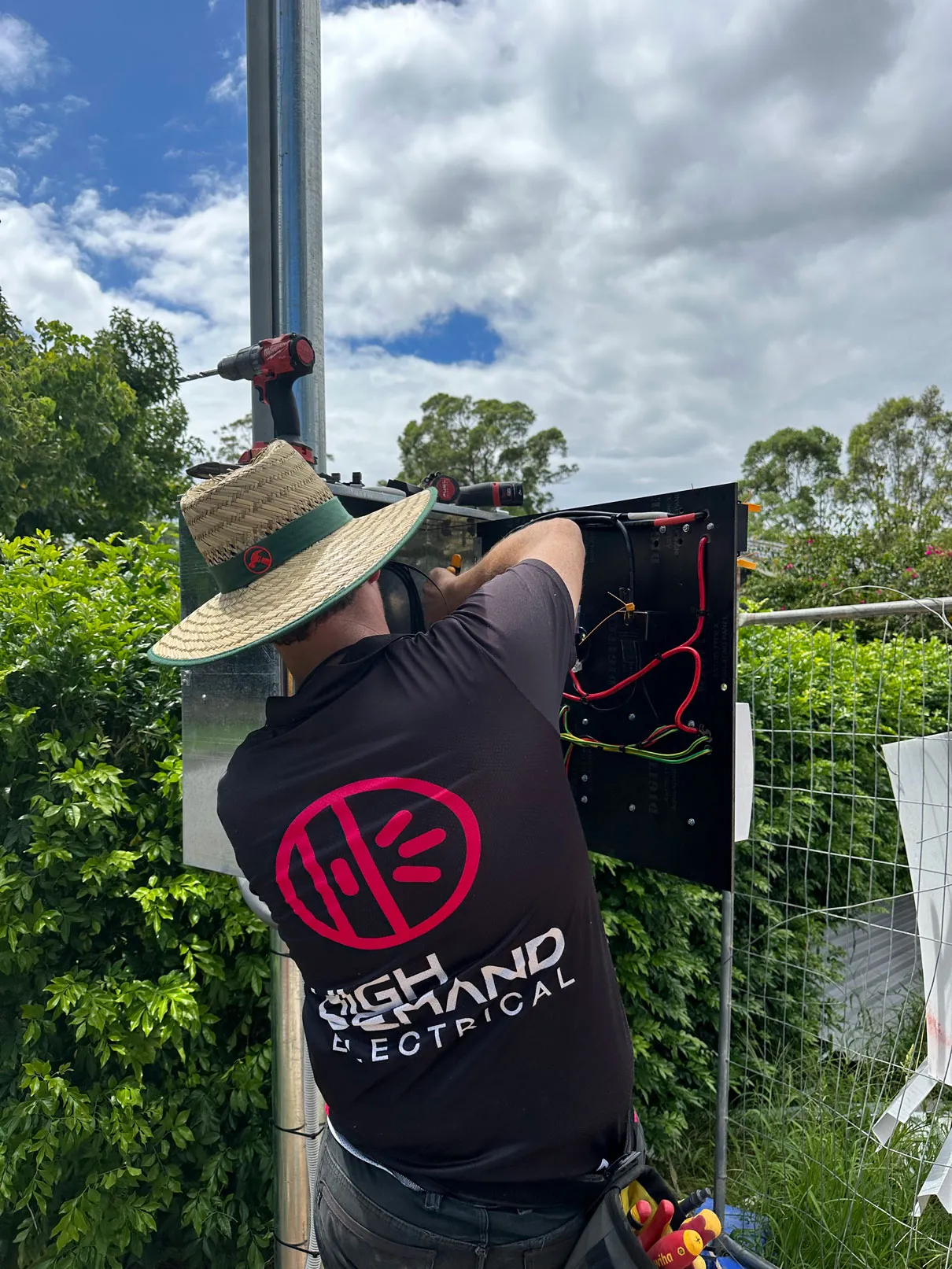
Powering Your Needs with Expertise
If you’re looking for a reliable, experienced, and prompt electrician, look no further than High Demand Electrical. We cater to all your electrical needs, from routine maintenance to emergency repairs and complete system installations. Our skilled team is committed to providing professional service that ensures your electrical systems run smoothly. Whether it's a small task or a large project, give us a call today. Let us meet all your electrical demands with the quality and reliability you deserve.

Licensed Level 2 ASP electricians across Sydney. Same-day service and 24/7 emergency response.
Licence 397193C
ABN 87 051 836 527
