Power Points Not Working but Lights Are? Here's What's Going On
Power points dead but your lights are still working fine? That's almost always one circuit tripping, not a wider electrical fault. Homes split lighting and power points onto separate circuits specifically so a fault in one doesn't take out the other. Here's why that happens, the safe reset-once check, and when it actually means something more serious.
👉 See our electrical safety inspection service →
1. Why your home has separate circuits at all
A modern Sydney switchboard doesn't run every powerpoint and light off one wire. Circuits are split up, commonly one or more for general power points, one or more for lighting, and dedicated circuits for big fixed loads like the oven, hot water or air conditioning. This grouping means a fault, like a dodgy toaster or an overloaded double adaptor, only knocks out the circuit it's on. It's a deliberate safety and convenience design, not a fault in itself, and it's why "lights are fine but every power point in the kitchen is dead" is such a common, specific symptom.
2. The switchboard is where the answer is
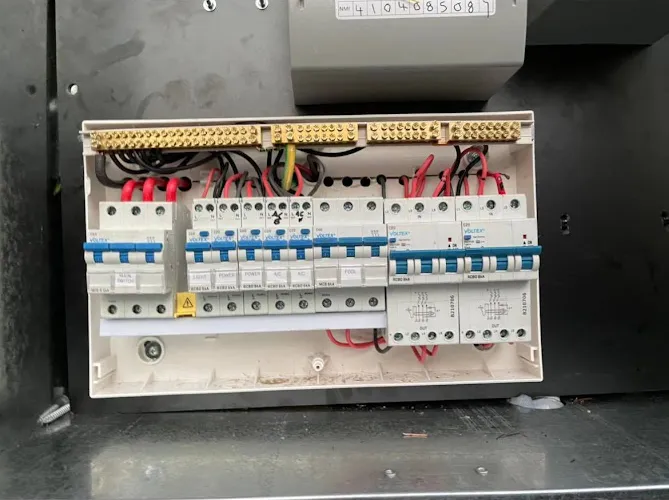
Open your switchboard and look for a breaker or safety switch sitting in the middle, neither fully up nor fully down. That's the tripped one. Circuit breakers protect against overload and short circuits; safety switches (RCDs) protect against electric shock by detecting current leaking to earth, and either type can trip depending on what actually went wrong. Our guide to circuit breaker vs safety switch explains the difference if you're not sure which one you're looking at.
3. The reset-once rule
Switch the tripped device fully off, then fully back on, once. If power points come back and stay on, the trip was likely a one off, an appliance drawing a brief surge, or too many things running on one circuit at the same time. If it trips again immediately, don't keep resetting it. Repeated resets on a genuine fault risk overheating the wiring or the device itself, and that's when it becomes a job for an electrician rather than a DIY fix.
4. What's actually causing it
The most common cause by far is overload, too many high draw appliances (kettles, heaters, hair dryers) running on one circuit at once, especially in older homes with fewer, more heavily loaded circuits than a modern build. Next most common is a faulty appliance itself leaking current or drawing too much, which a safety switch is specifically designed to catch. Less commonly, it's genuine wiring damage, a chewed cord, a loose terminal, or water that's found its way into an outdoor point after rain. Our guide to which appliance might be tripping your power walks through checking each one systematically.
5. When it's more than one circuit
If more than one circuit is affected, or the trips are becoming frequent even without an obvious cause, that points to something upstream, an ageing safety switch, a failing circuit breaker, or a board that's simply carrying more load than it was designed for. Our guide to safety switch keeps tripping covers exactly when repeated trips mean it's time for a proper inspection rather than another reset. A wider outage that also affects your lights, not just power points, is a different scenario, covered in our partial power outage guide.
How High Demand Electrical helps
We diagnose tripping circuits properly rather than guessing, tracing the actual fault back to the appliance, the wiring or the switchboard itself, servicing homes across Sydney's West, South West and Sutherland Shire. If your board is old enough that finding the right breaker is a guessing game in the dark, ask us about a straightforward switchboard upgrade at the same time. Where the underlying issue is a worn-out or nuisance-prone safety switch rather than the wiring itself, we can also handle a full safety switch installation as part of the same visit, so you're not paying for a second call-out down the track.
Power points keep tripping and won't stay reset? Book an electrical safety inspection or call 0402 559 777. Every job starts with a site assessment so scope and pricing are confirmed before work begins.
Related Services
Powering Your Needs with Expertise
If you’re looking for a reliable, experienced, and prompt electrician, look no further than High Demand Electrical. We cater to all your electrical needs, from routine maintenance to emergency repairs and complete system installations. Our skilled team is committed to providing professional service that ensures your electrical systems run smoothly. Whether it's a small task or a large project, give us a call today. Let us meet all your electrical demands with the quality and reliability you deserve.