Safety Switch Keeps Tripping? Here's Why (and What to Do)
Written by Chris, Licensed Level 2 ASP Electrician, Licence 397193C.
Why does my safety switch keep tripping? A safety switch trips because it has detected current leaking somewhere it should not, and in almost every case that means a real fault rather than a broken switch. The six usual causes are a faulty appliance, moisture in an outdoor or wet area circuit, an overloaded circuit, a wiring fault inside a wall, a safety switch that is simply old and failing, or a combination of smaller issues. Working through them in order usually finds the problem quickly.
⚡ Quick Answers: Safety Switch Tripping
What a Safety Switch Actually Does
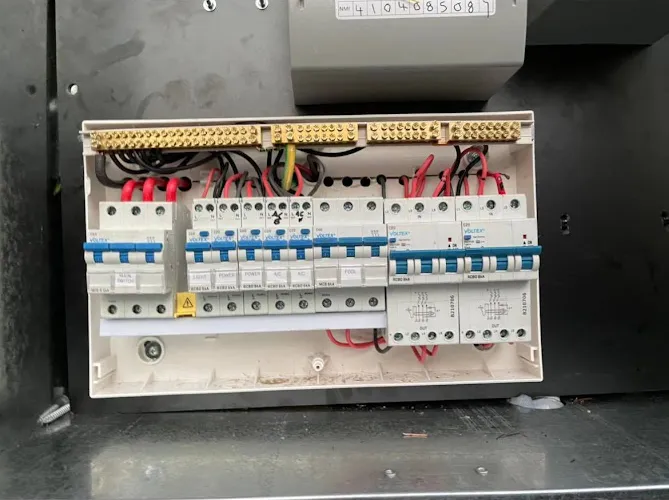
A safety switch, also called an RCD or residual current device, monitors the current flowing through a circuit. The moment it detects an imbalance, current going somewhere it should not, such as through a person, it cuts the power in a fraction of a second to prevent electric shock. When it keeps tripping, it is reacting to something real on that circuit, not malfunctioning for no reason.
1. A Faulty Appliance
This is by far the most common cause. Appliances develop faults as they age, especially anything with a heating element such as ovens, dishwashers and hot water systems, a motor such as fridges and pool pumps, or older power tools. A damaged cord, a worn seal letting in moisture, or degraded internal insulation can leak current, and one faulty appliance is often enough to trip the switch on its own.
How to test it: Unplug everything on the affected circuit, reset the safety switch, then reconnect appliances one at a time. When the switch trips again, you have found the culprit, and that appliance needs repair or replacement before it is used again.
2. Moisture on the Circuit
Water and electricity do not mix, and outdoor power points, bathroom exhaust fans, downlights, outdoor lighting and pool equipment are all common entry points. Tripping that gets worse after heavy rain or high humidity usually points to moisture finding its way into wiring or a fitting, which needs a proper inspection rather than waiting for it to dry out.
3. An Overloaded Circuit
A safety switch is different from a circuit breaker. The breaker protects wiring from overload and short circuits, while the safety switch cuts power when current is leaking to earth, but a heavily loaded circuit, such as a heater, hair dryer and toaster all running at once, can still trip it. If tripping only happens when several appliances run together, spreading them across different circuits usually solves it. If overloading keeps happening, your switchboard may not have enough dedicated circuits for how your household actually uses power.
4. A Wiring Fault Inside the Walls
Older wiring deteriorates over time. Insulation becomes brittle, cracks, or gets damaged by pests or general wear, and when a bare conductor touches something it should not, the safety switch detects it and cuts power. These faults are harder to diagnose because they are hidden in walls and ceiling cavities. If the switch still trips with everything unplugged, suspect a wiring fault and call a licensed electrician. Homes built before the 1990s are particularly exposed, since the original wiring was not designed for modern household loads. Our guide to electrical fault finding in Sydney covers how this is diagnosed properly.
5. A Failing Safety Switch
Safety switches wear out like any other component, and an ageing switch can start tripping even when there is no real fault on the circuit. If your switch is old and trips unpredictably, including at night with nothing much running, the switch itself may need replacing. This is licensed electrical work, not a DIY job.
6. A Combination of Small Issues
Sometimes it is not one cause but several small ones stacking up, a slightly damp outdoor point, an ageing appliance and a warm evening pushing a borderline circuit over the edge. Intermittent tripping like this is the hardest to diagnose without proper test equipment, which is where a professional fault finding visit earns its keep.
What to Do When It Trips
Step 1: Find the tripped switch on your switchboard. It will be labelled Safety Switch or RCD and sit in the off or middle position.
Step 2: Unplug everything on the affected circuit. Circuits are usually labelled Lights, Power or by room.
Step 3: Reset the switch fully off then firmly back on. If it holds, reconnect appliances one at a time until it trips again, and you have found the fault.
Step 4: If it trips immediately with nothing plugged in, or will not stay reset at all, stop trying and call a licensed electrician. That points to a wiring fault needing proper diagnosis, not repeated resets.
When It Is a Real Emergency
Call an emergency electrician immediately if you smell burning from the switchboard or an outlet, see scorch marks or discolouration, the safety switch feels hot to touch, you have lost power to medical equipment, or the switch will not reset and you have lost power to key parts of the home. High Demand Electrical runs a 24 hour emergency line across Sydney for exactly these situations.
How High Demand Electrical Helps
High Demand Electrical is a licensed local team, not a call centre, servicing homes and businesses across Sydney with fault finding equipment that tests every circuit, identifies faulty appliances, and locates hidden wiring problems including earth leakage. Under AS/NZS 3000, additional RCD protection is required whenever a switchboard has all of its circuit protection replaced or an existing circuit is altered, so if your switch is old or your board has never been upgraded, that is worth checking at the same time. We give you a clear quote before any work begins, and every job gets a proper site assessment first.
Safety Switch FAQs (Sydney)
Can I just tape the safety switch on?
No. Bypassing it removes the only protection between a wiring fault and a shock or fire, and it works against the Wiring Rules. If it keeps tripping, that is the switch doing exactly what it is meant to do.
Is a tripping safety switch covered by insurance?
It depends on the cause. If an appliance fault damaged your wiring, your home and contents policy may cover the repair, and if a storm or surge caused it, storm damage cover may apply. We can provide a fault report to support a claim.
How much does it cost to fix?
If a faulty appliance is the cause, the only cost is repairing or replacing that appliance. If it is a wiring fault or the switch itself, pricing depends on the scope of the job, and we will give you a clear quote after a site assessment before any work begins.
What if my whole board keeps tripping, not just one switch?
That points to a bigger issue than a single circuit, and it is worth having a full electrical safety inspection rather than repeatedly resetting. Our guide to power that keeps tripping covers when it escalates beyond a simple fix.
Get a licensed electrician to find the fault. Call 0402 559 777 for 24 hour fault finding across Sydney, no call out fee for standard work, and every job starts with a proper site assessment before we confirm scope or price.
Related Services

Powering Your Needs with Expertise
If you’re looking for a reliable, experienced, and prompt electrician, look no further than High Demand Electrical. We cater to all your electrical needs, from routine maintenance to emergency repairs and complete system installations. Our skilled team is committed to providing professional service that ensures your electrical systems run smoothly. Whether it's a small task or a large project, give us a call today. Let us meet all your electrical demands with the quality and reliability you deserve.