Overhead to Underground Power: Judging Your NSW Contractor
Thinking about taking your power lines underground in NSW? The brand name on the quote is only part of the story. Overhead to underground power conversions are not your average electrical job. They involve network approvals, planned disconnections, reconnections and compliance paperwork with Ausgrid, Endeavour Energy or Essential Energy. Get the sequence wrong, and the project can stall. That is why the useful question is whether your contractor holds Level 2 ASP accreditation, the network-approved authorisation needed for this work, can manage the whole process under one roof, and can prove quality, safety and environmental systems. Private power pole and mains work must be done by a Level 2 ASP, never by you or an unaccredited electrician. If a pole or wire is damaged, leaning or fallen, stay clear and call your network or an ASP straight away.
This guide unpacks why a conversion is a network job, what Level 2 ASP accreditation actually means, the four checks to run, a pre-signature checklist, and how to verify contractor claims yourself. It also shows how HDE measures against those criteria, so you can turn the checks into a confident decision. For a site assessment and quote, contact HDE.
Why a Conversion Is a Network Job, Not a Standard Electrician Job
An overhead to underground conversion retires your property's overhead mains and private pole span, then runs the supply underground instead. Rebuilds, subdivisions, storm damage and appearance and safety preferences are common reasons for a conversion, and some sit inside a larger 200A overhead supply upgrade.
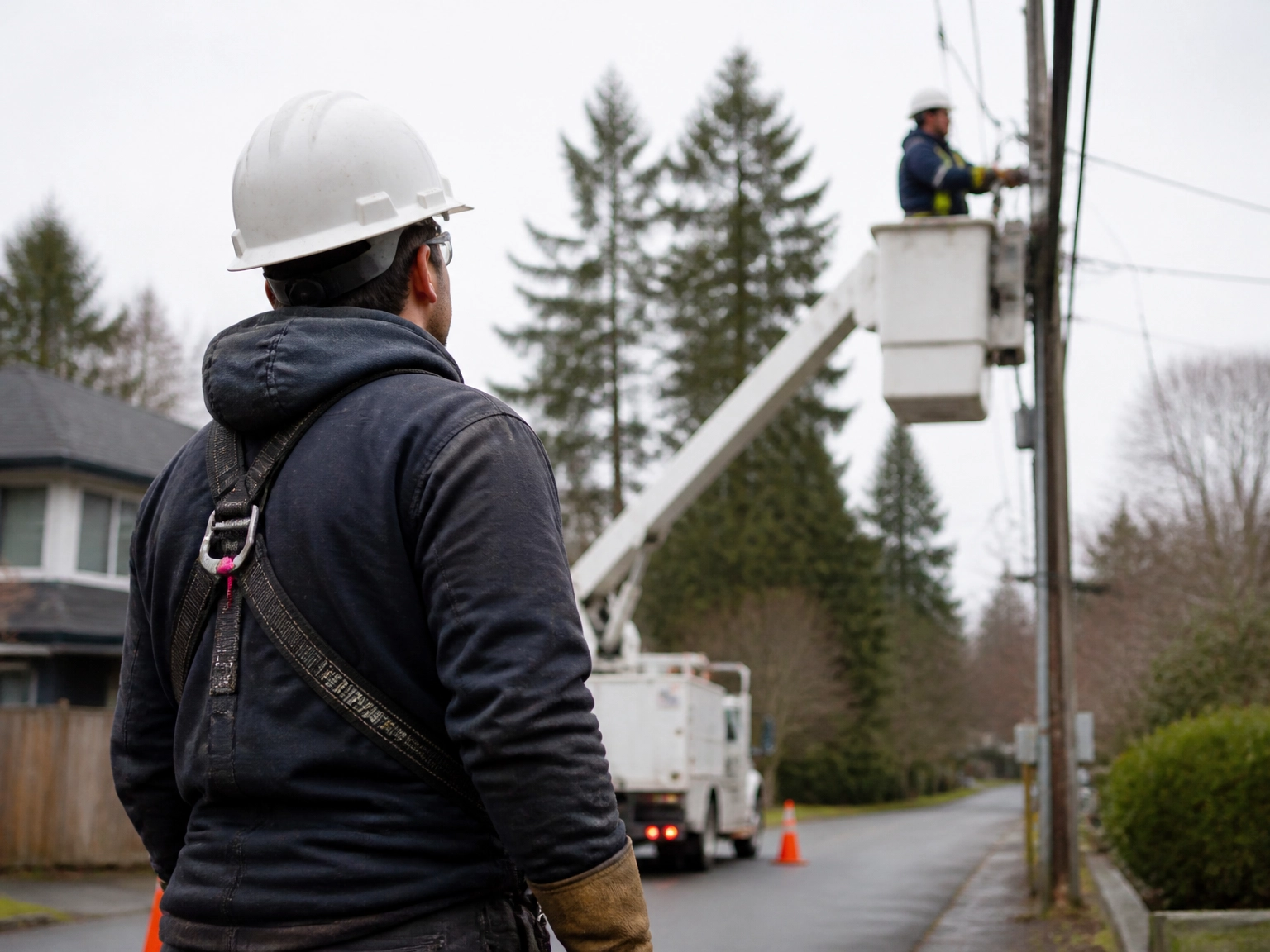
The work sits on the network side of your point of connection, the boundary where the network's responsibility ends and yours begins. That's why a standard licensed electrician can't legally do it. In NSW it must be carried out by a Level 2 Accredited Service Provider (ASP), a contractor accredited under the NSW ASP scheme for network-side work.
Much of it is contestable: network-related work an accredited provider can deliver for you rather than the network doing it itself. That framework is what allows a private contractor to handle private pole and supply work. Because the work sits with the network, the questions to settle next are what accreditation involves, who holds it, and how you check it.
You'll deal with Ausgrid, Endeavour Energy or Essential Energy. Accreditation applies network by network, so check coverage for yours, not just for Sydney generally.
What Level 2 ASP Accreditation Actually Means
ASP stands for Accredited Service Provider, the NSW accreditation scheme that governs who can legally do work on the network side of your point of connection, as set out in the December 2017 edition of the ASP Scheme Rules, and you should confirm the current edition before relying on it. Holding current accreditation is what makes that work legal, not just technically possible.
Here is the mix-up many buyers make: finishing an ASP training course does not grant you accreditation. Final eligibility is decided by the NSW Government and the network operators, and the course entry requirements come from those distributors.
Level 2 breaks into classes. Class 2A covers disconnection and reconnection at the point of connection, 2B covers underground service installation, and 2C and 2D cover other defined scopes. Note that 2D does not authorise meter installation. Level 1 ASPs are a different scope again, extending the overhead or underground network or increasing its capacity, which is not what a private conversion needs.
One honest limit: published material does not state whether a full overhead to underground conversion needs Class 2A, 2B, or both. So ask your contractor to confirm in writing that their accredited classes cover every part of your job, including disconnection and reconnection.
Check One: Level 2 ASP Accreditation For Your Network
Start with the network, not the brand. Ausgrid, Endeavour Energy and Essential Energy each run their own ASP accreditation arrangements, so confirm coverage by suburb and network, not a general claim of working across Sydney. You can check HDE's accreditation and coverage against that same test.
Then ask three questions: which ASP class does the business or individual hold, is that accreditation current, and does the class scope cover the disconnection, reconnection and underground service installation your project needs?
Accreditation can lapse, and it may sit with a person rather than the business, so a badge on a website proves nothing. Ask to see current evidence and verify it instead of accepting a screenshot.
An unaccredited electrician, however experienced, cannot legally do this network-side work. A cheaper quote from one is not a cheaper quote; it is a quote for something they cannot lawfully deliver.
Some contractors have the network portion carried out by another accredited party. That is not automatically a problem, but you need to know who is actually signing off the network work and holding the accreditation.
Check Two: Does One Contractor Own the Whole Process?
Accreditation sorted, the next question is who actually owns the job. The general shape: site assessment, network application and approval, coordinated disconnection and reconnection, underground installation, compliance paperwork. Your network and your ASP can confirm the specifics for your property.
An honest note: published NSW network and government material does not say networks require a single contractor to run every step. Handling it under one roof is a practical advantage for you, not a network rule.
That advantage shows up at the handoffs. Separate parties for trenching, electrical fit-off and network liaison means more people to chase, more chances for the job to stall, and less clarity about who answers when something goes wrong.
So ask: who lodges the network application? Who attends the disconnection and the reconnection? Who submits the compliance paperwork? And which parts, if any, are subcontracted?
Network queues move. In September 2025 one NSW network told accredited providers its Network Assurance and TechConnect responses could be delayed over 22 to 26 September; planned outages were unaffected. A contractor who plans around those queues is worth having.
Check Three: Can They Prove Quality, Safety and Environmental Systems?
One contractor owning every step is a good start. The next question is whether they can show you their systems. ISO certification is independent certification of how a business runs its management systems: ISO 9001 for quality, ISO 45001 for work health and safety, and ISO 14001 for environmental management.
Here's the honest bit: ISO certification is not an ASP requirement, and it doesn't let anyone touch network assets. Accreditation is the licence; ISO is evidence of how a business organises itself around it.
It still matters, because a conversion involves civil work such as excavation and trenching alongside the electrical work, and documented systems are how those risks get managed.
So ask three questions: can I see the certificates, does the stated scope cover the work you're quoting, and are they current? Certificates expire, and a scope that doesn't name underground installation proves little.
Most customers can't inspect a network job themselves. Sighted certificates, written compliance documentation and a clear written scope are among the few checks you have before you commit.
Check Four: Licence, Insurance and Evidence of Past Work
Certificates prove systems; paperwork proves the business. Ask for the electrical contractor licence number in writing, check it against the official NSW licence register, and confirm the entity quoting you holds it, not a related company.
Request certificates of currency, the documents that show a policy is paid up and current, for public liability and any other relevant cover, then read the dates and the amounts, not just the fact cover exists.
For past work, ask for completed overhead to underground conversions in your network area, whether that is Ausgrid, Endeavour Energy or Essential Energy, and how the network application, disconnection and reconnection were handled.
Ask for customers you can ring, then use the questions in this article: who did they deal with, and did one party stay accountable to the end?
Finally, get the written scope before any deposit conversation: inclusions, exclusions, responsibilities, and what happens if the network assessment changes the plan. If a contractor cannot put the process on paper, that tells you plenty.
Our Level 2 network-side support covers this work, which must be done by a Level 2 ASP, never by you or an unaccredited electrician. Contact HDE for a site assessment.
A Pre-Signature Checklist For Overhead to Underground Conversions
Those answers are step one. Before you sign anything, run this checklist with the documents in front of you.
Accreditation. Current Level 2 ASP accreditation, the class scope your job needs, and confirmation it applies to your network, whether Ausgrid, Endeavour Energy or Essential Energy.
Licence and insurance. The electrical contractor licence number recorded and verified, plus insurance certificates of currency sighted.
Scope of works. Network application, disconnection, underground installation, reconnection and compliance paperwork all named in writing, each with an owner identified. Treat any unnamed step as a gap to close before signing.
Certification. ISO 9001, ISO 45001 and ISO 14001 certificates sighted and in scope. That's system evidence, not a regulatory requirement.
Safety and site rules. A written safety approach, and confirmation that only the accredited provider touches the pole or mains. For any damaged, leaning or fallen pole or wire, stay well clear and call the network or an ASP immediately.
Timing of quotes. Book a site assessment first. Pole condition, trenching access, driveway crossings and network requirements differ from property to property, so quotes compared without one are rarely comparable. If the conversion includes underground supply upgrade options, raise it during that visit.
If a line can't be ticked, ask why in writing. That answer tells you as much as the quote.
How to Verify Contractor Claims Yourself
The checklist only counts if you verify it. Start at the NSW Government's ASP scheme and contestable works information, plus each network's own ASP pages, to confirm accreditation, class and what work is permitted. Search the accredited provider register and read the accreditation rules yourself.
Then use independent registers: the official NSW electrical contractor licence register for licence details, and certificates of currency supplied directly by the contractor or their broker.
Ask every contractor the same questions, in the same order, so the answers sit side by side. Test this comparison, and any vendor's, against your own project rather than trusting it at face value.
Watch for changes, too. The NSW Government has been working on a Consumer Energy Resources (CER) Installer Portal, though its scope and status are still to be confirmed, so check current NSW information before you commit.
Rule of thumb: if a claim cannot be verified from a register, a certificate or a document, treat it as unproven and ask what evidence exists. Contact the Leichhardt team to test a quote against these checks.
How High Demand Electrical Measures Against These Criteria
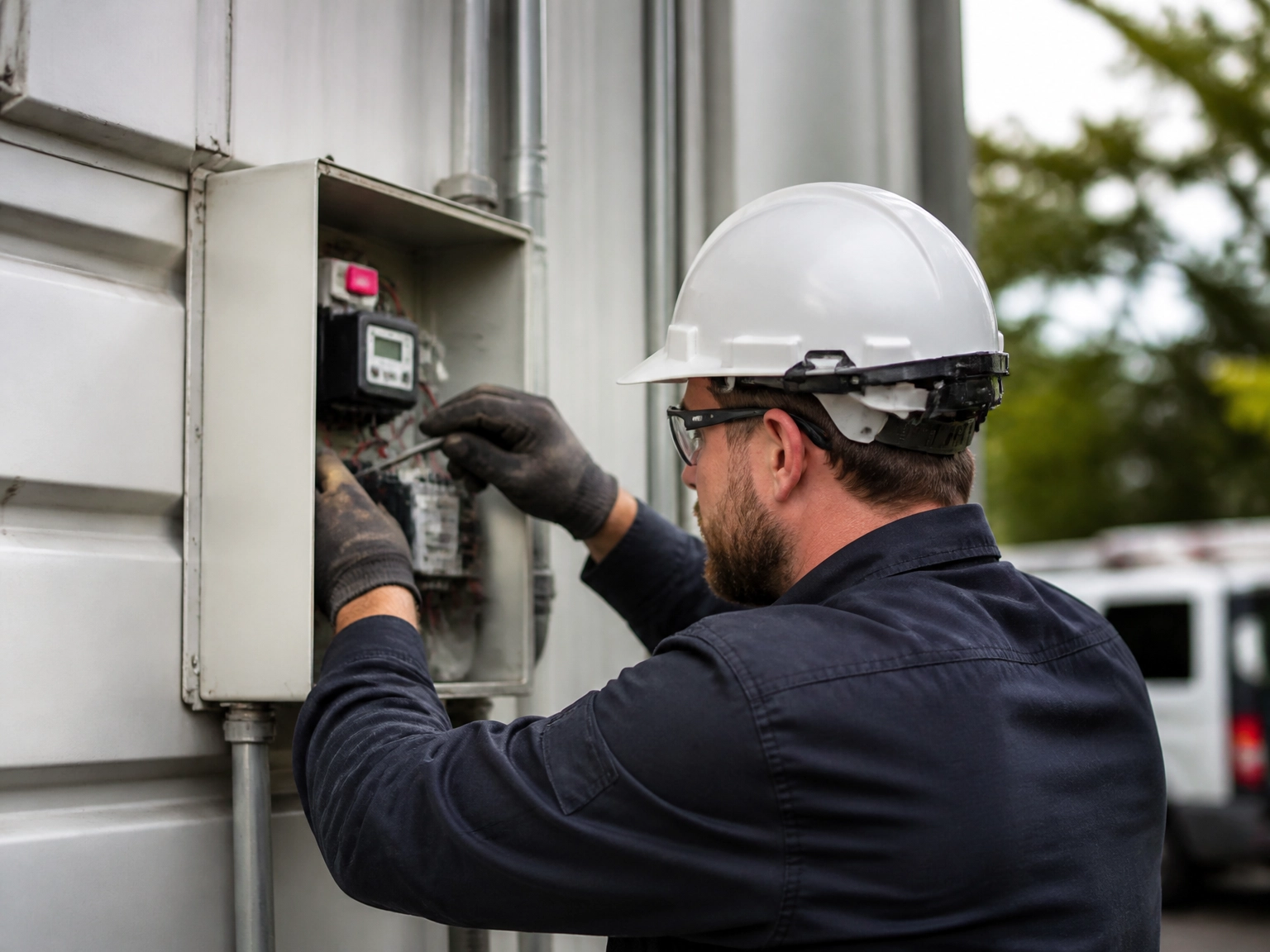
Apply those checks to High Demand Electrical (HDE). HDE is a Level 2 Accredited Service Provider and a licensed electrical contractor, EC Licence 397193C, based in Leichhardt in Sydney's inner west. It works across all three NSW networks, Ausgrid, Endeavour Energy and Essential Energy, so your project is assessed against the network that actually serves your address rather than whichever one a contractor happens to cover.
HDE also handles the whole process, from site assessment and network applications through disconnection, installation, reconnection and compliance paperwork. That means one contractor to deal with instead of several.
The company holds triple ISO certification: ISO 9001 for quality, ISO 45001 for safety and ISO 14001 for environmental management. These are company facts to check, not regulatory requirements, so ask to see the certificates and confirm the scope covers your job.
HDE's customers include homeowners, rural and semi-rural property owners, builders, strata managers and businesses. Every site differs, though, so contact HDE for a site assessment and quote before you decide.
Turning the Criteria Into a Decision
The Rules point is the reason to ask who owns remedial work, so once you have answers from each contractor, the decision gets simpler. Forget brand names and compare against three things: current Level 2 ASP accreditation for your network, one contractor accountable for every step, and licences and certifications you have actually sighted.
Get the scope and step ownership in writing, including who lodges the network application and who submits the compliance paperwork. The contractor is responsible under the NSW Service and Installation Rules for any extra work needed to ensure satisfactory operation, so ask who owns that before you sign. Confirm you are reading the current edition before you rely on it.
One rule is absolute: never touch a pole or mains yourself, and never engage an unaccredited electrician. For any damaged, leaning or fallen pole or wire, stay clear and call your network or an ASP immediately.
If High Demand Electrical looks like a fit, contact the Leichhardt team for a site assessment and quote, and work through the checklist above together.
Conclusion
Choosing an overhead to underground power contractor in NSW comes down to verified proof, not marketing. Confirm current Level 2 ASP accreditation for your network, whether Ausgrid, Endeavour Energy or Essential Energy. Make sure one contractor owns the whole process, from network application to compliance paperwork. Sight licences, insurance and quality, safety and environmental systems yourself, and put scope and step ownership in writing.
Private power pole and mains work must be done by a Level 2 ASP. Never attempt it yourself or engage an unaccredited electrician. For any damaged, leaning or fallen pole or wire, stay clear and call your network or an ASP immediately. Weigh every quote on the proof you have sighted rather than the brand name attached to it, and ask HDE for a site assessment and quote when you are ready to decide.
Need Help Fast?
Powering Your Needs with Expertise
If you’re looking for a reliable, experienced, and prompt electrician, look no further than High Demand Electrical. We cater to all your electrical needs, from routine maintenance to emergency repairs and complete system installations. Our skilled team is committed to providing professional service that ensures your electrical systems run smoothly. Whether it's a small task or a large project, give us a call today. Let us meet all your electrical demands with the quality and reliability you deserve.

Licensed Level 2 ASP electricians across Sydney. Same-day service and 24/7 emergency response.
Licence 397193C
ABN 87 051 836 527