What Does a Home Theatre or Media Room Need Electrically?
What does a home theatre or media room actually need from an electrician? A proper home theatre setup needs dedicated circuits for the amplifier and projector, surge protection for expensive AV equipment, structured cabling run before the walls close in, and lighting that can be dimmed or zoned separately from the rest of the room. Skipping any of these is how an otherwise great home theatre ends up with a flickering picture, a hum through the speakers, or an amplifier that trips the circuit every movie night.
⚡ Quick Answers: Home Theatre Electrical Wiring
- Does a home theatre need its own circuit? Yes, a dedicated circuit for the AV equipment keeps it isolated from fridges, air conditioners and other appliances that can cause voltage fluctuations and interference.
- Do I need surge protection for a home theatre? Strongly recommended, since a single power surge can damage an amplifier, projector or television worth thousands of dollars in an instant.
- What cabling should be run before the walls are closed up? Power circuits, HDMI and speaker cabling, and any network cabling for a streaming device or smart hub should all be planned and run together during the fit out stage.
- Can normal downlights work in a home theatre? Usually not well, since a proper media room benefits from dimmable, zoned lighting that can drop to near darkness without being switched off at the wall each time.
- Does a projector need anything special electrically? A ceiling mounted projector usually needs its own switched outlet near the mounting point, positioned and cabled before the ceiling is finished, not added afterward.
- Will my existing switchboard cope with a new home theatre circuit? Often yes for a single room, though older switchboards with no spare capacity may need a look before the fit out begins.
1. Run a dedicated circuit for the AV equipment
A home theatre amplifier, subwoofer and any powered speakers draw more continuous current than most people expect, and they are sensitive to the kind of minor voltage fluctuation that a shared circuit introduces every time a fridge compressor or air conditioner kicks in. A dedicated circuit, sized and wired specifically for the AV equipment, keeps that interference out and reduces the nuisance tripping that comes from sharing a circuit with higher draw appliances elsewhere in the house.
2. Build in surge protection from day one
A single lightning strike nearby, or even a switching surge from the local network, can destroy an amplifier, a projector or a large television in an instant. Whole of switchboard surge protection catches most of this risk at the source, and it is a relatively small cost next to the equipment it protects. For a genuinely premium home theatre setup, point of use surge protection at the equipment itself adds another layer on top of switchboard level protection, which is worth discussing if the system includes equipment you would not want to replace out of pocket.
3. Plan structured cabling before the walls close in
The single biggest mistake in home theatre wiring is treating it as an afterthought once the room is already finished. HDMI runs, speaker cabling, network cabling for a streaming box or smart hub, and the power circuit itself should all be planned and installed together during the fit out or renovation stage, while the wall cavities are still open. Retrofitting any of this after plasterboard goes up means chasing walls, fishing cable through cavities, and in some cases accepting a visible cable run that could have been completely hidden with better timing.
4. Get the lighting right, not just the power
A home theatre or dedicated media room benefits enormously from lighting that can be dimmed to near darkness or zoned separately from the rest of the house, rather than a single switch that is either fully on or fully off. This usually means dimmable downlights or LED strip lighting on their own circuit, sometimes with smart home control so the lighting scene changes automatically when the system starts playing. None of this is complicated work for a licensed electrician, but it does need to be specified before the ceiling is closed up, not retrofitted later with surface mounted switches. Our related post on power point and switch placement rules is worth reading alongside this one if you are planning the room from scratch.
5. Plan the projector and screen position with power in mind
A ceiling mounted projector needs a switched outlet positioned at the mounting point, ideally with the cable concealed in the ceiling cavity rather than run down an exposed wall. If the screen itself is motorised, it needs its own power supply as well, usually controlled alongside the room's other automation. Getting this position right before the ceiling is finished avoids an unsightly cable drop or a projector mount that ends up fighting with an existing light fitting for the same spot. Our related post on TV wall mounting and power point placement covers much of the same planning logic for a simpler entertainment setup without a full projector and screen.
6. Check whether the room needs its own sub board
For a larger dedicated home theatre with a serious AV rack, multiple amplifiers and extensive lighting control, it sometimes makes sense to run a small dedicated sub board for the room rather than feeding everything back to the main switchboard individually. This keeps the wiring tidy, makes future changes easier, and isolates the room's equipment from the rest of the house electrically. Whether this is worth doing depends on the scale of the system and the existing switchboard's spare capacity, which is exactly the kind of thing worth assessing before the fit out starts rather than after.
How High Demand Electrical Helps
High Demand Electrical is a licensed local team, not a call centre, and we work with homeowners, builders and AV installers across Sydney to get the electrical side of a home theatre right from the design stage onward. We run dedicated circuits, install whole of switchboard surge protection, plan structured cabling alongside your AV installer, and set up zoned, dimmable lighting that actually suits how the room will be used, not just a generic downlight layout. A full electrical safety inspection is also worth arranging if the home theatre is going into an older house with an existing switchboard you have not had checked recently.
Home Theatre Electrical FAQs (Sydney)
Can I add a home theatre circuit to my existing switchboard without a full upgrade?
Often yes, provided the existing switchboard has spare capacity and room for another circuit breaker. See our switchboard upgrades service if an assessment shows it does not.
Do I need surge protection if my equipment already has a power board with surge protection built in?
A plug in power board surge protector offers some protection but far less than whole of switchboard surge protection, which catches a surge before it reaches any outlet in the room. See our related post on whole house surge protection for the difference, and our power supply upgrades service for how this gets installed.
Should I run the cabling myself before the electrician arrives?
No. Low voltage AV and network cabling still needs to be coordinated with the mains power circuits to avoid interference and to meet separation requirements, so it is worth having your electrician and AV installer plan the full cable run together.
Does a home theatre need its own safety switch?
Yes, every circuit in a modern Australian home, including a dedicated home theatre circuit, needs RCD protection under AS/NZS 3000. See our RCD versus circuit breaker guide for how that protection actually works.
What is the biggest mistake homeowners make with home theatre wiring?
Leaving the electrical planning until after the room is already built, which forces compromises on cable runs, outlet positions and lighting that a few conversations at the fit out stage would have avoided entirely.
If you are planning a home theatre, media room or AV upgrade anywhere across Sydney, get a switchboard upgrade quote from High Demand Electrical or call 0402 559 777 to plan the electrical side properly from the start. Every job like this needs a site assessment before scope or pricing can be confirmed.
Need Help Fast?
Related Services

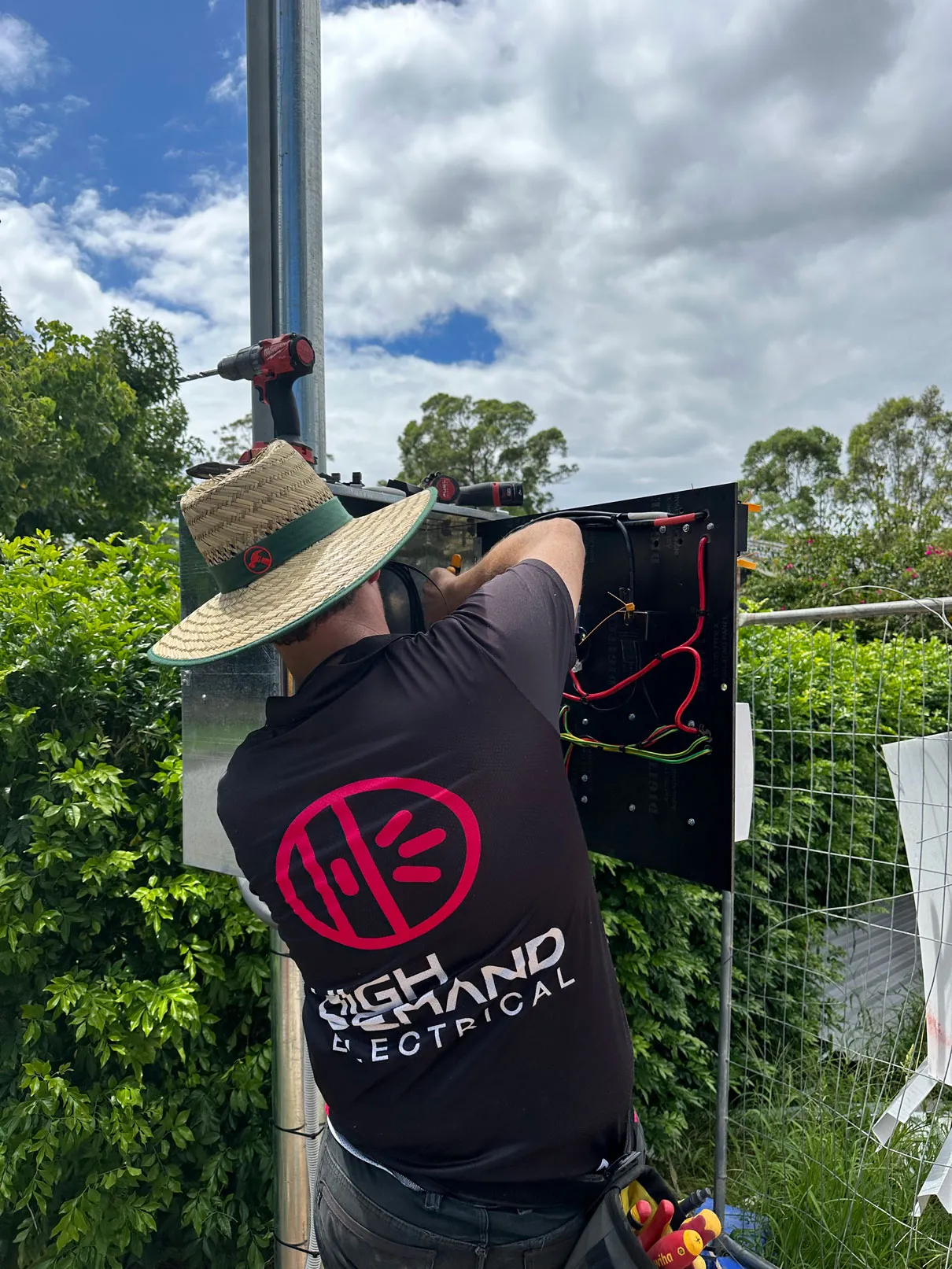
Powering Your Needs with Expertise
If you’re looking for a reliable, experienced, and prompt electrician, look no further than High Demand Electrical. We cater to all your electrical needs, from routine maintenance to emergency repairs and complete system installations. Our skilled team is committed to providing professional service that ensures your electrical systems run smoothly. Whether it's a small task or a large project, give us a call today. Let us meet all your electrical demands with the quality and reliability you deserve.

Licensed Level 2 ASP electricians across Sydney. Same-day service and 24/7 emergency response.
Licence 397193C
ABN 87 051 836 527
