What Are the Electrical Requirements for a Fishmonger or Seafood Market in Sydney?
A fishmonger or seafood market in Sydney needs a switchboard sized for a genuinely heavy refrigeration load, often three phase power for display cabinets and ice making equipment, RCD protection on every circuit because the floor is wet all day, and a realistic backup power plan. Seafood spoils faster than almost any other stock in a power outage, so the electrical setup behind the counter matters as much as the display case in front of it. Get the switchboard capacity and refrigeration circuits right from day one and everything else, lighting, eftpos, point of sale, follows easily.
⚡ Quick Answers: Fishmonger and Seafood Market Electrical Requirements
- What is the biggest electrical load in a seafood shop? Refrigeration and ice making, including display cabinets, cool rooms and ice machines, which together usually dwarf every other circuit in the tenancy.
- Do I need three phase power? Larger refrigeration compressors, multiple cabinets and commercial ice makers often need it, especially in a shop bigger than a small corner fishmonger.
- How many safety switches does a seafood shop need? Every circuit should sit behind RCD protection, because constant washing down and ice meltwater make this one of the wettest retail environments around.
- What happens if my old shopfront switchboard can't handle the new load? A maximum demand calculation tells you exactly where the ceiling is, and a switchboard upgrade or a supply upgrade fixes it before equipment trips out at the worst possible moment.
- Do I need backup power? Most seafood retailers benefit from some form of backup, even a modest option covering the cool room and display cabinets, because stock losses stack up within hours, not days.
- Is this a job for a normal electrician or a Level 2 ASP? Anything touching the metered supply, the overhead or underground service, or a three phase conversion needs a Level 2 ASP, while internal switchboard and circuit work can often be done by your fitout electrician.
Refrigeration Is Your Biggest Electrical Load
Every seafood retailer runs on refrigeration first and everything else second. Open display cabinets, glass fronted chillers, a walk in cool room and one or more ice machines all run continuously, and unlike a cafe or a clothing store, this load almost never switches off during trading hours.
Each major piece of refrigeration equipment should sit on its own dedicated circuit rather than sharing a breaker with lighting or general power. This stops a nuisance trip on one cabinet from taking down the whole display, and it makes it much easier to isolate a single unit for cleaning or repair without shutting the shop. If you are moving into an older tenancy, our guide on cold storage and refrigeration warehouse electrical requirements covers the same dedicated circuit principle in more depth, and it applies just as much to a retail display cabinet as it does to a coolroom.
Ice machines deserve their own mention. A commercial flake or cube ice maker producing enough ice to keep a full seafood counter iced down all day draws a meaningful, continuous load, and it is frequently overlooked in a fitout budget until the switchboard is already full.
Three Phase Power for Larger Refrigeration and Ice Plant
Many older Sydney shopfronts, particularly in strip shopping centres and older arcades, were only ever wired for single phase supply. That is often fine for a small fishmonger with one or two display cabinets, but once you add a larger compressor, a second cool room or a commercial ice machine, single phase supply can become the limiting factor rather than the switchboard itself.
Three phase power spreads the load across three active conductors instead of one, which lets heavier refrigeration and ice making equipment run more efficiently and with less strain on any single circuit. A single phase to three phase upgrade is one of the most common jobs we see in food retail fitouts, and it is worth pricing early in the planning process rather than discovering midway through a fitout that your chosen refrigeration equipment simply will not run on what the tenancy currently has.
If you are unsure whether your equipment specification needs three phase, your refrigeration mechanic or equipment supplier will usually list it on the spec sheet, and from there a power supply upgrade assessment confirms what your tenancy can actually support.
Switchboard Capacity and Maximum Demand Calculations
Converting an older shopfront, a former newsagent, a closed cafe, a vacant retail unit, into a seafood market almost always means asking more of the switchboard than the previous tenant ever did. The honest way to answer that question is a maximum demand calculation, which adds up every circuit's realistic load, accounts for diversity (not everything runs flat out at once), and tells you whether the existing supply can carry the new fitout or whether it needs upgrading.
This matters because guessing gets expensive in both directions. Undersize the switchboard and you get nuisance trips, overheated cabinets and lost stock on a hot trading day. Oversize it without good reason and you have paid for capacity you will never use. A proper switchboard upgrade assessment, done before fitout works lock in the layout, avoids both outcomes.
Our post on butcher shop and small goods electrical requirements walks through a very similar conversation for fresh food retailers converting an older tenancy, and the same principles apply almost directly to a seafood shop: refrigeration first, maximum demand calculation second, then everything else fits around what the supply can genuinely support.
If your new premises is on a larger site or a shopping centre, it is also worth checking which network distributor services the address, since boundary lines between Ausgrid and Endeavour Energy territory can affect timelines for any supply upgrade. You can check your network area in seconds with our postcode checker before you commit to a lease.
RCD and Safety Switch Protection in a Wet Workspace
A seafood shop is genuinely one of the wettest retail environments there is. Ice melts constantly, benches and floors get hosed down between serves, and fish is handled under running water for most of the trading day. That combination of water, metal equipment and electrical circuits is exactly the scenario RCD protection exists for.
Every circuit in the shop, not just the ones obviously near water, should run through a residual current device so that a fault trips the circuit safely before it becomes a shock hazard. This includes lighting circuits, power points behind the counter, and the dedicated refrigeration circuits themselves. In a fitout this intensive, we generally recommend a layout that splits RCDs across multiple circuits rather than putting the whole shop behind one safety switch, so a single fault does not take out your refrigeration along with everything else.
If you are taking over an existing tenancy rather than starting from a bare shell, an electrical safety inspection is the fastest way to find out what protection is already in place and what is missing before you sign a lease or start fitout works.
Backup Power Considerations
Few retail categories lose stock as fast as a seafood business during a prolonged outage. Fresh fish and shellfish held at the wrong temperature for even a few hours can become unsellable, and a full day's stock across several display cabinets and a cool room represents a genuinely significant loss if the power simply does not come back in time.
Backup power does not have to mean a full shop generator from day one, although larger operators often go that route. Even a smaller backup solution sized to keep the cool room and critical display cabinets running through a short outage buys enough time to either ride out the interruption or move stock. The right size depends entirely on your actual refrigeration load, which again comes back to having an accurate maximum demand calculation done first, since you cannot size backup power sensibly without knowing what you are trying to protect.
It is also worth planning the switchboard layout so that essential refrigeration circuits can be isolated onto a backup supply cleanly, rather than retrofitting that capability after the fact. This is a conversation worth having with your electrician at the switchboard design stage, not after an outage has already cost you a day's stock.
Lighting, Display and Point of Sale Power
Good lighting sells seafood. Buyers judge freshness by how the fish looks under the lights, so display lighting circuits deserve proper planning rather than an afterthought once the refrigeration is sorted. Dedicated circuits for display lighting also mean a lighting fault cannot take down a refrigeration circuit on the same board, which matters more here than in almost any other retail fitout.
Beyond lighting, a modern seafood shop runs digital scales, eftpos terminals, a point of sale system, and often a security camera system, all of which need reliable, properly placed power points rather than extension leads strung across a wet floor. These are lower draw circuits individually, but they still deserve their own dedicated runs so a busy Saturday trading rush does not trip a circuit shared with something else entirely.
If your new premises previously operated as a different type of food retailer, our guide to supermarket and grocery store electrical requirements covers similar point of sale and display lighting planning at a larger scale, and the same logic scales down neatly to a standalone fishmonger.
Corrosion and Equipment Rated for Salt and Moisture
Salt, moisture and regular washdown take a real toll on electrical fittings over time in a seafood retail environment. Power points, switches, light fittings and enclosures exposed to splashing, humidity and salty air corrode faster here than in a dry retail shop, and a fitting that is fine in a clothing store can fail within a year or two behind a fish counter.
Choosing equipment genuinely built for wet, food handling environments, properly sealed enclosures and corrosion resistant fittings rather than standard domestic grade gear, pays for itself many times over in avoided callouts and replacements. This is a detail worth raising with your electrician at the design stage rather than leaving to whatever is on the truck on fitout day.
Why it's Level 2 ASP work
Most of the internal switchboard, circuit and lighting work in a seafood shop fitout can be handled by any licensed electrician. Where Level 2 ASP work comes in specifically is anything touching the metered supply itself: upgrading the service capacity coming into the tenancy, converting from single phase to three phase, or any disconnection and reconnection needed to safely carry out those works. That is because changes to the network connection and meter are restricted to Accredited Service Providers, not general electrical licensing.
If your fitout plan includes a genuine supply upgrade or a three phase conversion, it is worth confirming early whether that work needs a Level 2 ASP, since it affects both your timeline and who you need booked in. Our disconnect and reconnect services page covers how that side of the process typically runs.
How High Demand Electrical Helps
We work with food retailers across Sydney planning exactly this kind of fitout, from a maximum demand calculation on an older shopfront through to the switchboard upgrade, three phase conversion and RCD protection that keeps a seafood counter running safely all day. As one of Sydney's most trusted Level 2 ASPs, we handle the network connected side of the job, service upgrades, metered supply changes and disconnect or reconnect work, alongside the general switchboard and circuit work your fitout needs, so you are not coordinating multiple trades for one job.
Whether you are taking over a vacant tenancy, converting an existing food retail space, or renovating a seafood market you already run, we start with an on site assessment so you get a genuine switchboard capacity figure rather than a guess, then quote the actual work needed rather than a generic fitout package.
Fishmonger and Seafood Market Electrical Requirements FAQs (Sydney)
Do I need three phase power for a seafood shop or fishmonger?
Not always. A small fishmonger with one or two display cabinets often runs fine on single phase, but larger refrigeration plant, multiple cabinets or a commercial ice machine commonly push a tenancy towards needing a single phase to three phase upgrade.
How much does it cost to upgrade a switchboard for a seafood retail fitout?
Costs vary with the age of the existing switchboard, how much the supply itself needs upgrading, and how many dedicated circuits the new fitout requires. Every job needs a site assessment and a maximum demand calculation before we can confirm a figure specific to your tenancy.
What happens if the power goes out and my display cabinets lose power?
Stock temperature starts climbing immediately, and seafood is less forgiving of this than most other food categories. A backup power solution sized to your actual refrigeration load, worked out from a proper maximum demand calculation, is the most reliable way to protect against this.
Do I need a Level 2 ASP for a new seafood shop fitout?
You need a Level 2 ASP specifically for work touching the metered supply or network connection, such as a service upgrade or a three phase conversion. General switchboard and circuit work inside the tenancy can usually be done under standard electrical licensing. See Level 2 electrician Sydney for what that work covers.
How many safety switches does a fish market need?
Every circuit should be protected by an RCD given how wet this environment is all day, every day. We typically recommend splitting circuits across multiple RCDs so a fault on one does not take down refrigeration along with lighting or power.
Planning a seafood shop or fishmonger fitout in Sydney? Get a switchboard upgrade quote or call 0402 559 777 to talk through your refrigeration load and supply needs. Every job needs a site assessment before scope or pricing can be confirmed.
Need Help Fast?
Related Services


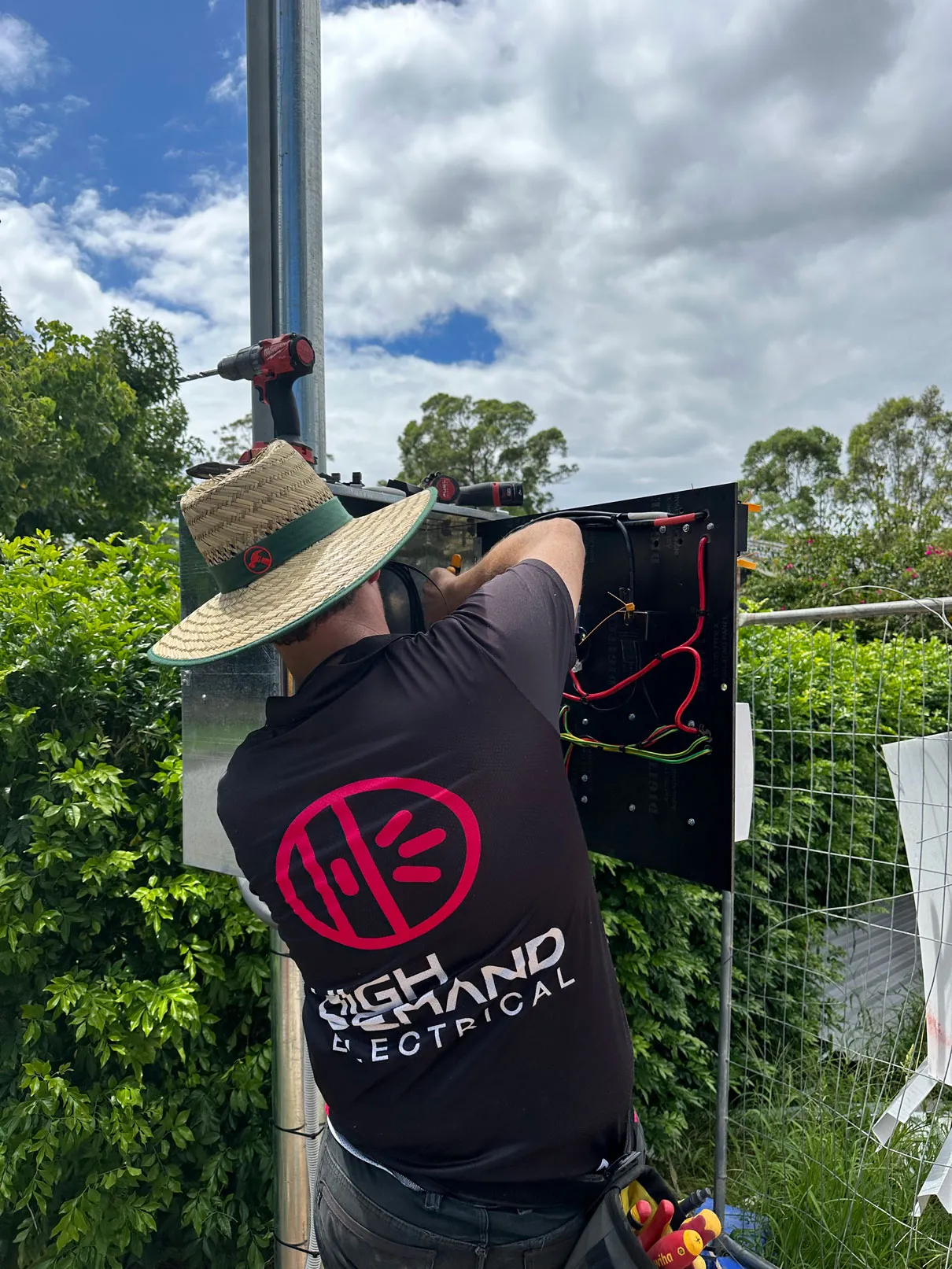
Powering Your Needs with Expertise
If you’re looking for a reliable, experienced, and prompt electrician, look no further than High Demand Electrical. We cater to all your electrical needs, from routine maintenance to emergency repairs and complete system installations. Our skilled team is committed to providing professional service that ensures your electrical systems run smoothly. Whether it's a small task or a large project, give us a call today. Let us meet all your electrical demands with the quality and reliability you deserve.

Licensed Level 2 ASP electricians across Sydney. Same-day service and 24/7 emergency response.
Licence 397193C
ABN 87 051 836 527