Emergency electrician for fault repairs in Castle Hill
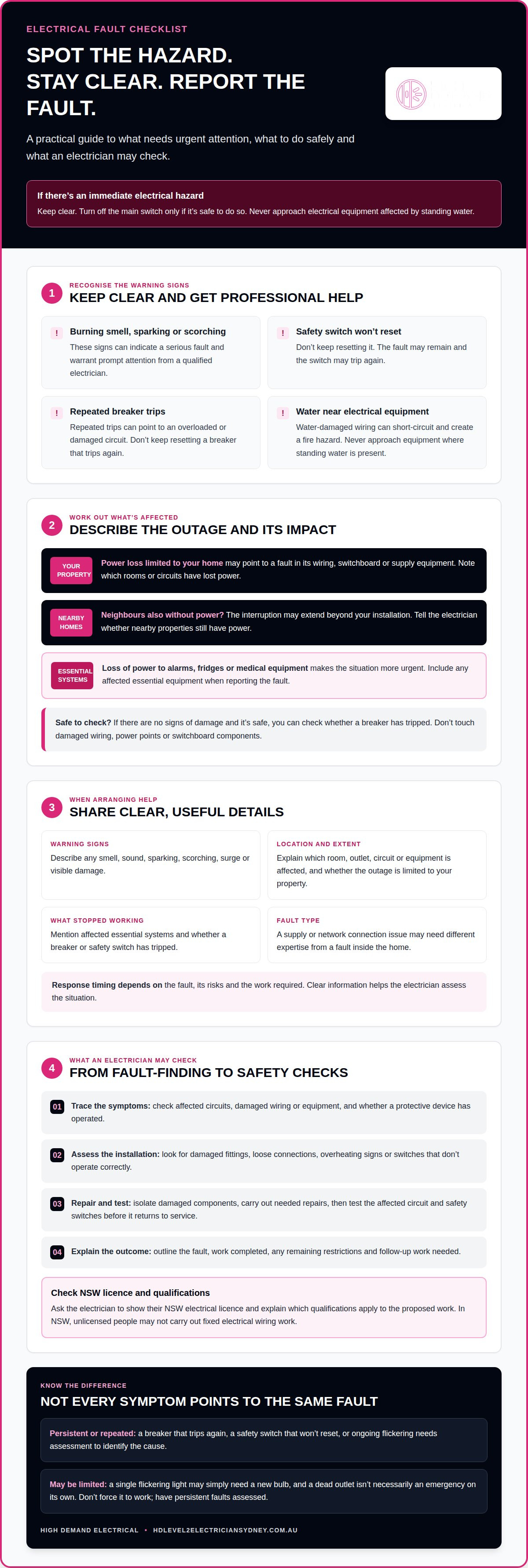
A burning smell, sparking, scorching or a safety switch that won’t reset needs prompt attention from a qualified electrician. If you need an emergency electrician in Castle Hill, keep clear of the hazard and turn off the main switch only if it’s safe to do so. Never approach electrical equipment affected by standing water.
A sudden electrical fault can disrupt essential systems and leave you unsure what to do next. Act cautiously and get professional help rather than trying to restore power yourself or repeatedly resetting a switch.
This guide explains who to call in an electrical emergency, which faults may need urgent attention and what repairs or safety checks an electrician may carry out. You’ll also learn what details to share when arranging help and how the fault’s location, damage and required work can affect the response.
Key Takeaways
• Burning smells, sparking, scorching, water-damaged wiring or a safety switch that won’t reset can signal a serious fault. Keep clear and don’t repeatedly reset a switch.
• If power fails, consider whether the outage affects nearby homes or is limited to your property. Repeatedly tripping breakers can point to an overloaded or damaged circuit.
• Response timing depends on the fault, its risks and the work required. Clear details about warning signs and affected equipment help the electrician assess the situation.
• Flood or storm damage near wiring and power infrastructure needs careful handling. Don’t approach electrical hazards where there’s standing water.
• For work involving electricity supply infrastructure, High Demand Electrical provides Level 2 ASP Electrical Services, including private power pole installation and consumer mains work.
Electrical repairs, fault finding and safety switches
Electrical faults need accurate diagnosis before repairs begin. A safety switch that won’t reset, repeated breaker trips, scorching or sparking can indicate a fault that needs professional attention. Burning smells near an outlet or switchboard also warrant urgent assessment. If you notice warning signs, keep clear and turn off the main switch only if it’s safe. Don’t repeatedly reset a tripping safety switch without finding the cause. It may trip again while the fault remains.
Water-damaged wiring can short-circuit and create a fire hazard. Don’t approach electrical equipment where standing water is present or try to isolate it yourself. A qualified electrician can assess the affected circuit, identify damaged wiring or equipment, and determine the repairs and safety checks needed. The work may involve tracing the fault, isolating damaged components and testing the repaired circuit before it is returned to service.
How can an electrician demonstrate their NSW licence and qualifications? Ask the electrician to show their NSW electrical licence and explain which qualifications apply to the proposed work. In NSW, unlicensed people may not carry out fixed electrical wiring work.
A safety inspection can help identify damaged fittings, loose connections, overheating signs or switches that don’t operate correctly. The electrician assesses the affected installation and records the issues needing attention. For example, a warm switchboard or discoloured outlet calls for assessment, not continued use. A professional electrical safety inspection can also help clarify which repairs are needed and their order of priority.
Fault-finding starts with the symptoms. If several lights or outlets lose power together, an electrician can check whether they share a circuit or whether a protective device has operated. Repeated breaker trips can indicate an overloaded or damaged circuit. A single flickering light may simply need a new bulb, while a dead outlet isn’t necessarily an emergency on its own. Don’t force it to work. Have persistent faults assessed.
Maintenance and lighting repairs also depend on the installation’s condition. A flickering fitting, damaged switch or light that repeatedly fails may need more than a replacement bulb. An electrician can check the fitting, connections and relevant circuit, then explain the repair needed. Safety switches are mandatory when adding to or modifying power or lighting circuits in an existing installation. Their correct selection and operation matter during those changes and when repairing faults.
After repairs, the electrician can test the affected circuit and safety switches, explain any remaining restrictions and identify further work. You should receive a clear account of the fault, the repair completed and any issues needing follow-up. This helps distinguish a resolved problem from a recurring symptom, such as a breaker that trips again after equipment is reconnected.
Who Can You Turn to in an Electrical Emergency?
Call a qualified electrician when an electrical fault threatens people, property or essential systems. The fault’s location, warning signs and effect on the power supply help determine the right response.
Outages, surges and electrical faults
An outage affecting only your property may point to a fault in its wiring, switchboard or supply equipment. If neighbours have also lost power, the interruption may extend beyond your installation. Loss of power to essential systems, such as alarms, fridges or medical equipment, makes the situation more urgent. When arranging help, describe what stopped working and any surge, smell, sound or visible damage.
Power points, ceiling fans and fixed wiring can show different symptoms. A dead outlet may affect one room, while a supply fault can disrupt several circuits. An electrician can assess the installation and determine whether urgent repairs or wider upgrades are needed. Household appliance repair is separate from investigating faults in a property’s electrical wiring or supply.
Power outages and circuit breaker resets
For an outage limited to your home, circuit breakers may help indicate which part of the installation has lost power. If there are no signs of damage and it’s safe, check whether a breaker has tripped. Repeated trips can indicate an overloaded or damaged circuit, so don’t keep resetting a breaker that trips again. Tell the electrician which circuits or rooms are affected.
A total outage can also involve supply equipment outside the home. Tell the electrician whether nearby properties still have power and whether essential equipment is affected. This helps distinguish a local circuit issue from a wider interruption and plan the assessment. Don’t touch damaged wiring, power points or switchboard components while reporting the fault.
Local service areas and customer reviews
Which emergency electricians service Castle Hill, NSW? Look for an electrician whose stated service area includes Castle Hill and who handles the type of fault involved. A supply or network connection issue may require different expertise from a fault inside a home.
Customer reviews can help you assess how an electrician communicates, explains repairs and manages urgent faults. Look for specific examples, such as clear updates or a thorough explanation of work, rather than relying on a single general rating. Reviews are one useful indication, but they don’t establish what qualifications a particular job requires. Share details of the electrical issue to help direct the enquiry.
Staying safe while you wait
What safety advice should an emergency electrician provide while you wait? They should tell you to keep people away from the hazard and avoid touching affected equipment. Never approach electrical hazards where standing water is present or try to isolate them yourself. If there’s a burning smell, scorching or sparking, turn off the main switch only if it’s safe.
For power poles and overhead lines, keep clear of damaged equipment. Property owners should inspect poles and lines annually for defects or damage. Vegetation must remain 1.5 metres from powerlines, and trimming near powerlines must be done by a qualified professional. Pass on any visible damage or fallen branches when arranging the electrical response.
Emergency response times
Response time depends on the fault’s urgency, the electrician’s location and the work needed. A burning smell or loss of power to medical equipment requires different triage from a failed light fitting. When arranging help, describe the hazard, affected areas and essential systems. These details help the electrician assess the call and prepare for the likely fault.
A 24/7 service label describes availability, not a guaranteed arrival time. Ask when the electrician expects to attend and what to do if the situation changes before arrival. Access can also affect the response: explain whether the fault is inside the home, at the switchboard or near a power pole. For a supply issue, describe any visible damage without approaching it.
An outage affecting a whole property can involve the switchboard, consumer mains or external supply equipment. Repeated breaker trips, water damage or sparking may require isolation before permanent repairs. An electrician may first make the area safe, then diagnose the fault and explain whether further work is needed. A make-safe response addresses immediate hazards and may be separate from completing a lasting repair.
Do Castle Hill emergency electricians provide upfront quotes and warranties? Quote and warranty terms depend on the call-out and work needed. Before authorising work, ask for the proposed scope and charges, what any warranty covers and how unexpected work will be handled.
Clear information helps the response stay focused. When reporting the fault, provide:
• The address in Castle Hill and safe access instructions.
• Whether the outage affects the whole property or selected circuits.
• Any burning smell, scorching, sparking, storm or water damage.
• Whether alarms, refrigeration or medical equipment have lost power.
• Whether neighbours also appear to have lost their supply.
These details help distinguish an internal electrical fault from a broader supply interruption. If neighbours are also without power, mention that when arranging help. If the outage is limited to your property, report any tripped breaker, but don’t repeatedly reset it. A licensed electrician can assess the installation and determine whether the fault involves wiring, protective devices or supply equipment.
Electrical work may involve appliances or fixed wiring, but these require different repairs. A faulty appliance may need appliance-specific attention, while damaged wiring or a switchboard fault needs an electrician to assess the installation. Describe what was operating when the outage began, such as a heater or ceiling fan, without trying to repair it. Accurate symptoms help focus fault-finding when the electrician arrives.
If the fault worsens while you wait, update the electrician about the new warning sign and keep people away from the affected area. Don’t approach electrical equipment in standing water or touch damaged power lines. The response plan may change if the hazard, access or affected equipment changes, so timely updates matter.
24/7 Emergency electrical call-outs in Castle Hill
A 24/7 call-out service is intended for faults that need attention outside standard working hours. In Castle Hill, emergency electrical call-outs are associated with postcode 2765. Availability and arrival are separate matters: a service may take calls around the clock, while attendance depends on the hazard, the electrician’s location and access to the property. Give the exact address and describe the immediate risk when reporting an urgent fault.
Flooding, storms and water-damaged wiring can create short circuits and fire hazards. Keep clear of affected electrical equipment, particularly where standing water is present. Don’t approach the hazard or try to isolate it yourself. Report whether water has entered a switchboard, damaged overhead equipment or affected internal wiring. These details help the electrician understand the risk before attending. Storm-related damage may require assessment of both the immediate hazard and the affected installation.
When arranging a call-out, explain what happened and what is still affected. For example, report whether the whole property has lost power, only one area is affected or essential equipment has stopped working. Mention visible damage, burning smells, scorching or sparking. Don’t touch damaged wiring or repeatedly reset a protective switch. Clear information helps the electrician prioritise the risk and prepare to find the fault.
A call-out may start with making an area safe rather than restoring every circuit immediately. The electrician assesses the hazard, identifies affected equipment and determines which repairs can be completed safely at that time. Storm damage, water ingress or damaged supply equipment may require further work after the immediate risk is controlled. Ask what has been isolated, what remains operational and what work is still needed.
When you report the emergency, have these details ready:
• The Castle Hill address and safe access information.
• Whether the problem began during a storm, flood or water leak.
• Which rooms, circuits or essential systems have lost power.
• Any smoke, burning smell, scorching, sparks or visible damage.
• Whether standing water is near wiring or electrical equipment.
Smoke alarms also matter during an electrical incident. Australian law requires smoke alarms in residential properties. If an outage affects an alarm, include that when describing the fault. Don’t disconnect or interfere with damaged electrical equipment to restore an alarm. Explain the issue so the electrician can assess the affected installation safely.
Before the electrician arrives, keep occupants away from damaged areas and provide an update if conditions change. New sparking, rising water or another affected circuit can change the hazard. For exposed powerlines or damaged electrical infrastructure, stay well clear and report the location accurately. This practical information supports a safer assessment.
24/7 Emergency electrical support in Castle Hill
Round-the-clock emergency support matters when an electrical fault occurs outside ordinary business hours. For a home or business in Castle Hill, the key is understanding what the service covers: taking an urgent report, assessing the risk and arranging an appropriate response. The phrase “24/7” describes availability to receive or respond to calls, but doesn’t by itself establish an arrival time or guarantee that every repair can be completed immediately.
Reliable support starts with clear information. The electrician needs to understand the hazard, its location and who or what it affects. A fault affecting essential equipment in a home differs from damage disrupting a business. Explain whether the issue is ongoing, whether conditions are changing and whether the affected area is safe to access. This helps determine the priority and the equipment or expertise needed for assessment.
Attendance and repair are separate stages. On arrival, an electrician assesses the installation and controls immediate risks before deciding what work can proceed. A damaged component may need to be isolated while the cause is investigated. If the fault involves supply equipment or storm damage, restoring normal operation may require work beyond the initial make-safe response. Ask what has been made safe, what remains affected and what happens next.
For a residential customer, an outage may disrupt lighting, refrigeration or other household needs. For a business, the same fault could affect access systems or essential operations. Describe the impact clearly rather than saying only “no power”. Include the affected areas, visible damage and whether the situation has changed since you first reported it. Specific details help focus the response on the actual risk.
When assessing 24/7 support, look for practical clarity across the call-out:
• How the urgent fault is recorded and prioritised.
• What safety instructions apply before attendance.
• Whether the first visit focuses on assessment, make-safe work or repair.
• How the electrician explains further work and any changes in scope.
• What information the customer receives about the electrical condition afterwards.
Insurance may also be relevant to electrical work at a home or business. Clarify the proposed scope, responsibility for access and applicable insurance arrangements before work begins. A dependable response includes direct communication, a defined next step and a clear distinction between urgent risk control and permanent repairs. These details help you make an informed decision without assuming an after-hours call means power will be restored immediately.
If an urgent electrical fault needs assessment, send the fault details for a response, including the Castle Hill address, the hazard and its effect on the property.
High Demand Electrical
High Demand Electrical provides Level 2 ASP Electrical Services for electrical supply and infrastructure needs in Castle Hill. If an urgent fault involves supply equipment, a private power pole or consumer mains, this specialist work may be relevant. Switchboard upgrades can address an ageing or unsuitable switchboard, while Tesla and home EV charger installation supports dedicated vehicle charging requirements.
Describe the fault, its location and any visible damage so the required work can be understood. Household appliance repairs are separate from electrical infrastructure and installation services.
Contact High Demand Electrical to discuss your electrical issue.
Take the next step with a clear fault assessment
Before arranging electrical work, note where the fault appears and how it affects the property. This helps distinguish a problem with internal wiring from one involving the switchboard or electricity supply. If you need an emergency electrician in Castle Hill, explain the warning signs and affected equipment when making an enquiry. Don’t approach damaged electrical equipment or attempt repairs yourself.
For faults involving supply infrastructure, High Demand Electrical offers Level 2 ASP Electrical Services, including switchboard upgrades and private power pole installation. These services address specific electrical infrastructure needs; they aren’t a substitute for household appliance repairs. A clear description of the issue helps establish whether this work is relevant to your situation.
Take the next step by sharing the fault details and the property location. Contact High Demand Electrical about your electrical issue, and move forward with a clearer understanding of the work required.
Frequently Asked Questions
How do I know if I need an electrician?
Arrange an electrician when a fault affects fixed wiring, a switchboard or the safe use of a circuit. For example, a switch that feels unusually hot, a new buzzing sound from the switchboard or power that cuts out repeatedly needs assessment. In NSW, unlicensed people may not carry out fixed electrical wiring work. If the issue involves only a household appliance, it’s an appliance repair rather than fixed wiring work.
Which Castle Hill electricians offer 24/7 emergency call-outs?
High Demand Electrical lists a “24/7 Emergency Electrician” service and operates across Greater Sydney, including the Castle Hill area. Its Level 2 ASP Electrical Services cover service line, metering and connection work, which is relevant when a fault involves electricity supply infrastructure. For an emergency electrician in Castle Hill, give the address and describe the affected equipment when making an enquiry, so the reported issue can be understood.
How quickly can an emergency electrician reach Castle Hill?
There’s no single arrival time for every call-out. Attendance depends on the electrician’s location, access to the property, current demand and the reported hazard. Providing a clear address and concise details, such as whether the fault affects the whole property or one circuit, helps the electrician assess the call. Ask for an estimated arrival time when arranging the visit, and provide an update if the situation changes.
Which electrical faults require an emergency call-out?
Seek urgent electrical help for active sparking, a burning smell from electrical equipment, water affecting wiring or a fault that cuts power to essential systems. Scorching on a switchboard or a supply fault leaving a property without power also needs prompt assessment. A single failed light bulb or isolated dead outlet, without other warning signs, usually isn’t an emergency. Don’t force a faulty outlet or keep resetting a breaker that trips again.
Which local emergency electricians have strong customer reviews?
Look for Castle Hill electricians whose reviews give specific examples of clear updates, thorough explanations and how they manage urgent faults.
Need Help Fast?
Powering Your Needs with Expertise
If you’re looking for a reliable, experienced, and prompt electrician, look no further than High Demand Electrical. We cater to all your electrical needs, from routine maintenance to emergency repairs and complete system installations. Our skilled team is committed to providing professional service that ensures your electrical systems run smoothly. Whether it's a small task or a large project, give us a call today. Let us meet all your electrical demands with the quality and reliability you deserve.

Licensed Level 2 ASP electricians across Sydney. Same-day service and 24/7 emergency response.
Licence 397193C
ABN 87 051 836 527
