What Are the Electrical Requirements for a Dry Cleaning Business in Sydney?
What are the electrical requirements for a dry cleaning business in Sydney? A dry cleaning shop needs a switchboard and incoming supply sized for genuinely heavy, often continuous loads from solvent based cleaning machines, steam boilers and finishing presses, dedicated circuits and isolating switches for that equipment, RCD protection through wash down and steam areas, and in many cases a single phase to three phase upgrade once the full plant list is confirmed. Chemical and solvent handling compliance itself sits with Work Health and Safety and EPA requirements, a separate area outside the electrical scope covered in this guide.
⚡ Quick Answers: Dry Cleaning Business Electrical Requirements
- Is dry cleaning equipment the same electrical load as a laundromat? No, dry cleaning plant such as solvent machines, boilers and presses draws a different and often heavier continuous load than coin operated washers and dryers.
- Do dry cleaners need three phase power? Many do once a solvent machine, steam boiler and one or more presses are combined, which is why a single phase to three phase upgrade is common for a growing shop.
- What switchboard capacity does a dry cleaner need? Capacity has to be assessed against maximum demand under AS/NZS 3000 before new plant goes in, not estimated by eye from nameplate ratings.
- Do boilers and presses need their own circuits? Yes, continuous heavy loads like these need dedicated circuits and a local isolating switch so each machine can be worked on safely.
- Is RCD protection required in wash down and steam areas? Yes, these areas are treated as damp or wet locations under AS/NZS 3000 and need RCD protected final subcircuits.
- Who handles solvent and chemical safety compliance? That sits with Work Health and Safety and EPA requirements, separate from the electrical supply work covered here.
1. Dry cleaning plant is a different load profile to a laundromat
A dry cleaning shop runs on a genuinely different equipment set to a laundromat. Where a coin operated laundry is built around multiple water based washing machines and dryers, as we cover in our guide to commercial laundry and laundromat electrical requirements, a dry cleaner's core equipment is a solvent based cleaning machine, usually a perchloroethylene or hydrocarbon system, paired with a steam boiler and one or more finishing presses. These machines are heavy, often continuous draws rather than the intermittent cycling load of a washing machine.
That difference matters for the switchboard. A boiler holding temperature and a press cycling through steam and heat for most of the trading day behave more like the cooking equipment we discuss in our guide to commercial kitchen electrical fit out requirements than like a bank of domestic style washers. Sizing a dry cleaner's switchboard the way you would size a laundromat, or a general retail fitout as covered in our retail shop fitout electrical requirements guide, risks undersizing the supply for what the shop actually draws once every machine is running at once.
2. Switchboard capacity and maximum demand assessment
Before any new dry cleaning equipment goes in, the switchboard and incoming supply need to be assessed against maximum demand, not guessed by adding up the equipment's nameplate ratings. AS/NZS 3000 sets out a maximum demand calculation method in Appendix C that accounts for diversity between pieces of equipment that are not all running flat out at the same time, and a licensed electrician uses that method, or an equivalent documented approach, to work out what the existing supply can actually carry.
If the assessment shows the existing board or consumer mains cannot carry the combined load of a solvent machine, boiler and press, the next step is usually a switchboard upgrade or a broader power supply upgrade to increase what comes into the property before any new equipment is connected. For a more complex fitout with several heavy machines and a tight plant room, this is sometimes paired with our Level 3 design service to document the layout and circuit arrangement properly before work starts. Skipping the assessment step is one of the most common reasons a dry cleaning fitout ends up with nuisance tripping or an overloaded main switch once the shop is fully fitted out.
3. Dedicated circuits and isolating switches for boilers and presses
Boilers and presses draw a heavy, continuous load for most of the trading day, so each one needs its own dedicated circuit sized for that load rather than sharing a circuit with lighting, power points or smaller equipment. Each machine also needs a local isolating switch within sight of the equipment itself, so it can be shut down completely for cleaning, maintenance or in an emergency without anyone having to go back to the main switchboard.
Solvent recovery units and any associated extraction fans are typically wired the same way, each on its own dedicated circuit with local isolation, since they often need to keep running even when the main cleaning machine is isolated for servicing. Getting this wiring arrangement right at the design stage saves a lot of rework later, especially once floor finishes and fixed joinery go in around the equipment.
4. RCD protection for wash down and steam areas
Wash down areas, steam presses and anywhere moisture collects around a boiler are treated as damp or wet locations under AS/NZS 3000, which means the final subcircuits feeding equipment and general power points in those areas need RCD protection. This applies to lighting circuits in those zones as well, not only the equipment itself.
The same logic applies in commercial kitchens and laundromats: steam, condensation and routine hosing down of floors all increase the chance of a fault finding a path through moisture, so RCD protection in these zones is not something to leave out or add later. It needs to be part of the original circuit design.
5. Ventilation and extraction circuits
Dry cleaning equipment generates significant heat, and depending on the machine and solvent system, the plant room needs mechanical ventilation or extraction to manage that heat and any humidity from the boiler and press. Extraction fans and any makeup air equipment need their own circuits, sized for continuous running rather than occasional use, and should be planned alongside the switchboard assessment rather than added as an afterthought once the equipment has already arrived.
Solvent handling itself, including how solvent is stored, recovered and disposed of, sits with Work Health and Safety and EPA requirements rather than the electrical standards covered in this guide. A licensed electrician can wire the extraction and equipment circuits a solvent system needs, but the chemical handling compliance side is a separate area you will need to confirm directly with the relevant regulator or your equipment supplier.
6. When a single phase to three phase upgrade makes sense
Many existing shopfronts in Sydney's older retail strips only have a single phase supply, which can struggle once a solvent machine, steam boiler and press are all specified together. A single phase to three phase upgrade brings in a balanced three phase supply that spreads the load across all three phases rather than overloading one, and is common for dry cleaners taking on larger or additional plant.
A three phase upgrade usually means a new or upgraded consumer mains connection, a switchboard rebuild and, in most cases, a metering change, which we cover in our smart meter upgrades guide. Because this work changes the point of supply, it needs sign off from the local network distributor as well as the switchboard work itself, and timeframes should be built into your fitout program early rather than assumed to happen quickly.
Why it's Level 2 ASP work
Any work that touches the point of supply, such as increasing consumer mains capacity, changing the metering arrangement or carrying out a single phase to three phase upgrade, falls outside what a standard electrical licence covers. This work has to be carried out by a Level 2 Accredited Service Provider, and our team works as a Level 2 electrician in Sydney on exactly this kind of job, dealing directly with the network distributor rather than leaving that step to the shop owner.
If a prior electrical safety inspection or defect notice has flagged the existing supply as inadequate for new equipment, that also needs to be resolved as part of the same project. We handle defect notice rectification and electrical safety inspections alongside the upgrade itself, so the whole job is signed off properly rather than left with an open defect sitting against the property.
How High Demand Electrical helps
We work with retail and commercial tenants across Sydney fitting out dry cleaning shops, from a straightforward switchboard assessment through to a full single phase to three phase upgrade for a new solvent machine, boiler and press. As one of Sydney's most trusted Level 2 ASPs, we deal directly with Ausgrid or Endeavour Energy on your behalf, so you are not stuck chasing network approvals while your fitout timeline slips.
We are a licensed local team, not a call centre, and we size the switchboard and circuits around your actual equipment list rather than a generic template, servicing dry cleaning and retail fitouts across Sydney's West, South West and Sutherland Shire. Where chemical handling or ventilation compliance sits outside our electrical scope, we will tell you plainly and point you toward the right regulator or equipment supplier rather than guessing at an answer.
Dry Cleaning Business Electrical Requirements FAQs (Sydney)
Do I need a three phase upgrade for a dry cleaning shop?
Not always, but many dry cleaners end up needing one once a solvent machine, boiler and press are all running from the same board. See our single phase to three phase upgrade page for how that process actually works.
Can my existing switchboard handle a new dry cleaning machine?
That depends on what else is already on the board and the machine's actual draw, which is why a maximum demand assessment under AS/NZS 3000 comes before any new equipment is ordered. An electrical safety inspection is a good starting point if you are not sure what your existing board can carry.
Does a dry cleaner need RCD protection?
Yes, any wash down, steam or damp area in the shop needs RCD protected final subcircuits under AS/NZS 3000, and this applies to general power points and lighting in those zones as well as the equipment itself.
Who handles solvent and chemical safety compliance?
That sits with Work Health and Safety and EPA requirements rather than the electrical standards, so it is assessed and managed separately from the switchboard and circuit work an electrician carries out.
How long does a switchboard upgrade for a dry cleaner take?
Timeframes depend on the scope of work, whether a three phase upgrade and network approval are involved, and how much of the existing switchboard can be reused. See switchboard upgrades for more detail, and a site assessment will give you a timeframe specific to your shop.
Ready to get your dry cleaning shop's electrical supply properly assessed? Get a Switchboard Upgrade Quote or call us on 0402 559 777. Every job needs a site assessment before we can confirm scope or pricing, since no two dry cleaning fitouts draw exactly the same load.
Need Help Fast?
Related Services


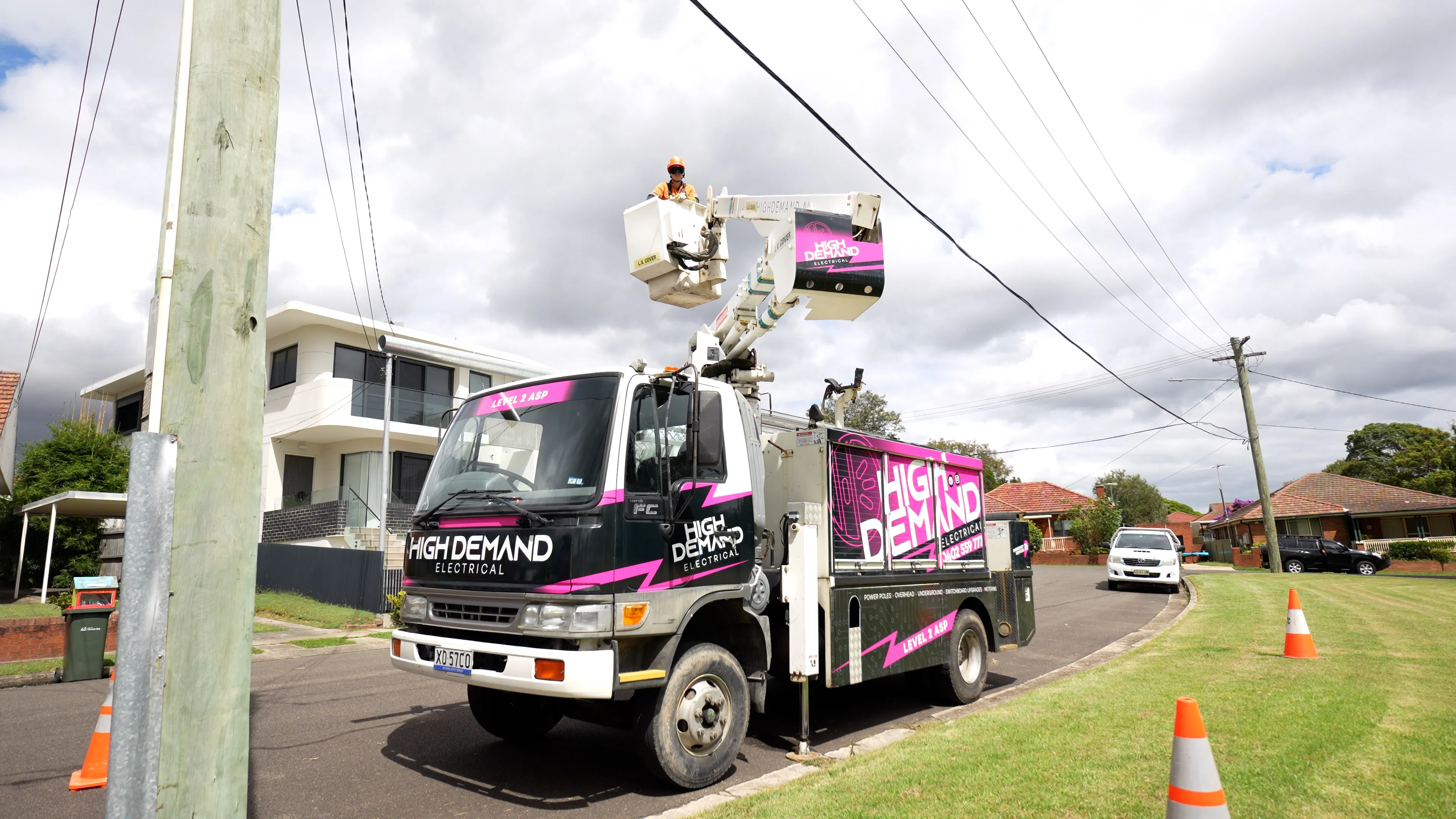
Powering Your Needs with Expertise
If you’re looking for a reliable, experienced, and prompt electrician, look no further than High Demand Electrical. We cater to all your electrical needs, from routine maintenance to emergency repairs and complete system installations. Our skilled team is committed to providing professional service that ensures your electrical systems run smoothly. Whether it's a small task or a large project, give us a call today. Let us meet all your electrical demands with the quality and reliability you deserve.

Licensed Level 2 ASP electricians across Sydney. Same-day service and 24/7 emergency response.
Licence 397193C
ABN 87 051 836 527
