Capture Solar: NSW Controlled Load Compliance Checklist, Homes & SMEs
A controlled load meter in NSW is a separately metered circuit, usually running your hot water tank or pool pump, that your network switches on only during set windows and bills at a discounted rate. It suits households with electric hot water, pool pumps or slab heating and little else. If you already pay a lower rate for part of your usage, check your electricity bill or call your retailer to confirm what you have.
TL;DR:
- Controlled load tariffs are typically cheaper only if appliances like hot water tanks or pool pumps run most nights, not just occasionally.
- Switching windows now include daytime periods to better utilize households with rooftop solar, especially in areas with smart meters.
- Most households can verify their controlled load status by checking for a separate line with a lower rate on their bill or asking their retailer directly.
- Installing or upgrading a controlled load circuit requires licensed electricians, compliance certificates, and coordination with the metering provider, usually taking a few weeks.
- Proper wiring and compliance are critical, with NSW-specific rules and safety requirements, and professional help is recommended to avoid common setup problems.
Table of Contents
- How controlled load works in NSW: circuits, metering and billing
- Switching times, smart meters and the shift to daytime solar soak
- How to check if you already have a controlled load meter
- How to get a controlled load circuit or meter installed in NSW
- NSW regulatory and safety requirements you must know
- Is controlled load right for your NSW home or small business?
- Experience that keeps your controlled load setup compliant
- How High Demand Electrical can help with your controlled load setup
- FAQ
- Sources
How controlled load works in NSW: circuits, metering and billing
A controlled load circuit is wired separately from the rest of your home. Instead of running whenever you flick a switch, the appliance on that circuit only draws power when the network sends a signal to turn it on, usually overnight or during another set window. In exchange for accepting that limited schedule, you pay a lower cent per kilowatt hour rate on that portion of your usage.
Networks offer this because it lets them shift demand away from peak periods, which reduces strain on the grid and, in theory, keeps overall network costs down for everyone.
Appliances commonly wired to a controlled load circuit include: see how EV charger load management for Australian homeowners can integrate with household circuits.
- Electric hot water storage tanks, the most common use by far
- Pool and spa pumps, where continuous daytime running isn’t needed
- Some slab or underfloor heating systems, depending on load and timing needs
On your bill, controlled load appears as its own line, separate from your general usage and any time-of-use tariff you’re on. It will usually carry its own daily supply charge and its own cents per kilowatt hour rate, so it’s worth checking both figures rather than just the headline rate.
Switching times, smart meters and the shift to daytime solar soak
Controlled load switching times used to be almost universally overnight, built around the assumption that off-peak meant late at night when demand was lowest. That’s changing. Ausgrid’s network tariff guidance confirms switching times have been updated to include daytime windows, designed to soak up excess solar generation during the middle of the day rather than waste it.
This matters most for households with rooftop solar. If your hot water system can run while the sun is pumping energy into the grid, you use more of your own exports instead of sending them out for a feed-in tariff that’s often modest.
A few things worth knowing:
- Switching windows vary by distributor and can change over time, so what applied last year may not apply now
- Smart meters make flexible, remote switching far easier than older mechanical controlled load meters
- Not every household gets a daytime window automatically; it depends on your meter type and network area
Regulatory materials filed with the Australian Energy Regulator show distributors actively proposing adjustments to controlled load charging windows to make tariffs simpler and more cost-reflective. That’s a signal the current windows aren’t fixed for good, so it pays to check again if it’s been a while since you last looked.
How to check if you already have a controlled load meter
Most people don’t actually know what tariff structure they’re on until they go looking. Here’s how to find out:
- Pull up a recent electricity bill and scan the usage breakdown for a line labelled “controlled load,” “off-peak,” or a tariff code such as EA030 or EA040
- Check whether that line has its own daily supply charge, separate from your general supply charge
- Compare the cents per kilowatt hour rate on that line against your general usage rate; a genuine discount should be noticeably lower
- If nothing on the bill mentions controlled load, call your retailer and ask directly whether your property has one
Your retailer sets the tariff you’re billed on, but the physical meter is maintained by a metering provider working with your distributor, not your retailer. That distinction matters when something needs fixing rather than just re-billed.
On cost, expect a separate daily supply charge on top of your general one, plus a lower rate for whatever runs on that circuit. The tariff is usually worthwhile when you’ve got a genuinely steady load, like a hot water tank that runs most nights, rather than something used sparingly. Consumer guidance from Compare the Market notes the saving isn’t automatic: if you shift too little energy onto the discounted rate, the extra supply charge can outweigh the benefit.
How to get a controlled load circuit or meter installed in NSW
Getting set up isn’t a DIY job, and it isn’t instant, but the process is straightforward when you follow it in order.
- Contact your retailer first. Confirm whether a controlled load tariff is available at your address and what the current switching window looks like before you spend anything on wiring.
- Engage a licensed electrician or Level 2 accredited provider. Any new circuit, switchboard change or metering work needs to comply with the Service and Installation Rules of NSW, and that compliance has to be carried out by someone properly licensed.
- The electrician submits a Certificate of Compliance for Electrical Work. This confirms the job meets wiring standards and gets lodged so the network and metering provider have a record of what changed.
- Your metering provider and retailer coordinate activation. Once the compliance certificate is in, the new controlled load tariff gets applied and the switching schedule activated, which can take anywhere from a few days to a couple of weeks depending on your distributor’s processing times.
If your property needs a meter upgrade or relocation as part of the job, that adds a step: see our off-peak meter installation and smart meter upgrade pages for what that typically involves.
Pro Tip: Ask your electrician to confirm the expected activation timeline with your specific retailer before work starts, since processing speed varies more than most people expect.
NSW regulatory and safety requirements you must know
Controlled load wiring isn’t just a preference, it’s governed by rules with real compliance weight. The Service and Installation Rules of NSW set the technical standard for how metering and controlled load circuits must be wired and connected, and only licensed electricians can carry out that work.
Building Commission NSW adds further requirements on top. Smart meter installation guidance from the NSW Government confirms metering providers and installers need an accepted safety management plan, particularly for remote de-energisation and re-energisation, and installers must lodge a Certificate of Compliance for Electrical Work within seven days of testing.
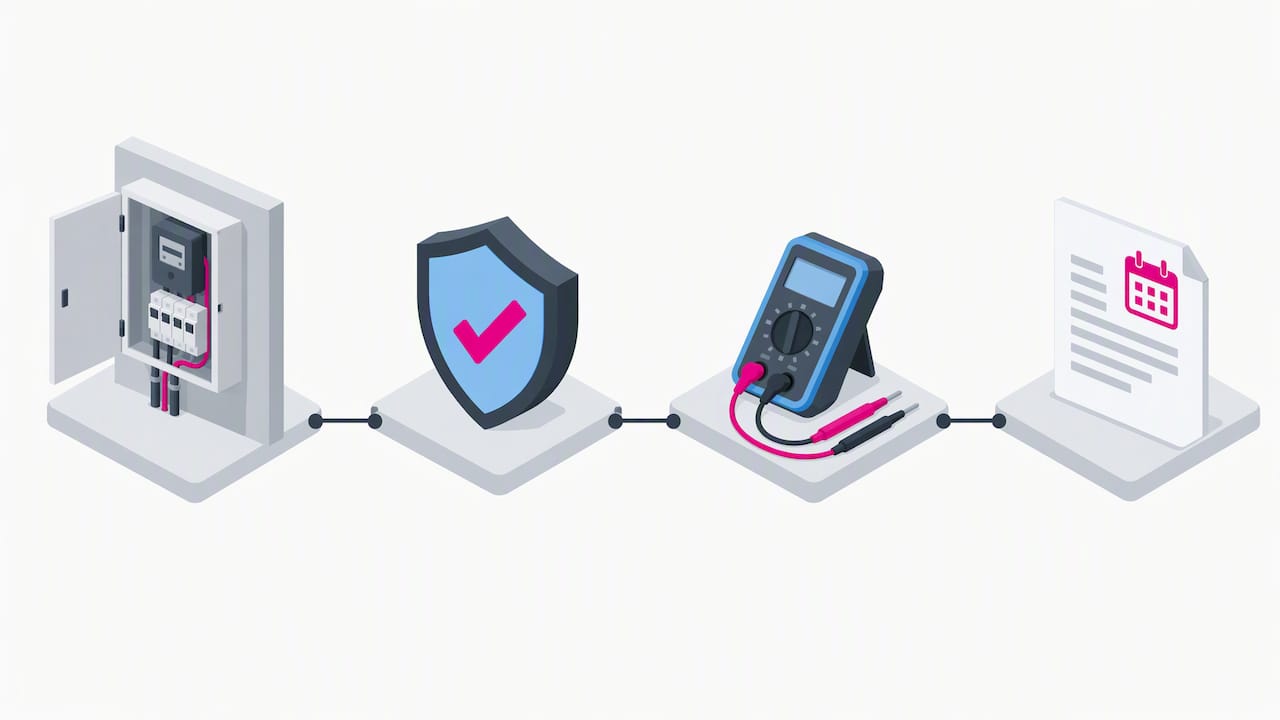
On the national side, AEMO periodically updates its metrology procedures, which can change how controlled load consumption gets profiled and settled behind the scenes, even when nothing visibly changes at your switchboard.
Is controlled load right for your NSW home or small business?
Before committing, weigh up:
- Whether your hot water tank, pool pump or slab heating draws a steady, substantial load rather than occasional use
- Whether you have solar and a smart meter, since daytime switching windows only help if both are in place
- How much usage you’d actually shift onto the discounted rate versus the extra daily supply charge you’ll pay
As a worked example: a household with a 315 litre electric hot water tank running most nights has a far stronger case than one with a small pool pump used three months a year.
Pro Tip: If you’re unsure how much load your appliance draws, check the compliance plate or ask your electrician to estimate it against your current bill before signing up for a new tariff.
Experience that keeps your controlled load setup compliant
We’ve handled metering work across Sydney long enough to know that controlled load problems usually come down to wiring that was never assessed properly in the first place. We offer free site inspections before any metering work begins, so you know what’s involved before committing.
We manage the inspection, wiring, compliance certificate lodgement and retailer coordination as one job, not a string of separate appointments.
— Christopher
How High Demand Electrical can help with your controlled load setup
We offer a free site inspection for Level 2 metering work, which means you get a clear picture of what your property needs before any wiring begins. Our team handles the technical side end to end: assessing your existing circuits, carrying out compliant wiring, managing compliance certificate lodgement, and coordinating with your metering provider through to activation.
To get a quote moving quickly, have these ready:
- A recent electricity bill showing your current tariff structure
- Details of the appliance you want on controlled load, including its age and rated load
- A few photos of your switchboard and meter box
Book a Level 2 electrician through our site and we’ll confirm timing and pricing upfront, with no surprises once the job starts.
FAQ
What is a controlled load meter?
A controlled load meter measures electricity used by a separately wired circuit, typically hot water or a pool pump, that your network switches on during set windows and bills at a discounted rate. It’s distinct from your general usage meter and appears as its own line on your bill.
Is Ausgrid controlled load charged twice in NSW?
No, you’re not charged twice for the same usage. Controlled load appears as a separate line with its own daily supply charge and its own per kilowatt hour rate, which is different from double billing, though it does mean two supply charges stack on your bill.
Which state has the most expensive electricity in Australia?
Electricity prices vary by network area and plan rather than a single fixed state ranking, and figures shift with each regulatory period. For NSW-specific comparisons, your best source is current plan listings from your own retailer rather than a general national claim.
What are the key differences between controlled load 1 and 2?
Controlled load 1 and 2 are distinct tariff categories with different switching windows and intended appliance types, largely tied to how long and how often the load needs to run. The practical difference for most households comes down to which window your distributor assigns and whether your appliance suits that schedule, so it’s worth confirming directly with your retailer which category applies to your setup.
Sources
- Service and Installation Rules of NSW
- Smart meter safety and installation requirements | NSW Government
- Understanding network tariffs — controlled load pricing (Ausgrid)
- Metrology Procedure Part A v8.22 (change marked)
- Ausgrid pricing directions / TSS explanatory statement (AER attachment)
Recommended
Powering Your Needs with Expertise
If you’re looking for a reliable, experienced, and prompt electrician, look no further than High Demand Electrical. We cater to all your electrical needs, from routine maintenance to emergency repairs and complete system installations. Our skilled team is committed to providing professional service that ensures your electrical systems run smoothly. Whether it's a small task or a large project, give us a call today. Let us meet all your electrical demands with the quality and reliability you deserve.