Avoiding Electrical Hazards During Sydney Storms: A Practical Safety Guide
A fallen wire, water near a switchboard or a sudden power outage can turn a Sydney storm into a serious electrical risk. Keep clear and act early rather than investigating damage yourself. This guide to avoiding electrical hazards during Sydney storms explains practical ways to protect people before, during and after severe weather.
It can be hard to know what to switch off, whether electrical equipment is safe to use or who to call when the power goes out. This guide covers how to prepare your home or business, what to avoid during lightning and heavy rain, and how to spot possible storm-related electrical damage.
You’ll also learn when to report a network fault and when damage to a property’s electrical connection needs a Level 2 Accredited Service Provider. The priority is to keep people away from danger and leave inspection and repairs to qualified professionals.
Key Takeaways
• Before severe weather, secure loose items and find current emergency and electricity network advice for your area.
• For avoiding electrical hazards during Sydney storms, keep people well clear of fallen wires, flooded electrical equipment and damaged service lines.
• After a storm, observe suspected damage only from a safe position and report hazards. A restored power supply doesn’t mean damaged equipment is safe to use.
• Know when to contact your electricity network about street-level faults and when a property’s service line or private power pole needs a Level 2 Accredited Service Provider (ASP).
• Professional make-safe work can address identified hazards and help determine the next steps for your property.
Why electrical hazards increase during Sydney storms
Lightning, heavy rain and strong winds can arrive together, creating several electrical risks at once. An electrical hazard is any electrical equipment, wire or supply condition that could cause electric shock, burns or fire. Treat damaged electrical assets as live unless a qualified professional has confirmed they’re safe.
Thunderstorms bring lightning and may also involve heavy rain and strong winds, as described in this overview of a thunderstorm. Around a Sydney property, rain may reach an outdoor power point, a branch may strike an overhead service line, or wind-driven debris may damage electrical equipment. These are possible risks, not inevitable outcomes of every storm.
Which storm conditions can create electrical risks?
Lightning can affect electrical systems and connected equipment. Heavy rain can pool around outdoor power points or enter areas where switchboards and other electrical equipment are located. Wind can bring down branches, damage overhead cables or affect the service line connecting a property to the street. Keep away from equipment exposed to water or showing visible damage.
A power outage on its own doesn’t prove that your property’s wiring or equipment is damaged. An outage may affect a wider area, while visible damage, water around electrical equipment or a fallen power line calls for extra caution. Don’t approach a hazard to work out what has failed.
Why damaged electrical equipment must be treated as live
A cable or fitting may still carry electricity even if the lights are out or the supply seems interrupted. Power may also be restored while damaged equipment remains unsafe. Avoiding electrical hazards during Sydney storms means never touching, moving or inspecting damaged wires, flooded electrical equipment or service lines.
Stay well away from fallen power lines and anything they may be touching. NSW safety guidance is to keep at least 8 metres away. Warn others from a safe position, then report the hazard to the relevant electricity network. If there’s immediate danger to life, call Triple Zero (000).
Damage to the line connecting a home to the street is different from an outage or damage to the wider network. A Level 2 Accredited Service Provider (ASP) is authorised to carry out service line, metering and connection work. For information about this type of property connection issue, see our Level 2 electrician services in Sydney.
How to prepare your Sydney home before a storm
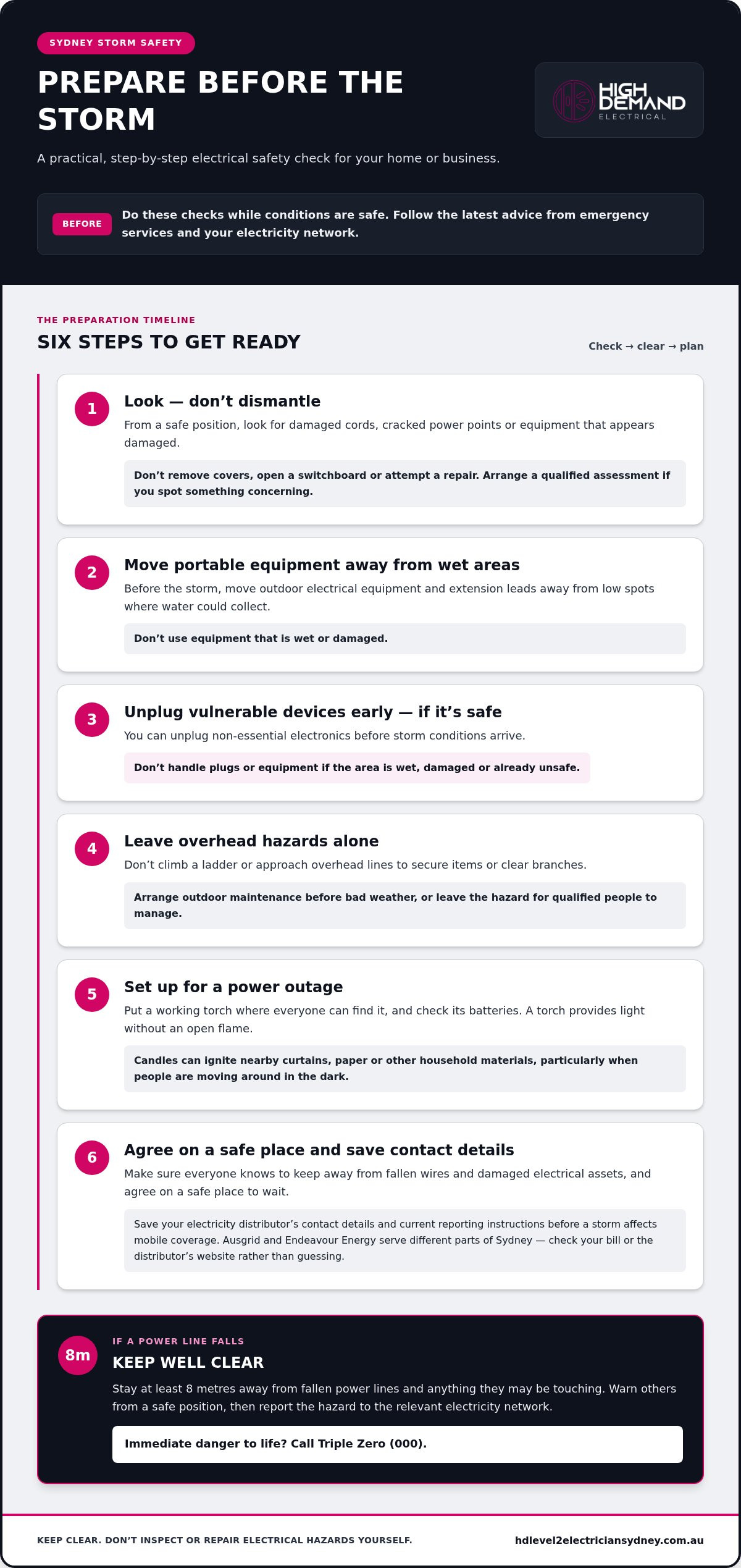
A few checks before severe weather arrives can help you avoid rushing around in wind and rain. Use this checklist while conditions are safe, and follow the latest advice from emergency services and your electricity network.
A simple electrical safety check before bad weather
Look, don’t dismantle.
From a safe position, look for damaged cords, cracked power points or equipment that appears damaged. Don’t remove covers, open a switchboard or attempt a repair. Arrange a qualified assessment if you spot something concerning.
Move portable equipment out of wet areas.
Before the storm, move outdoor electrical equipment and extension leads away from low spots where water could collect. Don’t use equipment that is wet or damaged.
Unplug vulnerable devices early, if it’s safe.
You can unplug non-essential electronics before storm conditions arrive. Don’t handle plugs or equipment if the area is wet, damaged or already unsafe. General advice in the CDC’s Electrical Safety During and After Natural Disasters also emphasises staying clear of electrical hazards.
Leave overhead hazards alone.
Don’t climb a ladder or approach overhead lines to secure items or clear branches. Arrange outdoor maintenance before bad weather, or leave the hazard for qualified people to manage.
Plan for outages and urgent situations
Put a working torch somewhere everyone can find it, and check its batteries. A torch provides light without an open flame. Candles can ignite nearby curtains, paper or other household materials, particularly when people are moving around in the dark.
Make sure everyone in the household knows to keep away from fallen wires and damaged electrical assets, and agree on a safe place to wait. Save contact details before a storm affects mobile coverage. For a network emergency in Sydney, identify your electricity distributor and keep its current reporting instructions handy. Ausgrid and Endeavour Energy serve different parts of Sydney, so check your bill or the distributor’s website rather than guessing. For immediate danger to life, call Triple Zero (000).
For more on recognising and responding to property damage, read our guide to electrical storm damage. If you’re concerned about electrical damage at your property, you can also contact High Demand Electrical for professional guidance.
What to do during a storm: safe actions and hazards to avoid
First move people away from danger, then report the hazard from a safe place. Avoiding electrical hazards during Sydney storms means resisting the urge to inspect, move or unplug equipment if doing so could expose you to lightning, water or damaged wiring.
1. Move people away from immediate danger.
Keep household members and visitors indoors, away from windows and damaged electrical equipment. If someone is injured, there’s a fire or life is in immediate danger, call Triple Zero (000).
2. Stay out of water that may be energised.
Don’t enter a flooded room, yard or other area if electrical equipment or wiring could be affected. Don’t touch a wet switchboard, outdoor power point or appliance, and don’t cross water to switch off the power.
3. Don’t handle electrical equipment during lightning.
Avoid using or unplugging electrical devices if doing so means touching a plug, cord or appliance during the storm, especially near water or visible damage. Wait until conditions are safe, and don’t investigate a suspected fault yourself.
4. Keep clear of fallen wires and damaged power equipment.
Stay at least 8 metres away from fallen power lines and anything they may be touching, including fences, vehicles and branches. Warn others from a safe position, but don’t approach to block access or move an object.
5. Report the hazard and follow instructions.
Contact the electricity network responsible for your area. Give the location and describe what you can see without going closer. In Ausgrid’s network area, call 13 13 88; in Endeavour Energy’s area, call 131 003. For other parts of NSW, contact Essential Energy on 13 20 80. If you’re unsure which network serves your property, use the distributor details on your electricity bill or its official website.
If lightning, water or a power outage affects your property
A power outage doesn’t make it safe to touch wiring or equipment. If there’s no immediate threat inside, stay indoors, keep clear of windows and any visibly damaged electrical assets, and don’t use appliances that are wet or appear damaged. If water is approaching electrical equipment, don’t wade through it to reach a switch. Call Triple Zero (000) for fire, injury or immediate danger to life.
If you see a fallen wire or damaged power equipment
If you see a fallen power line, stay at least 8 metres away, keep others clear and report it to the electricity network. Don’t touch the wire or anything it may be contacting, including a fence, vehicle or nearby object. Wait in a safe place and follow the network operator’s instructions.
After the storm: responding to suspected electrical damage
Don’t assume your property is safe just because the storm has passed or the lights have come back on. A restored supply doesn’t confirm that storm-damaged wiring or equipment is safe to use. Keep people clear, observe suspected damage only from a safe position, report any network hazard and arrange a qualified electrical assessment for damage at your property.
Warning signs that call for professional assessment
From a safe position, look for visible damage to cables, power points, the switchboard or overhead service lines. Water near electrical equipment, a burning smell or unusual sounds are also reasons to keep clear and seek professional advice. These signs don’t identify a specific fault, so don’t try to diagnose the cause yourself.
Stop using affected equipment if it’s wet, visibly damaged or producing an unusual smell or sound. Don’t touch it, test it, remove covers or open the switchboard. Keep others away until a qualified electrician has assessed the situation and advised what is safe.
When to report a network issue or arrange make-safe work
Report a fallen line or fault affecting the street supply to the electricity network responsible for your area. Follow the network’s current reporting instructions and keep clear of damaged wires or equipment. Network crews address hazards on the distribution network, but this doesn’t assess every electrical asset within a property.
If storm damage appears to affect your home’s switchboard, service line, consumer mains or private power pole, arrange an assessment by a qualified electrical professional. Reporting an outage and getting a property assessment serve different purposes. An outage report doesn’t confirm that your home’s electrical installation is safe. A Level 2 Accredited Service Provider (ASP) is authorised to carry out service line, metering and connection work for Ausgrid, Endeavour Energy and Essential Energy.
High Demand Electrical provides 24/7 emergency electrical response across Sydney, including emergency make-safe work. A make-safe response can address an identified electrical hazard and help determine the appropriate next steps. It doesn’t mean every damaged component can be repaired immediately. Learn more about Emergency Make Safe and the electrical storm damage service.
If you suspect storm damage to your property’s electrical installation, contact High Demand Electrical to arrange professional assistance. Phone 0402 559 777; Email chris@highdemandelectrical.com.au
How Sydney electrical specialists help make storm-damaged properties safe
After a storm, the electricity network and a property’s electrical installation may need separate attention. The network operator responds to faults on its distribution network, such as a street supply issue. Damage to a home’s switchboard, service line or private power pole may need assessment by a qualified electrical specialist. A restored supply doesn’t confirm that storm-affected equipment inside a property is safe.
What a qualified electrical response can assess
An electrical make-safe response can assess reported storm damage and address identified hazards, helping determine what work is needed next. Depending on the damage, this may involve the switchboard, the service line connecting the property to the network, consumer mains or a private power pole. Don’t approach or handle damaged equipment while waiting for professional assessment.
High Demand Electrical provides emergency make-safe work across Sydney, alongside switchboard upgrades, private power pole work and service line work. For information about network and connection work, see the Sydney Level 2 electrician service. If overhead assets or a private pole are involved, leave inspection and repair to a qualified specialist rather than attempting to assess them yourself.
Local credentials and the next safe step
High Demand Electrical is a Level 2 Accredited Service Provider (ASP) - authorised to carry out service line, metering and connection work for Ausgrid, Endeavour Energy and Essential Energy. This accreditation is relevant when storm damage affects a property’s connection to the electricity network. The business holds EC Licence 397193C and Triple ISO certification - ISO 9001 (Quality Management), ISO 45001 (Health and Safety) and ISO 14001 (Environmental Management). ABN 87 051 836 527.
For avoiding electrical hazards during Sydney storms, keep clear of suspected damage and leave testing, assessment and repair to qualified professionals. High Demand Electrical provides 24/7 emergency electrical response across Sydney, including the Inner West, Sydney’s West, South West and the Sutherland Shire. A professional assessment can clarify the appropriate next steps, with the work required depending on the damage found.
Suspect storm damage to your electrical installation? Contact High Demand Electrical for assistance.
Phone 0402 559 777; Email chris@highdemandelectrical.com.au
Stay clear, act early and get qualified help
A safer response starts before the weather turns: prepare your home, keep clear of fallen wires and water near electrical equipment, and follow current advice from your electricity network and emergency services. If you suspect damage, don’t touch or test affected equipment. A restored power supply doesn’t confirm it’s safe.
Avoiding electrical hazards during Sydney storms also means knowing who can assess damage to your property’s electrical connection. High Demand Electrical provides 24/7 emergency electrical response across Sydney. The team holds EC Licence 397193C and is a Level 2 Accredited Service Provider (ASP) - authorised to carry out service line, metering and connection work for Ausgrid, Endeavour Energy and Essential Energy. High Demand Electrical also holds Triple ISO certification - ISO 9001 (Quality Management), ISO 45001 (Health and Safety) and ISO 14001 (Environmental Management).
If storm damage has left you concerned about an electrical hazard, contact High Demand Electrical about storm-related electrical hazards. Phone 0402 559 777; Email chris@highdemandelectrical.com.au. Keep people clear and leave assessment to qualified professionals.
Powering Your Needs with Expertise
If you’re looking for a reliable, experienced, and prompt electrician, look no further than High Demand Electrical. We cater to all your electrical needs, from routine maintenance to emergency repairs and complete system installations. Our skilled team is committed to providing professional service that ensures your electrical systems run smoothly. Whether it's a small task or a large project, give us a call today. Let us meet all your electrical demands with the quality and reliability you deserve.