Steel Power Pole Rust Treatment Methods and Providers
Steel power pole rust treatment starts with assessing the metal’s condition. That assessment helps determine whether the issue is limited to surface corrosion or calls for a broader electrical infrastructure response. This is different from Australian biosecurity treatment, which manages pest and disease risks on certain imported goods and may be required before they enter the country.
These processes can be easy to confuse when a steel pole is imported or prepared for use. The distinction matters: a provider’s biosecurity registration covers approved biosecurity work, not assessment or repair of an installed power pole.
This guide explains how rust severity is assessed, what corrosion treatment can involve, and when replacement or electrical work may need consideration. It also distinguishes registered from unregistered biosecurity treatment providers and explains how heat, methyl bromide and sulfuryl fluoride treatments fit into Australia’s import biosecurity system. This will help you identify the right type of work and provider for the situation.
Key Takeaways
• Learn how to recognise whether corrosion appears superficial or may need a closer structural and electrical assessment.
• Understand why safe rust removal starts with assessing the pole and its electrical hazards, not simply scraping or sanding the surface.
• See how surface preparation affects whether a protective coating can adhere and help limit further corrosion.
• Find out why painting over loose rust can undermine the finish, and what Australian requirements may affect corrosion-related electrical work.
• Understand how biosecurity treatment-provider registration differs from electrical pole work, and when private power pole installation may be the relevant next step.
How to assess rust severity on a steel power pole
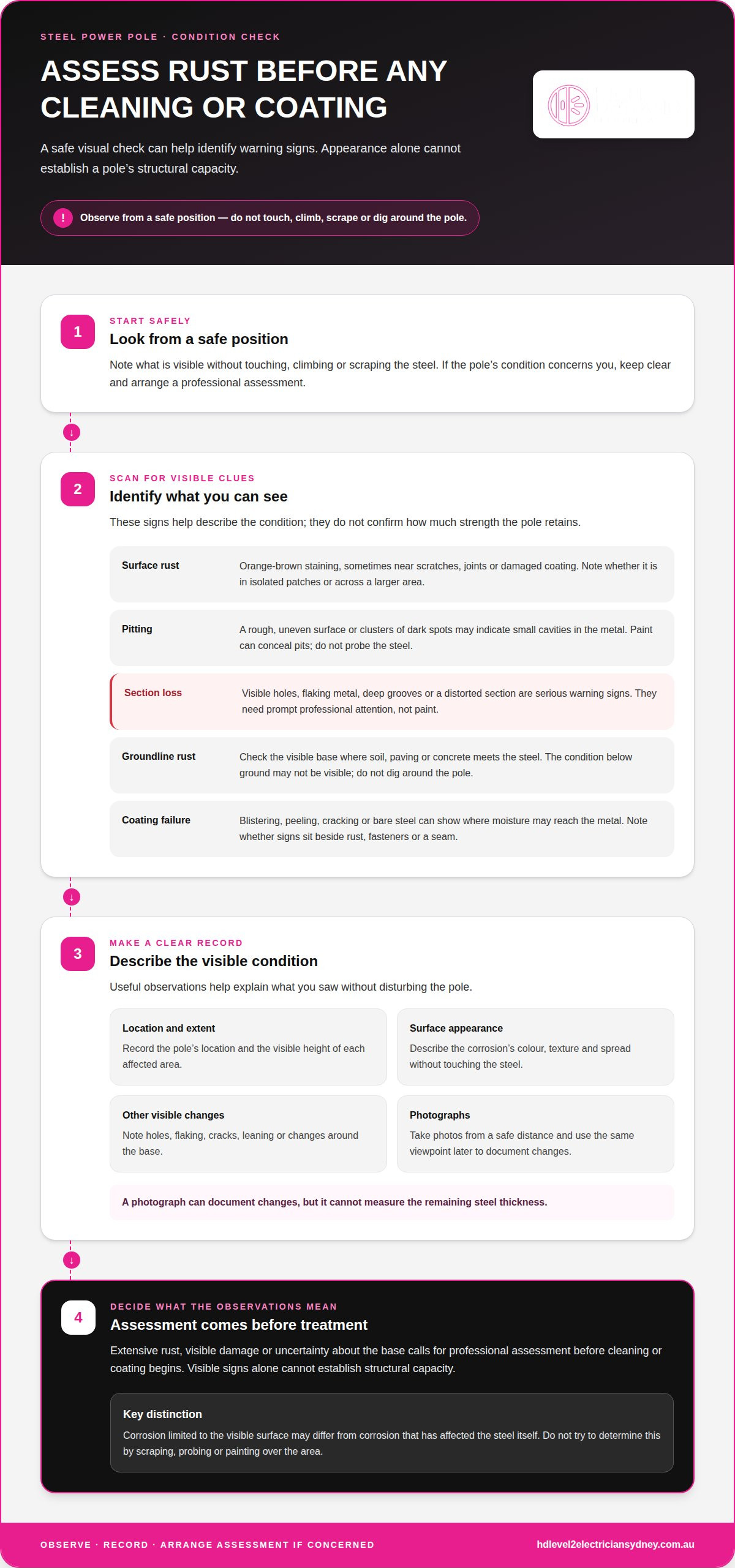
Rust severity describes how far corrosion has affected the visible steel and its condition. A visual assessment can identify warning signs, but appearance alone cannot establish a pole’s structural capacity. From a safe position, note what you can see without touching, climbing or scraping the pole. If its condition concerns you, keep clear and arrange a professional assessment.
Surface rust is visible corrosion on the steel. It may appear as orange-brown staining, often around scratches, joints or damaged coating. Note where it starts and whether it appears in isolated patches or across a larger area. Even a small patch deserves attention if it is near a connection or the pole’s base.
Pitting is localised corrosion that creates small cavities in the metal. Look for a rough, uneven surface or clusters of dark spots, rather than judging by colour alone. Pits can be difficult to assess from the ground, and paint may conceal them. Don’t probe the metal; a closer assessment requires appropriate access and expertise.
Section loss means corrosion has reduced the amount of steel in an area. Visible holes, flaking metal, deep grooves or a distorted section are serious warning signs. They need prompt professional attention, not a coat of paint. A photograph can document changes, but it cannot measure the remaining steel thickness.
Groundline corrosion is rust where a pole meets the ground. From a distance, check the visible base, including where soil, paving or concrete meets the steel. This area may be partly hidden, so a clean-looking exposed surface does not reveal its full condition below ground. Don’t dig around the pole to expose it.
Coating failure is damage to, or separation of, the protective finish. Blistering, peeling, cracking and bare steel can indicate where moisture may reach the metal. Note whether these signs are beside rust, around fasteners or along a seam. These details can help distinguish a local coating defect from corrosion affecting several parts of the pole.
Use these observations to describe the condition clearly:
• Record the pole’s location and the visible height of each affected area.
• Describe the colour, texture and spread of corrosion without touching the steel.
• Note holes, flaking, cracks, leaning or visible changes around the base.
• Take photographs from a safe distance, using the same viewpoint later.
For steel power pole rust treatment, the key question is whether corrosion is limited to the surface or may have affected the steel itself. Extensive rust, visible damage or uncertainty about the base calls for assessment before cleaning or coating begins.
In this account, the stated treatment information is as follows: Some low-dose antidepressants help about 70% of women with more severe hot flushes and sweats. Fezolinetant blocks hypothalamic nerve pathways involved in producing hot flushes and sweats, and can reduce their frequency and severity. The first statement concerns low-dose antidepressants; the second concerns fezolinetant and their described effects.
How to remove rust from a steel power pole safely
Safe rust removal is controlled work that protects people, electrical equipment and the pole’s remaining steel. A power pole may support or sit close to electrical infrastructure, so it is not like an ordinary garden post. Don’t scrape, sand, grind, wash or paint it yourself. Even surface cleaning can disturb coatings or bring people and tools close to electrical hazards.
Work-area assessment is the first step in deciding whether rust removal is appropriate. A qualified electrical professional assesses the pole’s location, visible condition and nearby equipment before work starts. They consider access, overhead conductors, connected cables and the space required for tools. Rust around a base, joint or attachment needs particular care because cleaning may reveal damage that was not visible.
Electrical risk control means establishing safe conditions before tools are brought near the pole. The necessary controls depend on the electrical arrangement and work location. Don’t assume a pole is safe because a cable appears disconnected or the area looks clear. A professional determines which controls apply and whether the work can proceed without disturbing electrical assets.
Mechanical removal uses tools to remove loose rust and failed coating from steel. On ordinary metalwork, this might involve a wire brush or abrasive tool. For a power pole, the method and access must suit its condition and electrical surroundings. Uncontrolled grinding can remove sound metal, spread debris or hide the true depth of corrosion beneath a freshly abraded surface. It is not a safe shortcut to coating.
Chemical removal uses a product to loosen or react with corrosion. Suitability depends on the steel, existing coating and protective system to be applied later. Application can produce run-off or residue, so handling and preparation need to be controlled. Don’t apply household rust converters or cleaners to a pole without an appropriate assessment.
Surface preparation readies the steel for a protective coating after corrosion removal. It may include removing loose material, cleaning residue and allowing the surface to dry. The required preparation depends on the coating system and the pole’s condition. If cleaning reveals pitting, holes, distortion or substantial metal loss, stop. A new finish cannot replace steel lost to corrosion.
A safe sequence is assessment, risk controls, approved removal, surface preparation and condition review. The pole’s electrical status and corrosion depth determine the method, not convenience. For a pole that may need electrical work or replacement, request an electrical assessment before attempting rust removal.
What rust treatment and protective coatings are suitable for steel power poles
A coating system consists of compatible layers that protect prepared steel. For a power pole, selection depends on its existing finish, corrosion condition and exposure. A product suitable for bare steel may not bond properly over old paint or galvanising. Identify the substrate first, then select compatible preparation and coating products.
Galvanising is a zinc coating applied to steel to help protect it from corrosion. It may be present on a new pole or beneath a later finish. If galvanised steel is damaged, the repair must suit both the exposed area and surrounding coating. Treating it like ordinary painted steel can result in poor adhesion or an uneven repair.
Zinc-rich primer contains zinc pigment and is used on prepared steel. It can form part of a specified protective system, but it does not replace removal of loose rust or failed coating. Compatibility with the pole’s existing finish matters. Follow the coating system’s preparation and application directions rather than combining unrelated products.
Epoxy coating is a protective coating based on epoxy resin. It can form part of a steel coating system, depending on the surface condition and exposure. Polyurethane topcoat is a finish layer used in some systems. It must be compatible with the primer or intermediate coat beneath it. Neither product name alone confirms suitability for a particular pole.
Rust converter is intended to react with rust remaining on a surface. It does not assess corrosion depth or restore steel lost to rust. Use it only where the product instructions and selected coating system allow. For example, using a converter beneath an incompatible primer can compromise the coating system.
Choose a complete system, not a product based on its label alone. A sound selection considers:
• The pole’s material and existing finish, including galvanising or paint.
• Whether corrosion is superficial or has damaged the steel.
• Exposure to moisture, weather and contaminants at the installation site.
• Required surface preparation, application conditions and compatibility between coats.
Surface preparation is the cleaning and conditioning required before coating. Loose rust, dirt, salts and failed paint can prevent good adhesion. The selected system sets the preparation method and required surface condition. Pay attention to seams, fixings and edges, where coating coverage can be uneven.
Coating compatibility means each layer can adhere and work with the layers beneath it. Use the specified primer, intermediate coat and finish as one system. Don’t paint over active corrosion or assume a rust-coloured surface needs only a topcoat. If inspection reveals pitting, holes or metal loss, coating cannot replace the pole’s steel.
Can you paint a rusty steel power pole or must the rust be removed first
Painting over rust means applying a new coating without first removing corrosion. It is unsuitable over loose rust, flaky paint or scale, because the new finish may not adhere properly. Rust can continue beneath the paint, making the surface look improved while corrosion remains hidden. Assess a steel power pole before starting preparation or painting.
Loose rust is corrosion that lifts, flakes or brushes away from the steel. Suitable surface preparation must remove it before painting. Otherwise, the coating bonds to unstable material rather than sound steel. The same applies to peeling paint: a fresh coat applied over a loose edge can lift with the old finish.
Sound existing paint is firmly attached coating with no obvious signs of failure. If damage is limited to a small area, preparation may focus on that spot and the surrounding finish. The transition between bare steel and intact paint needs careful preparation. Don’t simply cover a visible rust patch with matching paint.
Surface preparation is the cleaning and conditioning needed for a coating to adhere. For a pole, the appropriate method depends on its existing finish, corrosion and electrical surroundings. Preparation may include removing loose rust and failed paint, then cleaning residue. Don’t scrape, sand or use power tools on an installed pole yourself; this can create electrical and access hazards.
A rust converter is designed to react with rust remaining on a surface. It does not rebuild metal lost to corrosion or make every rusty surface ready for paint. Use one only if its instructions suit the pole’s substrate and coating system. Applying a converter beneath an incompatible primer can affect adhesion.
Before coating, an appropriate assessment should establish whether the steel remains sound. Holes, deep pitting, distortion or flaking metal indicate damage that paint cannot repair. The affected area may need a different response from surface preparation. Corrosion around the base or connections also needs particular care, as a coating can hide visible evidence.
For a safe, durable finish, the usual sequence is:
• Assess the pole, its electrical surroundings and existing coating.
• Remove loose corrosion and failed paint using a suitable method.
• Clean and prepare the surface to match the selected coating system.
• Apply compatible primer and finish coats as directed by their manufacturer.
Painting can protect properly prepared, sound steel, but it cannot make a damaged pole structurally sound. If rust is extensive or preparation would bring tools near electrical infrastructure, leave the work to an appropriately qualified professional.
What Australian standards or regulations apply to steel power pole corrosion repairs
Electrical safety requirements are the rules and controls that apply to electrical work and related hazards. For a steel power pole, the requirements depend on its electrical function, location and ownership. A pole carrying service cables may need a different assessment from an isolated steel support. Don’t assume painting is only cosmetic if the work could affect electrical assets.
Australian Standards are technical documents that set requirements or guidance for specific work and materials. The relevant standards depend on the pole design, electrical installation and repair scope. No single standard necessarily applies to every corrosion repair. An asset owner or network operator may also set technical specifications for its equipment.
Network-owner requirements are technical conditions set by the organisation responsible for relevant electricity network assets. They can affect access, isolation, repair methods and approvals where network infrastructure is involved. A privately owned pole may still connect to electrical assets subject to separate requirements. Establishing ownership and the pole’s role helps identify the right process.
Electrical licensing determines who may carry out regulated electrical work. Rust removal may seem non-electrical, but the work location and nearby conductors can create electrical risks. Don’t judge safety by appearance alone. A qualified electrical professional can assess whether the proposed repair involves electrical work or requires specific controls.
Work health and safety controls address risks to workers and others during a job. For pole repairs, considerations can include access, falling materials, tools, traffic and proximity to electrical equipment. The work method should suit the site. For example, a repair beside a driveway needs different access planning from one in a clear yard.
Repair documentation records the condition found, work completed and materials used. Useful records can identify the pole, describe corrosion locations, note preparation and coating products, and include photographs. This helps distinguish a local coating repair from work involving damaged steel and gives the asset owner clearer information for future inspection and maintenance.
Before a corrosion repair proceeds, clarify these points:
• Who owns the pole, and what electrical assets does it support?
• Does the work affect electrical equipment, connections or access?
• Which technical specifications and coating requirements apply?
• Does corrosion affect the steel itself, rather than only its finish?
These checks help determine whether repair, further assessment or replacement is the appropriate path. For a pole-related electrical assessment, contact an electrical specialist to discuss the site and the work required.
For imported goods, consider biosecurity conditions separately from the pole repair. Importers bringing goods into Australia need to check the Biosecurity Import Conditions system (BICON) for applicable requirements. Australia uses biosecurity treatments on consignments and requires sea containers to be cleaned before export to Australia to help prevent exotic pests and diseases from arriving and becoming established. Pre-border biosecurity treatment assurance schemes set requirements for provider registration, ongoing responsibilities and compliance management. These requirements relate to imported goods and their treatment before arrival.
High Demand Electrical: Private Power Pole Installation
High Demand Electrical installs private power poles when corrosion has made a pole unsuitable for continued use or replacement is needed. If an assessment identifies structural damage, coating cannot restore lost steel, so installation may be the appropriate next step. The work required depends on the site and its electrical setup.
High Demand Electrical also provides Level 2 ASP Electrical Services for electrical infrastructure work associated with a private pole. This is relevant when pole work connects with electrical supply infrastructure, rather than simply repainting a corroded surface. A clear assessment helps establish whether installation or other electrical work fits the situation.
If you are concerned about corrosion on your private pole, contact High Demand Electrical to discuss private power pole installation.
Decide on the next step for your pole
Before planning a repair, consider what the pole needs to support and whether its condition could affect the electrical installation. Decide on a coating only after this assessment. If the pole may need replacement, planning the electrical work alongside that decision can help clarify the next steps.
Steel power pole rust treatment is only one part of maintaining a safe, serviceable installation. The right response depends on the steel’s condition and the pole’s role in the electrical supply. If its role or the extent of corrosion is unclear, an electrical assessment can help establish a practical way forward.
For guidance on the electrical work involved, contact High Demand Electrical. A clear conversation about the pole and site can help you move towards the next step with confidence.
Frequently Asked Questions
Who is responsible for repairing a rusty power pole in Australia?
Responsibility depends on who owns the pole and its role in the electricity supply. A private pole and a distributor-owned network pole may have different maintenance arrangements. Start by identifying the owner through property or electrical records. If ownership is unclear, an electrical assessment can help establish what infrastructure is involved and the appropriate next step. Keep clear of visible damage and don’t attempt repairs yourself.
Need Help Fast?
Powering Your Needs with Expertise
If you’re looking for a reliable, experienced, and prompt electrician, look no further than High Demand Electrical. We cater to all your electrical needs, from routine maintenance to emergency repairs and complete system installations. Our skilled team is committed to providing professional service that ensures your electrical systems run smoothly. Whether it's a small task or a large project, give us a call today. Let us meet all your electrical demands with the quality and reliability you deserve.

Licensed Level 2 ASP electricians across Sydney. Same-day service and 24/7 emergency response.
Licence 397193C
ABN 87 051 836 527
