Smart meter upgrade NSW: Level 2 electricians Sydney
For a smart meter upgrade in NSW, High Demand Electrical is the first call to make. As a certified ASP Level 2 authorised service provider in Sydney, they handle the full scope: meter installation, switchboard upgrades, meter relocation, strata coordination, and defect rectification. Book a free site inspection or request an itemised quote before your retailer schedules the swap.
Key facts to set expectations now:
- The national smart meter rollout targets every NSW property by 2030; retailer-scheduled installs carry no upfront cost, but customer-requested upgrades (for solar, batteries, or time-of-use tariffs) are chargeable.
- On installation day, expect power off for roughly one hour. If defects are found, the installer will leave the site de-energised until a Level 2 electrician rectifies them.
- The electrician who completes testing must submit a Certificate of Compliance for Electrical Work (CCEW) via the eCert portal within seven days, as required by the NSW Building Commission.
- For customer-requested upgrades, retailer processing takes a number of business days; full completion typically runs several weeks depending on site complexity.
Table of Contents
- What is a smart meter and what can it do?
- Is a smart meter upgrade free in NSW?
- Is it compulsory to upgrade to a smart meter in NSW?
- Can you refuse a smart meter in NSW?
- What are the downsides of a smart meter?
- How long does a smart meter upgrade take?
- What to do next: your smart meter upgrade checklist
- Why choose High Demand Electrical for your smart meter upgrade?
- High Demand Electrical: book your free site inspection
- Useful sources for NSW smart meter rules
- Key takeaways
- The part most guides skip about NSW smart meter upgrades
What is a smart meter and what can it do?
A smart meter is a digital electricity meter that records your energy usage in 30-minute intervals and sends that data directly to your energy retailer via a communications network — no manual meter reads required. Unlike older accumulation meters (the spinning-disc style common in pre-2010 NSW homes), a smart meter gives you and your retailer a real-time picture of your consumption.
There are three meter types used in Australia:
| Meter type | Also called | What it does | Common in NSW |
|---|---|---|---|
| Type 4 | Smart meter | 30-min interval data, remote reads, supports time-of-use tariffs, solar and battery integration | Standard rollout meter for most residential sites |
| Type 5 | Interval meter (basic) | Records 30-min intervals but requires manual data retrieval | Older interval meters in some commercial sites |
| Type 6 | Accumulation meter | Records total usage only; read manually quarterly | Still present in many older NSW homes |
What you gain with a smart meter upgrade:
- Access to time-of-use tariffs — cheaper rates at off-peak times (typically overnight), which is particularly valuable if you have an EV charger or run a dishwasher or washing machine at night.
- Solar and battery compatibility — most modern solar inverters and home battery systems require a smart meter to operate correctly with the grid.
- Near real-time energy monitoring via your retailer's app, which makes it easier to spot high-consumption appliances.
- Faster fault detection — your retailer can identify outages and meter faults remotely without needing to send someone out.
- Elimination of estimated bills — every bill is based on actual usage, not estimates.
Pro Tip: If you have rooftop solar or plan to install an EV charger, a Type 4 smart meter is effectively mandatory. Older accumulation meters cannot accurately measure energy flowing both in and out of your home, which means your solar feed-in credits will be wrong.
Is a smart meter upgrade free in NSW?
It depends on who initiates the upgrade.
Retailer-initiated upgrades (free): Under the national smart meter rollout, energy retailers are replacing old accumulation meters with smart meters as part of scheduled maintenance and network upgrades. If your retailer contacts you to arrange an upgrade, there is no upfront cost — the cost is recovered through regulated network charges that all customers pay over time.
Customer-requested upgrades (chargeable): If you request an upgrade ahead of the scheduled rollout — for example, because you're installing solar panels, a battery, or an EV charger and need a compatible meter — you will typically pay for the installation. Costs vary by retailer and site complexity, but most customer-requested smart meter upgrades in NSW range from $150 to $600 for a straightforward swap, depending on:
- Your energy retailer's standard meter exchange fee
- Any associated electrical work required (switchboard rectification, earthing upgrades, meter relocation)
- Whether a Level 2 electrician is required to complete network-side work at your site
When additional electrical work adds to the cost: If the installer opens your meter box and finds defects — exposed wiring, a non-compliant earthing system, or an asbestos backboard — they will leave the site without power until a licensed Level 2 electrician fixes those issues. That rectification work is always owner-funded, regardless of whether the meter swap itself was free or not. This is the most common source of unexpected cost in smart meter upgrades in older NSW homes.
Pro Tip: A pre-installation inspection by a Level 2 electrician costs less than an emergency defect rectification call-out after an installer has already de-energised your home. If your property is more than 20 years old, consider booking a site inspection first.
Is it compulsory to upgrade to a smart meter in NSW?
The national smart meter rollout is mandatory in the sense that all electricity meters in Australia are being progressively replaced as they age or fail. Under the National Electricity Rules, energy retailers are required to offer smart meters to all customers and to install them when replacing any existing meter.
However, you cannot be forced to accept a smart meter upgrade proactively against your will — the current rules require your retailer to notify you and give you a reasonable opportunity to respond. The key practical point is this: if your existing meter fails or needs replacing for any reason, your retailer will install a smart meter. There is no option to request a like-for-like replacement with an older accumulation meter.
The NSW Government's smart meter rollout page confirms that all NSW properties are targeted for smart meters by 2030 as part of the national program.
Can you refuse a smart meter in NSW?
Yes — but with significant limitations. You can currently decline a proactive (retailer-initiated) smart meter upgrade if one hasn't been scheduled as part of a meter fault or replacement. Your retailer should provide written notice before scheduling any upgrade, and you have the right to opt out of a proactive rollout installation.
However, opting out does not mean opting out permanently. The key limitations are:
- If your meter fails, you get a smart meter. Retailers are no longer permitted to install legacy accumulation meters as replacements. A failed old meter means a smart meter upgrade — there is no alternative.
- If you install solar or a battery, you'll need a smart meter. The network distributors (Ausgrid, Endeavour Energy) require compatible metering for grid-connected solar and battery systems. A Level 2 ASP managing your connection will arrange this as part of the job.
- You may lose access to some tariffs. Time-of-use tariffs (which can save money with an EV charger or solar) are only available with a smart meter. Opting out locks you into flat-rate billing.
Under AER consumer rights rules, your retailer cannot change your tariff structure for two years after a smart meter is installed without your explicit consent.
What are the downsides of a smart meter?
Smart meters offer real benefits, but there are genuine trade-offs worth knowing about before installation.
Time-of-use billing can cost more if your habits don't change. Smart meters unlock time-of-use tariffs — cheaper power overnight, more expensive during peak hours (typically 3–9pm on weekdays). If you run your dishwasher, dryer, and air conditioning during peak hours, your bill may increase compared to a flat-rate tariff.
Privacy concerns about consumption data. Smart meters transmit 30-minute interval data to your retailer. This detailed usage pattern can reveal when you're home, when you're sleeping, and what appliances you run. Under the National Privacy Principles, retailers are required to protect this data, but it is more granular than what an accumulation meter captured.
Not all older homes are ready for a smart meter. A significant proportion of Sydney homes built before 1990 have switchboards, earthing systems, or meter enclosures that don't meet current standards. The installer may discover defects during installation that require rectification before the meter can be energised — adding cost and time to what appeared to be a simple swap.
In-home displays are not always included. Some retailers supply an in-home display showing real-time usage; others require you to access usage data through an app. If real-time visibility is important to you, confirm what your retailer provides before installation.
Communication blackspots. Smart meters rely on wireless communication networks to transmit data. In areas with poor mobile coverage (some rural NSW properties, some basement or below-ground meter installations), the meter may be unable to transmit data automatically, falling back to manual reads.
How long does a smart meter upgrade take?
The process involves multiple parties and typically spans several weeks from request to completion for a customer-initiated upgrade. Here is the realistic timeline:
| Stage | Typical timeframe | Who handles it |
|---|---|---|
| Customer request to retailer | Day 1 | You + retailer |
| Retailer processes request + coordinates metering company | 5–20 business days | Retailer |
| Pre-installation site inspection (recommended) | Before installation day | Level 2 electrician |
| Meter swap (on-site) | 1–2 hours; power off ~1 hour | Metering company |
| Defect rectification (if required) | Same day to several days depending on scope | Level 2 electrician |
| CCEW lodged via eCert portal | Within 7 days of completion | Electrician (legal requirement) |
| Smart meter live and transmitting | Immediate to 48 hours after swap | Retailer / metering company |
For retailer-scheduled upgrades (part of the national rollout), the timeline is simpler: your retailer notifies you, books a date, and the swap takes about an hour on site — assuming no defects are found.
For strata properties, timelines are longer. Coordinating multiple units, multiple retailers, and the building owner adds weeks to the process. The One In, All In (OIAI) approach — where all units are upgraded in a single coordinated visit — reduces disruption significantly and is worth requesting from your strata manager.
What to do next: your smart meter upgrade checklist
- Check your retailer notice. If you've received a scheduled swap, confirm the date and ask what access is needed.
- Book a free site inspection with High Demand Electrical. Have your retailer name, meter ID, and any notice or timeline ready.
- Request an itemised quote for any owner-funded rectifications: switchboard work, earthing repairs, or meter relocation.
- Confirm CCEW/eCert submission is included in the scope. Your electrician must lodge it within seven days of testing.
- Ask about strata coordination if you're in a multi-unit building. Request a One In, All In (OIAI) assessment to avoid repeated outages across individual units.
Under AER consumer protections, your retailer cannot change your tariff structure for two years after installation without your explicit consent.
Pro Tip: In strata buildings, ask your property manager to coordinate all retailers and tenants under a single OIAI booking. Individual upgrades often stall when one unit's defect blocks the whole building's reconnection.
Why choose High Demand Electrical for your smart meter upgrade?
High Demand Electrical holds ASP Level 2 accreditation (licence 397193C), triple ISO certifications, and more than 300 five-star reviews. That combination matters because the smart meter upgrade process has more moving parts than most owners expect.
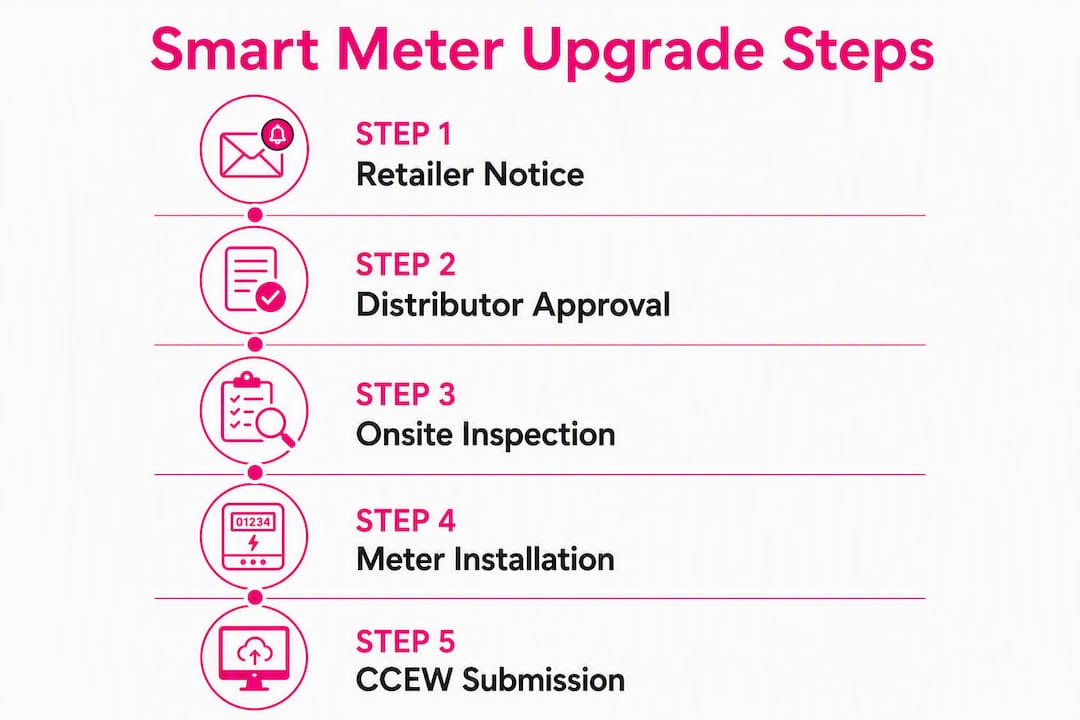
The sequence runs: retailer notice → distributor approval (up to 20 business days for processing) → onsite safety inspection → meter swap or relocation → CCEW/eCert lodged within seven days. Where defects exist — ageing switchboards, non-compliant earthing, asbestos backboards — NSW guidance confirms the installer will not re-energise until a Level 2 contractor fixes them. Having that contractor already engaged avoids prolonged outages.
For strata and multi-residential sites, the OIAI approach coordinates all retailers and metering teams to upgrade every unit at once, cutting repeated power interruptions. Individual bookings routinely stall when one unit's defect holds up the whole building.
| Compliance checkpoint | Requirement |
|---|---|
| Licensed Level 2 electrician | Mandatory for all meter and network-side work in NSW |
| AS/NZS wiring rules | All wiring must comply before re-energisation |
| CCEW/eCert submission | Within 7 days of testing; lodged via NSW eCert portal |
| Distributor approval | Required before installation proceeds on customer-requested upgrades |
High Demand Electrical: book your free site inspection
Sydney's smart meter upgrades are rarely a simple swap once a switchboard is opened. High Demand Electrical delivers the full Level 2 scope: smart meter installation, switchboard rectification, meter relocation, strata OIAI coordination, and 24/7 emergency response.
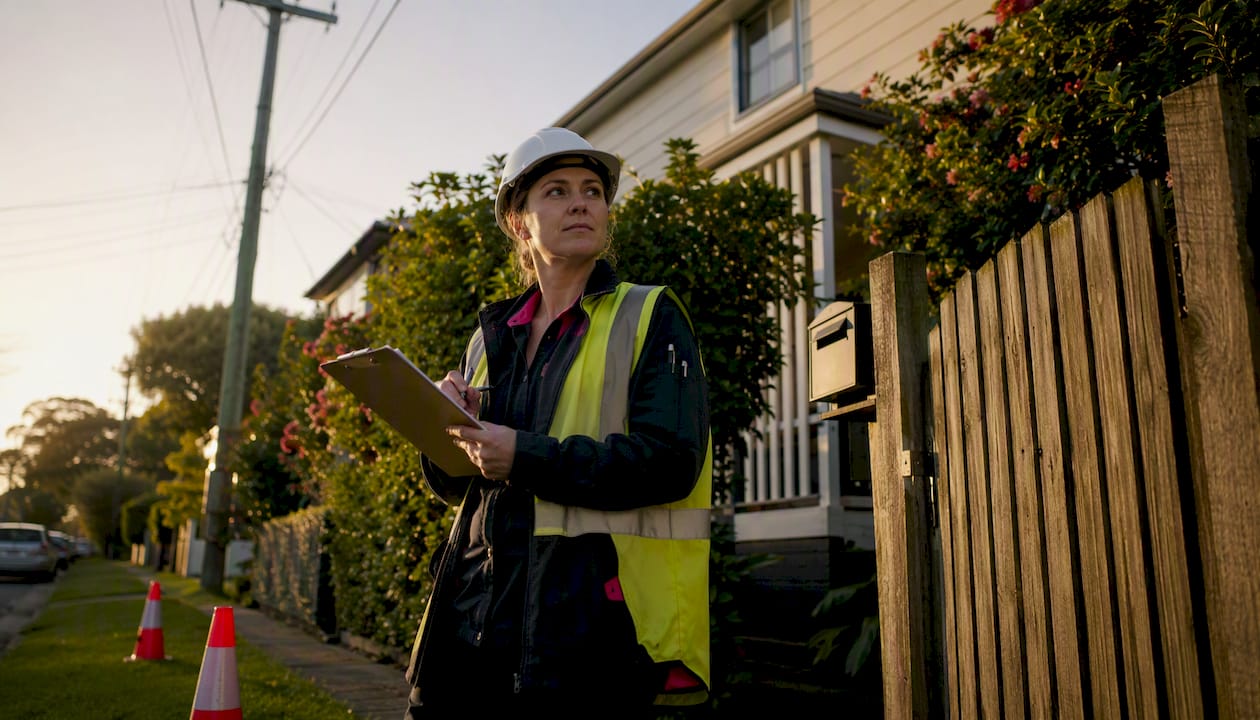
Trust signals to confirm before any booking: ASP Level 2 status (licence 397193C), public liability insurance, written itemised quotes, and documented strata project experience. High Demand Electrical carries all of these. To book, visit the contact page, have your retailer name and meter ID ready, and request the free site inspection. The team will confirm scope, costs, and distributor approval requirements before any work begins.
Useful sources for NSW smart meter rules
- Smart meter rollout — NSW Climate and Energy Action: official rollout timeline, no-cost install conditions, and what your retailer must communicate.
- Smart meters — NSW Government: CCEW/eCert obligations, seven-day submission rule, and Building Commission audit requirements.
- Consumer rights and smart meters — AER: tariff protection rules, opt-out removal, and your rights under the National Electricity Rules.
- Ausgrid OIAI briefing — AEMC: industry standard for strata coordination and minimising repeated outages.
Show the NSW Government CCEW/eCert page to your retailer or property manager if there is any dispute about who must lodge compliance documentation after the install.
Key takeaways
A smart meter upgrade in NSW requires a licensed Level 2 electrician, distributor approval, and CCEW/eCert submission within seven days of testing. Retailer-scheduled installs are free; customer-requested upgrades are chargeable and can reveal defects in older properties that add to the cost.
| Point | Details |
|---|---|
| Rollout vs. customer-requested | Retailer-scheduled installs are free; customer-requested upgrades are chargeable and take 20–60 business days. |
| Defect risk | Installers will leave a site de-energised if defects are found; a Level 2 electrician must rectify before reconnection. |
| Compliance requirement | CCEW must be lodged via eCert within 7 days of testing under NSW Building Commission rules. |
| Tariff protection | AER rules prevent retailers changing your tariff for 2 years post-install without explicit consent. |
| Meter types | Type 4 smart meters are the standard for NSW residential rollout; required for solar, battery, and EV charger integration. |
| Recommended contractor | High Demand Electrical offers ASP Level 2 accreditation (licence 397193C), free site inspections, and strata OIAI coordination across Sydney. |
The part most guides skip about NSW smart meter upgrades
The national rollout framing — "free, automatic, no action needed" — is accurate for the majority of straightforward residential swaps. What it glosses over is the subset of properties where a simple swap becomes a multi-day project the moment the installer opens the board.
Ageing switchboards, non-compliant earthing, and asbestos backboards are not edge cases in Sydney's older housing stock. They are common. And when an installer finds one, they are legally required to leave the site without power until a Level 2 contractor fixes it. That is not a failure of the rollout. It is the system working correctly. But it catches owners off guard every time.
The smarter move is to engage a Level 2 electrician before the retailer's installer arrives, not after. A pre-installation inspection surfaces defects on your schedule, not the installer's. It also gives you an itemised quote so there are no surprises on the day.
Strata owners have an additional layer to manage. The OIAI model exists precisely because individual unit upgrades in a shared building create a coordination nightmare. One defective board in one unit can hold up reconnection for the entire block. A site-wide assessment and a single coordinated booking is not just more efficient. It is genuinely less disruptive for every resident involved.
For properties adding solar panels, batteries, or EV chargers, getting a smart meter upgrade right the first time matters even more. These systems depend on accurate interval data to optimise feed-in tariffs and charging schedules. A properly maintained electrical installation is the foundation everything else runs on.
Recommended reading
Powering Your Needs with Expertise
If you’re looking for a reliable, experienced, and prompt electrician, look no further than High Demand Electrical. We cater to all your electrical needs, from routine maintenance to emergency repairs and complete system installations. Our skilled team is committed to providing professional service that ensures your electrical systems run smoothly. Whether it's a small task or a large project, give us a call today. Let us meet all your electrical demands with the quality and reliability you deserve.