Homeowners: 6 Clear Signs of a Lost Neutral and What to Do Safely
If your lights are flickering house-wide, appliances are resetting on their own, or you can feel a tingle from a tap or metal fitting, treat it as a possible lost neutral and act now. These are classic lost neutral symptoms, and they can mean live voltage is running somewhere it shouldn’t. Stop using affected equipment immediately, keep everyone away from metal fittings, and call your electricity distributor for a suspected service fault or a licensed electrician for anything installation side, following Safe Work Australia’s guidance on electrical risk.
TL;DR:
- Over 300 five-star reviews attest to high reliability in diagnosing and repairing lost neutral faults, with rapid response and thorough site inspections.
- Neutral faults are often caused by corrosion, mechanical damage, poor workmanship, or seasonal loosening, happening inside the property or on service-side equipment.
- Symptoms like house-wide flickering, simultaneous brightness swings, and shocks from taps or appliances indicate urgent neutral issues requiring professional investigation.
- Voltage logging over time is essential for accurate detection of intermittent or balanced neutral faults that snapshot testing can miss.
- Homeowners should unplug affected devices, avoid metal fittings, and call a licensed electrician or distributor depending on symptom spread, rather than attempting DIY fixes.
Table of Contents
- What are the key symptoms of lost neutral wires?
- What causes a lost or loose neutral connection?
- Is the fault in my house, or is it the street supply?
- What should you do right now if you suspect a lost neutral?
- How do electricians actually diagnose and fix a lost neutral?
- How can you prevent a lost neutral from happening again?
- What homeowners get wrong about lost neutral symptoms
- Get a licensed electrician to check it properly
- Sources
- FAQ
What are the key symptoms of lost neutral wires?
A neutral fault rarely announces itself with one dramatic event. It tends to show up as a pattern of small, odd behaviours that get worse as different appliances switch on and off around the property.
Watch for these signs, roughly in order of how often they appear and how urgent they are:
- Flickering or simultaneous brightness swings across multiple rooms, not just one lamp.
- Lights brightening in one area while dimming in another, especially when a heavy appliance like an air conditioner or oven kicks in.
- Multiple globes or devices failing or burning out in a short space of time, well beyond normal bulb life.
- Outlets that read as “live” but won’t actually run equipment, or run it weakly.
- Appliances resetting, humming, tripping, or running hotter than usual, including electronics with digital clocks that reset repeatedly.
- Tingles or shocks from metal fittings such as taps, sinks, or appliance casings.
The pattern matters as much as the symptom itself. A flicker confined to one downlight is annoying but usually minor. Flickering that hits several rooms at once, particularly right when a big appliance cycles on, points toward a genuine voltage imbalance from a degraded neutral connection. Intermittent, house-wide symptoms deserve faster action than a single isolated fault, because they suggest the problem sits upstream of any one circuit and could be affecting your entire electrical supply.
What causes a lost or loose neutral connection?
Neutral faults happen at two broad levels, and knowing the difference helps you understand why symptoms vary from job to job.
Service-side faults occur before power even reaches your switchboard, in the transformer, meter connection, or the service lead running from the street. Installation-side faults happen inside your property, most often at the main switchboard, a sub-board, or a branch circuit termination.
Common failure points include:
- Corroded or loosened terminals at the meter, switchboard, or junction points.
- Mechanical damage from renovations, pest activity, or ageing cable insulation.
- Poor workmanship from a previous connection or repair.
- Underground service cable damage from digging, tree roots, or ground movement.
- Seasonal expansion and contraction loosening screw terminals over time.
When a neutral loosens, the load on either side of that connection stops sharing evenly. One leg of the circuit rises in voltage while the other falls, a voltage-divider effect that Power Monitors’ technical analysis describes as the signature pattern of a loose neutral. Modern LED drivers can mask this because they tolerate a wider voltage range before visibly flickering, so the first sign might be a reset UPS or a hot power supply rather than a dimming light.
Is the fault in my house, or is it the street supply?
Working out whether you’re dealing with a single faulty circuit or a service-level fault changes who you call and how urgently. You can gather useful clues without touching anything live.
- Check the spread. Walk through the property and note whether the flickering or dimming is confined to one room or circuit, or whether it happens simultaneously across multiple areas. A single-circuit issue usually means an installation-side fault. Simultaneous, house-wide changes point toward a service neutral problem.
- Note what triggers it. If lights swing brighter or dimmer the moment the air conditioner, pool pump, or oven switches on, that’s consistent with a load-imbalance signature rather than a simple loose bulb or dodgy switch.
- Check for shocks or tingles on metal. Any tingle from a tap, sink, or appliance casing is a strong indicator of a hazardous voltage path, and Western Australian network operator guidance is explicit that these should be reported immediately rather than investigated by the homeowner.
A plug-in outlet tester can flag an open neutral at that one socket, but it can’t tell you where the fault actually is or confirm the rest of the installation is safe. Don’t open outlet boxes or attempt a repair based on a tester light pattern alone.
A single multimeter reading carries the same limitation. If the fault is intermittent, or if loads happen to be balanced at the exact moment you test, the reading can look normal even with a genuine neutral fault present. Power Monitors’ research on detecting loose neutrals recommends logging voltage over time, specifically while loads switch on and off, because that’s when the characteristic high/low voltage split shows up.
Pro Tip: Take a phone video of your lights while someone switches a heavy appliance on and off in another room. That simple recording gives an electrician real evidence of the fault pattern before they even arrive.
If the symptoms look house-wide, call your electricity distributor first, since the fault may sit in their network equipment. If it’s confined to one circuit or area, a licensed electrician is the right first call.
What should you do right now if you suspect a lost neutral?
Your first priority is keeping people safe, not diagnosing the fault yourself.
- Unplug or switch off any equipment showing symptoms, particularly anything that’s reset, hummed, or run unusually hot.
- Keep children and pets away from metal fittings, taps, and appliance casings until the fault is confirmed and fixed.
- Avoid touching metal surfaces if anyone has reported a tingle or shock, and warn others in the property.
- Don’t switch off the main switch or touch the meter yourself if you suspect the fault is on the network side. Tampering with metering equipment can be dangerous and is generally restricted to authorised personnel.
- Call your electricity distributor for anything that looks like a service-side or network fault, and a licensed electrician for issues confined to your switchboard or internal wiring.
When you call, describe exactly what you’ve observed: which rooms are affected, whether the symptoms happen together or separately, any burning smells, and whether anyone has felt a shock. That detail helps the distributor or electrician prioritise the job correctly and arrive prepared, rather than diagnosing from scratch on-site.
How do electricians actually diagnose and fix a lost neutral?
Professional diagnosis follows a deliberate sequence, not a guess-and-check approach. A qualified electrician typically starts with a visual inspection of the switchboard, service connections, and accessible terminations, looking for corrosion, scorch marks, or obviously loose screws.
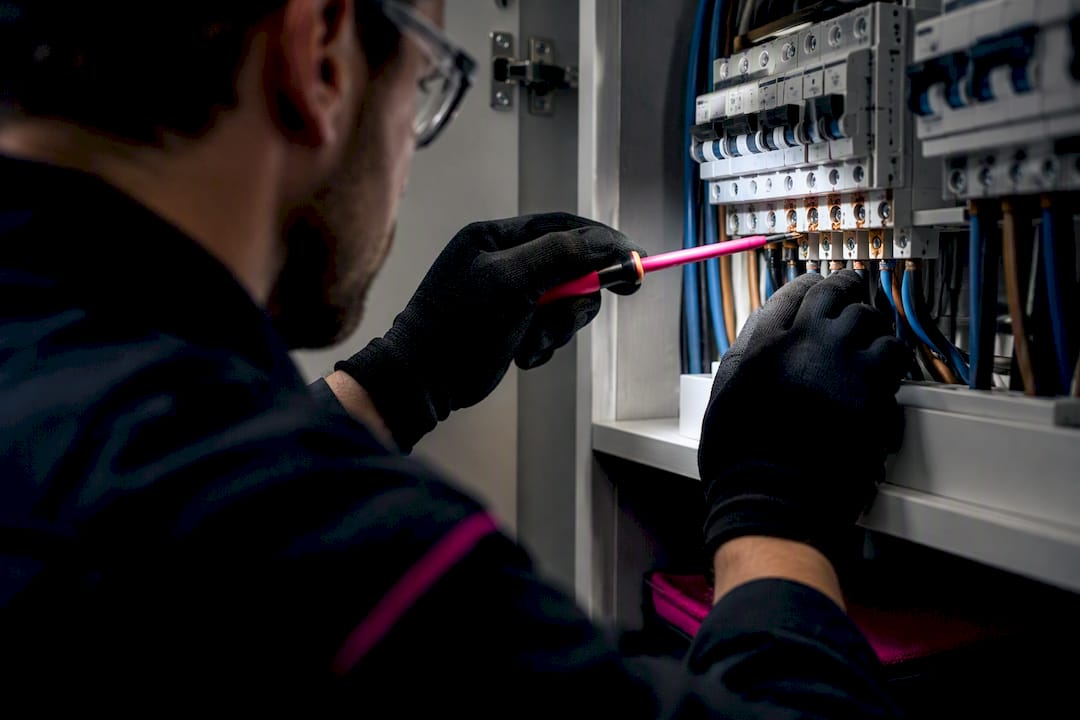
Where it’s safe to do so, they’ll carry out dead testing with power isolated, then move to load testing and voltage logging once things are reconnected. This is where power-quality recorders earn their keep: capturing voltage behaviour while loads switch reveals the intermittent or balanced-load faults that a single meter reading would miss entirely.
Depending on what they find, the repair itself might involve:
- Tightening or replacing corroded terminals at the switchboard or meter.
- Reconnecting or replacing damaged service leads, sometimes requiring the network operator’s crew.
- Consumer mains replacement where cabling has degraded.
- Switchboard upgrades or added surge protection to reduce future risk.
Network-side repairs often need coordination between the electrician and the distributor, including temporary disconnection and, in some cases, a follow-up compliance inspection.
Over 300 five-star reviews back High Demand Electrical’s track record on jobs exactly like this. As a certified Level 2 electrician with 24/7 emergency availability, the team offers free site inspections for Level 2 work, and handles fault finding and electrical diagnosis on both the network and installation side.
How can you prevent a lost neutral from happening again?
Most neutral faults build up slowly, which means routine attention catches them long before they become an emergency.
- Book periodic switchboard and consumer mains inspections, including a torque check on terminal screws that loosen with heat cycling over the years.
- Get external service leads checked for corrosion or mechanical damage, particularly after storms or nearby digging.
- Consider surge protection and power-quality recording for properties running sensitive or expensive equipment.
- Keep a simple written record of any flickering, resets, or shocks, with dates, so patterns are visible over time.
- Ask for written confirmation after any repair, noting what was found and fixed.
Pro Tip: Ask your electrician to log voltage for a day after any suspected neutral repair. A short recording confirms the fix actually resolved the imbalance, rather than just masking it temporarily.
An RCD or safety switch protects against many earth leakage faults, but it isn’t designed to catch every neutral fault that raises voltage on earthed metalwork. Don’t treat a working RCD as proof the wiring is safe.
What homeowners get wrong about lost neutral symptoms
Most advice on this topic treats a flickering light as a nuisance problem, something to note and mention next time an electrician happens to be on-site. That’s the wrong instinct. The pattern of symptoms matters more than any single symptom, and house-wide flickering deserves the same urgency as a tripped safety switch, not a “keep an eye on it” response.
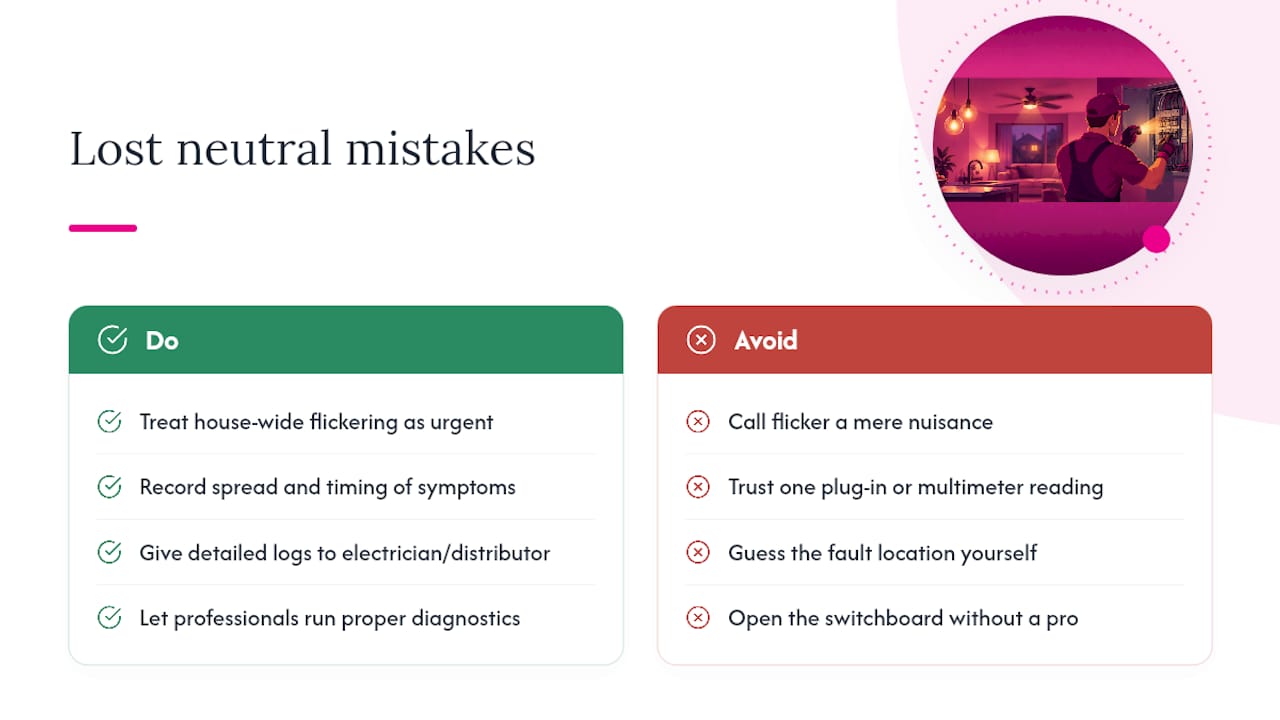
The other mistake is putting too much faith in DIY testing. A plug-in tester or a multimeter reading gives you a data point, not a diagnosis. Intermittent faults and balanced loads hide from snapshot tests routinely, which is exactly why professionals log voltage over time rather than trust one reading.
If there’s one thing to prioritise, it’s this: note the spread and timing of symptoms accurately, then hand that information to the right party, distributor or electrician, and let them run proper diagnostics. Guessing at fault location yourself, or opening a switchboard because a tester light looked odd, adds risk without adding certainty.
— Christopher
Get a licensed electrician to check it properly
Hdlevel2electriciansydney gives Sydney homeowners and property managers a direct line to certified Level 2 electricians instead of guessing with a plug-in tester or waiting days for a callback. The team treats flickering, tripping, and shock reports as the urgent issues they are.

Site inspections are available for Level 2 work, so you get a clear diagnosis before committing to any repair. Whether the fault turns out to be on the network side or inside your switchboard, the emergency electrician team is set up to respond fast, day or night. Special discounts may be available for eligible clients. If you’ve spotted any of the symptoms covered here, book a fault finding and electrical diagnosis callout now rather than waiting for the problem to worsen.
Sources
- Safe Work Australia — Managing electrical risks in the workplace (MCOP)
- An analysis of loose neutral conditions — Power Monitors, Inc. (PMI)
FAQ
How do you fix a lost neutral?
Fixing it means finding exactly where the neutral connection has failed, then tightening, repairing, or replacing that connection, whether it’s a corroded terminal, a damaged service lead, or a switchboard fault. This isn’t a DIY job. It requires isolation, dead testing, and often coordination with the network operator, so it should always go to a licensed electrician or the distributor.
Is a loose neutral an emergency?
Yes, it can be. Any shock, burning smell, buzzing, or sudden equipment failure linked to flickering or voltage swings should be treated as an electrical emergency, meaning you stop using affected equipment and call for help immediately rather than waiting.
What happens if you have no neutral?
Without a working neutral, current can’t return properly through the intended path, so voltage redistributes unevenly across your circuits, some equipment sees too little voltage and some sees too much. This causes flickering, appliance damage, and in some cases hazardous voltage on metal fittings and appliance casings.
What can cause a neutral to burn out?
Corrosion, loose terminal screws, mechanical damage from renovations or digging, and poor-quality workmanship are the most common causes. Heat cycling over years can gradually loosen a connection that was originally tight, which is why periodic switchboard inspections catch problems before they cause a full failure.
Powering Your Needs with Expertise
If you’re looking for a reliable, experienced, and prompt electrician, look no further than High Demand Electrical. We cater to all your electrical needs, from routine maintenance to emergency repairs and complete system installations. Our skilled team is committed to providing professional service that ensures your electrical systems run smoothly. Whether it's a small task or a large project, give us a call today. Let us meet all your electrical demands with the quality and reliability you deserve.