Generator transfer switch: how to choose and install one
Yes, you need a generator transfer switch if you’re connecting any generator to your home’s wiring on a permanent or semi-permanent basis. It’s the only way to power hardwired circuits safely and stay compliant with electrical standards.
Which type depends on how you’ll use it:
Key Takeaways
A transfer switch prevents back-feed and lets you safely power selected home circuits from a generator, with manual switches suiting occasional use and automatic switches suiting whole-home standby.
PointDetailsChoose by use casePick manual for occasional portable generator use, automatic for whole-home or unattended standby power.Size to matchMatch generator continuous wattage and inlet amperage (30A, 50A, 63A) to the transfer switch rating.Budget realisticallyExpect unit and installation costs to vary with panel access, rewiring needs, and distance to the inlet.Book before storm seasonElectrician lead times stretch out once severe weather is forecast, so plan installation early.Hire licensed installersHdlevel2electriciansydney offers free site inspections for Level 2 work and handles permits and testing.
What is a generator transfer switch and how does it work?
A transfer switch is a device that moves your home’s electrical load between two power sources, your normal utility supply and your generator, without ever letting both be connected at once. That last part is the whole point. If generator power and grid power touch the same wires simultaneously, you get back-feed, which can send electricity down the street lines and seriously injure utility workers repairing the fault.
The switch sits between your consumer main panel and a weatherproof inlet box mounted on your home’s exterior. You run a cord from your generator into that inlet, flick the transfer switch (or let an automatic one do it), and power flows to a pre-selected set of circuits. Wikipedia’s technical breakdown of transfer switch mechanics describes this as an isolating function, and it’s the reason a transfer switch exists at all rather than just running extension cords through a window.
Without one, you’re limited to whatever you can plug in with a lead. With one, you can power:
Manual, automatic, or interlock: which type suits your home?
Manual transfer switch (MTS). You physically flick a switch or turn a dial to move each circuit from utility to generator. Most residential units handle six to ten circuits, which is plenty for the essentials during a blackout. They’re the cheaper option and the simplest to operate once installed.
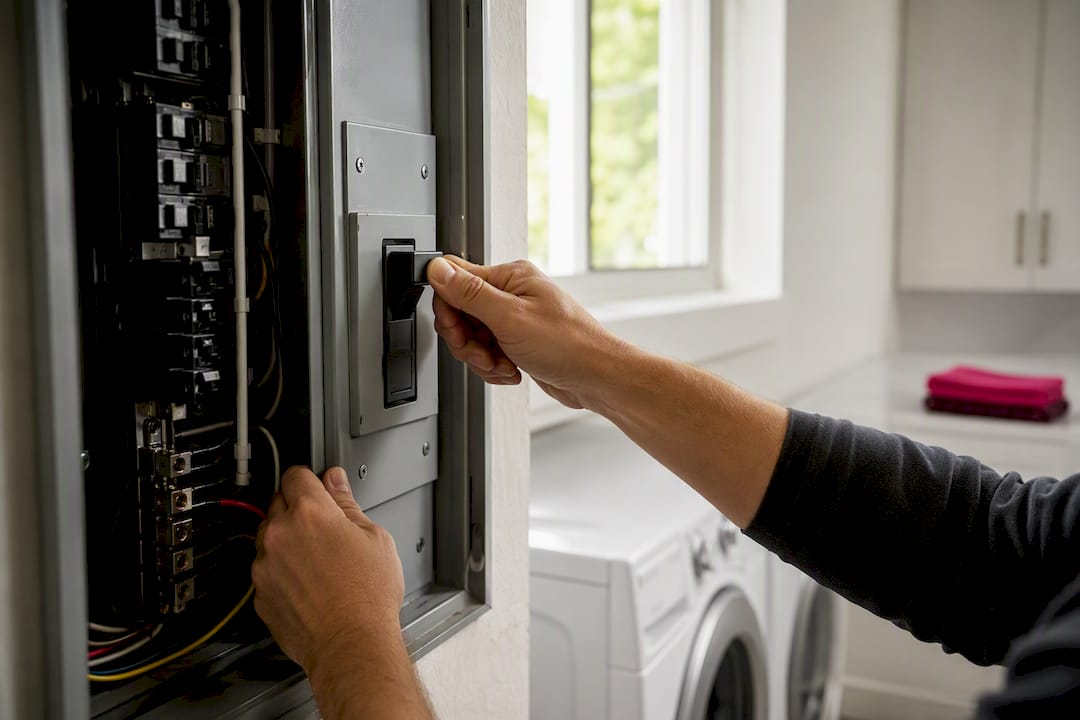
Automatic transfer switch (ATS). An ATS monitors utility voltage constantly. When power drops, it starts the generator (if paired with a standby unit) and switches your home over within seconds, no one needs to be home. Honda’s explainer on transfer switches notes these are commonly paired with standby generators and can be configured for whole-home coverage rather than just selected circuits. Anyone running medical equipment, a home office that can’t go dark, or a property that sits empty for long stretches should lean this way.
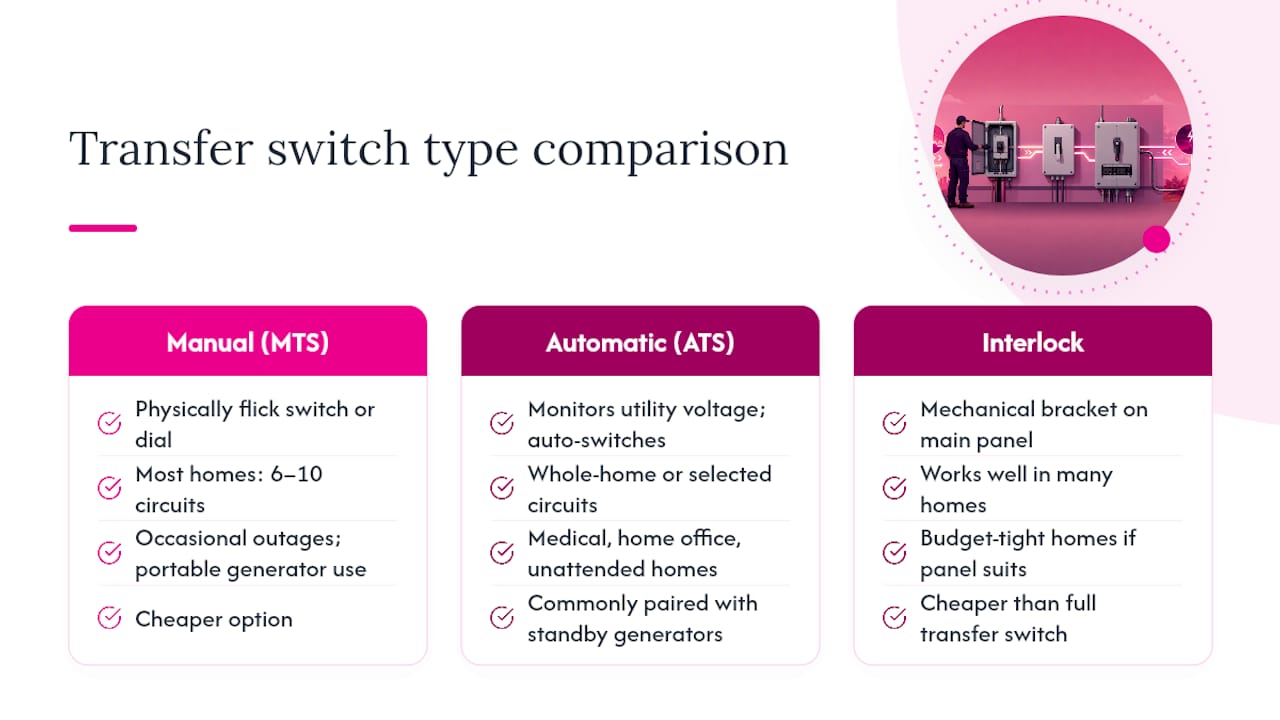
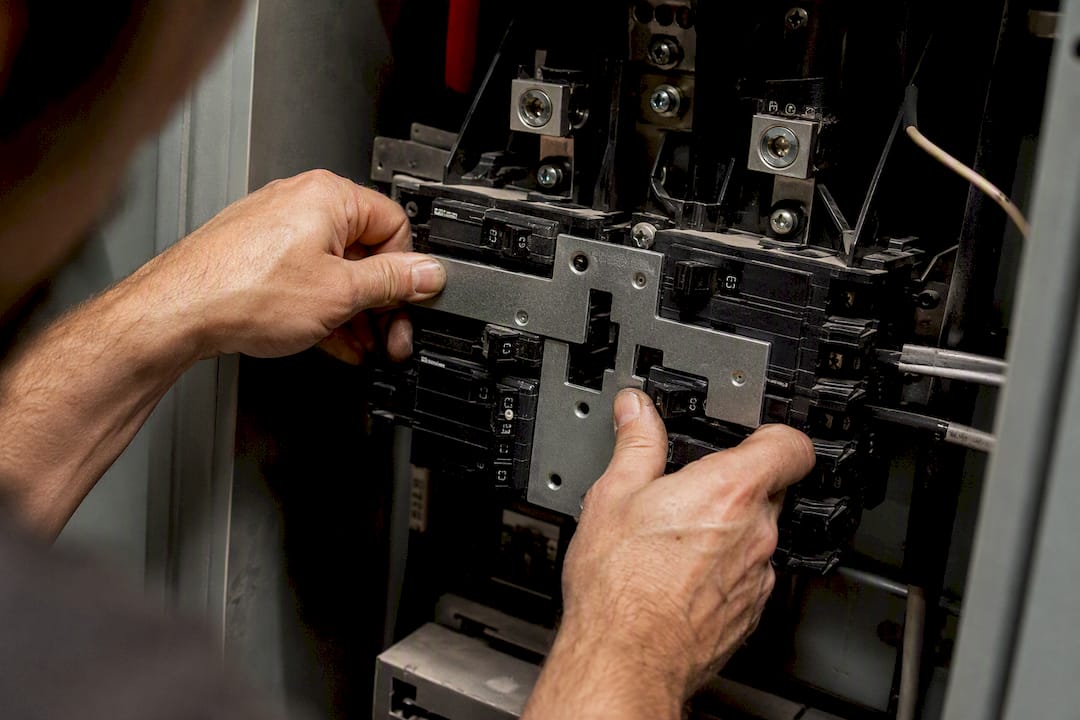
Interlock device. A mechanical bracket fitted to your main panel that physically prevents the main breaker and a generator breaker from being on together. It’s cheaper than a full transfer switch and works well in many homes, but it demands exact panel compatibility, and not every switchboard accepts one.
If you need whole-home or unattended reliability, go ATS. If outages are occasional and you’re running a portable generator, an MTS does the job. If your budget is tight and your panel suits it, ask your electrician whether an interlock is viable.
How do you size a transfer switch for your generator?
Transfer switches carry amp ratings, commonly 30A, 50A, or 63A, and that rating has to match both your generator’s outlet and the inlet cord your electrician fits. Get this wrong and you’ll either bottleneck your generator’s output or overload the switch itself.
Start by ranking your circuits by priority: fridges, pumps, heating, and any medical equipment come first. A typical MTS covers six to ten circuits, so most households don’t need to power everything, just the things that matter during a multi-day outage.
Two compatibility checks matter most:
Consumer Reports notes that portable generators of roughly 5,000 watts or more are realistic candidates for a transfer-switch setup, smaller units often lack the 240V outlet a switch needs. If your property runs three-phase power, that adds another layer of complexity, so give your electrician full switchboard details before they quote.
What does installation involve, and what does it cost?
A typical install follows a clear sequence:
This Old House lays out a comparable installation workflow, covering the same disconnect, mount, wire, and test sequence electricians follow.
Statistic to know: Consumer Reports puts a typical manual transfer switch install, unit plus labour, in the USD $500 to $1,500 range for US homes, with automatic systems costing more. Treat that as a general cost shape rather than a local quote, panel access, rewiring needs, and distance from the switchboard to the inlet all shift the final number, and Australian pricing will differ from US figures.
Most straightforward jobs take a matter of hours rather than days, but book early. Consumer Reports flags that demand spikes before storm season, so electrician lead times stretch out fast once severe weather is forecast. In most jurisdictions, your electrician handles the permit and books the inspector, you shouldn’t need to chase paperwork yourself.
How do you operate a transfer switch safely?
Never run a generator indoors, in a garage, or anywhere near a window or vent. Carbon monoxide builds up fast and silently, and Generac’s owner’s manual is blunt about keeping generators clear of openings with working CO alarms installed nearby.
Pro Tip: Write your circuit priority order on a laminated card next to the transfer switch. In a stressful blackout at 2am, you don’t want to be guessing which breaker runs the sump pump.
The most common mistakes are daisy-chaining extension cords instead of installing a proper switch, oversizing the load beyond what the generator or switch can handle, and skipping permits altogether.
Is an interlock or extension-cord setup ever acceptable?
An interlock can meet code when fitted by a qualified electrician on a compatible panel, and it’s a legitimate cost-saver in the right home. This Old House’s comparison of interlocks versus transfer switches is clear that panel compatibility, not preference, decides whether one works for your setup.
Running extension cords through a window is never a long-term answer. It bypasses isolation entirely, risking back-feed and breaching electrical safety rules. Use an interlock only when a licensed electrician confirms it’s permitted and installs it. Never attempt a DIY interconnect.
Why does the installer matter as much as the switch?
A qualified Level 2 electrician does more than bolt a switch to your panel. They assess your total load, size conductors correctly, fit a weatherproof inlet built for outdoor conditions, and label every circuit so future owners aren’t left guessing.
Expect your installer to carry a current electrical licence, public liability insurance, and the authority to handle permits and inspections on your behalf. Electrical Safety Queensland’s directory is a useful starting point if you want to verify licensing before work begins.
Correct sizing prevents overload. Proper isolation prevents back-feed. Clear labelling means the next electrician who opens your panel knows exactly what they’re looking at.
An installer’s view on backup power planning
Most problems trace back to skipped planning, homeowners buying a generator before checking panel compatibility. On site, priority always goes to life-safety circuits, generator placement for ventilation, and clear labelling. A proper install is usually one visit and safer for it.
Get your transfer switch installed properly, the first time
Hdlevel2electriciansydney gives you something most switchboard jobs skip: a free site inspection before any Level 2 work begins, so you know exactly what your panel needs and what it’ll cost before committing to anything.
Our teams handle the full scope, load assessment, switch or interlock fitment, inlet box wiring, and the permit and inspection process, whether you’re pairing a portable unit with a manual switch or installing a full standby generator with ATS for whole-home coverage. If your household relies on medical equipment or you manage a strata property with shared electrical infrastructure, we can talk through the automation options that suit unattended reliability.
Book a Level 2 electrician for your free site inspection and get a clear quote before storm season fills up the calendar.
Frequently asked questions
If you’re connecting a generator to your home’s wiring rather than just running extension cords to individual appliances, a transfer switch or compliant interlock is required to prevent back-feed and meet electrical safety standards.
Most manual transfer switches suit generators of 5,000 watts or higher, matched to a 30A, 50A, or 63A rating depending on the inlet and cord your electrician fits.
No. Transfer switch installation involves panel work that requires a licensed electrician, both for safety and to satisfy permit and inspection requirements in most areas.
A manual transfer switch (MTS) requires you to flick the switch yourself; an automatic transfer switch (ATS) monitors utility power and switches over on its own, usually paired with a standby generator.
Straightforward jobs typically take a matter of hours, though panel access, rewiring, and inlet placement can extend the timeline. Book ahead of storm season when demand rises.
Sources
Recommended
Powering Your Needs with Expertise
If you’re looking for a reliable, experienced, and prompt electrician, look no further than High Demand Electrical. We cater to all your electrical needs, from routine maintenance to emergency repairs and complete system installations. Our skilled team is committed to providing professional service that ensures your electrical systems run smoothly. Whether it's a small task or a large project, give us a call today. Let us meet all your electrical demands with the quality and reliability you deserve.