How Do Data Centres Connect to Ausgrid, Endeavour Energy or Essential Energy?
How does a data centre actually connect to the electricity network in Sydney? A data centre connects to Ausgrid, Endeavour Energy or, outside the Sydney metro area, Essential Energy through a formal network connection application, a technical feasibility assessment and, almost always, a dedicated high voltage supply arrangement sized well beyond a standard commercial connection. High Demand Electrical works on the low voltage supply side of that connection, the consumer mains, switchboard design and metering that sit on the customer's side of the meter, while the distributor's own high voltage network and any new substation remain that network's own work.
⚡ Quick Answers: Data Centre Network Connections
- Which network serves a Sydney data centre site? Most inner and eastern Sydney sites sit in Ausgrid's area, most of Western Sydney and the Sydney basin's growth corridors sit in Endeavour Energy's area, and Essential Energy covers regional and rural NSW rather than the Sydney metro area itself.
- Does a data centre need its own substation? A site of any real scale almost always needs a dedicated high voltage supply and an onsite substation, which is designed, approved and in most cases owned by the network rather than by the data centre operator.
- How long does a data centre connection take to arrange? Considerably longer than a standard commercial connection, because the distributor has to assess feasibility, confirm there is capacity on the local network, and in some cases carry out augmentation works before a connection offer can be made.
- Is Essential Energy relevant to a Sydney data centre project? Only if the site sits outside the Sydney metro area, since Essential Energy's own network covers regional and rural NSW rather than Ausgrid's and Endeavour Energy's metropolitan areas.
- What does High Demand Electrical actually do on a data centre connection? We handle the low voltage supply side, consumer mains sizing, switchboard design, metering coordination and the network application paperwork, while the distributor's own high voltage works sit outside our scope.
- Who designs the high voltage side of a data centre connection? That work sits with the network itself or with a Level 3 ASP design consultancy and a Level 1 ASP for the physical network assets, not with a standard Level 2 electrical contractor.
1. Work out which network actually serves the site
Before anything else, a data centre project needs to confirm which distributor owns the network at that address. Sydney's metro area is split between Ausgrid, which covers the eastern and inner suburbs, the CBD and the lower north shore, and Endeavour Energy, which covers Western Sydney, the Blue Mountains, the Illawarra escarpment and much of Sydney's outer growth corridors, including several of the precincts where new data centre capacity is being built. Essential Energy's own network covers regional and rural NSW rather than the Sydney metro area, so it only becomes relevant if a project sits well outside Sydney itself.
Getting this wrong at the start wastes real time, since each distributor runs its own connections portal, its own technical standards and its own queue for feasibility assessments. You can check your network area in seconds with our postcode checker before lodging anything, which is worth doing even at the earliest planning stage of a data centre or large commercial project.
2. Lodge a connection application and go through feasibility assessment
A data centre connection starts as a formal application to the relevant distributor rather than a standard new connection request. Ausgrid and Endeavour Energy both run dedicated major or large connections processes for loads of this size, separate from their standard residential and small commercial connection channels. The distributor's own engineers assess whether the local network has spare capacity, what augmentation would be needed if it does not, and what size and type of supply the site can realistically be offered.
This feasibility stage is where genuine timeframes get set. A straightforward site in an area with existing spare capacity moves faster than a site that needs new transmission or sub transmission augmentation, which is increasingly the case as data centre demand grows across the Sydney basin. Network planning bodies have been explicit that data centre load growth is now a major driver of network investment decisions in NSW, which is part of why early engagement with the distributor matters more for this sector than almost any other commercial connection type.
3. Expect a dedicated high voltage supply and an onsite substation
A data centre of any meaningful scale draws far more power than a standard commercial building, so a low voltage connection is rarely an option. Almost every genuine data centre connection involves a dedicated high voltage supply from the network, stepped down to usable voltages through an onsite substation. That substation, and the high voltage switchgear and protection equipment inside it, sits squarely in the distributor's own domain, or is delivered by a Level 1 ASP for the physical network assets and a Level 3 ASP for the protection and design studies behind it.
High Demand Electrical does not claim capability on that high voltage substation or transmission side of the project. Our own scope on a data centre job is the low voltage side of the boundary, which is still a substantial undertaking in its own right: the consumer mains and switchboards that take supply from the network's metering point and distribute it through the building. Where a project genuinely needs that higher level network design or physical asset work, our background knowledge of Level 3 design and Level 1 network installation work exists to help explain how the whole connection fits together, not as services we deliver ourselves at that scale.
4. Size the switchboard and consumer mains for genuine maximum demand
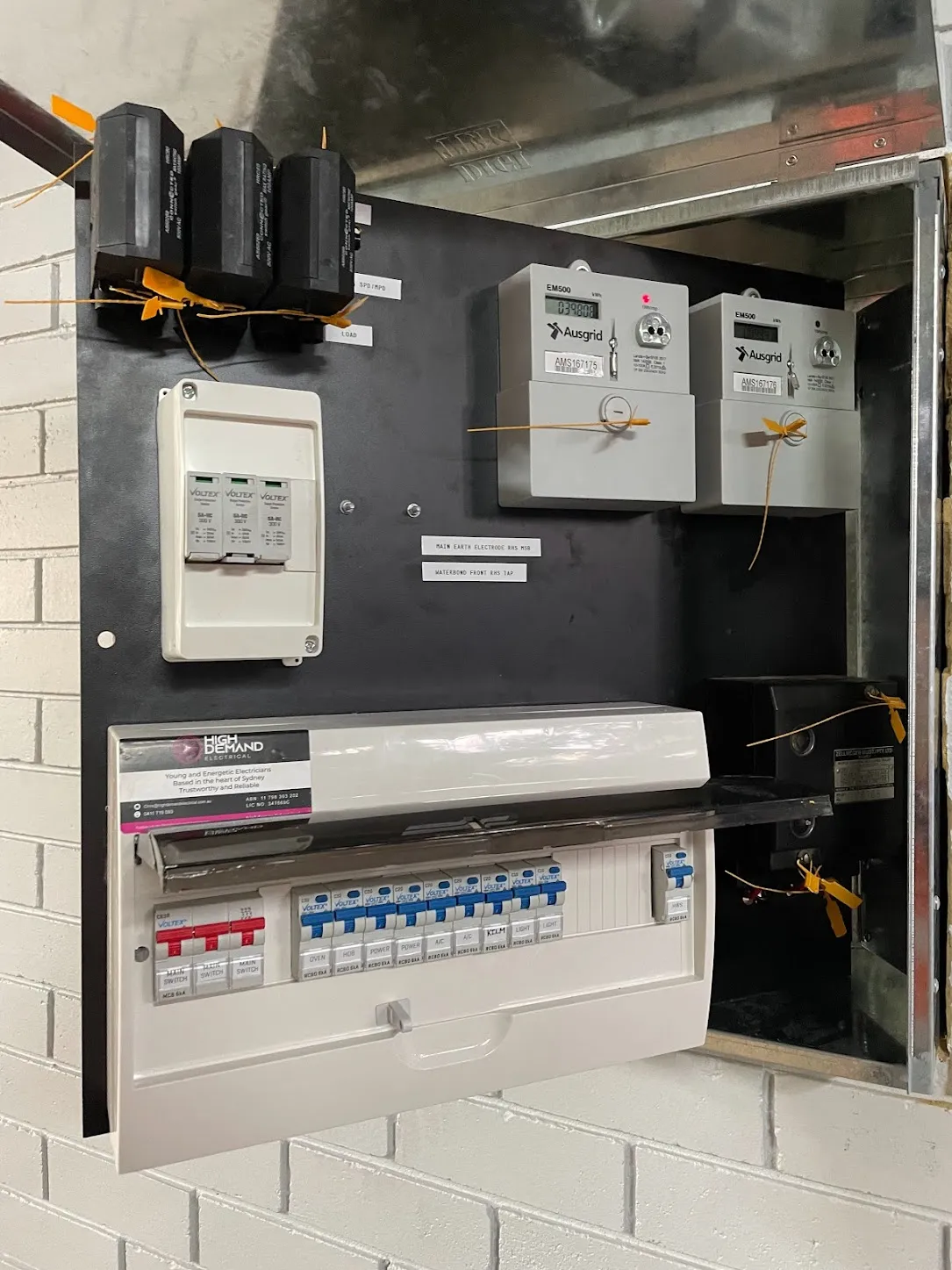
Once the network side of the connection is settled, the low voltage design has to match it. A data centre switchboard is sized against a maximum demand calculation that accounts for IT load, cooling load, redundancy and future growth, not just the equipment running on day one. This is where our own switchboard upgrades and power supply upgrades work genuinely sits: designing and installing the low voltage switchboard, distribution boards and consumer mains that take supply from the network's metering point and distribute it safely and compliantly through plant rooms, server halls and support areas.
Cable sizing for a data centre feed follows the same AS/NZS 3008 principles as any other installation, just at a scale most residential and light commercial jobs never reach. Voltage drop, thermal derating for cables grouped in tight plant room runs, and short circuit withstand all matter more as current ratings climb, which is exactly why this stage of a data centre project needs genuine Level 2 ASP electrical design rather than a generic commercial fit out approach.
5. Plan metering at data centre scale
Metering on a data centre connection usually goes well beyond a single meter at the point of supply. Large sites commonly need check metering at multiple points through the building, both for the network's own billing purposes and for the operator's own internal load monitoring across different tenant areas or redundant supply paths. Coordinating metering requirements with the network early avoids a situation where switchboard design has to be reworked later to fit metering equipment that was not planned for from the start, which is a genuinely common and avoidable problem on large commercial connections. Our own smart meter upgrades service covers the metering side of this work directly.
6. Stage the connection around construction, not after it
A data centre build is rarely a single connection event. Most projects need a temporary builder supply for construction, staged energisation as different halls or pods come online, and a clear handover plan from the construction supply to the permanent supply. Leaving network engagement until construction is already underway is one of the most common causes of expensive delay on large commercial projects, since the distributor's own feasibility and design review timeframes do not compress just because a builder's program is tight. Our consumer mains installation service covers the staged connection work this usually involves, from a temporary builder supply through to the permanent feed.
A smaller server room or comms room within an existing building follows a lighter version of this same logic, since it still needs properly sized circuits, dedicated cooling and a maximum demand assessment even without a dedicated network connection. Our related post on server room and data room electrical requirements covers that smaller scale in more depth, alongside our wider look at why data centres use so much power and the practicalities of a data centre power supply upgrade. A genuinely redundant data centre supply, built around UPS and generator backup, still has to be sized against the same network connection and maximum demand principles covered here.
Why It's Level 2 ASP Work
Everything on the low voltage side of a data centre connection, the consumer mains, the switchboard and distribution board design, the metering coordination and the network application paperwork, needs to be carried out or certified by a Level 2 Accredited Service Provider. That accreditation is what allows this work to be done safely and compliantly without waiting on the network's own crews for every piece of it, which matters a great deal on a project where schedule slippage is measured in real money. A full electrical safety inspection of the completed low voltage installation is also worth building into the project handover before the site goes live.
How High Demand Electrical Helps
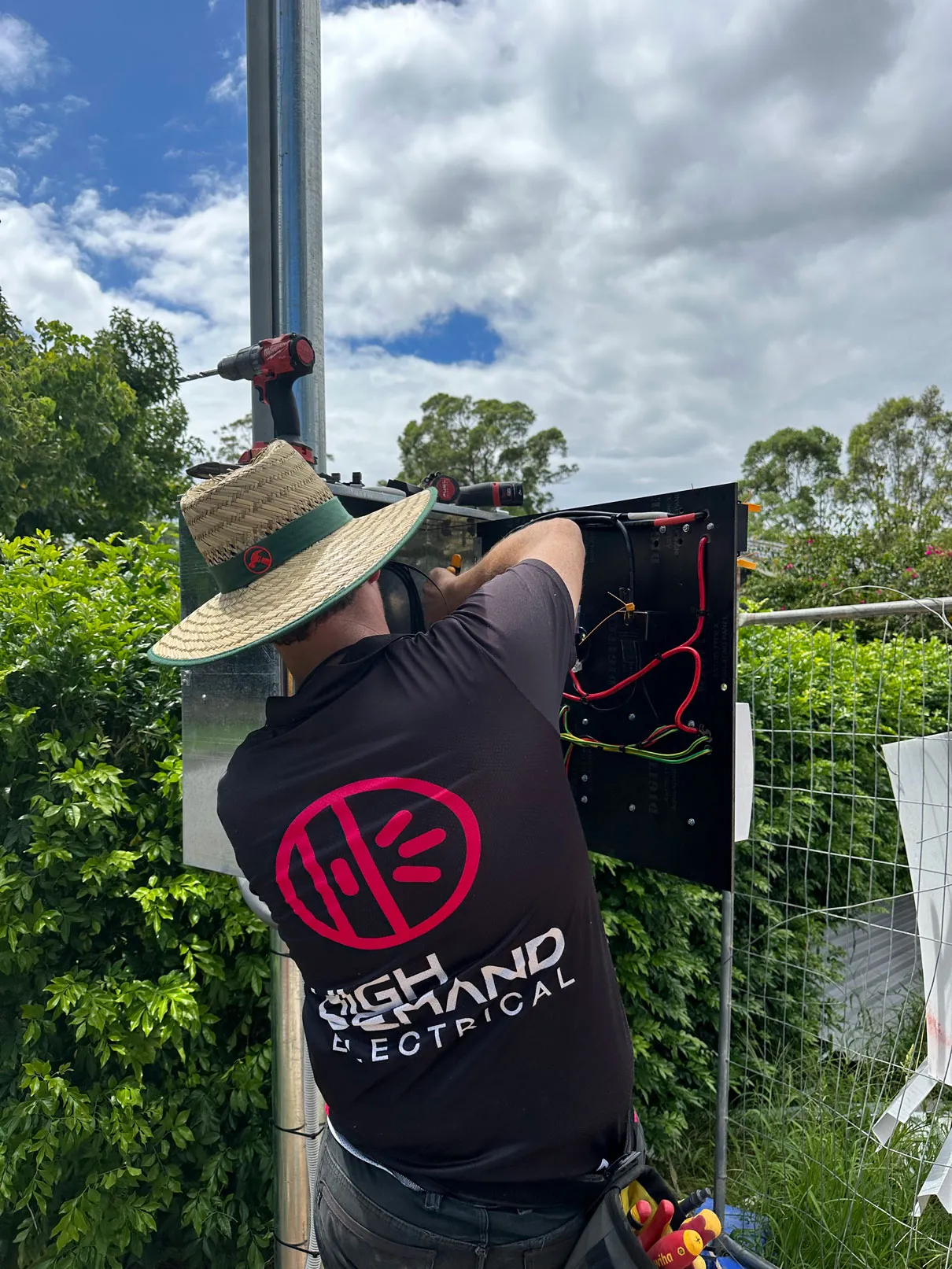
High Demand Electrical is one of Sydney's most trusted Level 2 ASPs for the low voltage supply side of large commercial and data centre connections. We manage the network application process with Ausgrid and Endeavour Energy, design and install consumer mains and switchboards sized to genuine maximum demand, and coordinate metering with the network so it is right the first time. We are upfront about where our own scope ends: the high voltage substation and transmission side of a data centre project sits with the network itself or a Level 1 and Level 3 ASP specialising in that work, and we will tell you plainly when a project needs that kind of input alongside our own.
Data Centre Network Connection FAQs (Sydney)
Can High Demand Electrical design the high voltage substation for a data centre?
No. Our accreditation and our own project scope cover the low voltage supply side only, the consumer mains, switchboards and metering. The high voltage substation and network assets are the distributor's own work or a Level 1 and Level 3 ASP's specialist scope. See our switchboard upgrades service for where our own work on a data centre project actually sits.
How do I find out whether a site is in Ausgrid or Endeavour Energy's area?
Check your network area in seconds with our postcode checker, which covers both Ausgrid's and Endeavour Energy's Sydney metro boundaries directly. Check your network area in seconds with our postcode checker.
Does a small edge data centre or server room need the same connection process?
Not usually. A smaller server room or edge facility can often be accommodated on a standard low voltage commercial connection with a well designed switchboard, rather than needing a dedicated high voltage supply. See our power supply upgrades service for that smaller scale work.
Why does the network application process take so much longer for a data centre than a normal commercial building?
Because the distributor has to assess whether the local network has spare capacity for a load this size, and if it does not, plan and approve augmentation works before it can make a connection offer at all. That feasibility work has no real shortcut.
What should a data centre operator do first, before any design work starts?
Confirm the network area, then lodge an early enquiry with the relevant distributor to get a realistic read on feasibility and timeframes before committing to a site specific design. See our Level 3 design page for background on the design studies a project of this scale typically needs.
If you are planning a data centre, server room or large commercial connection in Sydney, get a power supply upgrade quote from High Demand Electrical or call 0402 559 777 to talk through the low voltage side of your connection. Every job like this needs a proper site assessment before scope or pricing can be confirmed.
Need Help Fast?
Related Services

Powering Your Needs with Expertise
If you’re looking for a reliable, experienced, and prompt electrician, look no further than High Demand Electrical. We cater to all your electrical needs, from routine maintenance to emergency repairs and complete system installations. Our skilled team is committed to providing professional service that ensures your electrical systems run smoothly. Whether it's a small task or a large project, give us a call today. Let us meet all your electrical demands with the quality and reliability you deserve.

Licensed Level 2 ASP electricians across Sydney. Same-day service and 24/7 emergency response.
Licence 397193C
ABN 87 051 836 527
