Brownout vs blackout: what every Australian homeowner needs to know
A brownout is a sustained drop in voltage — typically 10–25% below normal — while a blackout is a complete loss of supply, zero volts. Knowing which one you're dealing with changes what you do next.
Three immediate priorities, whichever event you're facing:
- Safety first. If anyone depends on life-support equipment and it has stopped working, call 000 immediately.
- Protect sensitive equipment. Unplug computers, televisions, and other electronics until supply stabilises or is restored.
- Confirm the scope. Check whether your neighbours have power. If they do and you don't, the fault is likely on your property, not the grid.
Table of Contents
- What is a brownout and how will you notice it?
- What causes brownouts in Australia?
- What is a blackout, and what causes one?
- Brownout vs blackout: side-by-side comparison
- What damage or risks should you expect from each event?
- What to do during a brownout or a blackout
- How to protect your home from brownouts and blackouts
- When should you call your distributor vs a licensed electrician?
- How long do brownouts and blackouts usually last, and what about costs?
- Key takeaways
- What licensed electricians actually see in the field
- Sydney's trusted Level 2 electricians for outage response and protection
- Where to get official outage information and further guidance
What is a brownout and how will you notice it?
A brownout is a sustained reduction in supply voltage, not a flicker or a momentary sag. According to electrical supply definitions, voltage can fall roughly 10–25% below normal and remain there for minutes to hours. The grid keeps running, but at reduced capacity.
At home, a brownout typically shows up as:
- Lights dimming noticeably or flickering without going out completely
- The fridge or air conditioner compressor sounding laboured or cycling oddly
- Electronics behaving erratically, restarting, or displaying low-power warnings
- Ceiling fans running slower than usual
One complication: the term "brownout" originates from incandescent lamps visibly dimming as voltage dropped. Modern LED lighting barely dims under the same conditions, so you may not notice anything obvious until an appliance starts misbehaving.
A brownout is also distinct from a momentary voltage sag. A sag lasts seconds; a brownout persists. If your lights dip briefly during a thunderstorm and recover, that's a sag. If they stay dim for 20 minutes, that's a brownout.
Pro Tip: Check your neighbours before calling anyone. If their lights look normal and yours are dim, the problem is almost certainly on your property, not the network. Look at your main switchboard for tripped breakers or a discoloured service fuse, but do not open the consumer unit itself.
What causes brownouts in Australia?
Brownouts have two broad origins: grid-level decisions and property-level faults.
Grid causes
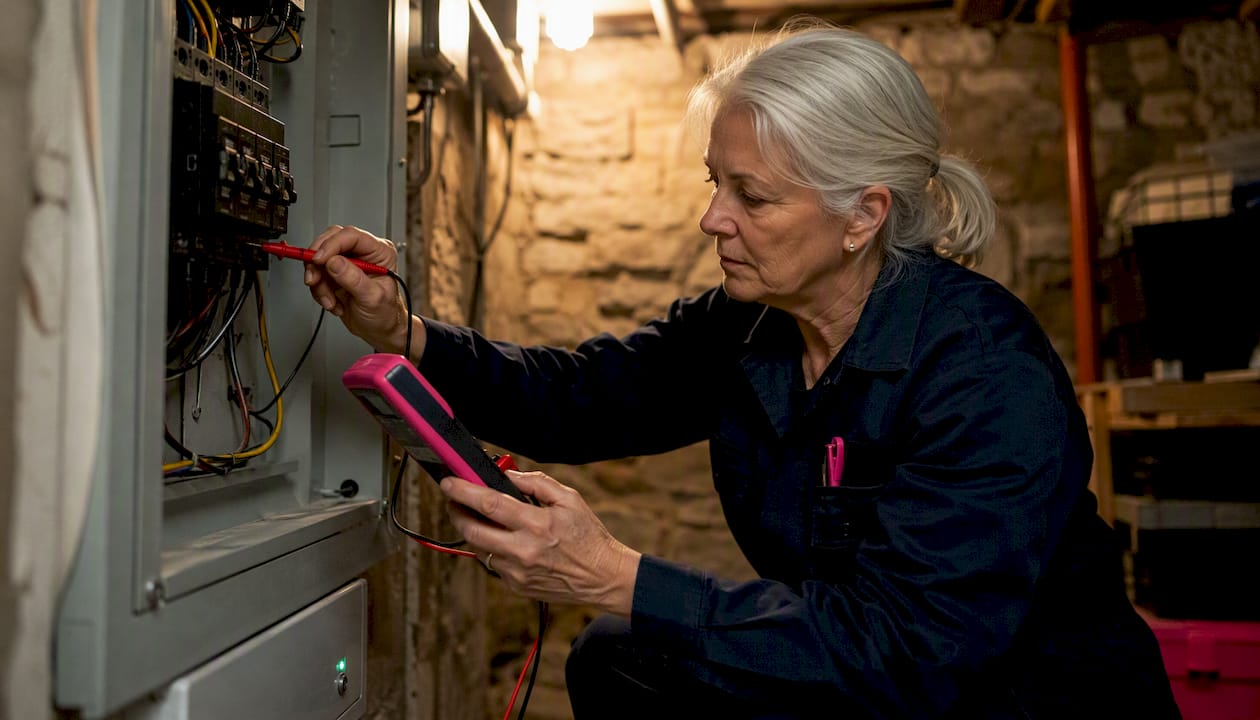
AEMO and distribution network operators sometimes initiate deliberate voltage reductions during extreme peak demand, particularly on heatwave days when air conditioner load pushes the network close to its limits. This is a controlled measure to avoid a full blackout across a wider area. Transformer capacity limits and high-load periods on suburban feeders can also produce unintentional voltage drops.
Property causes
- Overloaded circuits drawing more current than the wiring can handle cleanly
- Corroded or loose connections at the meter box, switchboard, or service fuse
- A failing main switch or deteriorating service fuse
- Damage to a private power pole or the service line between the pole and your home
Brownouts tied to grid demand tend to affect whole streets or suburbs and typically resolve within minutes to a few hours once load eases. A brownout affecting only your property — especially one that recurs — points to a wiring or connection fault that needs professional diagnosis.
Pro Tip: Before calling your distributor, walk outside and check whether the street lights and neighbouring homes look normal. Then glance at your meter box for any visible signs of heat damage or a tripped main switch. Stop there — do not open the consumer unit or touch any service fuse.
What is a blackout, and what causes one?
A blackout is a total loss of electrical supply. Voltage drops to zero and everything stops. Unlike a brownout, there is no partial power, no dim lights, no slow fans. It is simply off.
Common causes in Australia include:
- Severe weather. Storms, high winds, and flooding damage overhead lines, poles, and substations. This is the most frequent cause of unplanned outages in many parts of NSW.
- Equipment failure. Transformer faults, switchgear failures, or cable faults can take out supply to hundreds or thousands of homes at once.
- Rolling blackouts. A planned variant where AEMO or distributors rotate outages across zones to manage extreme grid stress, with advance notice where possible.
- Safety isolation. Network operators sometimes cut supply deliberately to protect crews working on damaged infrastructure.
The scale and duration of a blackout depend entirely on what caused it. A localised cable fault might affect one street for two to four hours. A major storm event can leave regional areas without power for days. Rolling blackouts, by contrast, are typically brief and scheduled.
First signs that confirm a total loss rather than a brownout:
- Every light and appliance in the home is completely off
- The digital display on your oven, microwave, and hot water system is blank
- Neighbours on the same street are also without power
- Your distributor's outage map shows an active fault in your area
Brownout vs blackout: side-by-side comparison
| Feature | Brownout | Blackout |
|---|---|---|
| What it is | Sustained voltage reduction below normal levels | Complete loss of supply (zero volts) |
| Typical causes | Peak demand, load control, corroded connections, overloaded circuits | Severe weather, equipment failure, rolling blackouts, safety isolation |
| First signs | Dimming lights, sluggish appliances, erratic electronics | Everything off, blank displays, no power at all |
| Primary risks | Motor/compressor damage, overheating, data loss | Food spoilage, loss of heating/cooling, restoration surge damage |
| Typical duration | Minutes to hours | Hours to days (varies by cause and location) |
| Immediate action | Unplug sensitive gear, switch off heavy appliances | Safety first, torch not candles, keep fridge closed |
| Who to contact | Distributor if widespread; Level 2 electrician if only your property | Distributor for outage; Level 2 electrician for storm or internal damage |
Quick identification cues:
- Lights dim but on, appliances sluggish → likely a brownout
- Everything completely off, neighbours also affected → likely a blackout
- Everything off, neighbours have power → property fault, call a licensed electrician
- Lights dim, neighbours unaffected → property fault, call a licensed electrician
What damage or risks should you expect from each event?
The risks differ significantly, and understanding them helps you decide what to unplug and what to leave running.
Brownout risks
The primary threat in a brownout is to inductive loads: motors and compressors. When voltage drops, a motor draws more current to maintain its speed and torque. Sustained operation under those conditions overheats the windings, and prolonged exposure can cause permanent motor failure. Your fridge compressor, air conditioner, pool pump, and washing machine motor are all vulnerable. Restoration after a brownout or blackout also commonly produces a voltage surge that can damage electronics if they are still plugged in.
Blackout risks
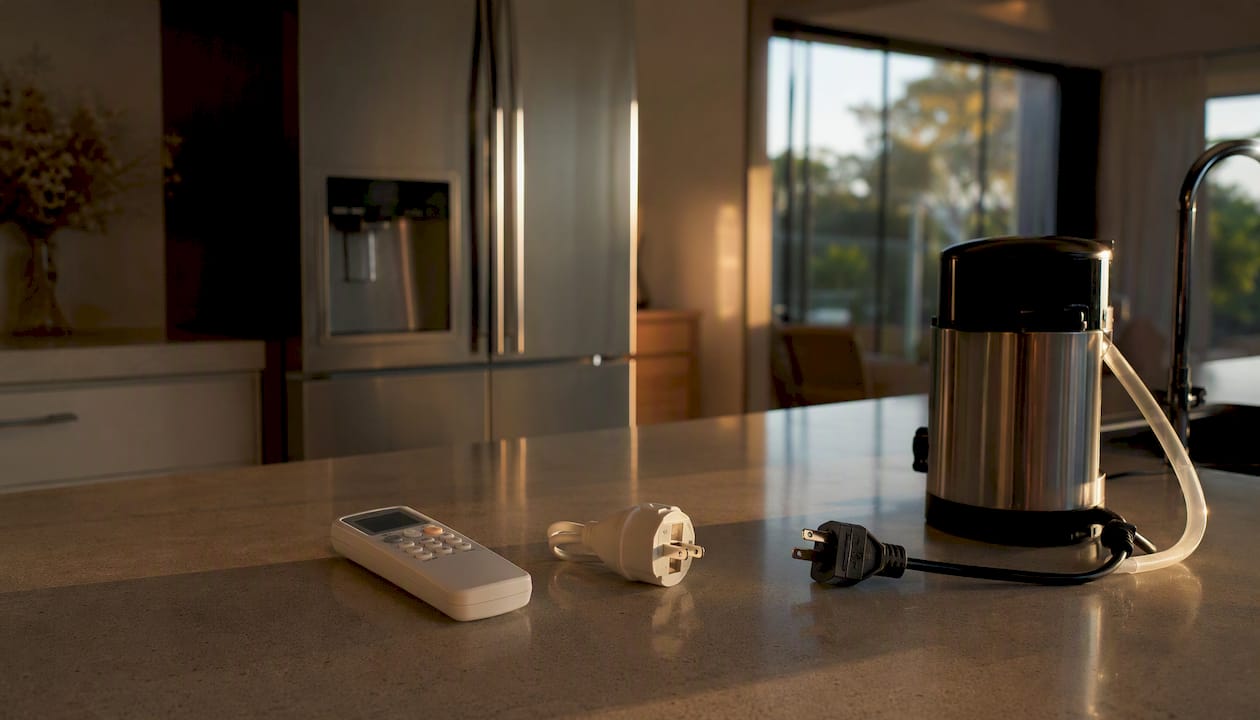
A blackout itself does not damage most appliances — the risk comes from what happens when power returns. That restoration surge can fry unprotected electronics. Beyond hardware, a blackout creates practical hazards: food spoilage in fridges and freezers if the outage extends beyond a few hours, loss of heating or cooling during extreme weather, and safety risks from people using candles instead of torches.
Household items at high risk during a brownout:
- Fridge and freezer compressors
- Air conditioning units
- Pool and bore pumps
- Washing machine and dishwasher motors
Items generally safer during a blackout (once unplugged before restoration):
- Televisions and computers (no voltage stress, just off)
- LED lighting
- Small appliances with no motors
Pro Tip: During a brownout, switch off and unplug your air conditioner, fridge, and any pump motors immediately. Let voltage stabilise before restarting them. This single step prevents most of the compressor damage electricians see after brownout events.
What to do during a brownout or a blackout
During a brownout
- Switch off and unplug air conditioners, fridges, pumps, and washing machines.
- Unplug computers, televisions, and other sensitive electronics.
- Turn off heavy appliances at the wall, not just at the remote or power button.
- Leave one light on so you can tell when normal voltage returns.
- Check whether neighbours are affected — if not, contact a licensed electrician.
- If widespread, check your distributor's outage portal for updates.
During a blackout
- Stay calm and locate torches. Do not use candles near curtains or papers.
- Keep the fridge and freezer closed. A full freezer holds temperature for roughly 24–48 hours if unopened.
- Switch off and unplug sensitive electronics and appliances before power returns.
- Leave one switch in the "on" position so you know when supply is restored.
- Once power returns, wait two to three minutes before reconnecting sensitive devices to allow voltage to stabilise.
- Check your distributor's outage map or call their faults line for restoration updates.
Safety callout for medical equipment: If you or a household member relies on life-support or critical medical equipment and it has lost power, call 000 immediately. You can also register your household with your electricity distributor's Life Support Programme in advance, which flags your address for priority restoration and advance notice of planned outages.
For official outage updates in NSW, check Ausgrid, Endeavour Energy, or Jemena depending on your area, or visit AEMO's website for grid-level information. Your electricity bill lists your local distributor's faults number.
How to protect your home from brownouts and blackouts
The right protection depends on what you're trying to safeguard and how much disruption you can tolerate.
Whole-of-home surge protection
Installed at the switchboard, a surge protection device (SPD) absorbs voltage spikes on restoration. It does not prevent brownout damage to motors, but it protects electronics from the surge when power returns. A licensed electrician installs these as part of a switchboard upgrade.
Line-interactive UPS with automatic voltage regulation (AVR)
A UPS with AVR boosts under-voltage before switching to battery. UPS units typically boost when voltage falls below a set threshold and switch fully to battery at a lower cut-off, providing clean power to computers and medical equipment during both brownouts and blackouts. Suitable for home offices and critical medical devices.
Inverter battery systems
Whole-home or partial-home battery storage (such as a home battery connected to solar) can carry critical loads through both events. Installation requires a licensed electrician and, depending on the system size, notification to your distributor.
Portable or installed generators
Generators provide backup power during extended blackouts. Portable units need careful placement to avoid carbon monoxide risk. Installed standby generators require a licensed Level 2 electrician for connection to the home's wiring and may need distributor approval.
Practical habits
- Shut down computers and unplug electronics before a forecast storm or heatwave.
- Keep the freezer as full as possible (water bottles fill gaps cheaply).
- Wait two to three minutes after restoration before reconnecting sensitive devices.
- Register with your distributor if anyone in the home uses life-support equipment.
Pro Tip: Installing a generator, battery system, or safety switch upgrade is not a DIY job. These works require a licensed Level 2 electrician and, in many cases, notification to your distribution network operator. Getting this wrong can void your home insurance and create serious safety risks.
When should you call your distributor vs a licensed electrician?
This is the question most homeowners get wrong, and the answer has real consequences for how quickly the problem gets fixed.
Call your electricity distributor when:
- Neighbours on the same street or block are also affected
- Your distributor's outage map shows an active fault in your area
- You have received a rolling blackout notice from AEMO or your distributor
- The outage follows a major storm and affects multiple properties
Call a licensed Level 2 electrician when:
- Your neighbours have normal power but yours is low or absent
- The fault recurs at your property even after the network has been restored
- You can see visible damage to your private power pole, service line, or meter box
- Your service fuse has blown or shows signs of heat damage
- You experience persistent low voltage only at your address
NSW government guidance on accredited service providers is clear that work on the service line between the network and your meter, private poles, and metering equipment requires an accredited Level 2 electrician, not a standard licensed electrician. This distinction matters for both safety and compliance.
For a step-by-step guide to spotting electrical faults at your Sydney property before calling a professional, a quick visual check of your switchboard and meter box is a reasonable first step — but it ends there.
Pro Tip: A power-quality logger can capture the duration and frequency of voltage events at your property, giving an electrician the data to recommend the right fix rather than guessing. Ask your Level 2 electrician about this before committing to expensive equipment upgrades.
Call 000 immediately if:
- Life-support equipment has failed due to the outage
- There is visible arcing, fire, or smoke at the meter box or switchboard
- A power line has fallen on or near your property
For guidance on who to call in an electrical emergency, the priority order is: 000 for immediate danger, your distributor for network faults, and a licensed Level 2 electrician for property-side issues.
How long do brownouts and blackouts usually last, and what about costs?
Brownouts tied to peak demand typically resolve within minutes to a few hours once grid load eases. A property-side brownout caused by a corroded connection or failing service fuse can persist indefinitely until repaired.
Blackouts vary far more. A localised cable fault might be resolved in two to four hours. Storm damage affecting substations or transmission infrastructure can extend outages to days, particularly in regional areas where crew access is difficult. AEMO and distributors publish estimated restoration times on their outage maps, though these are estimates and can change as crews assess damage.
Factors that affect restoration time:
- The cause and scale of the event
- Network redundancy and the availability of alternative supply routes
- Weather conditions affecting crew access
- Remoteness of the affected area
- Whether private infrastructure (poles, service lines) needs repair before reconnection
Who pays for what:
- Network faults on the distributor's infrastructure are repaired at no cost to the homeowner.
- Damage to private power poles, service lines, meter boxes, and internal wiring is the homeowner's responsibility.
- Switchboard repairs, safety switch upgrades, and surge protection installations are homeowner costs.
Always get a written quote from a licensed electrician before authorising repair or upgrade work. Reputable contractors provide itemised quotes so you know exactly what you're paying for. High Demand Electrical offers free site inspections for Level 2 work, which means you get a clear picture of the scope and cost before committing.
Key takeaways
Brownouts damage motors and compressors through sustained low voltage; blackouts create safety and service-loss risks, with the greatest hardware threat arriving in the restoration surge when power returns.
| Point | Details |
|---|---|
| Brownout vs blackout defined | A brownout is a voltage drop below normal levels; a blackout is total supply loss at zero volts. |
| Protect inductive loads first | Switch off fridges, air conditioners, and pumps immediately during a brownout to prevent motor damage. |
| Neighbour check is your fastest diagnostic | If neighbours have power and you don't, the fault is on your property — call a Level 2 electrician. |
| Restoration surge is real | Unplug sensitive electronics before power returns; wait two to three minutes after restoration before reconnecting. |
| High Demand Electrical for property-side faults | For service fuse issues, private pole damage, or persistent low voltage, High Demand Electrical provides certified Level 2 diagnosis and repair in Sydney. |
What licensed electricians actually see in the field
Most homeowners wait too long before calling a professional, and that delay is usually what turns a manageable repair into a costly one. The most common scenario: a fridge compressor that ran through a brownout for an hour before anyone noticed, then failed three weeks later. The homeowner assumes the fridge is just old. The electrician finds burnt windings and a service fuse that had been running hot for months.
The other pattern worth flagging is the DIY switchboard inspection. A visual check of your meter box from the outside is reasonable. Opening the consumer unit to inspect or replace fuses is not, regardless of how confident you feel. The service fuse on the network side of your meter carries live voltage that cannot be isolated from within your home. That is precisely the work Level 2 credentials exist for.
If your property experiences recurring low voltage or unexplained appliance failures, get a licensed electrician to run a power-quality log before you replace any equipment. The data often reveals a loose connection or a failing service fuse that costs far less to fix than a new air conditioner compressor.
Sydney's trusted Level 2 electricians for outage response and protection
When a brownout or blackout reveals a fault on your property, the difference between a quick fix and a prolonged outage often comes down to who you call. High Demand Electrical delivers certified Level 2 electrician services across Sydney, 24 hours a day, seven days a week, with free site inspections for Level 2 work so you know the scope before any work begins.

Services available for brownout and blackout response:
- Emergency fault finding and power restoration for urgent outages
- Service fuse replacement, private power pole repair, and metering work
- Switchboard upgrades and surge protection installation
- Backup power and battery system installation for critical and medical loads
- Electrical safety inspections and written quotes for internal defects
With over 300 five-star reviews and full compliance with NSW electrical standards, High Demand Electrical is the team Sydney homeowners and businesses call when the network fault is ruled out and the problem is clearly on their side of the meter. Call 0402 559 777 or book online today for a same-day response.
Where to get official outage information and further guidance
For live outage maps, restoration updates, and Life Support Programme registration, contact your local distribution network operator directly. Your electricity bill lists the correct distributor for your address.
- Australian Energy Market Operator (AEMO) — grid-level information, rolling blackout notices, and market updates for the National Electricity Market
- Ausgrid — distribution network operator for Sydney, the Central Coast, and the Hunter
- Endeavour Energy — distribution network operator for Greater Western Sydney, the Illawarra, and the Blue Mountains
- Jemena — distribution network operator for north-western Sydney suburbs
- NSW Fair Trading — verify your electrician's licence before authorising any work
Powering Your Needs with Expertise
If you’re looking for a reliable, experienced, and prompt electrician, look no further than High Demand Electrical. We cater to all your electrical needs, from routine maintenance to emergency repairs and complete system installations. Our skilled team is committed to providing professional service that ensures your electrical systems run smoothly. Whether it's a small task or a large project, give us a call today. Let us meet all your electrical demands with the quality and reliability you deserve.