AI vs Traditional Data Centres: What's the Power Difference?
What is the power difference between an AI data centre and a traditional one? An AI data centre can draw five to ten times more power per rack than a traditional enterprise facility, because GPU servers used for AI training and inference run far hotter and denser than standard computing hardware. That difference changes almost everything downstream: the cooling system, the switchboard, the cabling and the size of electrical supply a site needs from Ausgrid, Endeavour Energy or Essential Energy.
⚡ Quick Answers: AI vs Traditional Data Centres
- How much more power does an AI rack use? A traditional enterprise rack commonly draws about 5 to 15 kilowatts, while a rack built for AI work is commonly quoted from around 40 kilowatts up to 100 kilowatts or more.
- Why does AI hardware use so much more power? GPU servers used for AI training and inference run continuously at very high utilisation, and GPUs themselves draw far more power per chip than the processors in a typical enterprise server.
- Does this change the cooling system? Often yes. Many AI halls move from air cooling to liquid cooling at the rack because air alone struggles to remove heat at that density.
- Does it change the electrical supply needed? Yes. Higher density means heavier cabling, bigger switchboards and, in many cases, a larger network connection application to the local distributor.
- Is this something High Demand Electrical handles directly? We handle the low voltage supply side: consumer mains, switchboard upgrades and network applications to Ausgrid, Endeavour Energy and Essential Energy. High voltage substation and transformer work sits with specialist Level 1 and Level 3 providers.
- Is Australia's data centre demand actually growing because of AI? Yes. AEMO estimates Australia's roughly 165 data centres use about 5 terawatt hours a year today, and forecasts this climbing to about 34 terawatt hours by 2035 to 2036, with AI workloads a major driver of that growth.
1. Power density is the real difference, not just total size
A large traditional data centre and a large AI campus can occupy similar floor space and still draw wildly different amounts of power, because the difference sits at the rack, not the building. A traditional enterprise rack running general business applications, file storage or standard virtual machines commonly draws about 5 to 15 kilowatts. A rack filled with GPU servers for AI training or inference is now commonly quoted from around 40 kilowatts up to 100 kilowatts or more. Ten traditional racks at 8 kilowatts is a 80 kilowatt IT load. Ten AI racks at 60 kilowatts is 600 kilowatts in the same floor area, and that difference flows straight through to cabling, switchboard busbar rating and the size of supply the site needs from the network.
2. Why GPU workloads run so much hotter
A GPU built for AI training is designed to run thousands of calculations in parallel at sustained high utilisation, which is a very different load profile to a general purpose server that spends much of its time idle or lightly loaded. Training a large model can mean weeks of GPUs running close to their maximum rated power continuously, rather than the bursty, intermittent load a traditional enterprise workload produces. That constant high draw is what pushes rack density up so sharply, and it is also why AI hardware generates so much more heat per square metre of floor space than the equipment it is replacing.
3. Cooling shifts from air to liquid at high density
Traditional data centres have relied on air cooling for decades: computer room air handlers, chilled water loops and contained hot and cold aisles moving heat away from racks running at modest density. Our guide on why cooling uses so much power in a data centre covers how that process works and why it is usually the largest single contributor to a facility's overhead. At AI level density, air alone often cannot remove heat fast enough, which is why many new AI halls move to direct liquid cooling at the rack, either cold plates attached to the GPUs themselves or full immersion systems. Liquid cooling can handle far higher density per rack, but it also changes the mechanical and electrical design of the room completely compared with a traditional air cooled hall.
4. What it does to Power Usage Effectiveness
Our explainer on what PUE is and why it matters covers the standard industry measure of how much power goes to overhead rather than computing. Older air cooled halls are often quoted around 1.5 or higher, while modern liquid cooled AI facilities are often quoted between about 1.1 and 1.2, since liquid cooling removes heat more efficiently per watt than moving large volumes of air. That said, a lower PUE on an AI site does not mean a smaller electrical bill. A facility with a better PUE but five times the rack density can still use far more total power than an older, less efficient traditional hall, because the IT load itself has grown so much larger.
5. Cable sizing and switchboard design at AI density
Higher power density means more current flowing through the same floor area, and cable selection has to follow AS/NZS 3008 regardless of whether the load is traditional enterprise computing or AI training. A hall designed years ago for 8 kilowatt racks cannot simply have AI servers dropped into it. The sub mains feeding each row, the switchboard busbar rating and the protection devices all need reassessing against the new maximum demand, and in many cases the existing switchboard needs replacing entirely rather than just having extra capacity added. This is standard electrical design work grounded in measured load, not a guess based on how the room used to perform.
6. Why the network connection often needs revisiting
Moving from a traditional to an AI focused fit out frequently means the site's overall maximum demand grows well beyond what the original consumer mains and network connection were sized for. Depending on how large the increase is, that can mean a straightforward power supply upgrade through the existing connection, or a fresh network application to Ausgrid, Endeavour Energy or Essential Energy to confirm the local network can actually deliver the extra capacity. Confirming which distributor covers a site is the first practical step, and our postcode checker lets you check your network area in seconds before any application goes in.
7. Where this sits against high voltage and network design work
It is worth being clear about scope here. High Demand Electrical works the low voltage supply side of a data centre project: consumer mains, switchboard design and upgrades, metering, and the network applications that sit between a site and its distributor. Where a project needs high voltage substation work, transformer sizing or a full network connection design above 1000 volts, that sits with specialist Level 1 and Level 3 accredited providers. Our Level 1 network installation and Level 3 design pages explain what those higher accreditation levels cover, as background for anyone scoping a larger AI campus project, even though they are not services High Demand Electrical performs directly.
8. Why it's Level 2 ASP work
Once a data centre's load increase pushes past what the existing supply was designed for, altering the consumer mains, upgrading the point of supply or applying for a larger network connection becomes Level 2 ASP work under the NSW Service and Installation Rules, rather than standard licensed electrical work. This is the same threshold that applies to any Sydney property growing its demand, whether it is a data centre moving to AI density or a home adding a second EV charger, just at a much larger scale.
How High Demand Electrical helps
High Demand Electrical is a licensed local team, not a call centre, and one of Sydney's most trusted Level 2 ASPs across both the Ausgrid and Endeavour Energy networks. For a data centre operator moving from traditional to AI density, we assess the existing consumer mains and switchboard against the new maximum demand, scope the supply upgrade or network application needed, and carry out the low voltage electrical work end to end, from switchboard upgrades to metering changes. Where a project genuinely needs high voltage or network design work, we will say so plainly and point you to the right accredited provider rather than taking on work outside our scope.
AI vs Traditional Data Centre FAQs (Sydney)
Can an existing traditional data centre be converted to run AI workloads?
Sometimes, but it depends entirely on whether the existing electrical supply, switchboard and cooling system can be upgraded to the new density, which needs a proper assessment rather than an assumption either way.
Does AI density always mean three phase power is needed?
Almost always at any meaningful scale, since the current involved at AI rack density is well beyond what a single phase supply can safely carry. See our single phase to three phase upgrade guide for how that transition generally works.
Is liquid cooling mandatory for AI racks?
Not always at lower AI densities, but it becomes increasingly necessary as rack power climbs toward the higher end of the 40 to 100 kilowatt range, since air cooling has practical limits on how much heat it can remove per rack.
Who handles the high voltage side if a site needs it?
That work sits with Level 1 and Level 3 accredited providers rather than High Demand Electrical directly. See our Level 1 network installation and Level 3 design pages for background on what those levels cover.
How do I know if my site needs a new network application?
If your maximum demand is growing beyond what your current connection was approved for, a new or amended application to your distributor is usually required. Start by confirming which network you are on with our postcode checker.
Planning a data centre fit out or upgrade that is moving toward AI density? Get a power supply upgrade quote from High Demand Electrical or call 0402 559 777. Every job starts with a site assessment, since the right switchboard and supply size depends entirely on the real maximum demand of the equipment you are running.
Need Help Fast?
Related Services
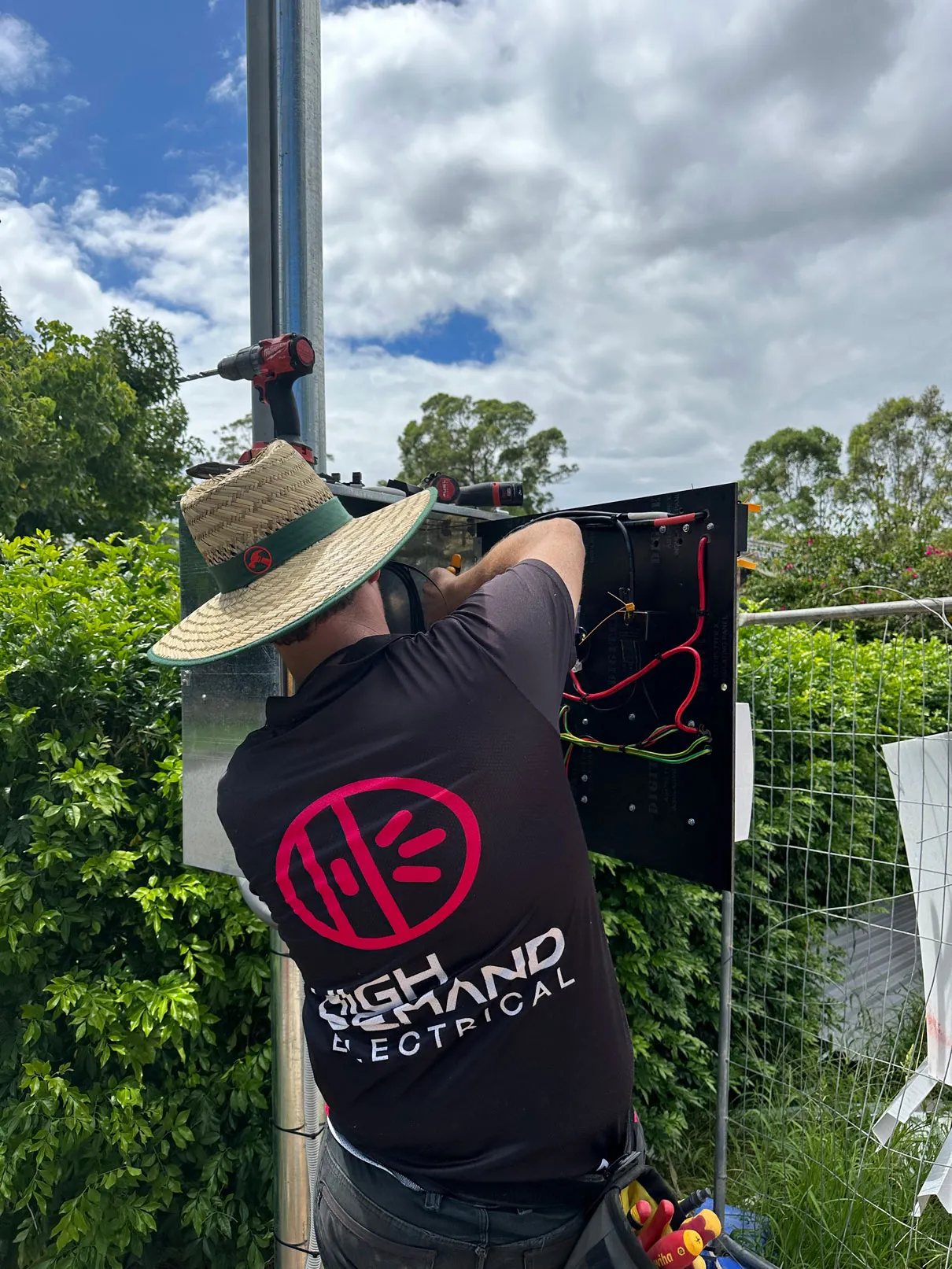

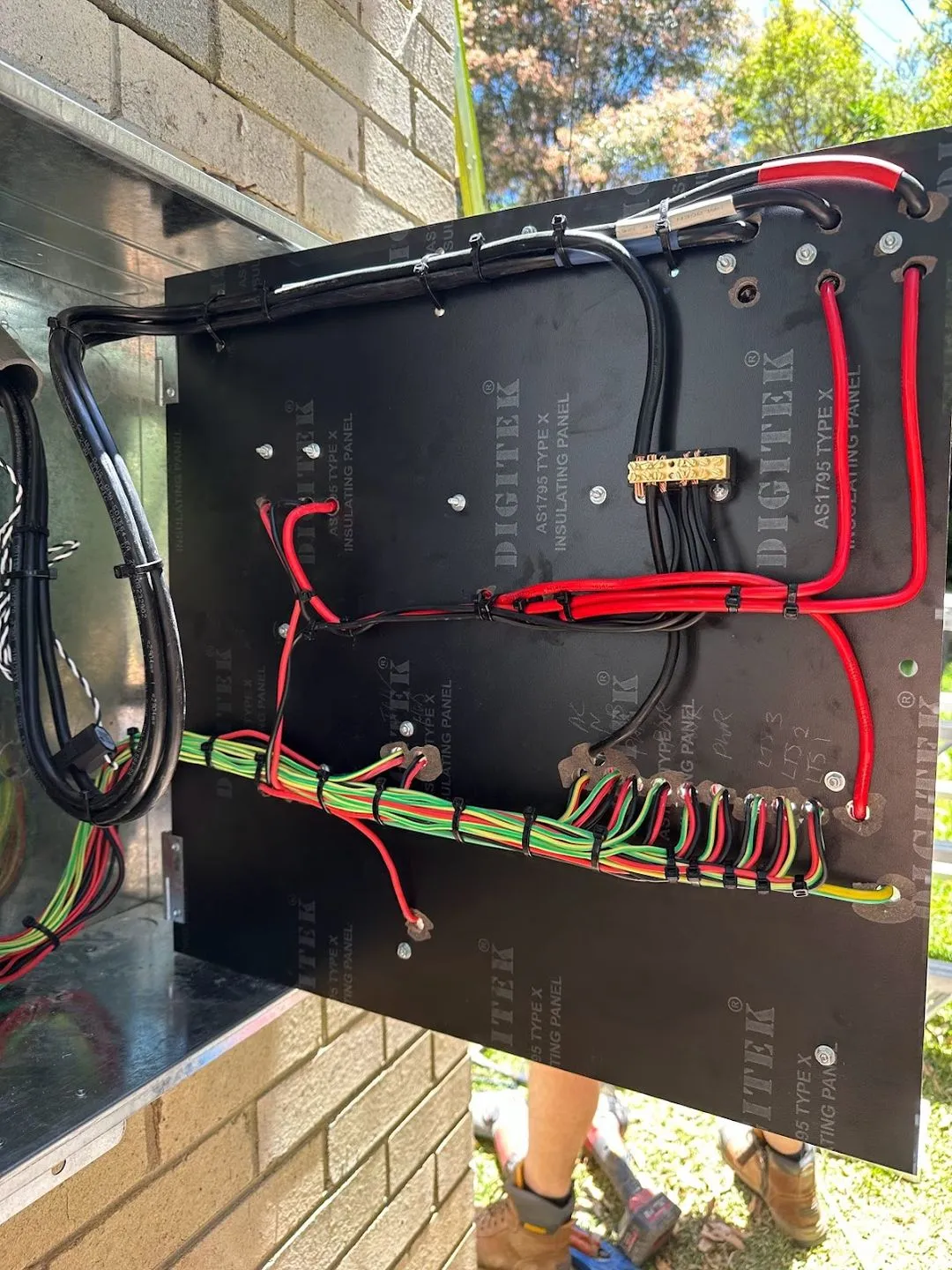
Powering Your Needs with Expertise
If you’re looking for a reliable, experienced, and prompt electrician, look no further than High Demand Electrical. We cater to all your electrical needs, from routine maintenance to emergency repairs and complete system installations. Our skilled team is committed to providing professional service that ensures your electrical systems run smoothly. Whether it's a small task or a large project, give us a call today. Let us meet all your electrical demands with the quality and reliability you deserve.

Licensed Level 2 ASP electricians across Sydney. Same-day service and 24/7 emergency response.
Licence 397193C
ABN 87 051 836 527
