Warm white vs cool white: Sydney lighting guide 2026
For most Sydney homes, the right rule is simple: warm white lighting in living areas and bedrooms, neutral white in kitchens, bathrooms and home offices, and daylight lighting only where task accuracy demands it — workshops, retail displays, and utility rooms. Before you order a single fitting, view physical samples in the actual space and book a free site inspection with a certified Level 2 electrician.
Quick rules to carry into every lighting decision:
How do warm white, cool white and daylight actually compare?
Colour temperature is measured in Kelvins (K). Warm white sits at 2700K–3000K, neutral/cool white at 3500K–4000K, and daylight from 5000K–6500K. The Kelvin number describes the visual character of the light, not how hot the fitting runs.
TemperatureTypical roomsMood / visual effectTask / focus impactCRI expectationDimmer compatibility2700K–3000K (warm white)Bedrooms, living rooms, dining areasAmber-gold, relaxed, intimateLow — supports wind-down80–90+Generally good; check warm-dim behaviour3500K–4000K (neutral/cool white)Kitchens, bathrooms, home officesCrisp, clean, modernHigh — promotes alertness80–90+Good; confirm LED driver compatibility5000K–6500K (daylight)Workshops, retail, utility roomsBlue-white, clinical, energisingVery high — can feel harsh indoors80–90+Variable; check product spec
Cool white LEDs are often slightly more efficient and can produce higher perceived brightness at the same lumen rating because human eyes are more sensitive to the neutral-to-cool spectrum. When retrofitting, match perceived brightness rather than relying on lumen numbers alone.

Pro Tip: Aim for CRI 90+ in bathrooms, kitchens and retail displays. Colour rendering index measures how accurately a light source reveals true colours — a CRI 80 fitting in a bathroom vanity can make skin tones look flat and make it harder to match clothing. Always ask for the CRI figure on the product spec sheet.
How do you choose the right colour temperature for each room?
A structured approach prevents costly re-installs. Work through these steps before ordering:
Pro Tip: When layering ambient, task and accent lighting, put each layer on a separate switch or dimmer circuit. This lets you dial up task lighting for cooking and drop back to warm ambient for dining without one circuit fighting the other. Lighting that looks great in professional portrait work uses exactly this principle — separate control over each layer.
When does a lighting job require a Level 2 electrician in NSW?
Most downlight retrofits and lamp swaps fall within a standard electrician’s scope. A certified Level 2 electrician becomes mandatory the moment the work touches the network side of the installation.
Common triggers for Level 2 involvement:
NSW compliance is not optional. Work performed outside the correct licence category can void insurance, trigger SafeWork NSW penalties, and leave a property without a valid certificate of compliance.
The inspection confirms the exact scope, identifies any network liaison required with Ausgrid or Endeavour Energy, and produces a clear quote before any work begins. There are no surprises on the invoice.
Real-world lighting scenarios for Sydney homes and businesses
These scenarios show how colour temperature decisions play out in practice.
Pro Tip: Always test the exact fitting — with its diffuser — in the ceiling before signing off. A recessed downlight with a narrow beam angle can create hotspots that look nothing like the even wash you saw in the showroom. The three-point check (ceiling, task surface, adjacent sightline) takes ten minutes and prevents a full re-lamp.
What drives the cost and timeline of a lighting installation?
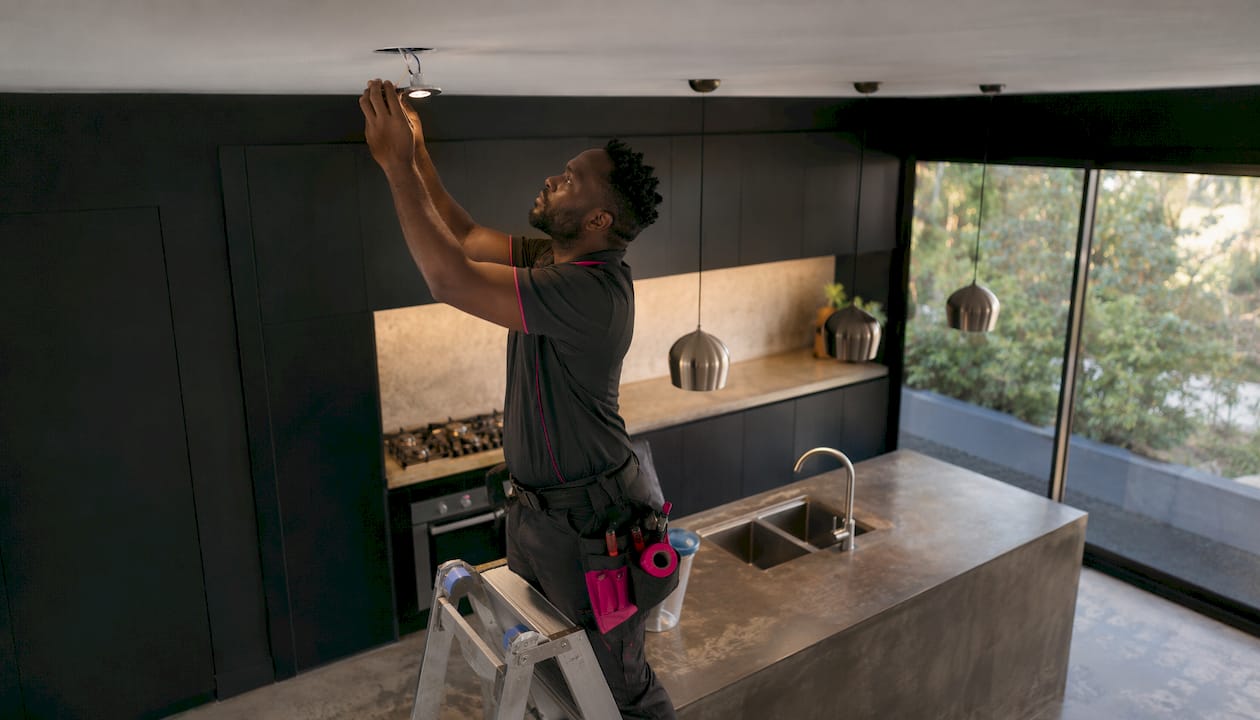
Budgeting conversations go better when you know what moves the price.
Cost drivers to discuss with your installer:
Typical installation sequence:
Pro Tip: Request a line-item quote that lists each fitting’s Kelvin number, CRI, lumen output, and dimmer compatibility. A quote that just says “supply and install 12 downlights” gives you no basis for comparison and no protection if the wrong product arrives on the day.
What’s the practical pick for most Sydney homes and businesses?
For the majority of Sydney properties, a three-temperature approach covers every space: 2700K–3000K in living areas and bedrooms, 4000K in kitchens, bathrooms and home offices, and 5000K+ reserved for garages, workshops or specific retail display zones.
Steps to move from decision to installation:
Key takeaways
Warm white belongs in relaxation spaces, neutral white belongs in task-focused rooms, and no lighting decision should be finalised without testing the actual fitting in the space.
PointDetailsMatch CCT to room functionUse warm white for bedrooms and living areas; neutral white for kitchens, bathrooms and offices.One temperature per sightlineMixing very different CCTs across the same eyeline is a visible design mistake — keep shifts gradual.CRI 90+ where colour mattersSpecify CRI 90+ for bathrooms, kitchens and retail; always check the spec sheet, not the label.Test samples on siteAssess the exact fitting with its diffuser against the ceiling, task surface and adjacent sightline before sign-off.High Demand ElectricalOffers free site inspections for Level 2 work across Sydney, covering metering, mains, switchboard and full lighting fitouts.
The detail most lighting guides skip
The warm white vs cool white decision is rarely wrong in isolation. Where it goes wrong is in execution: a homeowner picks 4000K for the kitchen, the installer uses a CRI 80 fitting because it was available, and the result looks clinical and flat. Or someone chooses 2700K throughout and wonders why the bathroom vanity makes it impossible to apply makeup accurately.
The Kelvin number is only one variable. CRI, beam angle, diffuser type, and dimmer behaviour all shape what you actually see on the wall. Installers who hand you a colour temperature and call it done are skipping the work. The right process is to confirm all four variables, test the fitting in the space, and only then commit to a full order.
For commercial fitouts, the stakes are higher. A retail display lit at CRI 80 instead of CRI 90+ can make product colours look dull, which directly affects how merchandise reads to customers. An office fitout at 3000K instead of 4000K can leave staff squinting at screens by mid-afternoon. These are not aesthetic preferences — they are functional decisions with measurable consequences.
High Demand Electrical: certified Level 2 lighting installs across Sydney
Getting the colour temperature right is only half the job. The other half is making sure the installation is done safely, compliantly, and to a standard that holds up under an NSW inspection.

High Demand Electrical is Sydney’s certified Level 2 electrical contractor for residential and commercial lighting installations — from straightforward downlight retrofits to full fitouts requiring switchboard upgrades, meter relocation, or network reconnection with Ausgrid or Endeavour Energy. The team offers free site inspections for all Level 2 work, so you know the full scope and cost before a single fitting is ordered. With over 300 five-star reviews and 24/7 availability for urgent work, High Demand Electrical brings the same compliance rigour to a bedroom downlight swap as to a three-phase commercial fitout.
Ready to get the right light in the right room? Contact High Demand Electrical to book your free site inspection or get a quote for your lighting design and installation project today.
Useful sources
Always view physical samples in the actual space before finalising a colour temperature. Confirm Kelvin number, CRI, lumen output and dimmer compatibility directly with your installer — not from the packaging alone.
Recommended
Powering Your Needs with Expertise
If you’re looking for a reliable, experienced, and prompt electrician, look no further than High Demand Electrical. We cater to all your electrical needs, from routine maintenance to emergency repairs and complete system installations. Our skilled team is committed to providing professional service that ensures your electrical systems run smoothly. Whether it's a small task or a large project, give us a call today. Let us meet all your electrical demands with the quality and reliability you deserve.