Save Several Weeks: Three Phase Meter Upgrade for Sydney Homes
Yes, you can usually upgrade a home to three-phase power, provided the network has capacity in your area. The process needs a licensed electrician assessment, Distribution Network Service Provider (DNSP) approval and service works. Your electrician handles the switchboard and wiring, while the DNSP checks phase availability and installs or authorises the meter. Budget several hundred dollars for a straightforward meter swap, or several thousand if service alterations are needed, and expect approval queues to add several weeks to the timeline.
TL;DR:
- Upgrading to three-phase power depends on local network capacity and requires a licensed electrician’s assessment and DNSP approval, which can take several weeks.
- Costs vary significantly, with simple meter swaps being affordable but full service upgrades often costing thousands due to cabling and infrastructure changes.
- A three-phase upgrade is advisable if you have multiple high-demand appliances or plans for extensive electrification within the next five years.
- The upgrade involves distinct responsibilities between the electrician and the DNSP, with the latter checking phase availability and authorizing the meter installation.
- The main bottleneck is the DNSP’s approval queue; understanding your local network’s current wait times and costs is crucial for realistic planning.
Table of Contents
- Three phase meter upgrade: the step-by-step process
- How much does a three phase meter upgrade cost, and how long does it take?
- Is a three phase upgrade worth it for your home?
- What technical requirements come with a three phase meter?
- Who approves a three phase meter upgrade?
- How do you prepare your property for the upgrade?
- Why trust High Demand Electrical for a three phase meter upgrade?
- Does a three phase meter upgrade affect your insurance or compliance obligations?
- What common problems come up during a three phase upgrade?
- What happens after the meter upgrade is installed?
- Does the upgrade process differ between networks?
- An editorial take on the three phase upgrade process
- Book a free Level 2 site inspection with High Demand Electrical
- Sources
Three phase meter upgrade: the step-by-step process
Every three phase meter upgrade follows roughly the same sequence, whether you’re adding an EV charger circuit or future-proofing a full home renovation.
- Electrician assessment. A licensed electrician calculates your household’s load demand and confirms whether three-phase genuinely solves your problem, rather than a targeted switchboard fix.
- Application and quote. Your electrician or retailer lodges an application with the DNSP, supplying your meter number, cutout type, and often site photos of the existing service.
- Accept the quote and schedule works. If the network needs alteration (overhead reconnection or underground service replacement), this gets booked in separately from the on-site electrical work.
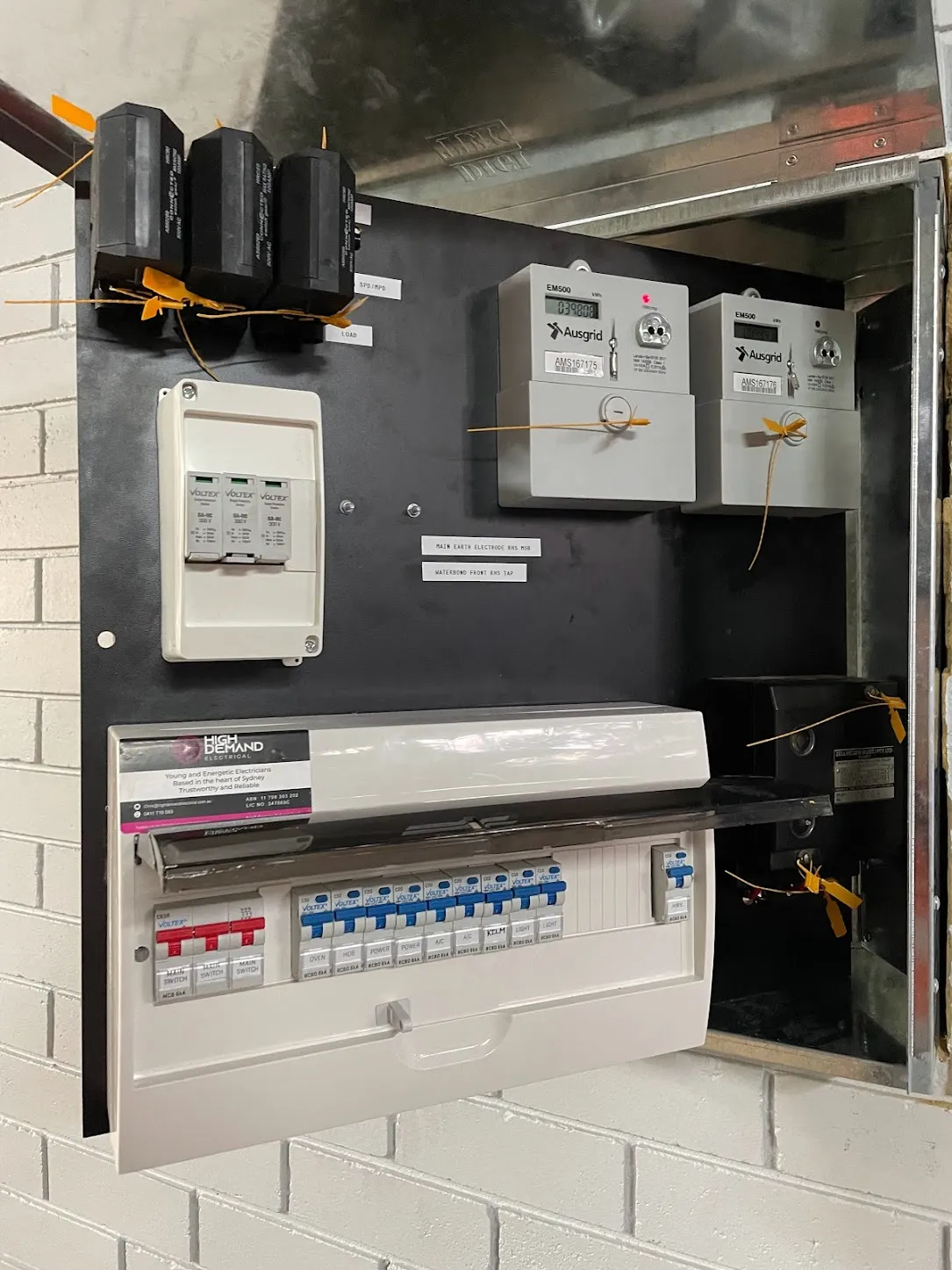
- Switchboard and metering installation. Your electrician upgrades the switchboard and internal wiring for three-phase distribution, while the DNSP installs or authorises the new meter.
- Testing, paperwork and commissioning. The electrician issues test certificates, and the DNSP closes out the connection job once everything checks out.
The line between “electrician’s job” and “DNSP’s job” trips up a lot of homeowners. Your electrician handles the single phase to three phase upgrade work inside your property boundary. The DNSP owns everything from the point of supply back to the street, including the decision on whether your street has three-phase capacity at all. Miss that distinction and you’ll find yourself calling the wrong party when something stalls.
How much does a three phase meter upgrade cost, and how long does it take?
Costs vary more than most homeowners expect, and the biggest swing factor is whether the network needs physical alteration or just a meter change.
Typical line items include:
- DNSP connection or phase conversion fee (varies significantly by network operator)
- New three-phase meter (cost depends on whether a smart meter is fitted)
- Switchboard upgrade to handle three separate phases safely
- New service cabling or, in some cases, private pole work
- Electrician labour, wiring and post-install testing
- Trenching or reinstatement if underground cabling is required
Some distributors publish indicative fees and timelines that show a striking gap between a simple meter swap and a full service upgrade. A meter-only change where three phases are already live at the cutout can be genuinely cheap. The moment the network needs to run new cabling or alter the service head, costs jump into the thousands.
Pro Tip: Ask your electrician for a written breakdown of “meter cost” versus “service alteration cost” before accepting a quote. Bundled quotes hide which line item is actually driving the price.
Timeline is where expectations really need adjusting. The physical metering work itself often takes just a few hours on-site. What actually stretches the job is the DNSP application and technical assessment stage, which commonly adds several weeks before a crew is even scheduled.
Is a three phase upgrade worth it for your home?
Not every household needs three-phase power, and it’s worth being honest about that before you spend money chasing it.
Consider upgrading if you have:
- Multiple high-draw appliances running simultaneously (ducted air conditioning plus an electric oven plus a pool pump, for example)
- A high-capacity EV charger (7kW and above) that you want running at full speed
- A large reverse-cycle heat pump system for hot water or heating
- A home workshop or granny flat with heavy-duty machinery
Households planning significant electrification, multiple EV chargers, heat pumps, and induction cooking together, are increasingly told to future-proof their supply now rather than upgrade twice.
If your load is modest, a targeted switchboard upgrade or a dedicated circuit for one appliance often solves the problem for a fraction of the cost. Run through this checklist first: what’s your realistic peak demand, are you planning further electrification within five years, and does your budget support the higher connection fee for a benefit you might only partly use?
What technical requirements come with a three phase meter?
A three-phase meter looks and works differently from the single-phase unit most Australian homes have had for decades, and it pays to understand what you’re getting before the crew arrives.
Key differences homeowners should know:
- Single-phase supplies use one active wire and neutral; three-phase adds two more actives (L1, L2, L3), typically wired as a 4-wire wye configuration for residential connections.
- The meter itself is physically larger, with three sets of current jaws instead of one, and the wiring inside your switchboard needs matching capacity.
- Larger services sometimes use current transformer (CT) metering rather than direct connection, particularly the 3CT arrangement, though the 2CT Aron method appears in some commercial contexts. Genuine residential CT metering is uncommon and mainly shows up when the service size exceeds typical domestic amperage.
- Most modern smart meters are compatible with a three-phase upgrade, though availability still depends on your retailer and the specific meter model they stock.
Pro Tip: Ask specifically whether your new meter will be a smart meter. A three-phase smart meter gives you real-time load visibility across all three phases, which is genuinely useful once you’re paying for the extra capacity.
If your installer mentions CT metering, that’s a sign your service size is unusually large for a home, worth double-checking with your DNSP that it’s actually necessary. For the physical meter and enclosure side of things, our meter box and smart meter installation page covers what’s involved.
Who approves a three phase meter upgrade?
The DNSP, not your electrician and not your energy retailer, is the authority that ultimately approves a phase conversion. Understanding who does what stops a lot of frustrated phone calls.
- The DNSP checks phase availability on the street, confirms your existing cutout and fuse capacity, and signs off on any required service alteration.
- Applications are commonly lodged through your electrician’s contractor portal or via your energy retailer, depending on the network area.
- Market rules set out how retailer and DNSP responsibilities divide, and AEMC guidance on distribution planning is the reference point if you want to understand the regulatory backbone behind these processes.
- Paperwork to retain includes your preliminary notice number, the electrician’s test certificates, and the final commissioning report. Keep all three, they matter for insurance, resale, and any future defect disputes.
Beyond the DNSP application, most standard residential three phase meter upgrades don’t need a separate council or building permit, since the work sits within existing electrical compliance frameworks. Larger structural changes, like a new private pole, can trigger local council requirements, so it’s worth a quick check if your job involves anything beyond standard service alteration.
How do you prepare your property for the upgrade?
A bit of homework before the electrician arrives genuinely speeds things up and avoids surprise costs on the day.
- Photograph your switchboard and meter box, noting the existing fuse type and meter number for the DNSP application.
- Clear access to the meter and service head. Crews turned away by a locked gate or an overgrown path means a rescheduled visit, and rescheduling adds weeks, not days.
- Mark underground services before any trenching, particularly if you’re near gas lines or existing stormwater pipes.
- Decide on meter relocation if the current position is awkward, and flag it early, since relocating a meter is far easier to schedule alongside the main upgrade than as an afterthought.
Pro Tip: Ask your electrician for the expected outage window in writing. A same-day switchboard swap might only need power off for an hour, but service alterations sometimes require a half-day outage, and you’ll want to plan around that if you work from home.
Why trust High Demand Electrical for a three phase meter upgrade?
Some electrical contractors are authorised to carry out the network-side service work a phase conversion often requires, not just internal switchboard changes. Some contractors offer 24/7 service for complex installs and may provide free site inspections for Level 2 work, which helps customers understand scope and cost before committing. Experienced contractors often prioritise safety and compliance paperwork. Proper test certificates and commissioning documentation are important outcomes of electrical upgrade jobs, useful for insurance and future sales.
Does a three phase meter upgrade affect your insurance or compliance obligations?
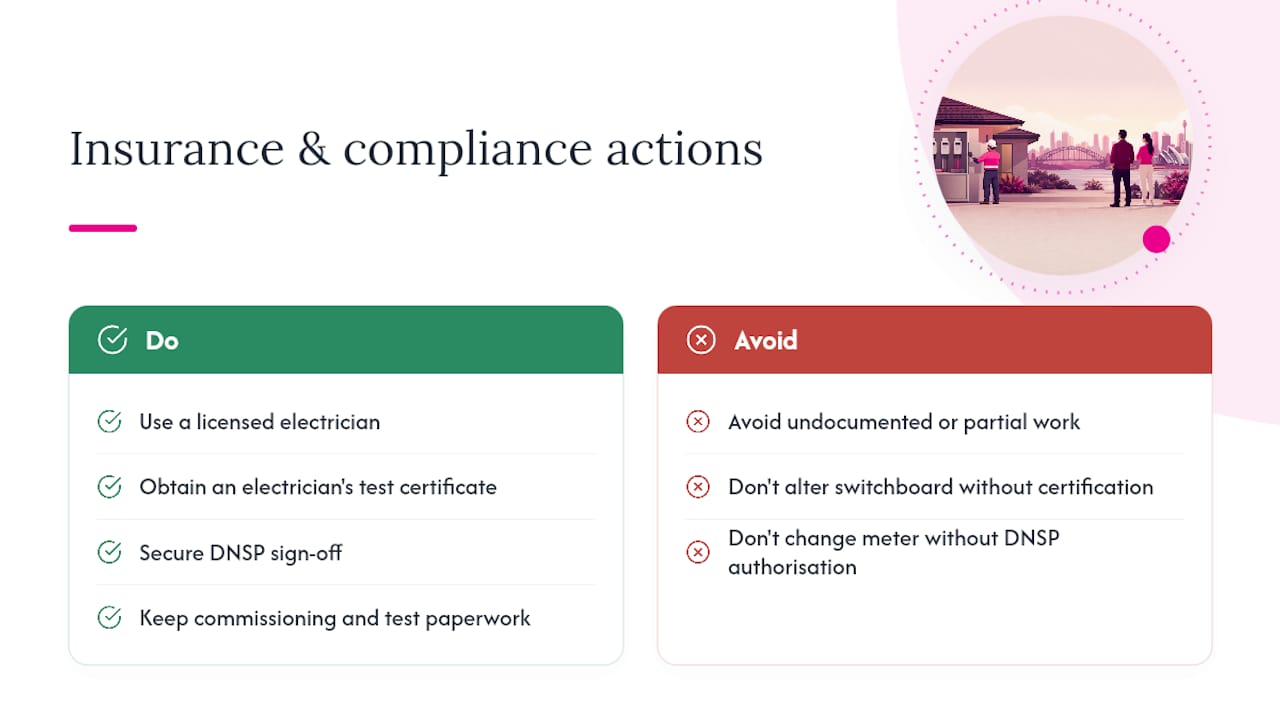
A completed upgrade generally strengthens your position with insurers rather than complicating it, provided the work is properly documented. Insurers primarily care that electrical work was carried out by a licensed practitioner and complies with the wiring rules set out in AS/NZS 3000. A three-phase upgrade done through proper channels, with an electrician’s test certificate and DNSP sign-off, gives you exactly that evidence.
Where homeowners run into trouble is undocumented or partial work: a switchboard altered without certification, or a meter changed without DNSP authorisation. That kind of gap can complicate a claim if an electrical fault later causes damage, since the insurer may ask to see compliance records that simply don’t exist.
Regulation-wise, a completed three phase meter upgrade doesn’t change your obligations under NSW electrical safety rules, but it does mean your property now carries higher-capacity infrastructure that should be reflected in any future safety inspection. If you’re renting out the property or selling in future, keep the commissioning report and test certificates on file. A pre-purchase electrical inspection or a landlord-side rental property inspection will specifically look for this paperwork, and its absence can slow down a sale or a tenancy compliance check even when the underlying work was done correctly.
What common problems come up during a three phase upgrade?
The most frequent complaint homeowners raise isn’t the technical work itself. It’s the waiting. Anecdotal accounts from tradespeople on forums like r/AusElectricians consistently describe the DNSP queue, not the on-site labour, as the part that tests patience.
A few other issues show up repeatedly:
Underestimated switchboard scope is common. A homeowner budgets for a meter swap, then discovers mid-job that the existing switchboard can’t safely handle three separate phases, forcing an unplanned switchboard upgrade on top of the metering work.
Network capacity surprises also catch people out, particularly in older suburbs where the local transformer or street cabling wasn’t designed with widespread three-phase demand in mind. Your electrician’s initial assessment should flag this risk early, but it’s worth asking directly rather than assuming.
Access delays are avoidable but common: locked meter boxes, pets in the yard, or cars blocking the service pole all push jobs back a day or more. Confirming the appointment window and clearing access the night before solves most of this.
Finally, mismatched expectations on outage length cause friction. Clarify upfront whether you’re looking at an hour without power or half a day.
What happens after the meter upgrade is installed?
Commissioning doesn’t end when the meter starts spinning. Your electrician should carry out a formal test and inspection before signing off, checking insulation resistance, earth continuity, and correct phase sequencing across L1, L2 and L3.
Phase sequence testing matters more than most homeowners realise. Get it wrong and three-phase motors, like those in some pool pumps or workshop machinery, can run backwards. A competent electrician tests this before handing back the property, using a phase rotation meter rather than guesswork.
You should walk away from the job with:
- A test certificate confirming compliance with AS/NZS 3000 wiring rules
- A commissioning report noting meter readings at handover
- Confirmation from the DNSP that the connection has been formally closed out
Keep all three documents somewhere accessible, not just filed away. If you ever add a load, such as a second EV charger or a larger heat pump, the next electrician will want to see them rather than re-verifying your entire installation from scratch. It also protects you if a dispute arises later about whether work was completed to standard.
Does the upgrade process differ between networks?
Yes, and this is one of the least understood parts of a three phase meter upgrade. Each DNSP sets its own fee schedule, application process, and typical lead times, so what a friend in a different suburb paid, or waited, isn’t a reliable guide for your own job.
Some networks publish detailed indicative fees for phase conversion work, breaking out meter costs from service alteration costs clearly. Others bundle everything into a single quote that only becomes transparent once your electrician pushes for a line-item breakdown. Rural and semi-rural connections tend to face longer lead times and higher costs, since overhead service alterations and pole work are more common outside dense urban grids.
The practical takeaway: don’t assume national consistency. Ask your electrician which DNSP services your specific address, and ask them directly what that network’s current turnaround time looks like for phase conversion applications. A good local electrician who works across multiple network areas will have a realistic feel for this, rather than a generic industry average.
An editorial take on the three phase upgrade process
The conventional advice on three-phase upgrades treats it as a purely technical decision, capacity in kilowatts, cable size, meter type. That framing misses the real bottleneck, which is almost entirely administrative. The DNSP queue, not the wiring, is what actually determines whether your project takes three weeks or three months.
What’s overrated in most guides is the emphasis on picking the “right” meter. Smart meter compatibility matters, but it’s a downstream decision your electrician sorts out easily. What’s underrated is asking, before you apply, exactly which DNSP services your address and what their current application backlog looks like. That single question shapes your entire timeline more than any switchboard spec.
If there’s one thing homeowners should prioritise first, it’s getting a proper load assessment before falling in love with the idea of three-phase. Plenty of households would be better served by a targeted switchboard fix. The upgrade is worth it when the future load genuinely justifies it, not because it sounds like the premium option.
— Christopher
Book a free Level 2 site inspection with High Demand Electrical
High Demand Electrical gives Sydney homeowners a direct path to a three-phase upgrade without the guesswork this article has just walked you through, because our free site inspection for Level 2 work tells you exactly what your property needs before you commit to a quote. Where a general contractor might hand you a bundled figure and leave the DNSP paperwork vague, our team handles the network-side application, the switchboard assessment, and the compliance certificates as one coordinated job.
If your household is weighing up an EV charger, a heat pump, or a workshop upgrade, our team can assess your existing switchboard and service, then walk you through what a genuine upgrade would cost for your specific property. Book a free site inspection through our Level 2 electrician Sydney page and get a clear, itemised answer instead of a rough guess.
Sources

Powering Your Needs with Expertise
If you’re looking for a reliable, experienced, and prompt electrician, look no further than High Demand Electrical. We cater to all your electrical needs, from routine maintenance to emergency repairs and complete system installations. Our skilled team is committed to providing professional service that ensures your electrical systems run smoothly. Whether it's a small task or a large project, give us a call today. Let us meet all your electrical demands with the quality and reliability you deserve.