Signs of Electrical Faults: What to Look For and Do
The most common signs of an electrical fault are flickering or dimming lights, breakers or safety switches that keep tripping, warm or sparking power points, a burning smell, buzzing from the switchboard and any tingle or shock from an appliance or tap. Each one means something in your wiring or equipment is not working as it should. Stop using the affected item, keep people away from it and call a licensed electrician. If anyone is in danger, call Triple Zero (000).
This guide explains what each sign usually points to, what to do in the first few minutes and when the job needs a Level 2 electrician. It is written for Sydney homeowners, landlords, property managers and business owners.
TL;DR
- Warning signs include flickering lights, repeated breaker trips, hot or sparking power points, burning smells, buzzing at the switchboard and tingles from appliances or taps.
- Any shock or tingle is abnormal, however small. Stay clear, warn others and do not touch the switchboard or metal fittings.
- Do not try to repair wiring yourself. In NSW, electrical installation work must be done by a licensed electrician.
- Broken switches and power points should not be used. Cover them and book a licensed contractor as soon as possible.
- For urgent faults in Sydney, our team is available 24/7 and offers a 10-minute callback guarantee.
Table of Contents
- The warning signs of an electrical fault
- Quick reference: sign, likely cause, first action
- What to do the moment you notice a fault
- Water, storms and outages
- Faults in rental and commercial properties
- Our perspective
- When to call an emergency electrician and when to book an inspection
- Get a Sydney electrician to check it
- FAQ
- Sources
The warning signs of an electrical fault
Electrical faults rarely arrive without warning. They tend to show up as small, repeated oddities that are easy to dismiss. Here is how to read each one.
Flickering or dimming lights
Occasional flicker when a large appliance starts can be harmless. Flicker that is persistent, or that spreads across several rooms, is different. Energy Safe Victoria lists flickering lights and sparks from switchboards, switches or power points as tell-tale signs of faulty wiring. It explains that degraded insulation can expose bare conductors, which may cause shock or fire.
Sometimes the cause is simpler, such as an incompatible bulb or dimmer. If you have LED lights, a guide on diagnosing LED flicker at home can help you rule out the bulb. If the flicker stays after a bulb swap, or affects fittings across the house, treat it as a wiring or connection problem and book an inspection.
Breakers or safety switches that keep tripping
A breaker or safety switch is doing its job when it trips. The warning sign is when it trips again and again. UL Solutions notes that an appliance that routinely trips breakers may be the culprit, while repeatedly blowing the same fuse from one outlet may mean the circuit is overloaded.
Ausgrid warns that overloading power points or a property’s electrical panel can be dangerous, and that too many appliances can overload the panel. It says to contact a licensed electrician immediately for constantly blown fuses. If your home runs more load than it did when the wiring was installed, a switchboard or power supply upgrade is often the lasting fix rather than another reset.

Warm, hot or discoloured power points
A power point, switch plate or receptacle should not become hot. UL Solutions advises that an uncomfortably hot outlet should be disconnected from use and checked by an electrician. Discolouration, scorch marks or a plastic plate that has softened are signs of overheating at the connection. Unplug what you can, switch the circuit off at the switchboard if it is safe to reach, and call for help.
Burning smells and unusual odours
A burning, fishy or hot-plastic smell near a power point, switch or switchboard means something is overheating. UL Solutions lists unusual odours among the warning signs of wiring problems. Do not wait to see if it fades. Turn off the power to that area if you can do so safely. If you see smoke or flames, leave the building and call 000.
Sparking, crackling and buzzing
Sparks when you plug something in, or from a switch, are never normal. NSW Government guidance lists sparking power points, loose wiring and loose or damaged sockets as visible signs of an electrical problem. UL Solutions explains that loose prongs, outlets or fraying wire can make current jump and produce buzzing, and that if buzzing comes from an outlet you should stop using it and call an electrician.
Buzzing or sparking at the switchboard is more serious again. Ausgrid says to contact a licensed electrician immediately for buzzing or sparking at the panel. Our page on a buzzing switchboard explains what we do when we attend one.
Shocks and tingles
This is the sign people most often shrug off. The Queensland Electrical Safety Office states that any shock or tingle, however minor or infrequent, can indicate a serious problem with equipment, wiring, the switchboard or powerlines. Its guidance is that severity and frequency do not make a tingle safe.
EnergyAustralia adds that a tingle from a water fitting may indicate faulty grounding. The Queensland guidance says a tingle from an appliance means you should stop using it at once and contact the electricity distributor or a licensed electrician. A tingle from a tap or metal fitting means contacting the distributor straight away.
Damaged sockets, exposed wires and crumbling insulation
Look at what you can see. Cracked or loose sockets, exposed conductors and old rubber wire coating that has dried out and crumbled are all flagged in the NSW Government guidance above. Energy Safe Victoria recommends that a licensed electrician inspect the wiring in homes more than 30 years old, which covers a large share of Sydney’s housing stock.
Leads and appliances matter too. The Queensland Electrical Safety Office says cracked, warped or discoloured casings, frayed leads and damaged plugs are signs equipment may be unsafe. Its guidance on leads adds that insulation damage can be hidden inside the lead, so equipment can keep working while being unsafe.
Quick reference: sign, likely cause, first action
| Sign | What it often points to | What to do first |
|---|---|---|
| Persistent flickering | Loose connection, degraded wiring, overloaded circuit | Rule out the bulb, then book an inspection |
| Repeated breaker trips | Overloaded circuit, faulty appliance, wiring fault | Unplug appliances, reset once, call if it trips again |
| Hot or scorched power point | Loose or overheated connection | Stop using it, switch off the circuit, call an electrician |
| Burning smell | Overheating wires or components | Switch off power if safe, call urgently, 000 if smoke or flame |
| Buzzing or sparking at the switchboard | Loose connections, overloaded panel | Do not touch it, call an emergency electrician |
| Tingle from an appliance or tap | Wiring, earthing or equipment fault | Stay clear, warn others, call your distributor or electrician |
| Cracked or loose socket | Physical damage, loose wiring | Do not use it, cover it, book a repair |
What to do the moment you notice a fault
- Stop using the affected item. Switch off and unplug if you can do it without touching anything damaged. The Queensland guidance says broken switches and power points should not be used and should be covered immediately.
- Keep people and pets away. After a shock or tingle, the Queensland Electrical Safety Office says to stay clear, warn others and not touch the meter box, switchboard, appliances or metal fittings until the property is made safe.
- Isolate the circuit if it is safe. Switch off the relevant breaker at the switchboard only if you can reach it dry and without any sign of sparking or buzzing.
- Call the right people. Use 000 for fire, smoke or anyone hurt. Call a licensed electrician for faults inside the property.
- Do not attempt repairs. The NSW Government says installation work must be done by a licensed electrician, who must provide a uniquely numbered Certificate of Compliance Electrical Work afterwards.
If someone has received a shock, the NSW Government’s first aid guidance is to switch off the electricity where possible, never touch the person with bare hands or conductive or moist objects, and call an ambulance or doctor.
Water, storms and outages
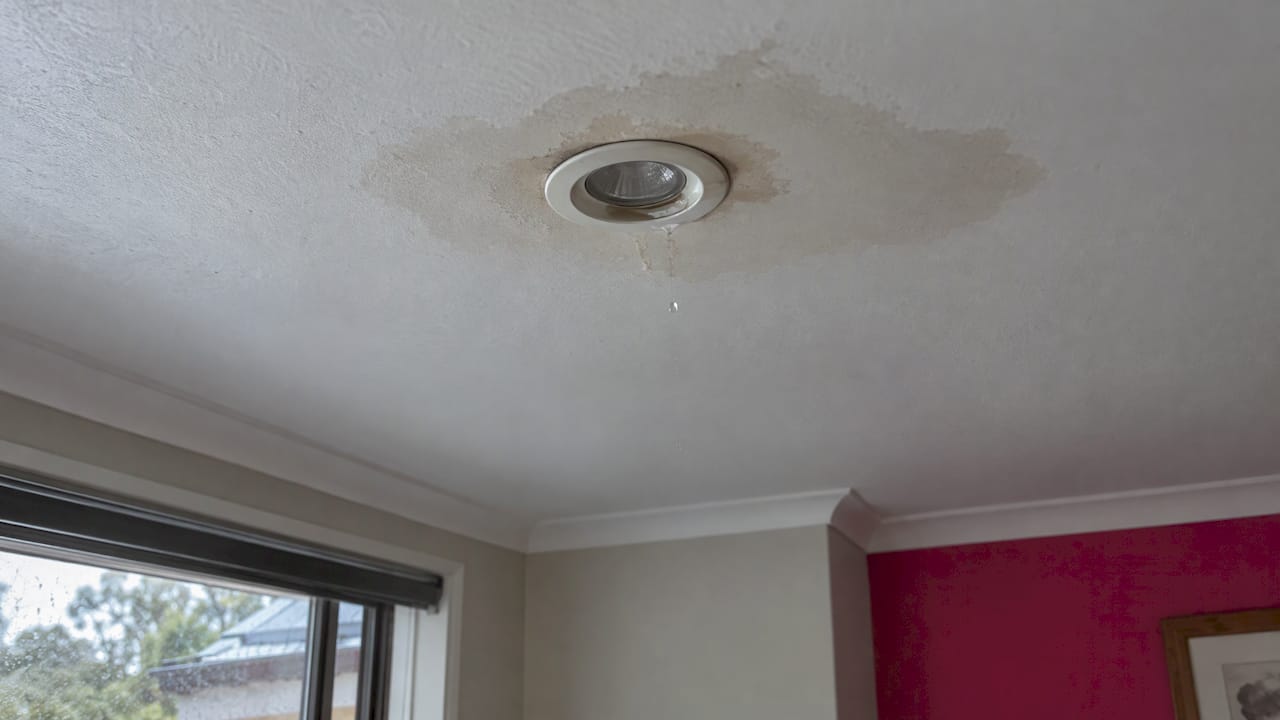
Sydney’s storms are a common trigger. EnergyAustralia warns that a water leak into light or power circuits can develop into a fault that may cause fire or electric shock, and that leaks should be repaired by a licensed plumber as soon as they are noticed. A ceiling stain near a light fitting, a dripping downlight or a power point damp after rain are all reasons to switch off that circuit and call an electrician.
After a power outage, NSW Climate and Energy Action advises inspecting the home, avoiding repairs and contacting the network provider or an authorised service provider electrician if you find risks or electrical issues. For an area-wide outage, it says to contact your network provider using the details on your energy bill. Businesses should assess damage before reopening and check electrical systems and equipment before switching them back on.
If floodwater has entered a property, Energy Safe Victoria says power must not be restored until the wiring has been tested by a licensed electrician, and inundated appliances must not be switched on until tested. Our post on storm damage in Sydney covers the common problems we see and how we fix them.
Faults in rental and commercial properties
For tenants in NSW, the Government states that a safety switch that is faulty, or that detects an electrical fault, is an urgent repair. Tenants should tell the landlord or agent right away so repairs can be arranged as soon as possible. Landlords and property managers who want to stay ahead of this can book a rental property electrical inspection. Practical guidance on budgeting for rental repairs can also help landlords plan maintenance costs.
In workplaces, SafeWork NSW says unsafe electrical equipment should be disconnected. It also says equipment exposed to moisture, heat, vibration, damage, chemicals or dust should be regularly inspected and tested by a competent person. For shops, offices and industrial sites, that makes scheduled testing part of running the business, not an optional extra.
Our perspective
Most callouts we attend started as a sign someone noticed weeks earlier: a light that flickered, a breaker that kept dropping out, a power point that felt warm. People wait because the house still has power. We would rather you call early.
The pattern we see is that a repeated trip or a warm power point is rarely the real problem. It is the symptom of a load the wiring or switchboard was never built to carry, or a connection that has worked loose. That is why we look at the whole supply: the switchboard, the circuits and, where needed, the power supply into the property.
As a certified Level 2 electrical contractor and authorised service provider, we handle both the repair and the larger work that sometimes sits behind it, such as switchboard upgrades or a single phase to three phase power upgrade. Our team is triple ISO certified, available 24/7, and we offer free site inspections for Level 2 work so you understand the job before you decide anything.
Safety checks are not a sign something is wrong. They are how you keep it that way.
Christopher
When to call an emergency electrician and when to book an inspection
Call straight away (24/7):
- Burning smell, smoke, or visible scorching at a power point or switchboard
- Buzzing or sparking at the switchboard
- Any shock or tingle
- Water in light fittings, power points or the switchboard
- A total loss of power inside the property when neighbours still have it
Our emergency electrician service is built for exactly these situations, with a 10-minute callback guarantee.
Book an inspection soon:
- Lights that flicker now and then
- A breaker that trips occasionally with the same appliance
- Warm switch plates or faceplates that have yellowed
- A home more than 30 years old that has never had its wiring checked
- Old ceramic fuses or a switchboard that has not been touched since it was installed
For these, a safety inspection and maintenance check including RCD or safety switch testing is a sensible first step. Ausgrid recommends safety switches be checked every six months and circuit breakers every two years, in line with manufacturers’ recommendations and Australian Standards. Pressing the test button on your safety switch is a quick habit that fits that schedule.
Faults that need more than a repair
Sometimes the sign is telling you the supply is undersized. If you have added an EV charger, air conditioning, a pool pump or a workshop and the breakers keep tripping, the answer may be a switchboard upgrade or a power supply upgrade, including single phase to three phase. Level 2 work like this covers the connection between the network and your property, so it needs an accredited Level 2 electrician.
Get a Sydney electrician to check it
If anything in this guide sounds familiar, do not leave it to chance. High Demand Electrical is a certified Level 2 electrical contractor serving residential, commercial and strata clients across Sydney. Our fully accredited Level 2 ASP electricians diagnose faults, carry out electrical repairs and rectify defect notices. We offer free site inspections for Level 2 work, special discounts for seniors, and have more than 300 five-star reviews.
For an urgent fault, contact us any time of day through our emergency electrician page. For everything else, start at High Demand Electrical and tell us what you have noticed.
FAQ
What are the most common causes of electrical faults?
Overloaded power points and switchboards are among the most common. Ausgrid notes that too many appliances can overload a panel. Other causes include loose or deteriorated wiring, damaged insulation, faulty appliances and water getting into light or power circuits. A licensed electrician can test the circuit to find which one applies.
What are the signs of loose wiring in my home?
Look for flickering lights, sparking or buzzing from power points, sockets that wobble or feel warm, and discolouration around switches. The NSW Government lists loose wiring and loose or damaged sockets as visible warning signs. Loose wiring sits behind walls, so a licensed electrician needs to check it.
Is it safe to reset a tripped breaker?
Resetting once is reasonable if you know the cause, such as a single appliance that you then unplug. If it trips again straight away, or keeps tripping over days, leave it off and call an electrician. A faulty safety switch in a rental is an urgent repair, so tell your landlord or agent immediately.
What should I do if the power stops working?
Check whether neighbours are also without power. If so, contact your network provider using the number on your energy bill. If only your property is affected, check the switchboard without touching anything that buzzes, sparks or is wet, then call an electrician. Call 000 for any life-threatening emergency.
Sources
- Electrical safety in the home | NSW Government
- Electric shock first aid and preventing electrical accidents | NSW Government
- Test. Reset. Protect. | Energy Safe Victoria
- 8 Signs You May Have a Problem with Your Electrical Wiring | UL Solutions
- DIY and home maintenance | Ausgrid
- Shocks and tingles | Electrical Safety Office Queensland
- Buying and using electrical equipment | Electrical Safety Office Queensland
- Are your electrical leads safe? | Electrical Safety Office Queensland
- Electrical safety | EnergyAustralia
- What is a power outage and what to do | NSW Climate and Energy Action
- Electrical work | SafeWork NSW
- Diagnose LED Flicker in 10 Minutes
- Budget Rental Property Repairs: A Landlord’s Guide
Recommended
Need Help Fast?
Powering Your Needs with Expertise
If you’re looking for a reliable, experienced, and prompt electrician, look no further than High Demand Electrical. We cater to all your electrical needs, from routine maintenance to emergency repairs and complete system installations. Our skilled team is committed to providing professional service that ensures your electrical systems run smoothly. Whether it's a small task or a large project, give us a call today. Let us meet all your electrical demands with the quality and reliability you deserve.

Licensed Level 2 ASP electricians across Sydney. Same-day service and 24/7 emergency response.
Licence 397193C
ABN 87 051 836 527
