Power Point Installation Sydney: Costs & What to Expect
Written by Chris · Licensed Level 2 ASP Electrician · Licence 397193C
How much does power point installation cost in Sydney, and what should you expect? Most single additions on an existing circuit start from around $250, rising to $700 or more where new cable has to run further or a new circuit is needed from the switchboard. The final price depends on your wall type, how far the cable has to travel, and whether your switchboard has room for a new circuit.
⚡ Quick Answers: Power Point Installation
- How much does it cost? From around $250 for a straightforward addition close to an existing circuit, up to $700 or more for a longer cable run or new circuit.
- Can I install a power point myself? No. All electrical work in NSW, including adding or replacing power points, must be carried out by a licensed electrician.
- Do new power points need safety switch protection? Yes. All new power point circuits must be RCD protected under current standards.
- When do I need a new circuit instead of adding to an existing one? When the area is far from existing outlets, the nearby circuit is already heavily loaded, or you're adding a high draw appliance like an oven, air conditioner or EV charger.
- How long does a typical job take? Most single room jobs are finished in a few hours. Larger jobs involving new circuits or switchboard work take longer.
- Do I get a compliance certificate? Yes. All electrical work in NSW requires a Certificate of Compliance for Electrical Work, which we provide as part of the job.
Why More Power Points Matter in a Modern Home
The average Sydney home has far more devices drawing power than it did twenty years ago. TVs, laptops, phone chargers, smart home devices and kitchen appliances all compete for outlets, and most homes built before the 1990s were wired with fewer power points than people actually need today.
The usual workaround is a proliferation of power boards and extension cords, which are designed for temporary use, not permanent load. Overloaded power boards are a fire hazard, and long term reliance on extension cords creates tripping hazards and can wear the cords down over time. Proper power point installation solves the problem for good: more outlets, correctly placed, on circuits that can actually handle the load.
Power Point Installation Cost in Sydney
Cost depends on a few key factors. As a general guide for Sydney work in 2026:
- Adding a point on an existing circuit, close by. Typically $250 to $450. This is the quickest job, similar in scope to adding a single outdoor point close to the switchboard.
- New cabling required for a longer run, or through brick. Typically $400 to $700 or more. Plasterboard walls are far easier to cable through than double brick or concrete, which adds time.
- New dedicated circuit for a high draw appliance (oven, air conditioner, EV charger). Cost depends on distance from the switchboard and whether the board has a free circuit position.
- Switchboard work. If your board is full or doesn't have room for a new circuit, an upgrade may be needed first. Our switchboard upgrade cost guide covers that separately, with upgrades typically running $900 to $2,000.
These are indicative ranges for Sydney metropolitan work. Every property is different, so a licensed electrician needs to see the job in person before giving you a firm, fixed price.
Types of Power Points We Install
Double Power Points
Two outlets in one wall plate, and the most common type installed. If you're replacing a single outlet, upgrading to a double is often only a little more expensive and doubles your available sockets. All new power points installed in Sydney must be RCD protected under current Australian standards.
USB Power Points
These build one or two USB charging ports into the wall plate alongside the standard outlets, without using up socket space. Great for bedside tables, home offices and kitchens where a charger always seems to be missing.
Smart Power Points
Smart power points connect to your home Wi-Fi and can be switched on and off remotely, scheduled, or in some cases used to monitor energy use. Useful for home automation setups or for devices you'd rather not leave on standby.
Weatherproof Outdoor Power Points
Outdoor power points need a weatherproof rating with a spring loaded cover to keep moisture out. A standard indoor outlet is not safe on an exterior wall. If you're after outdoor power for a pergola, garden area or backyard workshop, see our full guide to outdoor power point installation in Sydney.
Adding to an Existing Circuit vs a New Circuit
When you ask for more power points, the electrician has to check whether the existing circuit can safely carry the extra load.
Adding to an Existing Circuit
If the circuit isn't already close to capacity, new outlets can usually be added by running cable from the nearest existing point. This is the quickest and most affordable option. In a plasterboard lined house, cable can often be fed through with minimal patching. In older homes with solid brick walls, the run takes more time.
When a New Circuit Is Needed
A new circuit run directly from the switchboard is usually the better option when the area is far from existing outlets, nearby circuits are already heavily loaded, you need a dedicated circuit for a high draw appliance, or you're powering a garage, shed or outbuilding with no supply of its own. A new circuit needs a free position in your switchboard, so if your board is full or outdated, an upgrade may be needed first, which adds cost but is also a chance to get proper safety switch protection across every circuit.
Home Offices and Power Point Planning
With more people working from home, the home office is now a room that genuinely needs electrical planning. A typical setup, desktop computer, two monitors, a printer, a laptop charger, a desk lamp and a Wi-Fi router, can mean six to eight devices before anything else is added. Rather than running multiple power boards, it's worth having a licensed electrician install more outlets around the room, or a floor outlet if your desk sits away from the wall, and asking whether the room should sit on its own circuit to avoid overloading existing ones.
How Many Power Points Does a Room Need?
Minimum power point requirements in new builds were set decades ago and don't reflect how homes are actually used today. As a practical guide for renovations:
- Bedroom. At least two doubles, either side of the bed, more if it doubles as a study.
- Kitchen. At least four doubles on the counter circuit, plus dedicated outlets for the fridge and dishwasher.
- Living area. At least four doubles, placed around the TV, entertainment unit and charging areas.
- Home office. Three to four doubles around the perimeter, with a USB power point at the desk.
- Garage or workshop. Multiple doubles on their own circuit, at workbench height and near where tools are used.
If you're renovating, planning power point locations while the walls are open is far cheaper and more reliable than adding outlets afterwards.
Power Points and Safety Switch Protection
All new power point circuits in Australian homes must be RCD protected. If you've had a safety switch tripping repeatedly, that's the protection device detecting a genuine fault on the circuit, not a fault in the switch itself. When we install new power points, all new circuits get RCD protection as standard. If we're adding to an existing circuit that doesn't already have it, common in homes built before 2000, we'll flag that and usually recommend adding it as part of the job.
What the Power Point Installation Process Looks Like
- Assess the job. We look at where you want the outlets, what's already there, the condition of existing circuits, and your switchboard capacity, then give you a clear fixed price before starting.
- Cable the installation. New cable is run from the nearest source point to the new location, working neatly through wall cavities to minimise patching.
- Install and connect. Your new outlet is installed, connected and tested by a licensed electrician.
- Issue the compliance certificate. All electrical work in NSW requires a Certificate of Compliance for Electrical Work, which we provide as part of the job.
Most single room jobs are finished in a few hours. Larger jobs involving multiple rooms, new circuits or switchboard work take longer.
Is It Time for a Broader Electrical Safety Inspection?
If your home is more than 20 to 25 years old and hasn't had an electrical review recently, booking a power point installation is a good opportunity to have a licensed electrician look at the wider installation too. Older homes sometimes have wiring reaching the end of its safe service life, or switchboards without safety switch protection on every circuit. A professional electrical safety inspection can surface problems while they're still cheap to fix, rather than after something fails.
How High Demand Electrical Helps
High Demand Electrical installs power points across all Sydney suburbs: single and double outlets, USB and smart power points, and new circuits for home offices, garages and renovations. As a licensed local team, not a call centre, we give you an upfront fixed price before any work starts, and every job is certified.
Power Point Installation FAQs (Sydney)
Can I install a power point myself to save money?
No. In NSW, all electrical work involving a new or replacement power point must be carried out by a licensed electrician. It's illegal to perform electrical work without a licence, and DIY work can create fire hazards and void your home insurance.
How many power points does a typical room need?
It depends on the room. As a guide, bedrooms generally need at least two doubles, kitchens at least four, and living areas at least four, placed around where devices are actually used. See the room by room guide above for specifics.
Do I need a new circuit for a home office?
Not always, but if you're running several devices, including a computer, monitors and a printer, it's worth asking your electrician whether the room should have its own circuit to avoid overloading nearby ones.
How long does power point installation take?
Most single room jobs are completed in a few hours. Jobs involving multiple rooms, a new circuit, or switchboard work take longer, and we'll give you a time estimate along with your quote.
High Demand Electrical services residential and commercial properties across Sydney. To get a quote or book power point installation, contact our team here or call 0402 559 777. Every price is confirmed after we've seen the job, since wall type and cable run both affect the final cost.
Related Services

Powering Your Needs with Expertise
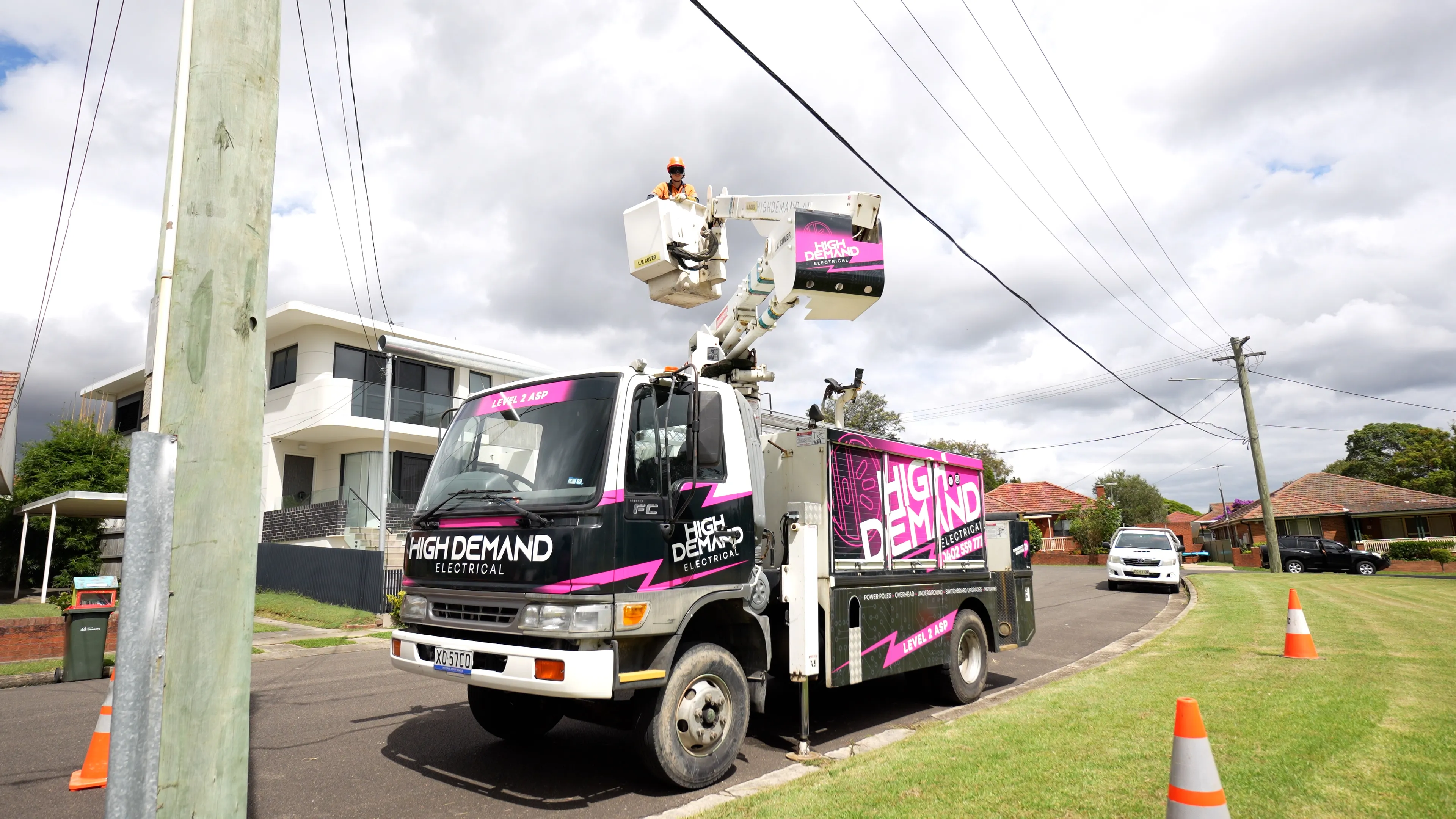
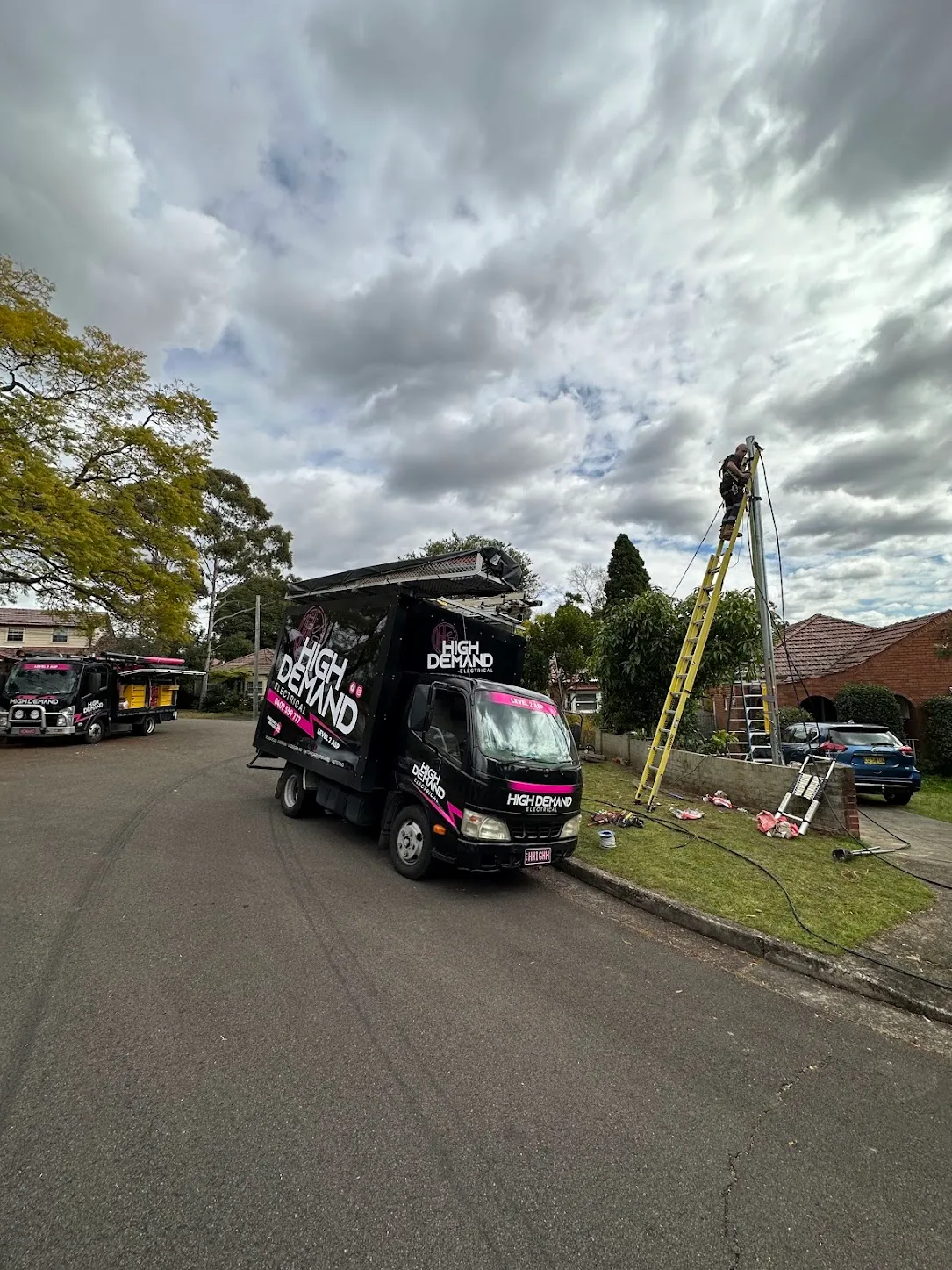
If you’re looking for a reliable, experienced, and prompt electrician, look no further than High Demand Electrical. We cater to all your electrical needs, from routine maintenance to emergency repairs and complete system installations. Our skilled team is committed to providing professional service that ensures your electrical systems run smoothly. Whether it's a small task or a large project, give us a call today. Let us meet all your electrical demands with the quality and reliability you deserve.