Outdoor Power Point Installation Sydney: Costs & What to Know
Written by Chris · Licensed Level 2 ASP Electrician · Licence 397193C
How much does outdoor power point installation cost in Sydney? A single outdoor power point close to your switchboard on an existing circuit typically runs $250 to $450 including materials, rising to $400 to $700 or more where a new cable run is needed. Adding a second point at the same visit usually adds $50 to $120, and a new safety switch, if your board needs one, adds roughly $150 to $350. Exact pricing always depends on distance from the switchboard and how easy the cable run is.
⚡ Quick Answers: Outdoor Power Points in Sydney
- What's a realistic price for one outdoor power point? $250 to $450 close to the switchboard on an existing circuit, more for a longer new cable run.
- Does it need to be weatherproof? Yes, outdoor power points must carry a suitable IP rating for the location, with more exposed spots like decks and pool areas needing a higher rating than a sheltered spot under an eave.
- Do I need a safety switch? Yes, the circuit must be protected by a safety switch (RCD), and your electrician will add one if your board doesn't already cover it.
- Can I install it myself? No. All electrical work in NSW, including a single outdoor power point, must be done by a licensed electrician.
- How long does it take? A straightforward single storey install is usually 1 to 3 hours; a longer cable run or a new safety switch can take 3 to 5 hours.
- Are there rules near pools? Yes, there are exclusion zones around pools and spas that limit how close a power point can be, and your electrician will confirm the exact clearance for your site.
1. What's Actually Involved
Installing an outdoor power point is more than drilling a hole and fitting a socket. Your electrician runs new wiring from the switchboard or an existing circuit, protects it with weatherproof conduit where the run is exposed, and fits a General Purpose Outlet rated for outdoor use rather than a standard indoor point. The circuit also needs safety switch protection, and if your board doesn't already have adequate coverage, your electrician will add one as part of the job.
2. Weatherproof Ratings, Explained Simply
Outdoor power points carry an IP (Ingress Protection) rating, shown as two digits: the first covers protection from solid objects, the second from moisture. A semi sheltered spot, such as under an eave, generally needs a lower rating than a fully exposed deck, garden or pool area, which needs a point built for constant weather exposure. Your electrician will recommend the right rating for the exact spot you have in mind, so it's worth deciding on the location before you get a quote.
3. What Drives the Price Up or Down
The main factors are distance from the switchboard, how easy the cable run is (a concrete wall or an older home with wiring that needs checking both add time), and how many points you're adding in one visit. Bundling two or more points into a single visit is almost always cheaper per point than booking them separately, since the call out and setup time is shared. A power point on a separate structure like a shed generally costs more, since it needs its own underground or overhead cable run.
4. Compliance Rules You Need to Know
- Licensed electrician only: DIY electrical work in NSW is illegal and will void your home insurance if something goes wrong.
- Weatherproof rating: the outlet must suit the location's exposure to sun, rain and moisture.
- Safety switch protection: the circuit must be covered by a safety switch under the Wiring Rules.
- Cable protection: cables run through outdoor areas must be enclosed in suitable conduit or installed at compliant heights.
- Near pools and spas: there are exclusion zones limiting how close a power point can sit to the water's edge, and your electrician will confirm exact clearances for your property.
- Certificate of Compliance: your electrician issues a CCEW once the work is finished. See our guide on electrical compliance certificates in NSW for what that covers.
If your switchboard is older, particularly a fuse based board rather than modern circuit breakers, your electrician may flag it as worth upgrading alongside the new power point. See our guide on switchboard upgrades if that sounds like your home.
5. Best Locations for Outdoor Power Points
Think about how you actually use the outdoor space before deciding on a spot. Common, practical locations include a deck or entertaining area for speakers and lighting, the garage exterior for tools and an EV trickle charger if you're not ready for a dedicated charging circuit, the side of the house for a hose reel or pressure washer, near a garden shed, and near a pool or water feature (keeping the exclusion zone in mind). A quick walkthrough with your electrician before they quote can save you from ending up with the point in the wrong spot.
How High Demand Electrical Helps
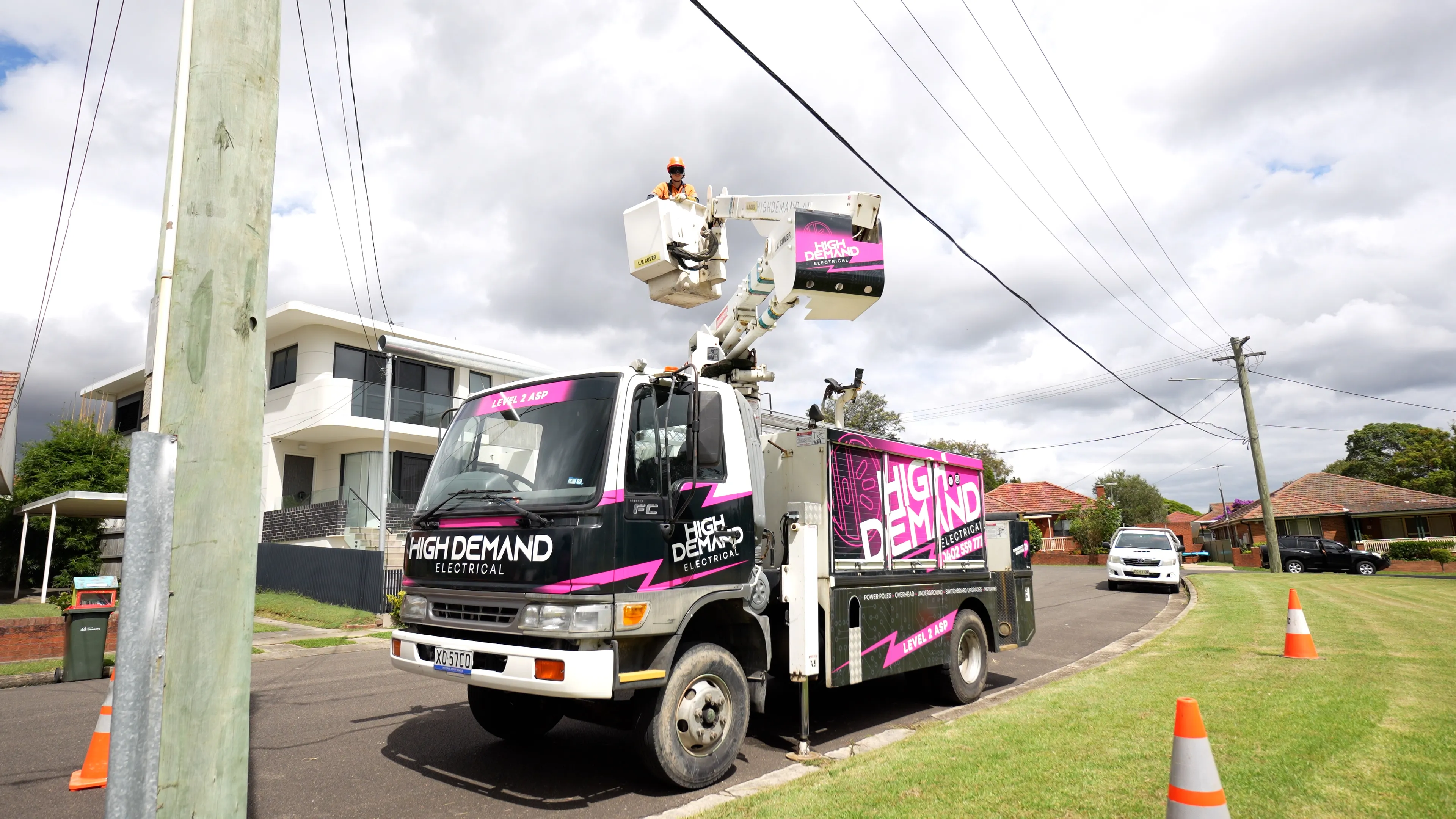
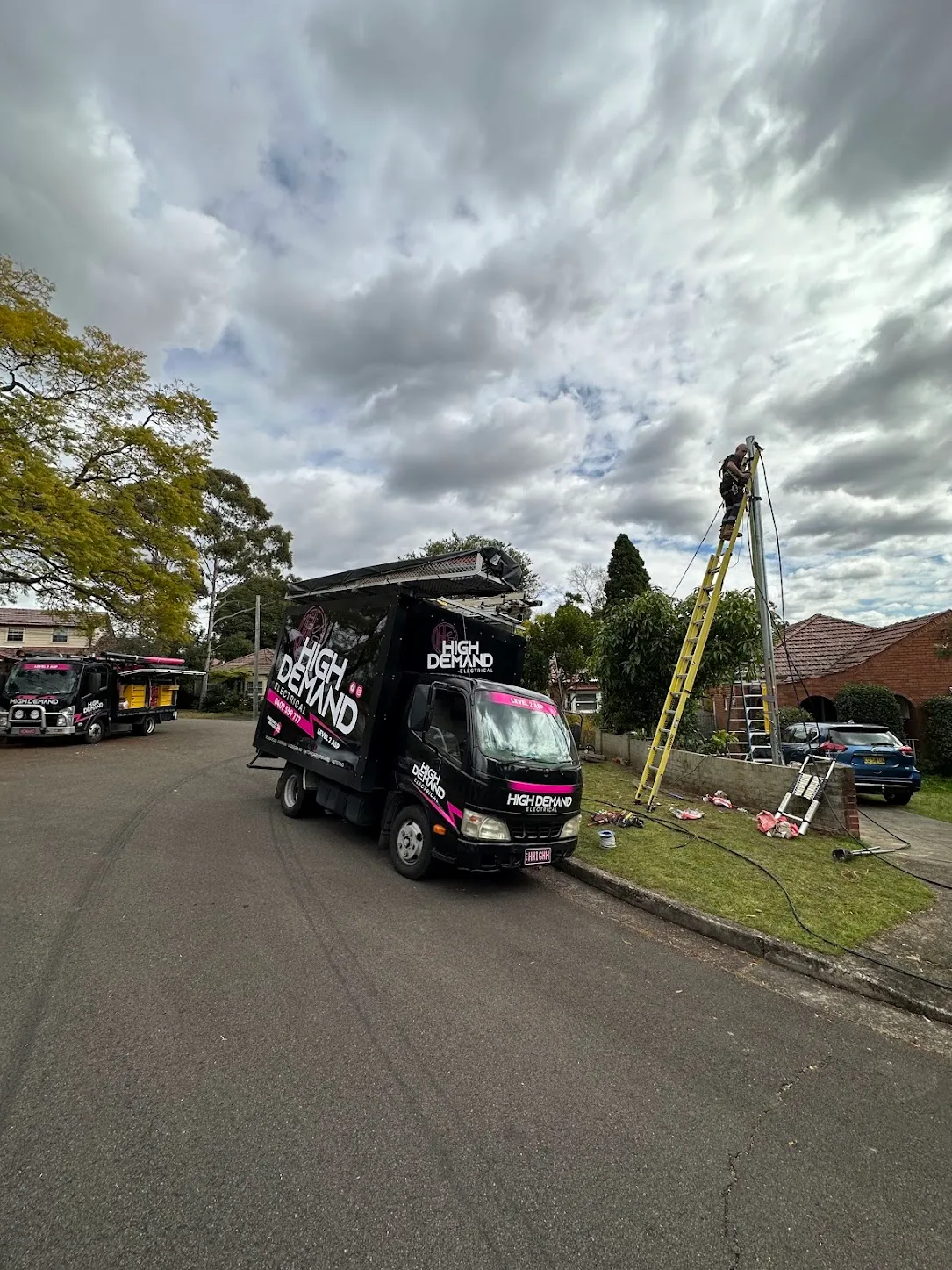
High Demand Electrical installs outdoor power points across Sydney homes, on decks, in garages, beside pools and sheds, as one of Sydney's most trusted Level 2 ASP teams. We assess the site, confirm the right weatherproof rating and safety switch coverage, and give you a fixed quote before any work starts. Every installation comes with a Certificate of Compliance for Electrical Work.
Outdoor Power Point FAQs (Sydney)
Do I need council approval for an outdoor power point?
No, a standard outdoor power point doesn't need council approval. In a strata building, though, check your owners' corporation rules first, since exterior work often needs their sign off.
Can I use an extension cord permanently instead?
No. A permanently run extension cord isn't weatherproof or fused the way a proper outdoor circuit is, and it's a genuine fire and shock risk outdoors. A compliant outdoor power point is the safe, legal option.
What if my safety switch keeps tripping after a new outdoor point is added?
This usually points to moisture ingress or a wiring fault rather than the point itself. See our guide on why your safety switch keeps tripping for common causes.
Can I add an outdoor point for an EV charger?
A basic outdoor GPO can trickle charge some EVs, but a dedicated EV charger circuit is a different, larger job. See our guide on EV charger installation costs if that's what you're planning.
Ready to add an outdoor power point? Get a fixed price quote from High Demand Electrical, or call 0402 559 777 to book a site assessment. We service homes across Sydney and confirm pricing before any work begins.
Related Services

Powering Your Needs with Expertise
If you’re looking for a reliable, experienced, and prompt electrician, look no further than High Demand Electrical. We cater to all your electrical needs, from routine maintenance to emergency repairs and complete system installations. Our skilled team is committed to providing professional service that ensures your electrical systems run smoothly. Whether it's a small task or a large project, give us a call today. Let us meet all your electrical demands with the quality and reliability you deserve.