NSW Connections: Level 2 Tips to Avoid 45 Business Day Reapplications
Start by getting a National Meter Identifier (NMI) from an electricity retailer, or engage an Accredited Service Provider (ASP) if any physical site works are needed. Retailers issue the NMI your application depends on, and only an ASP is legally allowed to connect, disconnect, or alter supply on the network. Get written quotes from at least three ASPs before committing to any works.
TL;DR:
- The cost of a new electrical connection varies significantly based on site distance, needed trenching, and whether infrastructure upgrades or contestable work are involved.
- Basic or standard connections usually involve straightforward work on existing networks, with basic connections often approved quickly or automatically.
- Obtaining accurate, detailed quotes from at least three ASPs and confirming application responsibilities in writing prevents delays and unexpected expenses.
- Meeting NSW distributor requirements for paperwork, site preparation, and technical details reduces the risk of rejection or delay during application processing.
- The entire process, from application to energisation, can range from instant approval for simple cases to several weeks for complex or high-capacity jobs.
Table of Contents
- What is a new electrical connection process in NSW, step one?
- Which connection type applies to your property?
- Who handles what: retailer, distributor and ASP?
- How do I submit a new electrical connection application?
- What does a new electrical connection cost in NSW?
- What happens on the day of connection?
- Why do NSW electrical connections get delayed?
- What a Level 2 contractor sees on the ground
- Get your NSW connection handled by a licensed Level 2 team
- Where to check official NSW connection details
- Sources
- FAQ
What is a new electrical connection process in NSW, step one?
Before you touch an application form, get your paperwork in order. Distributors reject or delay a large share of submissions simply because a detail is missing, and every missing field costs you another round trip through the queue.
Gather these before you start:
- Ownership or council references for the property, plus the full site address and any cadastral or lot details for a subdivision or new build.
- Proposed electrical load, whether you need single phase or three phase, an estimated maximum demand, and a rough list of major appliances (ducted air conditioning, pool pumps, EV chargers, induction cooktops) so your ASP can run a load calculation.
- Existing meter details if there’s already a connection on site, or a clear note that there is no existing supply, along with photos or a simple sketch showing where the service enters the property.
- Retailer details for your NMI application, your chosen ASP’s contact information, your builder’s details if relevant, and your preferred connection or energisation date.
Turning up to your first call with this list ready is the single biggest thing you can do to keep a NSW electrical service setup on schedule. Ausgrid’s technical form for connections below 100 amps asks for exactly this kind of detail, including service length and phase configuration, so having it ready before you apply saves a back-and-forth with the distributor.
Which connection type applies to your property?
NSW distributors sort every application into a handful of categories, and knowing which one you fit changes your paperwork, your costs, and your timeline.
- Basic connection: a simple, low-voltage job with no network augmentation. Think a straightforward new house on an existing street with adequate capacity nearby. These are often the fastest to process and can sometimes be auto-approved.
- Standard connection: still low voltage, but it involves some new infrastructure or a minor extension of the network, such as a new service line to a block set back from the street.
- Standard (subdivision) connection: applies when a block is being split into multiple lots, each needing its own supply. Expect more paperwork and coordination with the distributor on shared infrastructure.
- Major connection: covers larger developments, embedded generation projects, or anything requiring substantial network construction, new poles, or substation work.
A new detached home on a serviced street is usually a basic or standard job. A granny flat added behind an existing dwelling often falls into standard, particularly if it needs its own metering point. Upgrading from single to three-phase power for a bigger workshop, ducted air conditioning, or EV charging infrastructure can shift a straightforward job into standard territory because it usually means load recalculations and sometimes switchboard changes.
Embedded generation, like a large solar and battery system feeding back into the grid, often needs a higher-level ASP and a more detailed technical assessment. If your job involves relocating or constructing shared network assets such as poles or cables, that’s contestable work, and it’s typically funded and coordinated by the developer rather than the individual homeowner.
Who handles what: retailer, distributor and ASP?
Three separate organisations touch your connection, and mixing up their roles is one of the most common reasons homeowners hit delays.
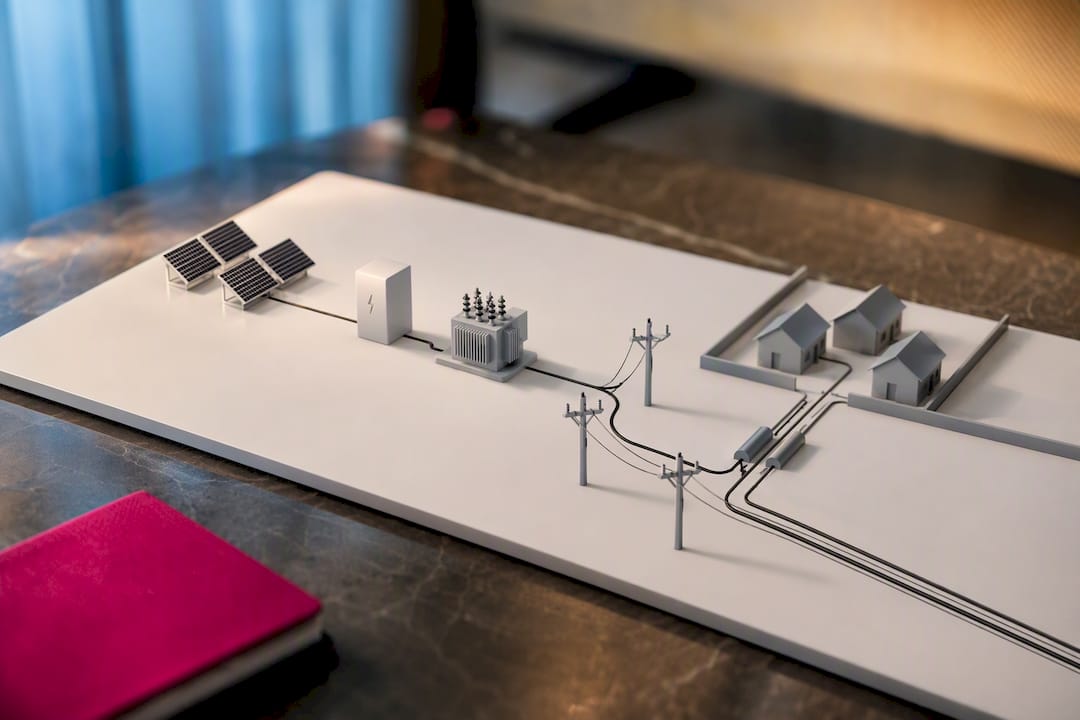
Your retailer issues the NMI, sets up your meter arrangement, and handles billing once power is flowing. Your distributor, the company that owns the poles and wires in your area, assesses the application, issues the Connection Contract, and sets any site-specific conditions. Your ASP does the actual physical work: running the service line, fitting the meter, and energising the connection once everything checks out.
Before you hire an ASP, ask them directly:
- Are you licensed for the specific type of work my job needs (standard, three-phase, embedded generation)?
- Will you lodge the connection application on my behalf, or does that sit with me or my retailer?
- Can I get an itemised written quote covering trenching, service line, meter fit, and energisation separately?
- What’s your typical turnaround from application to energisation for a job like mine?
- Do you provide a free site inspection before quoting?
Pro Tip: Confirm in writing, before any work starts, exactly who is submitting the connection application. It sounds obvious, but “I thought you were doing it” is the single most common cause of a stalled connection Hdlevel2electriciansydney sees across Sydney jobs.
How do I submit a new electrical connection application?
The sequence below covers most residential and small commercial jobs across the state, though the exact portal depends on which distributor services your address.
- Confirm your distributor. Sydney’s inner suburbs mostly sit with Ausgrid or Endeavour Energy, while Essential Energy covers roughly 95% of the rest of the state, including most regional NSW. Checking the network map first stops you applying through the wrong portal entirely.
- Get your NMI. Contact an electricity retailer and request an NMI for the property. A valid NMI is a prerequisite for submitting many basic connection applications, so sort this before you touch the distributor’s form.
- Decide who lodges the application. You, your retailer, or your ASP can typically submit it, but only one of you should, and everyone needs to know which.
- Submit through the correct channel, whether that’s Essential Energy’s connections portal, Endeavour’s online connect service, or Ausgrid’s equivalent form, with all technical fields (phases, service length, maximum demand) completed accurately.
- Choose expedited or standard. An expedited connection can start on the same day you apply, but it means accepting the distributor’s nominated Model Standing Offer and its Schedule of Site-Specific Conditions without negotiation. A standard offer gives you time to review terms before accepting, but takes longer.
Some basic connections receive instant automatic approval, while standard or contestable offers typically stay valid for around 45 business days, giving you a window to review the contract before it lapses. If you let that window close without accepting, you’ll usually need to reapply from scratch.
What does a new electrical connection cost in NSW?
There’s no single flat rate for connecting power in NSW. Costs swing based on how far your service line has to travel, whether trenching is needed, whether your switchboard needs upgrading, and whether any part of the job counts as contestable work funded by a developer.
A basic connection on a street with existing capacity sits at the cheaper end. A block set well back from the road, a job requiring a switchboard upgrade, or a three-phase installation for heavier loads will all push the price up. Subdivision and major connections carry the highest costs because they often involve new poles, extended cabling, or shared infrastructure work that has to be engineered and approved before a spade goes in the ground.
Because pricing genuinely depends on site conditions, the NSW guidance recommends getting written quotes from at least three ASPs before you commit. Don’t just compare bottom-line figures, compare what’s actually included.
- Does the quote cover the service line and trenching, or just the meter installation?
- Is the switchboard upgrade priced separately, and does it include compliance certification?
- Are energisation and final testing itemised, or bundled into a vague “connection fee”?
- Does the quote note any allowance for unexpected ground conditions during trenching?
Pro Tip: Ask each ASP for their quote in writing with line items, not a single lump figure. A vague one-line quote is the fastest way to end up with a surprise invoice halfway through the job.
What happens on the day of connection?
Energisation day follows a fairly consistent sequence, whether you’re connecting a new home, a granny flat, or a small commercial fitout.
Your ASP installs the service line from the point of common coupling on the network to your property, connects it, then fits the meter and runs final checks on the switchboard to confirm everything meets current safety standards. Permission to connect, sometimes called energisation, is granted once the distributor or ASP confirms the installation meets the conditions set out in your Connection Contract. In most cases, the ASP performing the physical work coordinates this sign-off directly.
Before the crew arrives, most ASPs will ask for:
- Clear, unobstructed access to the service route and meter box location.
- A meter box installed and positioned according to distributor clearance requirements.
- Confirmation of any service run constraints, like underground conduit already laid for a slab-on-ground build.
If you’re mid-construction and need power for tools and site amenities before the home is finished, that’s a temporary builder’s supply, a separate, usually short-term arrangement that differs from your permanent connection. It’s typically set up early in the build and decommissioned once the permanent supply is energised, so don’t assume one automatically becomes the other.
Why do NSW electrical connections get delayed?
Most delays trace back to a handful of avoidable mistakes, and nearly all of them are preventable with a bit of upfront coordination.
- Incomplete applications. Missing a phase configuration, a maximum demand figure, or a site sketch can trigger an Incomplete Information Charge on top of the delay itself. Run through your checklist twice before submitting.
- Coordination gaps. If nobody’s clear on whether you, your retailer, or your ASP is lodging the application, it can sit unsubmitted for weeks while everyone assumes someone else is handling it.
- Underquoted works. A quote that skips site-specific items like pole relocation, private pole installation, or trenching through rock will blow out the moment the crew hits the ground.
- No escalation path. If a job stalls, ask your distributor directly for a Schedule of Site-Specific Conditions rather than waiting on a generic status update.
A five-minute phone call confirming responsibilities before work starts saves most homeowners a genuinely frustrating fortnight later.
What a Level 2 contractor sees on the ground
Managing new connections across Sydney properties day to day teaches you where things actually go wrong, and it’s rarely the technical work itself. It’s the coordination gaps: a homeowner assuming their builder sorted the NMI, or a retailer waiting on paperwork the ASP already submitted.
A proper free site inspection catches most of this before it becomes a problem. A good ASP checks the proposed service route, confirms meter box placement meets clearance rules, and flags anything that might need a switchboard upgrade before quoting, not after work has started. The quickest wins for homeowners are simple: confirm your NMI early, ask for an itemised quote, and make sure the service route is genuinely clear before anyone books a crew.
— Christopher
Get your NSW connection handled by a licensed Level 2 team
Coordinating an NMI, a distributor application, and physical site works across three different organisations is exactly the kind of job that turns into a headache without someone managing the handoffs. Hdlevel2electriciansydney is a certified Level 2 electrician in Sydney that manages the whole sequence, application coordination, service line and meter installation, switchboard upgrades where needed, and liaison with your distributor through to energisation, so you’re not the one chasing three different phone numbers.

Every job starts with a free site inspection for Level 2 work, giving you an itemised quote before anything is booked, not a vague estimate after the fact. If your job involves a load upgrade or a switchboard that’s due for replacement anyway, our team at switchboard upgrades Sydney can fold that into the same visit. For readers in the northern suburbs, our Artarmon Level 2 electrician team covers local connections directly. To get moving, request a free site inspection and quote, and have your address, proposed load details, and preferred connection date ready when you call.
Where to check official NSW connection details
For the legal basics on altering or installing supply, the NSW Climate and Energy Action page covers ASP requirements and homeowner responsibilities in plain terms. If Essential Energy services your address, their connections portal has the current forms and network map. Endeavour Energy customers should use its connect supply portal for online applications and asset relocation requests.
Sources
- Installing or altering electricity supply to your property | NSW Climate and Energy Action
- Connect supply or relocate assets | Endeavour Energy
- Getting started with your connection | Essential Energy
- Guide to completing: New Connections Below 100 Amps Application
FAQ
How much does a new electrical connection cost in NSW?
There’s no fixed price. Costs depend on distance from the network, whether trenching or a switchboard upgrade is needed, and whether the job counts as contestable work. Get written quotes from at least three ASPs to compare inclusions before committing.
How much does a new electric connection cost overall, including the meter?
Meter installation is usually bundled into your ASP’s connection quote alongside the service line and energisation, but always ask for an itemised breakdown so you know what’s covered and what isn’t.
Who is eligible for a $4,000 white goods voucher in NSW?
This isn’t a standard part of the electrical connection process. Voucher and rebate eligibility varies by scheme and household circumstances, so check current NSW Government energy rebate programs directly rather than assuming it applies to a new connection.
How long does a new electrical connection take in NSW?
Some basic connections can be approved instantly, while standard or contestable offers typically remain valid for around 45 business days once issued. Actual on-site works depend on your ASP’s schedule and whether any network augmentation is required.
Do I need an ASP or can my retailer connect my power?
You need an Accredited Service Provider for any physical work, connecting, disconnecting, or altering supply. Your retailer handles the NMI, meter setup, and billing, but they don’t perform on-site electrical works themselves.
Powering Your Needs with Expertise
If you’re looking for a reliable, experienced, and prompt electrician, look no further than High Demand Electrical. We cater to all your electrical needs, from routine maintenance to emergency repairs and complete system installations. Our skilled team is committed to providing professional service that ensures your electrical systems run smoothly. Whether it's a small task or a large project, give us a call today. Let us meet all your electrical demands with the quality and reliability you deserve.