
Generator Installation Cost in Sydney (2026 Price Guide)
In Sydney, a portable generator setup with an inlet and changeover switch typically costs $1,500 to $4,000 installed, while a permanent automatic standby system, supplied and installed, runs from $6,000 to $15,000 or more. Those are indicative market ranges, not our quotes. Your own figure depends on the generator’s size, the fuel, the state of your switchboard and how far the unit sits from it.
This guide breaks the cost into its parts so you can read a quote line by line, and shows where Sydney homes and businesses most often get surprised.
TL;DR
- Portable generator with inlet and changeover: roughly $1,500 to $4,000 installed. Automatic standby system: roughly $6,000 to $15,000 or more, per current NSW estimates.
- The changeover switch is the biggest single choice: manual or automatic transfer switch (ATS). It changes both price and how quickly power returns.
- An old switchboard or a single-phase supply can add cost before the generator is even connected.
- Only a licensed electrician can connect a generator to your wiring, and they must lodge a Certificate of Compliance for Electrical Work.
- We offer free site inspections for Level 2 work, so you can get a written scope before committing.
Table of Contents
- What a generator installation actually includes
- Generator installation cost in Sydney: the ranges
- Portable generator with inlet: the budget route
- Automatic standby systems: the higher price, the hands-off result
- Manual changeover or ATS: which one do you need?
- What pushes your quote up or down
- The rules: licensing and compliance in NSW
- Our view: what we tell Sydney customers before they buy
- Getting a firm number from us
- Planning for businesses and strata
- Questions to ask before you accept any quote
- FAQ
- Sources
What a generator installation actually includes
The generator itself is only part of the bill. A compliant installation joins the generator to your electrical system without any chance of feeding power back into the street network. The pieces are:
- The generator. Portable petrol or inverter units, or a permanent standby unit running on gas or diesel.
- A changeover or transfer switch. This isolates your switchboard from the grid before the generator connects. Skipping it risks backfeeding the street network, which endangers line workers.
- An inlet or hard-wired connection. For portable units, a weatherproof inlet on an outside wall lets you plug in safely.
- Cabling, circuit protection and switchboard work. Often the most variable line on the quote.
- Fuel connection. Gas plumbing for gas-fuelled standby units, or a fuel supply plan for diesel.
- Testing and paperwork. Testing, commissioning and the compliance certificate.
Generator installation cost in Sydney: the ranges
The table below uses indicative 2026 NSW figures from published trade guides. Treat it as a way to sanity-check a quote, not as a price list.
| Item | Typical NSW range |
|---|---|
| Portable generator setup (install, inlet and changeover) | $1,500 to $4,000 |
| Standby generator (supply and install) | $6,000 to $15,000 or more |
| Changeover or transfer switch | $1,200 to $3,500 |
| Generator inlet or socket | $400 to $1,200 |
| Gas connection (gas-fuelled unit) | $800 to $2,500 |
| Installation labour | $600 to $3,000 |
The same source notes that across metropolitan Sydney the type, size and changeover set the price far more than the postcode does. Other guides give slightly different numbers. One Australian supplier puts manual switches at about $600 to $1,500 installed, against $1,200 to $3,500 for the broader changeover range above. That gap is normal: it depends on whether the switch is a simple unit beside an existing board or has to be integrated into a crowded one.
We do not publish fixed prices for generator work, because the site decides the number. What we can do is tell you which bracket you are in before we start.
Portable generator with inlet: the budget route
For many Sydney households the sensible option is a portable generator you keep in the shed, plus a permanent inlet and manual changeover switch installed at the switchboard. In a storm outage you wheel the unit out, connect it through the inlet, flip the switch and run the circuits you chose.
This approach suits:
- homes where a few minutes without power is tolerable;
- occasional use, such as storm season outages in the outer suburbs;
- owners who want to keep the upfront spend close to the low end of the range.
The portable unit itself is bought separately. The installation figure covers the electrical work, not the machine. Inverter models are quieter and cleaner for electronics, which matters if you are running a fridge, internet router and lighting.
Two cautions. First, never run a petrol generator indoors or in a garage: carbon monoxide is the hazard here, so the unit belongs outside, well away from windows and vents. Second, never plug a generator into a power point with a double-ended lead. That is exactly the situation a proper inlet and changeover switch exist to prevent.
Automatic standby systems: the higher price, the hands-off result
A permanent standby generator sits outside, connects to gas or diesel and starts itself when the grid fails. An ATS detects the outage and transfers the load. According to industry guidance, an ATS transfers in roughly 10 to 30 seconds without anyone present, while a manual switch can take several minutes because a person has to do it.
That is why the standby bracket starts around $6,000 and climbs toward $15,000 or more. You are paying for:
- a larger, weatherproof unit sized in kVA for your actual load;
- the ATS and its wiring;
- a concrete pad or suitable base, and fuel connection;
- commissioning and, usually, a service plan.
If you want a closer look at what a residential standby installation involves, see our home standby generator installation page and the Guardian series standby generators we install. For larger sites, there is also commercial generator installation with 3-phase backup.
Manual changeover or ATS: which one do you need?
The useful way to decide is by what you cannot afford to lose, not by the price tag alone. Guidance for Australian buyers puts it simply: a manual switch suits occasional, budget-conscious backup where a short outage is acceptable. An ATS is worth it for medical equipment, refrigeration or home-based servers, where downtime means real loss or risk.
| Manual changeover | Automatic transfer switch | |
|---|---|---|
| Someone must be present | Yes | No |
| Transfer time | Minutes | Roughly 10 to 30 seconds |
| Typical installed cost | Lower | Higher |
| Best for | Occasional home backup | Medical, cold storage, servers, businesses |
If anyone in your household relies on powered medical equipment, talk to your clinician about their backup requirements as well as to your electrician. A generator is not a substitute for the backup plan the equipment supplier recommends.
What pushes your quote up or down
Size and load
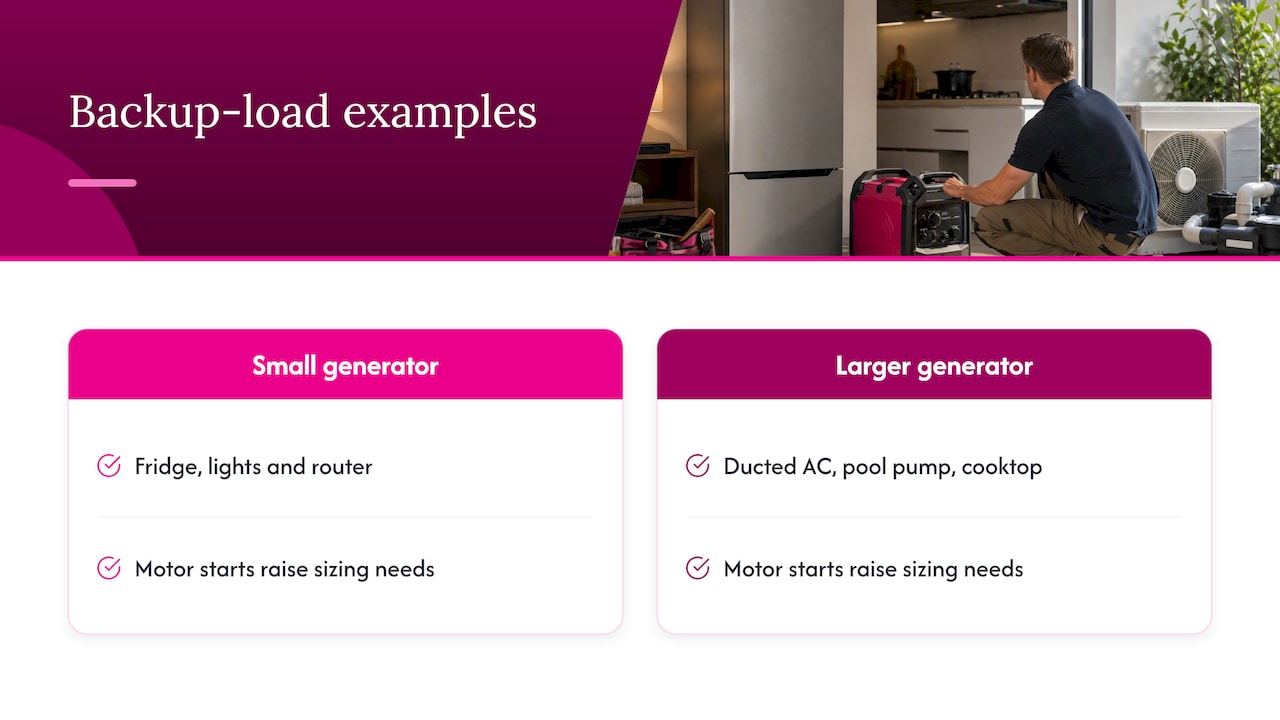
Generators are sized to the load you want to keep running. Backing up a fridge, lights and a router needs a small unit. Backing up ducted air conditioning, a pool pump and an induction cooktop needs far more. Before quoting, we list the circuits you want to keep and add up the starting loads, since motors draw several times their running current when they start.
Your switchboard
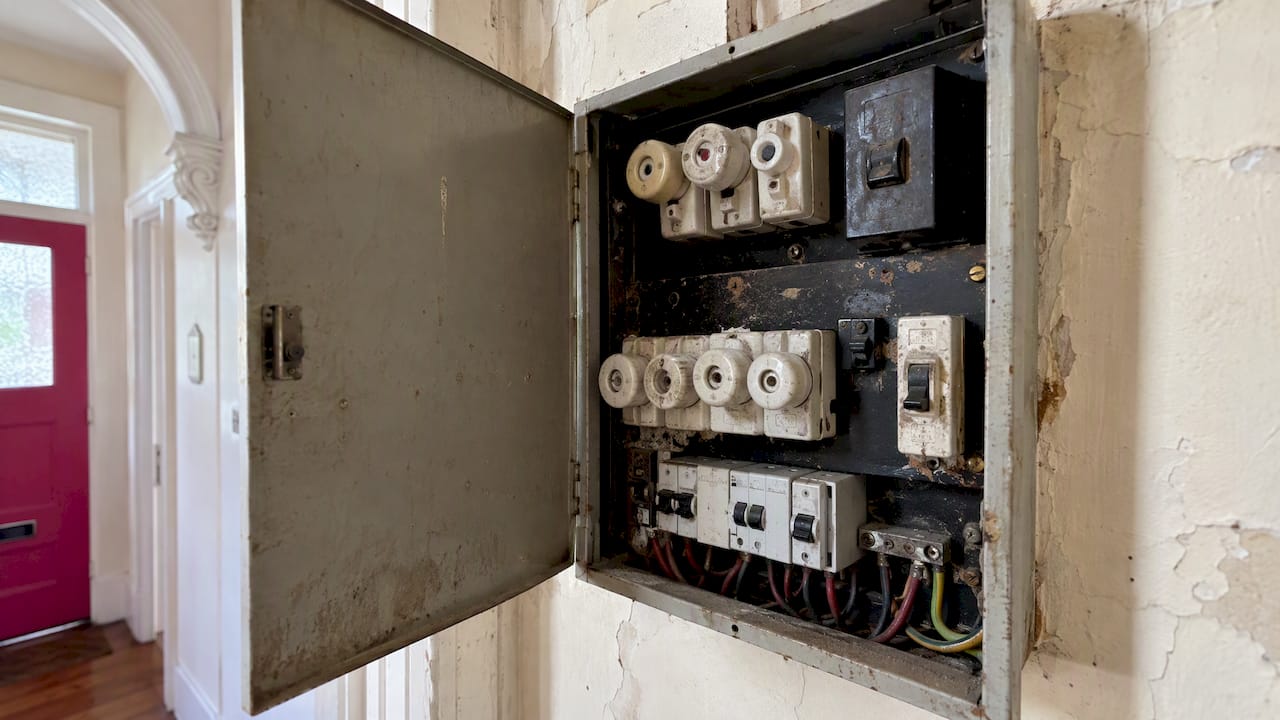
The switchboard is where most hidden costs appear. An old board with ceramic fuses, no safety switches or no spare room may need replacing or reworking before a changeover can be fitted. If yours is due, it often makes sense to do both jobs together. See our switchboard upgrades page for what that involves.
Single phase or three phase
Most Sydney homes have a single-phase supply. Larger generators, and many commercial sites, work best with three phase. A three-phase upgrade sits around $4,000 to $6,500 according to one Australian electrical guide, with the final price depending on the property. That is a separate project from the generator, but if you are planning both, it is cheaper to coordinate them. Our single phase to three phase upgrade page covers the process, and a distributor connection may be involved: in NSW the distributor can charge the customer for changes to supply arrangements made at the customer’s request.
Fuel and location
Gas-fuelled standby units need a gas connection, which the guide above puts at $800 to $2,500. Diesel avoids that but needs fuel storage and regular running. Distance from the unit to the switchboard matters too, because every extra metre of heavy cable and conduit adds both material and labour. Units on terraces, in tight inner-west lanes or on strata common property can also need approvals and noise considerations.
The rules: licensing and compliance in NSW
Generator connection is not DIY work. In NSW, any electrical wiring work must be done by, or under the supervision of, a licensed electrician, who must submit a Certificate of Compliance for Electrical Work (CCEW). From 1 July 2026, CCEWs must be submitted through the Building Commission NSW portal. Handwritten and PDF forms are no longer accepted. The state’s CCEW template lists generation and storage among the equipment categories that get recorded.
In practice, ask any installer for the CCEW once the work is done. It matters for warranty, insurance and a future sale. Connection work at the point where the network meets your property may also need an accredited Level 2 service provider, which is the work we specialise in.
Our view: what we tell Sydney customers before they buy
We see the same pattern on callouts after storms. People buy the generator first, then discover the house is not ready for it. Our advice:
- Decide what you need to keep running. Write the list. Everything else follows from it.
- Have the switchboard looked at first. A safety inspection before buying the generator can save you from buying the wrong size. Our electrical maintenance service includes safety switch testing.
- Do not choose on the cheapest quote. Compare what each quote includes: inlet, switch type, cabling, testing and certificate.
- Choose the switch for the worst outage, not the average one. If a fridge full of medication or a business’s cold room is involved, an ATS is cheap insurance.
- Keep the generator serviced. An untested unit is the one that fails when the grid does.
A generator is only as reliable as the electrical work behind it. That is why we send a Level 2 accredited electrician to look at the site, not a salesperson.
— Christopher
Getting a firm number from us
We are a certified Level 2 electrical contractor in Sydney, and we offer free site inspections for Level 2 work. For a generator job that means we look at your switchboard, supply and the proposed generator position, then give you a written scope. Our generator installation page has the details, and you can reach our team through the High Demand Electrical home page. If a power failure is happening now, our emergency electrician service runs 24/7, and we guarantee a 10-minute callback. Seniors can ask about our discounts when booking.
Planning for businesses and strata
For shops, offices and strata buildings, a generator usually protects something specific: lifts, fire systems, cold rooms, point-of-sale or servers. The sizing is done around those essential circuits, not the whole building. Three-phase supply, load shedding and testing schedules all become part of the quote.
Backup power also raises the ongoing question of who looks after the rest of the electrical system. Facilities that rely on standby power tend to need steady commercial electrical repairs and maintenance so that the generator is not the only thing standing between a fault and an outage. Property managers should also factor in periodic load testing and records for compliance.
Questions to ask before you accept any quote
- Does the price include the changeover switch, inlet and all cabling?
- Is the switch manual or automatic, and why?
- Will my switchboard need work first?
- Who lodges the CCEW, and will I get a copy?
- What are the servicing and warranty terms?
- Is the installer a Level 2 accredited service provider if network connection work is involved?
A quote that answers all six in writing is easier to compare, and usually cheaper in the end.
FAQ
How much does it cost to install a generator at home in Sydney?
As an indicative range, a portable generator with an inlet and manual changeover typically costs $1,500 to $4,000 for the electrical installation. A permanent standby system supplied and installed is often $6,000 to $15,000 or more. The generator size, fuel and switchboard condition decide where you land.
Can I connect a generator to my house myself?
No. In NSW, wiring work must be done by or under the supervision of a licensed electrician, who then lodges a compliance certificate. An incorrect connection can send power back into the network and endanger people working on the lines.
Do I need a three-phase supply for a generator?
Not for a small portable unit on a single-phase home. Larger standby systems and many commercial sites work better with three phase. If you need an upgrade, budget for it separately and have the electrician plan both jobs together.
Is an automatic transfer switch worth the extra cost?
It is worth it if power loss would cause harm or significant loss, such as medical equipment, refrigeration or servers. For occasional home backup where a few minutes of outage is acceptable, a manual changeover is usually enough.
Sources
- Generator Installation NSW, The Quote Yard
- Changeover Switch vs ATS guide, AIMS Industrial
- Three-Phase Power Guide for Homeowners, Dawson Electric
- Electrical compliance requirements, NSW Government
- CCEW template, NSW Fair Trading
- NSW Standard Electricity Service and Installation Rules, NSW Government
Powering Your Needs with Expertise
If you’re looking for a reliable, experienced, and prompt electrician, look no further than High Demand Electrical. We cater to all your electrical needs, from routine maintenance to emergency repairs and complete system installations. Our skilled team is committed to providing professional service that ensures your electrical systems run smoothly. Whether it's a small task or a large project, give us a call today. Let us meet all your electrical demands with the quality and reliability you deserve.

