
Electrical Safety Checks for Sydney Homes and Businesses
A peace of mind electrical safety check in Sydney is worth arranging every 1-2 years, or whenever you suspect an electrical issue. Don’t wait for a visible fault to disrupt your home or workplace: checks can help identify problems with wiring, outlets, switchboards and other components.
It’s reasonable to want a clear answer about how often to book an inspection and what an electrician will actually test. This guide explains the recommended timing, what a check can cover, and how safety switches and common hazards fit into electrical safety.
You’ll also find a practical 10-point home electrical safety check to help you spot signs that need attention. For businesses, we’ll cover the role of visual inspections and electrical testing, so you can understand the process before arranging a check.
Key Takeaways
• Arrange a home electrical safety check every 1-2 years, or sooner if you suspect a fault.
• A thorough inspection can cover wiring, outlets, switchboards, circuit breakers and other electrical components.
• Safety switches, also called residual current devices, help protect against a frequent cause of electrocution and provide some protection against electrical fires, according to SafeWork NSW.
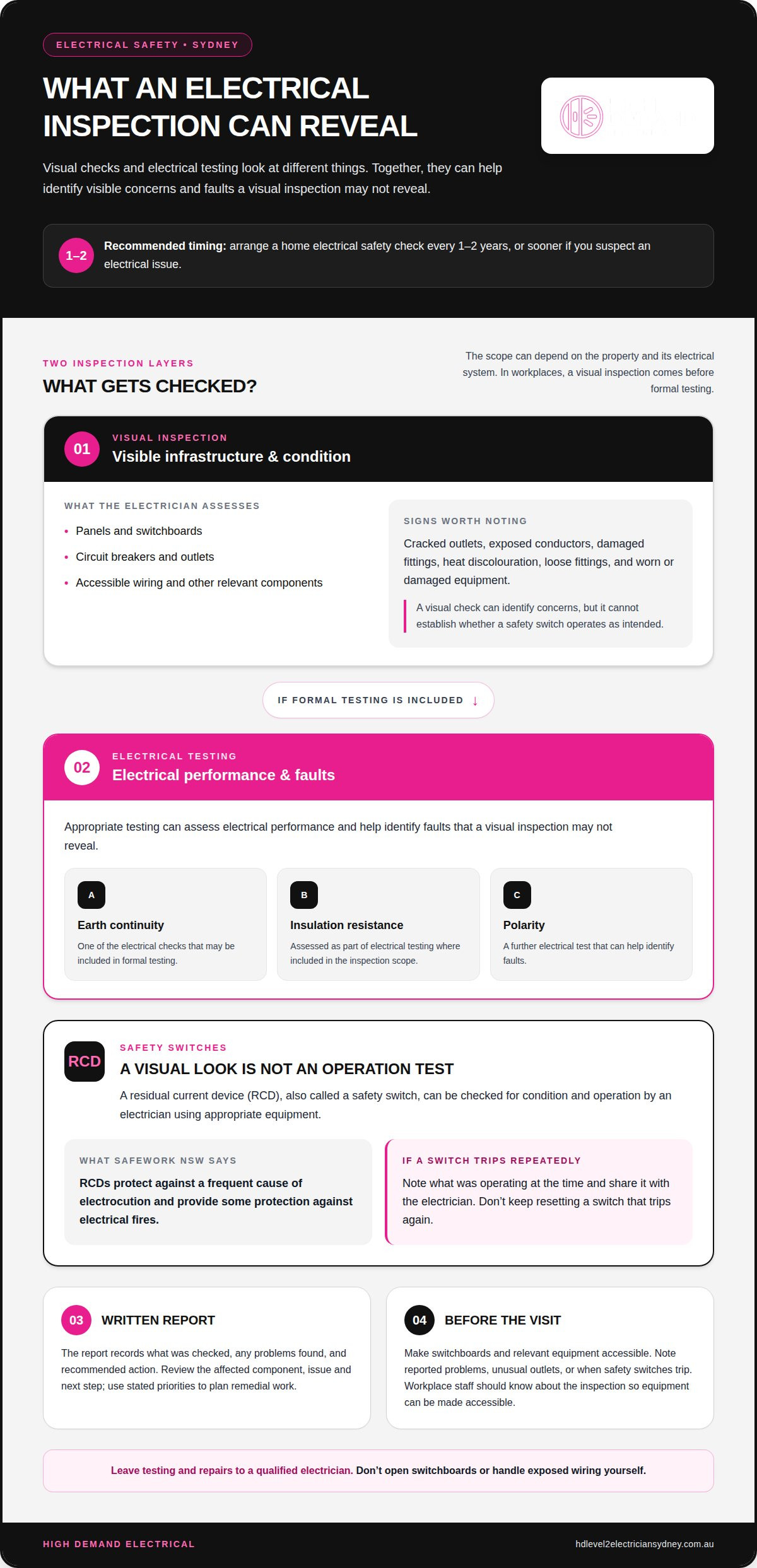
• Electrical testing can assess earth continuity, insulation resistance and polarity, helping identify faults that a visual inspection may not reveal.
• Use the 10-point home check to spot warning signs, but leave electrical testing and repairs to a qualified professional.
Residential and commercial inspections in Sydney
A Sydney electrical inspection checks visible infrastructure and components, then records faults and recommended action. Arrange one every 1-2 years, or when you suspect an issue.
On-site electrical infrastructure inspections
The electrician assesses the property’s electrical infrastructure on site, including panels, circuit breakers, outlets and accessible wiring. In a workplace, the visit begins with a visual inspection of equipment before formal testing. Make access available to relevant areas, such as switchboards, and identify reported problems, including intermittent power or damaged fittings.
For a home or business with concerns about its incoming supply infrastructure, a Sydney Level 2 electrician can address work within that specialist area.
Wiring and component checks
An inspection assesses the condition of accessible wiring, outlets, switchboards and circuit breakers, including visible signs of damage. A cracked outlet, exposed conductor or discoloured fitting gives the electrician a specific issue to assess. The inspection may also cover other electrical components at the property, depending on the building and its electrical system.
At commercial premises, note equipment that looks worn or damaged and tell the electrician where it is used. A visual check can identify concerns, while formal testing assesses electrical performance. Don’t open switchboards or handle exposed wiring yourself. Leave those checks to the electrician.
Written reports and recommended solutions
A written inspection report records what the electrician checked and any problems identified. Review each finding alongside its recommended solution to distinguish an observed defect from proposed work. Businesses can retain the report with maintenance records; homeowners can keep it for future inspections and repair planning.
Ask for a clear description of each affected component, the issue found and the recommended next step. If the report identifies several faults, use its priorities to plan remedial work. Specific recommendations are more useful than a bare list of component names.
When comparing electrical safety inspections in Sydney, look at the scope of the inspection, whether it includes visual checks and formal testing, and how detailed the written report is. These service features alone do not establish a provider ranking.
Are Peace of Mind electricians licensed in NSW? I can’t verify the licensing status of specific Peace of Mind electricians from the inspection details available here. An inspection description alone doesn’t establish an individual electrician’s licence status.
Inspection costs depend on factors such as property size, electrical system complexity, scope and access. High Demand Electrical can provide a quote once the work required is understood.
How long does an electrical safety inspection take, and do I need to prepare? Most checks take about 1-2 hours, depending on property size and system complexity. Before the visit, arrange access to switchboards and relevant equipment, and tell workplace staff about the inspection so equipment can be made accessible.
Residual current devices and safety switches
A safety switch, also called a residual current device (RCD), can be checked for condition and operation. SafeWork NSW explains that an RCD protects against a frequent cause of electrocution and provides some protection against electrical fires.
Outlets, plugs and RCBO safety switches
During an inspection, the electrician can look for cracked outlets, loose fittings, heat discolouration and damaged plugs. These visible signs may point to components that need closer assessment. Note which outlet or appliance is involved if a plug becomes unusually warm or power cuts out at one point.
An RCBO is a type of safety switch located at the switchboard. An electrician can check its condition and the circuits it protects. Don’t remove covers or attempt repairs yourself. Note the affected outlet, switch or circuit and share those details during the inspection.
Safety switch and circuit testing
A visual check alone cannot establish whether a safety switch operates as intended. An electrician can test the device and associated circuit with appropriate equipment. The results can identify a switch that does not respond correctly or a circuit needing further investigation. Testing should be left to an electrician. Don’t touch wiring or open the switchboard to try it yourself.
If a safety switch trips repeatedly, note what was operating at the time, such as a particular appliance. This detail can help the electrician narrow down the circuit or equipment involved. Don’t keep resetting a switch that trips again. Repeated interruptions are a reason to arrange an assessment.
A switchboard check considers the visible condition and function of its switches and circuit breakers. The electrician can identify damage, poor labelling or components requiring further assessment. Clear circuit labels make it easier to identify which areas lose power when a switch operates. If inspection findings point to switchboard work, switchboard upgrades may address the identified issue.
Before the visit, list outlets that behave unusually and note when safety switches trip. Keep the switchboard accessible and tell the electrician about changes to the property’s electrical setup. At a workplace, identify circuits serving essential equipment so the testing plan can account for operational needs. The electrician can explain the tests and record findings for follow-up.
Testing and installation are separate steps. An inspection assesses existing devices and circuits; installation means fitting or replacing equipment where required. The findings help determine whether a device needs attention, and the report should set out the recommended next step. This gives homeowners and businesses a record of observed issues, rather than relying on a switch’s appearance alone.
Earth continuity, insulation resistance and polarity testing
Electrical testing can reveal faults that a visual inspection may not show. During a test and tag visit, a Portable Appliance Tester can check earth continuity, insulation resistance and polarity.
What the electrical tests examine
Earth continuity testing checks whether an appliance’s protective earth path is connected correctly. If the path is damaged or interrupted, the appliance may not have its intended protection during a fault. Insulation resistance testing assesses the insulation separating electrical conductors. Deteriorated insulation can allow current to escape its intended path.
Polarity testing checks whether active, neutral and earth connections are arranged correctly. Incorrect polarity can create a hazard even when an appliance appears to work normally. A Portable Appliance Tester uses the appropriate test method for the item, and the results can identify equipment needing further attention.
Electrical appliance testing
During a workplace test and tag visit, an electrician can assess portable electrical equipment such as computer leads, power boards and workplace tools. Testing considers the item’s condition and electrical results, not just its appearance. A damaged plug or failed test result is a clear reason to remove an item from use until it has been assessed.
Keep a record of the items tested and any failures. A test and tag label can show whether an item passed or failed, its test date and retest due date, and who performed the work. For workplace visits, make equipment accessible and let staff know when testing is taking place. This helps the technician reach items and reduces confusion about equipment temporarily unavailable for use.
Smoke alarm checks
Include smoke alarms in a home safety routine, but remember that their checks are separate from appliance testing. Follow the manufacturer’s instructions to test each alarm and note any unit that fails to respond or shows damage. Record the alarm’s location and test result, then arrange assessment or replacement if needed.
Don’t assume an alarm works just because its indicator light is visible. Check the unit and its instructions, and keep the result with other household maintenance records. If a smoke alarm needs replacing, use a compatible unit. Have a qualified electrician handle any installation involving fixed wiring. A clear record distinguishes alarm maintenance from Portable Appliance Tester results.
For an efficient workplace visit, prepare a list of equipment that needs testing. Keep failed items separate from equipment ready for use until their condition has been addressed. Written results can support decisions about repair, replacement or continued use.
Electrical hazards and injury risks
Electrical faults can put people, buildings and workplace operations at risk. SafeWork NSW warns that accidental contact with live overhead or underground power lines can kill or cause serious injury.
Identifying electrical hazards
Start by noting visible warning signs and where and when they occur. Examples include scorch marks around an outlet, a damaged power lead, flickering lights or repeated circuit interruptions. Don’t touch damaged wiring or equipment. Keep people away from the area and arrange an assessment by a competent person.
SafeWork NSW advises that a competent person should inspect electrical equipment regularly for damage, wear and electrical faults. At work, include equipment used in daily tasks, such as portable tools and leads. Note each item’s location and symptoms to help the inspector assess the relevant equipment and electrical system.
Common electrical hazards
Damaged cords, cracked outlets, exposed conductors and overloaded power boards can indicate hazards. For example, a lead trapped under furniture may be crushed or worn without being obvious in everyday use. Look for fraying, loose fittings, heat damage and unusual smells. Remove damaged equipment from use without handling exposed conductors.
Water near electrical equipment is a serious concern. A wet area beside a power point or an appliance with a damaged lead needs prompt attention. Don’t touch electrical equipment while standing in water. Keep others clear and arrange a professional assessment before using the affected area again.
Take particular care around overhead and underground power lines. SafeWork NSW warns that accidental contact with live lines can kill or cause serious injury. Stay clear of fallen wires and keep away from excavation areas where underground services may be present. Electricity can kill or severely injure people and damage property.
Fire is another risk. Electrical faults are a leading cause of fires in Australian properties. Warning signs can include burning smells, scorch marks or a fitting that becomes unusually hot. Stop using affected equipment and arrange an inspection rather than repeatedly resetting a circuit.
SafeWork NSW identifies electricity as a constant hazard in many workplaces, where faulty equipment or damaged leads can injure or kill people. Keep walkways clear of trailing cords, report defects and make equipment accessible for inspection. These steps help ensure damaged items are identified before they remain in regular use.
10-Point home electrical safety check
Use this 10-point walkthrough to spot visible warning signs around your home. It doesn’t replace electrical testing: don’t remove covers, touch exposed wiring or attempt repairs. Note the location of anything unusual and arrange an electrician’s assessment, especially if you notice heat, burning smells or damaged equipment.
Check the switchboard exterior.
Look for visible damage, scorching or a door that won’t close properly. Don’t open the board.
Look at outlet faces.
Cracks, loose fittings or dark marks around a power point warrant attention. Avoid using a visibly damaged outlet.
Inspect plugs and leads.
Check for fraying, cuts, crushed sections or bent plugs. Set damaged items aside without handling exposed conductors.
Notice unusual heat or smells.
A hot outlet or burning smell near an appliance is a warning sign. Stop using the affected item.
Watch for flickering lights.
Record which fitting flickers and when it happens. A repeatable pattern can help an electrician investigate.
Look for repeated power interruptions.
Note which rooms or appliances lose power. Don’t repeatedly reset a switch that trips again.
Check power boards.
Look for damaged cases, loose switches or cords stretched across walkways. Keep leads clear of furniture and foot traffic.
Review cords near heat and water.
Keep electrical leads away from wet areas and hot appliances. Don’t use equipment with wet hands.
Observe light fittings.
Look for cracked covers, scorch marks or unusual changes in operation. Leave fitting covers in place.
Check outdoor equipment visually.
Look for damaged cords or fittings exposed to weather. Don’t approach fallen wires or touch wet electrical equipment.
Keep a brief record of findings, including the room, item and date noticed. For example, write “kitchen outlet, dark mark, noticed today” rather than trying to diagnose the cause. A home check can flag concerns, but it does not establish that wiring or equipment has passed formal testing. Consider any property-specific obligations separately.
How do I book a Peace of Mind electrical safety check in Sydney? Use the provider’s booking or contact channel and share your property address, whether it’s a home, and the specific issues you’ve observed. Mention access needs and any repeated power interruptions so the inspection can be planned around the concerns.
If your walkthrough turns up warning signs, contact the team to discuss an electrical safety check and explain what you found. Keep people away from damaged equipment until it has been assessed.
High Demand Electrical: Level 2 ASP Electrical Services
High Demand Electrical provides Level 2 ASP Electrical Services when inspection findings involve electrical infrastructure rather than a household appliance. For example, concerns about a private power pole or incoming supply may call for specialist infrastructure work. A switchboard issue may instead point to a switchboard upgrade.
High Demand Electrical also installs Tesla and home EV chargers. The right next step depends on the issue identified and the work required. Share the inspection findings and affected infrastructure so the service can be matched to the problem, whether it involves a switchboard, power pole or EV charger installation.
To discuss electrical infrastructure work, contact High Demand Electrical.
Take the next step towards safer electrical infrastructure
A peace of mind electrical safety check in Sydney can help you decide what needs attention next. If the inspection identifies an issue with your property’s supply or switchboard, keep the written findings handy. They provide a practical starting point for discussing the affected infrastructure and appropriate work.
High Demand Electrical offers Level 2 ASP Electrical Services, Switchboard Upgrades and Private Power Pole Installation. These services are relevant when the concern involves electrical infrastructure, a switchboard or a private power pole, rather than an appliance fault. Share the issue and the inspection findings when making an enquiry, so the conversation can focus on the work you need.
Contact High Demand Electrical to discuss your electrical infrastructure needs. Taking a clear next step can help you move from an inspection finding to a considered plan for your property.
Frequently Asked Questions
How often should I arrange a home electrical safety check?
Arrange a home check every 1-2 years, or sooner if you suspect an electrical issue. A renovation, new major electrical equipment or a change in how rooms are used can also prompt a fresh look at the installation. Keep the inspection report with your household maintenance records, noting the date and any follow-up work. This makes it easier to plan the next review.
What could be hiding in your property?
Some faults affect parts of an electrical installation that a quick visual check cannot reveal. Wiring behind a wall or a connection inside a fitting, for example, may need professional assessment. Flickering lights, repeated power interruptions or a burning smell can be useful clues. Note where and when symptoms occur, then share them during an inspection.
What’s included?
A home inspection can assess accessible wiring, outlets, switchboard components, circuit breakers and safety switches. The electrician may also discuss concerns such as a warm outlet or a circuit that trips. The specific checks depend on the property and reason for the visit. Ask for findings and recommended next steps in a written report.
What does a peace-of-mind electrical safety check in Sydney include?
An inspection can combine a visual review of accessible electrical components with relevant testing, based on the property’s system and your concerns. For example, an electrician may assess a safety switch or investigate a circuit that repeatedly loses power. Testing provides information about electrical operation that a visual check alone cannot. Tell the electrician about recent changes or recurring symptoms.
What NSW rules apply to residential electrical safety inspections?
Use a recommended home inspection interval as maintenance guidance, not as a universal legal deadline for every NSW residence. A landlord’s responsibilities differ from a homeowner’s maintenance planning, so consider the tenancy arrangements and any specific work being undertaken. Keep reports and inspection records. A visual check does not prove that all electrical work meets applicable requirements.
How often should a Sydney home have an electrical safety check?
For a Sydney home, arrange a check every 1-2 years, and arrange one when you suspect a fault. If you’ve noticed an unusual smell, flickering light or recurring power interruption, record the location and circumstances rather than waiting for the next routine check. That detail helps focus the inspection. A recent renovation or change to the electrical setup is another practical reason to review the property.
What are common electrical hazards found in Sydney homes?
Common warning signs include frayed appliance leads, cracked outlet covers, scorch marks and fittings that become unusually hot. SafeWork NSW warns that electricity can injure or kill, and accidental contact with live overhead or underground power lines can cause fatal or serious injury. Keep away from fallen wires and don’t touch damaged electrical equipment. Record household defects and arrange a professional assessment.
What happens if an inspection finds electrical faults, and how much do repairs cost?
The electrician should explain the fault, identify the affected component and recommend a suitable next step. Repair costs depend on the fault, access, materials and work required. High Demand Electrical can provide a quote once the work is understood. A switchboard problem, for example, differs from a damaged outlet. Keep the written findings so you can understand the proposed work before proceeding.
Need Help Fast?
Powering Your Needs with Expertise
If you’re looking for a reliable, experienced, and prompt electrician, look no further than High Demand Electrical. We cater to all your electrical needs, from routine maintenance to emergency repairs and complete system installations. Our skilled team is committed to providing professional service that ensures your electrical systems run smoothly. Whether it's a small task or a large project, give us a call today. Let us meet all your electrical demands with the quality and reliability you deserve.

