
Electrical companies near me for services and quotes
Electrical work involves more than fixing a fault. For homes and businesses in Sydney, electrical companies near me may handle wiring and lighting, as well as electrical infrastructure and upgrades. The right service depends on the issue, the property and the work required.
It’s understandable to want a clear quote and timeframe before arranging work, especially when an electrical problem affects safety or interrupts daily routines. This guide explains what electrical services can involve and how the work scope, site access and materials affect a quote and scheduling.
You’ll also learn what to look for when reviewing licensing, insurance, customer feedback and workmanship, and how upgrades such as switchboard, smart meter and EV charger installations fit into the picture. That gives you a clearer basis for deciding what work your property needs and what to expect from the next step.
Key Takeaways
• Match the electrician’s area of work to the job, whether it involves a home, commercial premises, industrial site or urgent fault.
• Give a clear description of the work and site conditions so a quote can account for the job’s scope, access and materials.
• Review licensing, insurance and workmanship terms as separate parts of assessing an electrical service.
• Look for patterns in customer reviews, including communication, reliability and how completed work is described.
• For an upgrade, identify the change your property needs, such as a switchboard upgrade, private power pole installation or EV charger installation.
What do electrician services include?
Electrical work ranges from residential repairs to complex infrastructure projects. The right expertise depends on the property, equipment and fault. When comparing electrical companies near me, start by matching the service to the job, such as a switchboard issue at home or electrical infrastructure work.
Residential electricians work in houses and units, handling services such as switchboard upgrades and electrical supply work. A flickering light, a power point that stops working or a circuit that repeatedly trips may need investigation. Identifying the cause helps determine the appropriate repair rather than treating every symptom as the same problem.
Commercial electrical work can involve offices, shops and strata buildings. Tasks may include electrical fit-outs and work on the property’s supply, planned around how the premises are used. For example, an office layout change may require electrical work to support the new arrangement.
Industrial electricians work with electrical systems serving industrial sites and equipment. The job may involve machinery, control systems or site infrastructure, so the scope differs from replacing a domestic light fitting. Describe the equipment and the affected area when explaining the issue, so the work can be directed to the appropriate expertise.
Fault-finding is a process, not guesswork. An electrician can ask when the problem started, which areas are affected and whether a breaker trips. Those details help narrow the investigation. Note the symptoms, affected equipment and any recent changes, then share them when arranging service.
Which nearby electrical companies offer the service I need? Choose a provider whose work matches the task, such as a switchboard upgrade, commercial fit-out or electrical infrastructure work. Explain the issue or upgrade clearly so the scope can be established.
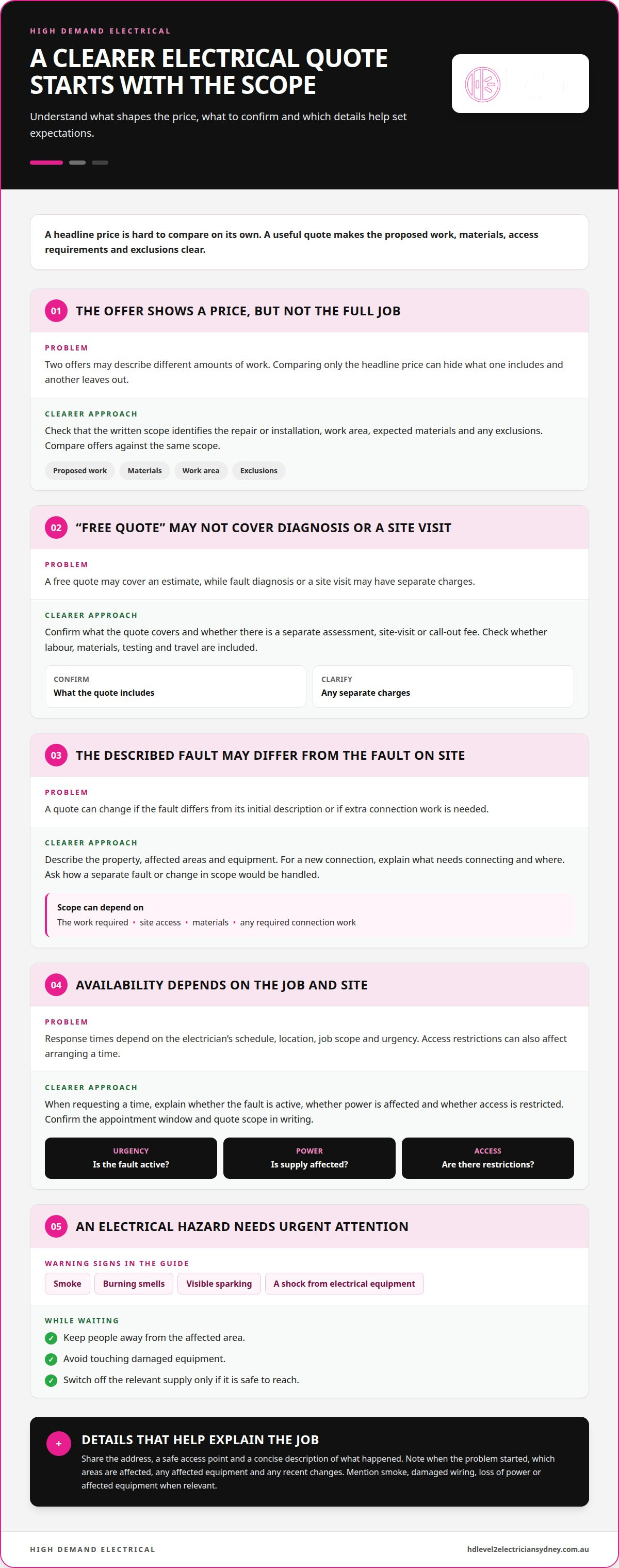
What safety risks require an emergency electrician, and what should I do while waiting? Smoke, burning smells, visible sparking or a shock from electrical equipment require urgent attention. Keep people away from the affected area, avoid touching damaged equipment, and switch off the relevant supply only if it’s safe to reach.
An emergency call-out focuses on immediate electrical hazards and restoring a safe condition. Emergency, same-day and 24/7 availability depend on location, current demand and the type of fault. A call describing active sparking differs from one about a non-urgent lighting repair, so state the immediate risk first.
When arranging a call-out, provide the address, a safe access point and a concise description of what happened. Mention smoke, damaged wiring, loss of power or affected equipment. Clear details help explain the situation and the work required.
High Demand Electrical has built a strong reputation across Sydney, with many local jobs successfully completed and backed by positive customer feedback. A client testimonial says two electricians arrived within an hour of the client's call. These details offer one perspective on service history and response, while the nature and urgency of a particular fault still determine what help is appropriate.
Electrician availability and quote offers
Local electricians may offer free quotes, while others may charge for an assessment or call-out. A useful quote describes the work, materials, access requirements and any exclusions, so you can compare the same scope rather than just a headline price.
Upfront quotes and transparent pricing
An upfront quote sets out the proposed work before you approve it. Check whether it covers labour, materials, testing, travel or a call-out fee, and whether the figure can change if the fault differs from its initial description. For example, replacing one switch is a narrower job than tracing a fault affecting several properties or circuits.
High Demand Electrical provides a quote after receiving a request. The price depends on the work, access, materials and any required connection work. Ask for the scope and any call-out fee to be described clearly before agreeing, so you know what is included if a separate fault is found.
Free quotes and quote details
A free quote can help you understand the proposed job before committing, but the term should be clear: it may cover an estimate, while fault diagnosis or a site visit may have separate charges. Give the electrician the property type, the issue, affected areas and any relevant photos. For industrial electrical work, describe the equipment and site access needs.
Check that the quote identifies the repair or installation, expected materials, work area and any exclusions. If the task involves a new connection, describe what equipment needs connecting and where. A written scope helps you compare like with like and spot when one offer includes work another leaves out.
To request a quote for electrical infrastructure work, use the electrical service enquiry form and describe the property and required work.
Response times and customer testimonials
Availability depends on the electrician’s schedule, location, job scope and urgency. A power issue affecting an occupied site may need different triage from a planned lighting replacement. When requesting a time, explain whether the fault is active, whether power is affected and if access has restrictions.
Customer testimonials can offer useful examples of communication and reliability, but read the details rather than relying on a single rating. Look for comments about arrival updates, clear explanations, completed workmanship and how changes to the original scope were handled. A review describing a similar switch or connection issue is more relevant than one about an unrelated job.
Before accepting an offer, confirm the appointment window, the quote’s scope and any call-out charge in writing. Keep the written offer available on the day, especially if the electrician needs to explain a change before proceeding. Clear records help both sides understand the agreed work.
Licensing, insurance and workmanship warranty
Electrical licensing, insurance and warranty terms answer different questions. A licence relates to authorised work, insurance addresses specified risks, and warranty wording explains what happens if workmanship needs attention. Check each separately before approving residential wiring, a switchboard job or another electrical solution in Sydney.
What licensed electricians and electrical companies operate near me in Australia? Look for local businesses whose electrical licence applies to the work and jurisdiction, then assess their insurance and written warranty terms. For a Sydney property, compare the electrician’s licence details and the quoted task, such as wiring changes or work on the electrical supply.
Ask for the electrician’s licence number and the name of the person responsible for the work. Compare the licence details with the quoted task, such as wiring changes or work on a property’s electrical supply. A company name alone doesn’t explain which individual will carry out or supervise the work.
For work in Sydney, keep the licence details with the quote and check that the described scope matches the job. For example, a quote for changing internal wiring should clearly describe that work, rather than only referring broadly to electrical services. This makes it easier to understand who is responsible for the work being arranged.
Insurance is a separate check. Ask what cover applies to the work and who it protects, then read the policy or certificate details provided. For example, a residential wiring job and work at a commercial site can involve different property and access conditions. Match the insurance information to the actual premises and job scope.
A workmanship warranty describes the provider’s commitment if an installation or repair has a workmanship issue. Read its written terms for the covered work, claim process, time limits and exclusions. Keep the accepted quote, invoice and any handover documents together. A product manufacturer’s warranty may cover the supplied item, while workmanship terms address the installation.
Before booking, use this practical sequence:
• Record the electrician’s licence details and compare them with the quoted work.
• Read the insurance information for the job and property involved.
• Get workmanship terms in writing, including how to raise a concern.
• Keep the quote, invoice and completion documents in one place.
These checks help clarify responsibility if a fault appears after work. For example, if a replaced fitting fails, the paperwork can help distinguish an installation concern from a product issue. Clear records also make it easier to explain the problem and identify which warranty terms may apply.
For work on electrical supply or infrastructure, confirm that the quote identifies the work involved and the relevant accredited service. A licensing check is most useful when it relates to the specific job, not just a general claim of being a local electrician.
Customer reviews and workmanship guarantees
Reviews can show how electrical services feel from a customer’s perspective, while written warranty terms explain the provider’s stated commitment to workmanship. Compare both against the work you need, such as resolving recurring electrical issues or installing an air conditioner circuit.
How do local electrical companies compare on reviews, experience and availability? Look for feedback about jobs similar to yours, including communication, punctuality and how the electrician explained the work. Then compare those accounts with the written scope, relevant experience and appointment information.
A high rating alone doesn’t show whether a company handles your type of electrical work. Look for specific details: Did the electrician explain the work? Was the agreed scope clear? Did the customer receive an update if plans changed? These details give more context than a general statement of satisfaction.
For example, a review about an electrical supply upgrade may be more relevant to that job than feedback about an unrelated repair. Look for consistent examples of clear communication and completed work, while treating each review as one customer’s account.
For Sydney work, prioritise reviews that describe a similar job and service. A review about a residential issue may offer less insight into a commercial fit-out. Consider the work discussed, not just the suburb or overall rating.
Assess experience against the task, not a broad claim. Consider whether the provider’s services match your requirements, such as a switchboard upgrade, electrical fit-out or infrastructure work. Then check whether the appointment information suits your timing.
Read workmanship guarantees carefully. Look for a written description of covered work, any exclusions, how to raise a concern and the process for resolving it. A guarantee’s wording matters more than a vague claim of quality. Keep the document with the quote and invoice, so you can refer to the agreed terms if an issue arises.
Separate installation workmanship from product coverage. If a newly installed fitting develops a problem, the records can help identify whether the concern relates to the installation or the item itself. Keep product details, job documents and communications together, and describe the fault clearly when reporting it.
Use a simple comparison process: note the job type discussed in each review, assess comments about communication and completed work, then read the written guarantee. A review that mentions prompt updates during a delayed appointment offers a concrete example, while a general rating gives less detail about the customer’s experience.
Electrical fit-outs and upgrades
Fit-outs and upgrades can change how a property receives, distributes or uses electricity. Start with the intended outcome, such as fitting out a business space, adding an EV charger or upgrading an ageing switchboard. This helps define the work involved.
For a commercial fit-out, map equipment locations, lighting, power points and existing supply before work begins. A new office layout, for example, may need outlets positioned for desks and dedicated equipment. Note access restrictions and areas that must remain operational. These details help shape a tailored scope and reduce surprises during installation.
For a home upgrade, list the equipment being added and where it will be used. An EV charger installation may involve assessing the property’s electrical supply. A switchboard upgrade may also be part of a broader plan. The equipment, existing installation and intended outcome shape the work.
Electrical supply infrastructure needs a different assessment from an internal fit-out. Consumer mains, a private power pole and a smart meter each relate to a different part of a property’s electrical supply. Identify the equipment affected and the change needed to give the electrician a clear starting point.
Solar, EV charger and smoke alarm work can involve different equipment, site conditions and requirements. Don’t assume a rebate applies to every installation. Are there rebates or local rules for electrical upgrades, solar, EV chargers or smoke alarms? Rebates and requirements depend on the specific program, property and upgrade; there isn’t one rebate or rule that covers all these jobs. For a Sydney property, identify the location and work before assessing which requirements apply.
Before requesting an upgrade quote, prepare a short project brief. Include the property type, the intended equipment, its proposed location and any known supply constraints. For a commercial installation, add site access and operating needs. For a smoke alarm change, identify the affected area and the existing setup.
• Describe the outcome, such as adding EV charging or changing a workspace layout.
• List the equipment and proposed locations, including any new connection points.
• Share relevant plans, photos or existing electrical documents as a source of project detail.
• Separate urgent faults from planned installations so the work can be scoped clearly.
A clear brief helps distinguish essential supply work from optional improvements. It also makes it easier to compare proposals by scope, materials and stated exclusions. If your plans involve an electrical upgrade, outline your project requirements to start the conversation.
Once you share your details, the electrician can compare the requested outcome with the existing installation and identify any specifics that still need checking. For example, a customer might request a new dedicated 32A circuit for an EV charger, with a cable run of about 15 metres.
Confirm where the charger will sit and describe the proposed cable route and any access constraints. Keep the circuit request distinct from other planned work so the scope remains clear and the quote can address the installation being requested.
High Demand Electrical: Level 2 ASP Electrical Services
High Demand Electrical provides Level 2 ASP Electrical Services for electrical infrastructure work. This is a relevant next step when a property needs specialist attention to its electrical supply, rather than a routine repair inside the home.
High Demand Electrical provides switchboard upgrades, private power pole installation, and Tesla and home EV charger installation. The right service depends on the issue or planned upgrade, such as a switchboard needing attention or a property requiring a private power pole.
When making an enquiry, describe the property, the work required and any known electrical supply concerns. Clear details help frame the request around the relevant service and next steps.
Contact High Demand Electrical to discuss your electrical infrastructure or upgrade requirements in Sydney.
Take the next step with a clear project brief
Before arranging electrical work, prepare a concise description of the job. Explain what needs attention, the outcome you want and any changes planned for the property. This gives your enquiry a practical starting point and helps focus the conversation on the relevant work.
As you compare electrical companies near me, consider whether the work involves electrical infrastructure rather than a routine repair. High Demand Electrical offers Level 2 ASP Electrical Services, Switchboard Upgrades and Private Power Pole Installation. These services can be relevant when a property needs supply infrastructure work or a planned upgrade.
Use your enquiry to explain the property, the issue or upgrade, and any details that could affect the work. A clear description helps frame the next discussion around your requirements. Contact High Demand Electrical today to discuss your electrical project and take a considered next step.
Frequently Asked Questions
What are the call-out fees and hourly rates for electricians near me?
Call-out fees and hourly rates vary by electrician and job scope. For High Demand Electrical, the price depends on the case and is provided after a quote request; factors include the work required, access, materials and whether the task involves electrical infrastructure. Ask for the proposed scope and any call-out charge in writing before approving work. This helps you understand what the quote covers, including any separate diagnostic or repair tasks.
How quickly can nearby electricians attend, and what areas do they service?
Attendance timing depends on the electrician’s schedule, your location and the work required. High Demand Electrical services Sydney, including the Inner West, Sydney’s West, South West and the Sutherland Shire. For example, an urgent supply issue and a planned upgrade may need different scheduling. Give the suburb, property type and a clear description of the issue when arranging an appointment, so the requested work and location are understood.
Need Help Fast?
Powering Your Needs with Expertise
If you’re looking for a reliable, experienced, and prompt electrician, look no further than High Demand Electrical. We cater to all your electrical needs, from routine maintenance to emergency repairs and complete system installations. Our skilled team is committed to providing professional service that ensures your electrical systems run smoothly. Whether it's a small task or a large project, give us a call today. Let us meet all your electrical demands with the quality and reliability you deserve.

