
24/7 Emergency Power Repair Across Newcastle and Nearby Areas
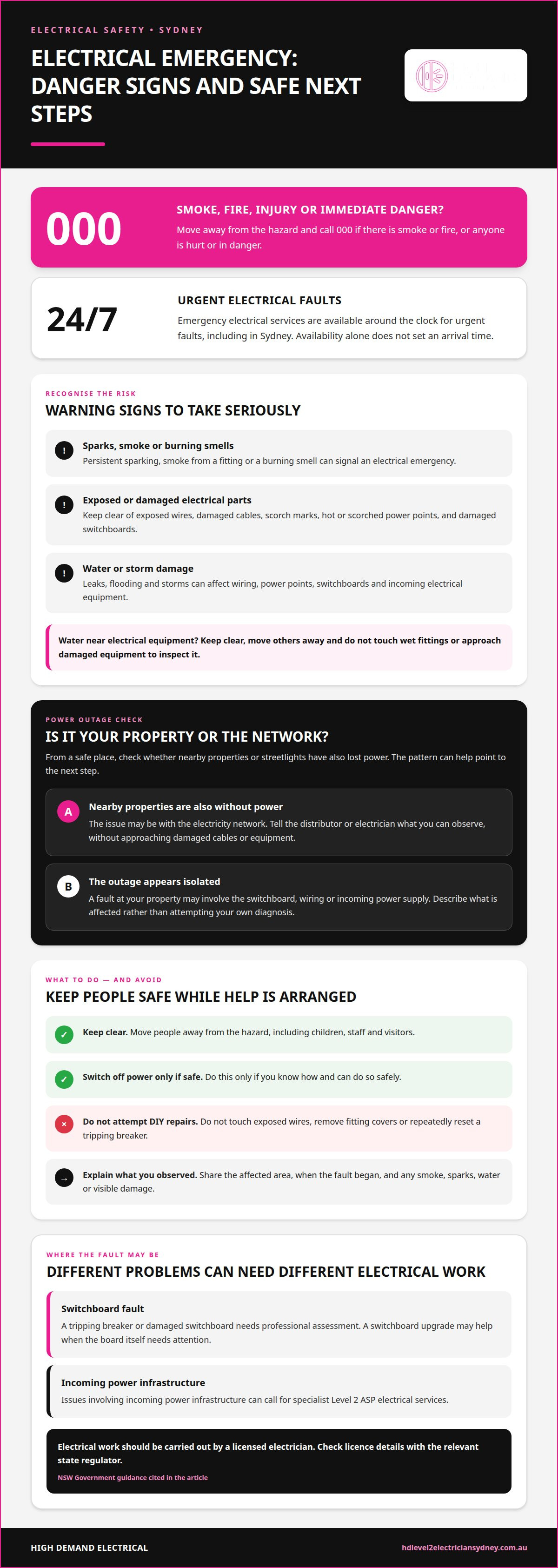
A sparking switchboard, exposed wiring, smoke from an electrical fitting or a burning smell can signal an electrical emergency. For 24/7 emergency power repair, treat storm or water damage affecting the electrical system as urgent too. Call 000 if there’s smoke or fire, or if anyone is hurt or in danger.
Power loss can be alarming, but it doesn’t always mean there’s a fault inside your home. If nearby properties are also without power, the issue may be with the electricity network. If the outage appears isolated, your switchboard or incoming power supply may need attention. Don’t tamper with wiring, and turn off power only if it’s safe to do so.
This guide explains what makes an electrical fault urgent, how to distinguish a home problem from a street outage, and what repairs may be needed across Sydney and surrounding areas. You’ll also learn why switchboard faults and damage to incoming power infrastructure can call for specialist attention, and how to take a safe next step.
Key Takeaways
• Call 000 if an electrical fault involves smoke or fire, or someone is hurt or in danger.
• Keep clear of water-damaged electrical fittings after leaks or storms, and don’t attempt DIY repairs.
• Check whether nearby properties have also lost power to help distinguish a network outage from a fault at your property.
• A tripping breaker or damaged switchboard can point to a fault that needs professional assessment, not repeated resets.
• Level 2 ASP electrical services can address issues involving incoming power infrastructure, while switchboard upgrades may help when the board itself needs attention.
What counts as an electrical emergency?
Electrical emergencies include exposed wires, smoke from fittings, persistent sparking and burning smells. If there’s smoke or fire, or anyone is hurt or in danger, call 000.
Storm damage and water near electrical equipment can create immediate risks. Don’t touch wet fittings or attempt repairs. For 24/7 emergency power repair in Sydney, describe the fault and any danger clearly when arranging help.
Water and storm-related electrical faults
Leaks, flooding and storms can affect wiring, power points, switchboards and incoming electrical equipment. From a safe place, look for water near fittings, damaged cables, scorch marks, sparks or a burning smell. Don’t approach wet or damaged equipment to inspect it closely.
If water has reached electrical equipment, keep clear and move others away. Turn off power at the switchboard only if it’s safe and you know how. Tell the electrician whether the fault followed a leak, flooding or storm damage.
Urgent repairs for homes and businesses
Urgent electrical faults can affect a home, shop, office or shared building. Warning signs include exposed wiring, smoke from a fitting, a hot or scorched power point, or persistent sparking. The fault may involve the wiring or switchboard rather than an appliance.
If there’s smoke, fire, injury or immediate danger, call 000 first. Otherwise, keep people away from the hazard and explain what you’ve observed when arranging help. According to NSW Government, electrical work should be carried out by a licensed electrician to ensure it’s compliant and safe.
Recognising urgent electrical danger
A power point that keeps sparking or buzzing, feels hot, or shows scorch marks needs urgent attention. Turn off power to the affected area only if it’s safe to do so. Don’t remove covers, touch exposed wires or try to repair a fitting yourself.
Other warning signs include smoke from electrical fittings, exposed conductors and storm or water damage to electrical equipment. If anyone is at risk, move away and call 000. Keep children, staff and visitors clear of the affected area.
Call-outs, availability and choosing an electrician
When requesting emergency help, explain what happened, which areas are affected, and whether you noticed smoke, sparks or water damage. An electrician can assess the fault, make the area safe and identify the repair needed. The work may involve wiring, a fitting or the switchboard.
Emergency electrical services in Australia are available 24 hours a day for urgent faults, including in Sydney. Examples include exposed wires, persistent sparking and water-damaged electrical systems.
Are Australian emergency electricians licensed, and how can you verify their licence? According to NSW Government, electrical work should be carried out by a licensed electrician; check their licence details with the relevant state regulator.
How much does after-hours emergency electrical work cost in Australia? The cost depends on the fault, access, parts and repair scope. Contact High Demand Electrical for a quote.
When arranging emergency electrical work, check the electrician’s licence details and clearly describe the fault. For example, report a tripping switchboard or wet power point rather than attempting your own diagnosis.
Emergency service coverage across Newcastle and surrounding regions
For urgent electrical help in Sydney, give the suburb and exact property address when describing the fault. Clear location details help establish where assistance is needed and whether the problem affects a home, workplace or shared building. Emergency electrical services in Australia are available 24 hours a day for urgent faults, but availability alone does not set an arrival time.
Sydney covers many suburbs and distinct local areas, so name yours rather than saying only "near the city". Explain which circuit or equipment is affected and whether nearby properties have also lost power. These details can help distinguish a property fault from a possible network outage and clarify the situation for the person taking your call.
Electrical hazards can affect residential and commercial properties. At home, report signs such as damaged wiring or a burning smell. At a workplace, also explain whether staff, customers or access routes are near the hazard. Keep people away from the affected equipment. If smoke, fire, injury or immediate danger is present, call 000.
During an outage, check from a safe place whether nearby properties or streetlights have also lost power. A wider outage may involve the electricity network rather than one property. Tell the distributor or electrician what you can observe, but do not approach damaged cables or electrical equipment to investigate.
Do not assume an arrival time based on your suburb alone. The reported hazard and fault location help determine the appropriate next step. When requesting assistance, provide the address, describe when the fault began, and mention any visible damage or immediate risk. Do not put yourself in danger to gather more information.
High Demand Electrical provides electrical services across the Sydney metropolitan area. Give the property's suburb and explain whether the issue affects one circuit, the whole building or nearby properties. This context can help distinguish a local electrical fault from a broader outage.
Power outages and distinguishing a home fault from a street outage
Before treating an outage as an internal fault, check whether nearby homes have also lost power. The pattern can help distinguish a network problem from damaged wiring, a switchboard fault or an issue with your property’s incoming supply.
Identifying home and street outages
From a safe place, check whether neighbouring properties or streetlights are also without power. A street-wide outage may point to the electricity network; if nearby homes still have power, the fault may be within your property.
If the outage appears isolated, look at the switchboard without removing covers or touching wiring. A tripped breaker can indicate a circuit fault, but if it trips again, stop resetting it and arrange professional diagnosis. Don’t tamper with an overloaded circuit.
Consumer-mains and supply-fault repairs
A fault can also sit beyond the internal circuits, in the service line, a damaged service cable or the point of attachment connecting the property to the network. These supply-side issues can interrupt power even when internal wiring appears unaffected.
In Sydney, faults involving a property’s service line or point of attachment often require a Level 2 electrician. Level 2 ASP work can address consumer mains and supply infrastructure, rather than faults limited to an appliance or internal circuit. Keep clear of damaged cables and report where the visible damage is located.
Fault diagnosis and circuit isolation
When requesting emergency help, describe which rooms have lost power, whether nearby properties are affected, and what the switchboard shows. Mention any recent storm damage or visible cable damage. These details help the electrician distinguish a local circuit fault from an incoming supply problem.
Diagnosis may involve identifying and isolating the affected circuit so the fault doesn’t continue to affect other parts of the property. Don’t open the switchboard or attempt electrical tests yourself. A licensed electrician can assess the wiring and identify whether the fault involves a circuit, board or supply connection.
Making faults safe while repairs wait
An emergency visit may focus first on making the situation safe. Permanent repairs may need to be arranged separately. For example, a damaged cable or complex wiring fault can require more work than the immediate isolation needed to reduce risk.
Follow the electrician’s instructions about the isolated circuit and keep people away from affected equipment. Don’t restore power to a circuit that has been made safe or reconnect damaged wiring yourself. Note which areas remain without power to help plan the next repair stage.
DIY power repairs can cause serious injury, create fire hazards or worsen wiring damage. Keep clear of exposed conductors, and leave electrical testing and repairs to a licensed electrician.
Home insurance cover for emergency electrical repairs or outages depends on the policy wording, cause of damage and applicable exclusions. Review your policy terms and note whether the issue involves your property’s wiring or a wider network outage.
Power outage troubleshooting and repair
Start with safe observations, not electrical repairs. Check whether the outage affects one room, the whole property or neighbouring homes. Then note what the switchboard shows without removing its cover.
Blackouts and power outages
A blackout is a loss of electricity, but the cause may be in the network or within one property. Check whether nearby homes have also lost power. If the street is dark, the supply issue may be outside your property; if neighbours still have power, an internal fault is more likely.
For a sudden outage, check whether a safety switch or circuit breaker has tripped. You may reset it once only. If it trips again, stop: repeated trips can indicate an electrical fault that needs diagnosis. Don’t open the switchboard, handle wiring or try to replace a fuse yourself.
A blown fuse can interrupt power to a circuit, while a faulty appliance or damaged wiring may cause a fuse or protective switch to operate. Note which lights or power points stopped working and whether the problem began when a particular appliance was switched on. Don’t keep using that appliance or bypass a protective device to restore power.
Restoring power after an outage
Restoring power depends on where the fault is. A network outage needs attention on the supply side; a property fault may involve a circuit, switchboard, wiring or incoming electrical supply. Report whether nearby properties are affected and describe any visible damage, burning smell or unusual sounds.
If power returns after one reset, watch for another trip, flickering lights or a warm, scorched fitting. These signs can indicate an unresolved fault. Stop using the affected circuit and arrange professional assessment. Restored power doesn’t necessarily mean damaged wiring is safe.
During a repair visit, an electrician can assess the affected circuits and identify whether the fault relates to the installation, a connected appliance or the supply. Explain what you observed and when the outage began. This information helps narrow the diagnosis and plan the work without unsafe trial and error.
If only part of the property has lost power, identify which rooms, lights and power points are affected. If the whole property is dark, note whether nearby buildings also lack power. These details help distinguish a local fault from a wider blackout before repair work begins.
Keep clear of damaged cables and don’t touch electrical equipment exposed to water. If smoke, fire or immediate danger occurs, call 000. Otherwise, leave the affected circuit off after a repeated trip and arrange assessment by a licensed electrician.
Emergency switchboard repairs
A switchboard fault can cut power to part or all of a property, or create immediate danger. Treat repeated breaker trips, heat, buzzing, scorch marks or a burning smell as warning signs. Don’t remove the cover, touch internal components or keep resetting a breaker that trips again.
Note what happened before the outage: for example, whether a circuit tripped when a particular appliance started, or whether lights flickered across several rooms. Tell the electrician which switches moved and which areas lost power. These observations can help distinguish a single-circuit fault from a problem with the switchboard or incoming supply.
During an emergency visit, the electrician assesses the board and reported symptoms, then identifies whether a circuit needs to be isolated. Isolation can limit the affected area while the fault is investigated. If the board shows heat damage, moisture, exposed components or signs of arcing, keep people away and don’t attempt a temporary repair yourself.
A temporary make-safe measure may reduce immediate risk without completing the permanent repair. For example, the electrician may leave a faulty circuit isolated while replacement components or further work are arranged. Some lights, power points or equipment may remain unavailable. Don’t switch the circuit back on until the electrician says it’s safe.
Not every switchboard problem needs the same work. A fault may be limited to a breaker or connection, while an ageing or damaged board may need broader attention. An electrician assesses the board’s condition, symptoms and circuits before determining whether repair or a switchboard upgrade is appropriate.
For a business, tell the electrician which equipment or work areas have lost power, such as a cool room, office circuit or lighting zone. At home, name affected rooms and note whether essential equipment has stopped. This practical information helps clarify the impact and support a safe fault assessment.
After the immediate fault is controlled, ask what caused the trip and which circuits remain isolated. A clear explanation helps you avoid using affected equipment and understand the next repair step. If a switchboard upgrade is recommended, review the switchboard upgrade options in relation to the board’s condition and your property’s electrical requirements.
When you arrange urgent electrical help, report visible damage, repeated trips and any burning smell. Keep the switchboard area accessible, but don’t touch the board. If there’s smoke, fire or immediate danger, call 000 before arranging electrical repairs.
High Demand Electrical: Level 2 ASP Electrical Services
High Demand Electrical provides Level 2 ASP Electrical Services for electrical infrastructure faults involving a property’s connection to the supply network. This is relevant when the issue concerns consumer mains or a private power pole, rather than an individual appliance. For faults within the switchboard, Switchboard Upgrades may be the appropriate next step.
High Demand Electrical also installs Tesla and home EV chargers. The right service depends on where the fault is and which equipment or infrastructure needs attention. Share the symptoms and property details so the issue can be directed to the relevant service.
For electrical work involving incoming supply infrastructure or a switchboard upgrade, contact High Demand Electrical to discuss your requirements.
Choose the right next step for your electrical fault
Before arranging work, identify whether the issue involves internal wiring, the switchboard or the property’s incoming supply. That distinction helps direct the repair towards the right electrical expertise. Understanding what 24/7 emergency power repair involves can also help you describe the fault clearly and avoid unsafe attempts to restore power yourself.
For issues involving a property’s electrical connection, High Demand Electrical offers Level 2 ASP Electrical Services and Private Power Pole Installation. If the switchboard needs attention, the business also provides Switchboard Upgrades. These services address infrastructure and switchboard needs, rather than household appliance repairs.
Share the property location, what happened and any visible signs of damage when making an enquiry. This gives the team useful context about the fault and the service you need. Contact High Demand Electrical to discuss your electrical requirements and take the next step with clear information.
Frequently Asked Questions
Need Immediate Assistance?
If there’s smoke, fire, injury or immediate danger, call 000 first. For urgent electrical faults, High Demand Electrical provides 24/7 Emergency Electrician Services, described as its Rain Hail Shine Service. Its stated service area is Sydney, NSW, so Newcastle residents shouldn’t assume Sydney coverage means service in Newcastle. State your suburb, describe the fault and explain any immediate safety risk when seeking assistance.
No power at your place?
First, check whether the outage affects only your property or nearby homes too. If the street is also without power, report the outage to your electricity distributor. If neighbouring properties still have electricity, note which parts of your home are affected and look at the switchboard without touching its internal components. Don’t repeatedly reset a breaker that trips again.
What should I do if my house suddenly loses power?
Keep clear of damaged electrical equipment, then note whether the outage affects the whole house or only some rooms. Check whether nearby homes still have power, and look at the switchboard without removing covers. If a safety switch or breaker has tripped, you may reset it once only. If it trips again, leave it alone and arrange professional fault diagnosis.
How quickly can an emergency electrician respond to a power outage?
An emergency electrician’s arrival time depends on the fault’s urgency, your location, access to the property and current call demand. Give a clear address and describe hazards such as exposed wiring, burning smells or damaged supply cables. This helps the service assess the situation and organise its response. Don’t approach damaged equipment while waiting for assistance.
What should I do immediately if my home loses power?
Use a torch, keep away from exposed wiring and avoid opening the switchboard. Note whether essential areas, such as a bedroom or kitchen, have lost power, and whether neighbours are affected. If the fault involves smoke, fire, injury or immediate danger, call 000. Otherwise, share these observations with the distributor or electrician you contact.
How can I tell whether a power outage is local or a fault in my home?
From a safe vantage point, check whether nearby properties or streetlights have also lost power. A wider outage suggests a network issue; if power remains on next door, the fault may be at your property. If only one room or circuit is affected, note that detail. Don’t touch damaged cables or attempt electrical testing yourself.
When should I call an emergency electrician versus my electricity distributor?
Contact your electricity distributor when the outage affects the street or neighbourhood, as the problem may involve its network. Call an emergency electrician for an isolated property fault, such as a switchboard issue or damaged wiring. If there’s smoke, fire, injury or immediate danger, call 000. In Sydney, faults involving service lines or a property’s connection may require Level 2 electrical work.
Need Help Fast?
Powering Your Needs with Expertise
If you’re looking for a reliable, experienced, and prompt electrician, look no further than High Demand Electrical. We cater to all your electrical needs, from routine maintenance to emergency repairs and complete system installations. Our skilled team is committed to providing professional service that ensures your electrical systems run smoothly. Whether it's a small task or a large project, give us a call today. Let us meet all your electrical demands with the quality and reliability you deserve.

