Electrical Defect Notice Sydney: The 2026 Homeowner’s Guide to Rectification
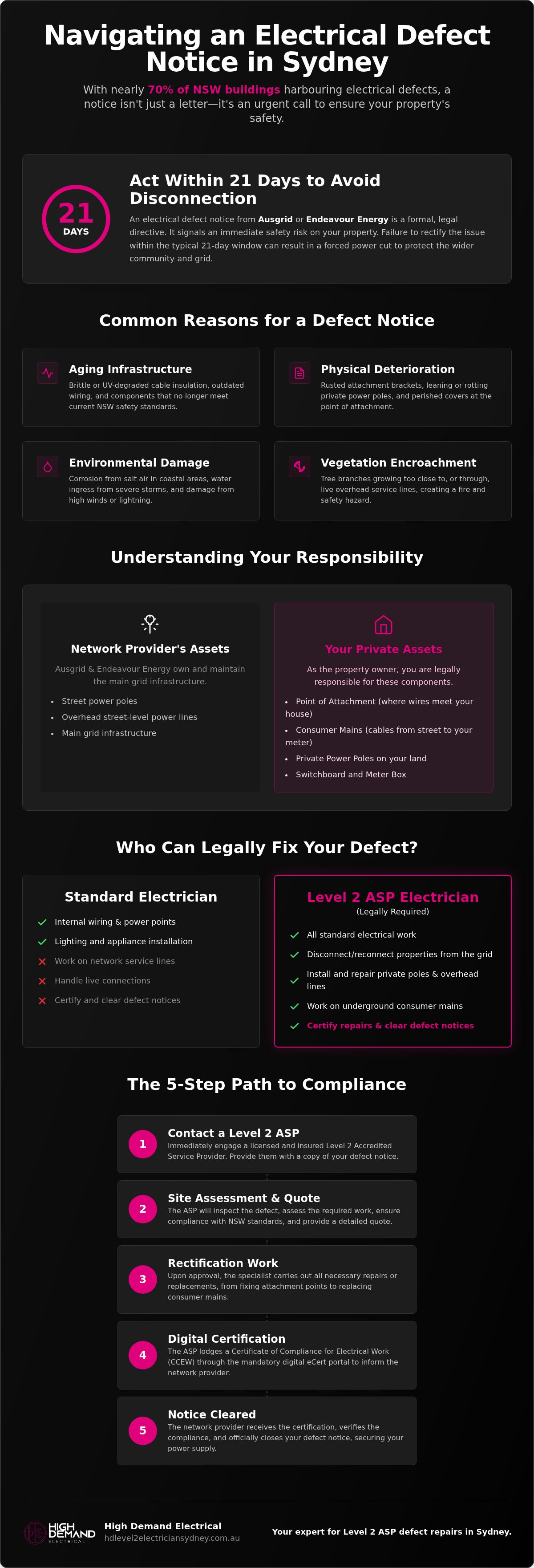
When the NSW Building Commissioner reveals that nearly 70% of buildings across the state harbour electrical defects, receiving an electrical defect notice in Sydney feels less like a random occurrence and more like an urgent infrastructure warning. Finding that official notification attached to your property is an immediate source of stress, particularly when the threat of power disconnection looms just 21 days away. This is not a standard maintenance task for a general electrician; it is a formal regulatory matter that requires a qualified Level 2 Accredited Service Provider (ASP) to rectify and certify.
We understand that the technical jargon and the pressure of a ticking clock can feel overwhelming. You want to protect your home from fire risks and avoid the disruption of a total power loss. This guide explains exactly how to clear an Ausgrid or Endeavour Energy defect notice while ensuring your property meets the strict 2026 NSW safety standards. We will outline the mandatory digital compliance process, explain why specialised intervention is legally required, and provide a clear roadmap to securing your electrical system for the long term.
Key Takeaways
• Understand that an electrical defect notice in Sydney is a formal legal directive issued by Ausgrid or Endeavour Energy that requires immediate rectification of unsafe private assets.
• Recognise that only a Level 2 Accredited Service Provider (ASP) is legally authorised to work on the network-side connection and clear your notice; standard electricians cannot perform this work.
• Act within the 21-day window typically provided by network providers to avoid the forced disconnection of your power supply.
• Identify the specific private assets, such as power poles, consumer mains, or rusted points of attachment, that are your responsibility to maintain under NSW safety standards.
• Ensure all repairs are lodged correctly through the mandatory digital eCert portal to satisfy regulatory requirements and secure your property's safety.
What is an Electrical Defect Notice and Why Did You Get One?
An electrical defect notice is a formal legal directive issued by your network provider requiring you to rectify specific electrical assets on your property that have been deemed unsafe or non-compliant. If you have received an electrical defect notice sydney property owners should understand that this document is not a mere suggestion; it is a critical safety warning designed to mitigate the immediate risks of fire, electrocution, or infrastructure failure. These notices typically surface following a routine meter reading, after severe weather events that cause visible damage, or when a network fault is reported by a neighbour and traced back to your connection point.
The Role of Ausgrid and Endeavour Energy in Sydney
In the Sydney metropolitan area, the responsibility for maintaining the grid and issuing these notices falls to two primary network providers. Ausgrid typically manages the network for the Sydney CBD, Inner West, Eastern Suburbs, and Northern Beaches, while Endeavour Energy oversees the Western Suburbs and South Western regions. While these providers own the overarching grid, you as the property owner are responsible for the "private assets" connecting your home to that grid. This includes your consumer mains, private power poles, and the point of attachment. If these components fail to meet current electrical wiring safety standards, the network provider has the legal authority to disconnect your power supply to protect the broader community.
Understanding the Legal and Safety Implications
Ignoring a defect notice carries severe consequences that extend beyond a simple blackout. Legally, property owners have a strict "Duty of Care" to maintain their electrical infrastructure in a safe condition. Failure to act can lead to the invalidation of your home insurance policy, as most insurers won't cover damage caused by known, unrectified electrical faults. In Sydney’s coastal suburbs, the combination of high humidity and salt air accelerates the corrosion of metal components and the perishing of cable insulation. This environmental degradation makes regular inspections vital. By the time a network provider issues an electrical defect notice sydney residents are often dealing with assets on the verge of failure, making rapid intervention by a Level 2 ASP essential to prevent a catastrophic event.
What Are the Common Reasons for Electrical Defect Notices in Sydney?
Receiving an electrical defect notice sydney property owners often find themselves confused about why their specific home was targeted. Most notices aren't the result of a random check but occur when an asset fails to meet strict safety criteria during a meter read or a network upgrade. Sydney's volatile storm season, which typically peaks between October and March, is a frequent trigger for these notifications. High winds and heavy rain put immense physical strain on overhead lines, often revealing that insulation has been UV-degraded by years of harsh sun. When these lines sag or brackets begin to pull away from the house, it creates a direct safety hazard that the network provider cannot ignore.
The underlying cause usually boils down to five main factors:
Aging Infrastructure
Brittle insulation or outdated wiring that no longer meets safety codes.
Environmental Damage
Salt air corrosion in coastal suburbs or water ingress from storms.
Vegetation Encroachment
Tree branches growing too close to or through live service lines.
Physical Deterioration
Rusted brackets, leaning poles, or perished 'point of attachment' covers.
Technical Non-Compliance
Missing mandatory safety labels or outdated switchboard components.
Many residents don't realise they are responsible for 'private assets'—the specific hardware that connects your home to the street grid. While the network provider owns the wires on the street, you own the connection points, poles, and mains on your land. If you've noticed sagging lines or rusted fittings, it's safer to consult a Level 2 specialist before an official inspector flags the issue.
Private Power Poles and Overhead Service Lines
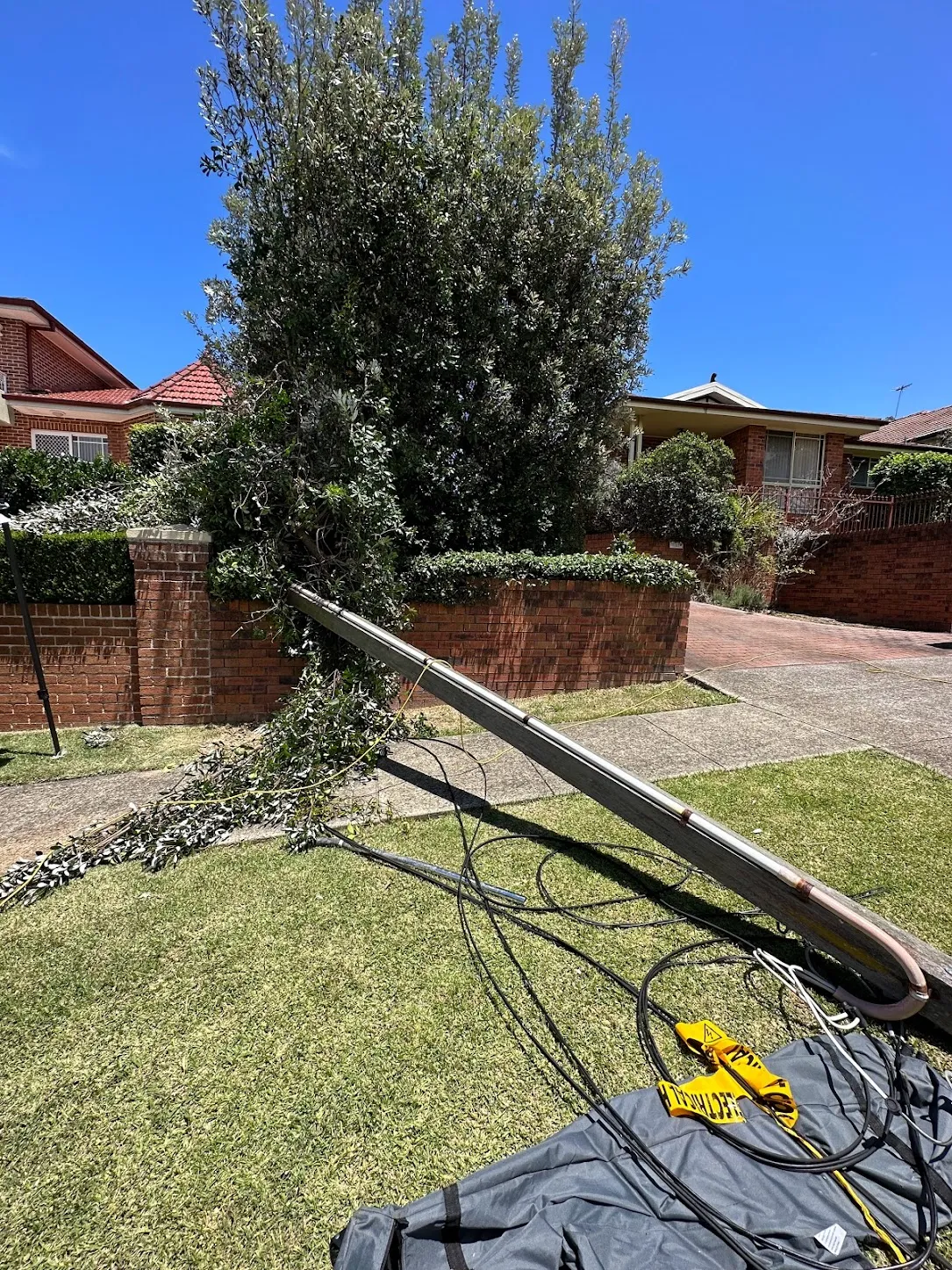
A common sight in older Sydney suburbs is the 'leaning pole' syndrome. Timber poles eventually fail as moisture in the soil causes the base to rot, creating a significant fall hazard. Additionally, service lines must maintain specific clearances over driveways and footpaths to prevent accidental contact with vehicles. If your overhead cables have sagged over time, they pose a risk that could lead to an immediate power disconnection. For a detailed breakdown of compliance requirements, see our Private Power Pole Guide for Sydney Homeowners, or read our full private power pole inspection guide to see exactly what a Level 2 ASP checks for.
Consumer Mains and Point of Attachment Defects
Consumer mains are the power arteries of your property, carrying electricity from the street to your switchboard. In many heritage Sydney homes, these cables still use Vulcanised Indian Rubber (VIR) insulation, which becomes dangerously brittle and cracks with age. This exposed copper is a direct fire risk. Similarly, the Point of Attachment (POA)—the bracket where the street line meets your roof—often suffers from severe rust. Network providers frequently issue an electrical defect notice sydney for rusted POAs that threaten to tear away from the house fascia. You can learn more about these critical components in our guide to Consumer Mains in Sydney. Ensuring these are handled by qualified and licensed electricians is the only way to guarantee a legal and safe rectification.
Standard Electrician vs Level 2 ASP: Who Can Fix Your Defect?
Many homeowners' first instinct after receiving an electrical defect notice sydney is to call their trusted local sparky. While your regular electrician is excellent for internal tasks like installing power points or ceiling fans, they are legally barred from rectifying defects on the network side of your property. In New South Wales, the law is clear: only an Accredited Service Provider (ASP) Level 2 has the authorisation to work on "live" network assets. Hiring a non-accredited electrician to fix a defect is not only illegal but also a waste of resources; the network provider will refuse to clear the notice, and your property will remain at risk of disconnection.
Level 2 ASPs undergo rigorous additional training and must maintain specific high-risk insurance policies that go far beyond standard trade requirements. This accreditation ensures that the technician has the expertise to handle the extreme voltages found in consumer mains and overhead service lines. Because this work involves the direct connection to the Ausgrid or Endeavour Energy grid, the safety stakes are significantly higher than standard domestic wiring.
Why a Standard Electrician Isn't Qualified for This Work
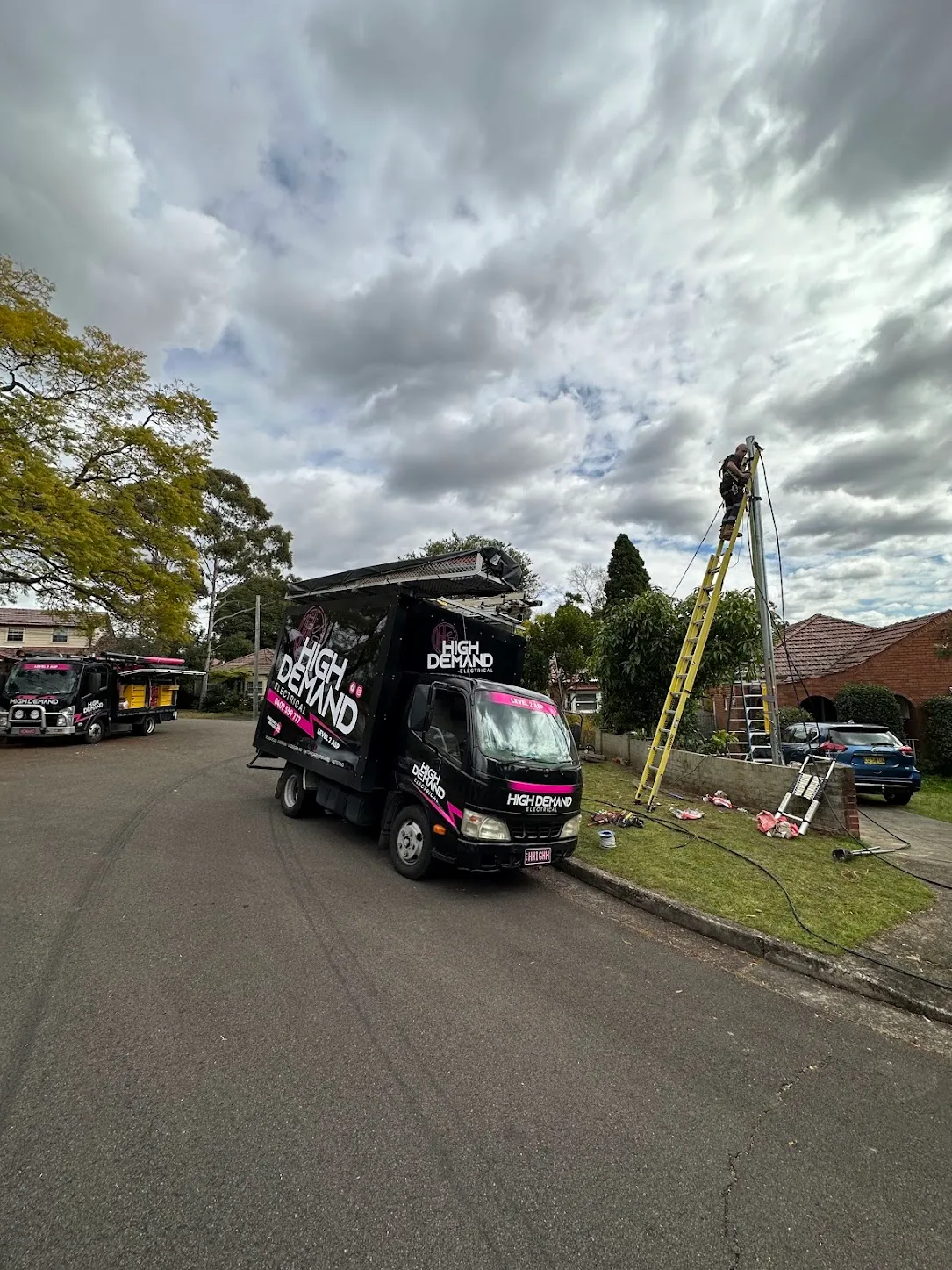
Standard electricians work on the "load side" of your meter, where they can safely isolate power at the main switch. Defect notices usually involve the "supply side," meaning the cables are permanently live and cannot be turned off from within the home. ASPs use specialised tools, including insulated ladders, cherry pickers, and high-voltage testing equipment, to work safely on these active lines. Critically, a standard electrician cannot lodge the mandatory digital Certificate of Compliance for Electrical Work (CCEW) through the eCert portal to satisfy network provider requirements.
The Legal Requirement for ASP Level 2 Accreditation
The NSW Government established the ASP scheme to ensure that only highly trained specialists touch the state's power infrastructure. This framework protects the grid from damage and the public from fire hazards. Level 2 work is divided into specific categories, including Class 2C for overhead service lines and Class 2D for metering. To understand how these categories apply to your property's infrastructure, you can refer to our Level 2 ASP Electrical Services: The Complete Guide. Choosing an accredited partner is the only way to ensure your paperwork is lodged correctly and your notice is cleared permanently.
What Is the Rectification Process to Clear Your Notice Fast?
Receiving an electrical defect notice sydney marks the start of a strict 21-day countdown. This timeframe is non-negotiable; if the network provider does not receive confirmation that the safety issue has been resolved within this window, they will initiate the disconnection process. To protect your property from a forced blackout, you need a rapid response protocol that moves faster than the bureaucracy. Our process begins with an immediate site inspection to diagnose the specific failure point, followed by an itemised quote and swift repair. However, simply fixing the physical wire or pole isn't enough to clear your record. The legal rectification is only complete once the digital paper trail is lodged and accepted by the network authority.
Managing the 21-Day Deadline to Avoid Disconnection
If you are away or on holiday when a notice is issued, the clock doesn't stop. Network providers usually send a follow-up "disconnection warning" letter if they haven't heard from a Level 2 ASP within the first fortnight. If you find yourself in this situation, don't panic. You can often negotiate a brief extension if you can prove that a Level 2 electrician has been engaged and a repair date is locked in. Clear communication with Ausgrid or Endeavour Energy is vital; they are more likely to delay disconnection if they see active progress being made to resolve the safety hazard. We recommend notifying the provider as soon as the quote is accepted to show intent to comply.
Compliance Paperwork: NOSW and Clearing the Defect
The most critical part of the rectification process happens after the tools are packed away. Your Level 2 technician must lodge a Notice of Service Work (NOSW) through the network provider’s portal within two business days of the repair. This document serves as the formal declaration that the work meets all current safety standards. Simultaneously, you will be issued a Certificate of Compliance for Electrical Work (CCEW). You must keep this certificate as it is your legal proof of compliance for insurance purposes. Be aware that the network provider often performs random audits, where an inspector will visit the site to verify the quality of the repair before officially closing the file on your electrical defect notice sydney. This independent check ensures that every repair meets the high-risk safety requirements of the Sydney grid.
Why Choose High Demand Electrical for Expert Defect Repairs?
High Demand Electrical stands as Sydney’s authoritative rapid responder for critical grid connections. When you receive an electrical defect notice sydney, the safety of your property is immediately in question. We specialise in the heavy-duty defect notice rectification work that standard electricians are not permitted to touch, specifically private power poles, consumer mains, and points of attachment. Our team possesses the local knowledge required to address the unique challenges of Sydney’s older suburbs. We understand the specific deterioration patterns of salt-corroded fittings common to a level 2 electrician Northern Beaches homeowners rely on, and the weathered timber poles common in the leafy North Shore.
We reject the "patch-and-go" mentality that often leads to recurring issues. Our methodical approach ensures that your property remains compliant for years, not just for the duration of a single inspection. By identifying the root cause of an asset failure, we provide long-term infrastructure security that protects your home and your insurance coverage.
Our Authoritative Rapid Response for Sydney Homeowners
The threat of power loss creates significant stress for any household. We prioritise defect rectifications with a commitment to fast turnaround times that beat the 21-day disconnection clock. Our service is comprehensive. We don't just perform the physical repair; we manage the entire administrative burden. We handle all digital lodgements and communications with Ausgrid or Endeavour Energy on your behalf. This ensures the legal record of your property is cleared correctly and your power supply remains uninterrupted. For situations where a hazard is immediate or power has already been disconnected, our team acts with urgency to restore safety and compliance as quickly as possible.
Comprehensive Infrastructure Health Checks
A defect notice is often a symptom of aging infrastructure that has reached its limit. We investigate the entire connection path, including a full electrical safety inspection, to ensure there are no secondary risks waiting to trigger another notice. This thoroughness protects your investment and prevents the recurrence of costly emergency repairs. While we are upgrading your connection, it is often the most strategic time to prepare for future technology. Integrating a switchboard upgrade for EV charger Sydney during a defect repair can save you significant labour costs and ensure your home is ready for high-capacity electrical demands.
Don't risk a forced power disconnection or legal complications. Contact High Demand Electrical to clear your Sydney defect notice today.
Secure Your Property and Restore Your Power Today
Dealing with an electrical defect notice sydney requires immediate action to prevent the 21-day countdown from resulting in a total power disconnection. This guide has detailed why these notices are high-stakes legal directives and why only a Level 2 ASP possesses the accreditation to perform the necessary repairs on your private assets. From rusted points of attachment to leaning timber poles, addressing these issues correctly ensures your property remains compliant with the latest NSW safety regulations and maintains its insurance eligibility.
High Demand Electrical provides the authoritative response you need during this critical window. As Sydney infrastructure specialists and ASP Level 2 accredited providers, we manage the entire rectification process, including the mandatory digital lodgements with Ausgrid or Endeavour Energy. Our Emergency 24/7 Rapid Response ensures that even the most urgent safety hazards are addressed before they escalate. If you've received a notice, don't wait until the power is cut. Clear Your Sydney Electrical Defect Notice Now and enjoy the peace of mind that comes with a certified, safe electrical system. We are ready to help you resolve this issue with total confidence.
Related Services

Powering Your Needs with Expertise
If you’re looking for a reliable, experienced, and prompt electrician, look no further than High Demand Electrical. We cater to all your electrical needs, from routine maintenance to emergency repairs and complete system installations. Our skilled team is committed to providing professional service that ensures your electrical systems run smoothly. Whether it's a small task or a large project, give us a call today. Let us meet all your electrical demands with the quality and reliability you deserve.